
The World's Strangest Museums (And Why You Should Visit Them)
At some point in the development of human civilisation, someone looked at a concept - toilets, say, or failure, or broken relationships - and thought: this deserves a museum. Not a corner of a larger museum, not an exhibit within a more respectable institution, but its own building, its own staff, its own gift shop. And then they built it. And people came. This is, depending on your worldview, either a testament to human creativity and curiosity, or evidence that the species has too much disposable income and time. Possibly both.
What is remarkable about the museums on this list is not merely that they exist - though their existence is, in each case, remarkable - but that they are often excellent. The Museum of Broken Relationships has won awards. The Iceland Phallological Museum has drawn scholars. The Sulabh Toilet Museum has been covered in every major newspaper in the world. Strange, it turns out, is not the same as bad. Strange is frequently its own category of extraordinary. Here, then, are the world's finest institutions dedicated to subjects that no one thought needed a museum until someone built one, at which point it became extremely clear that they were right.
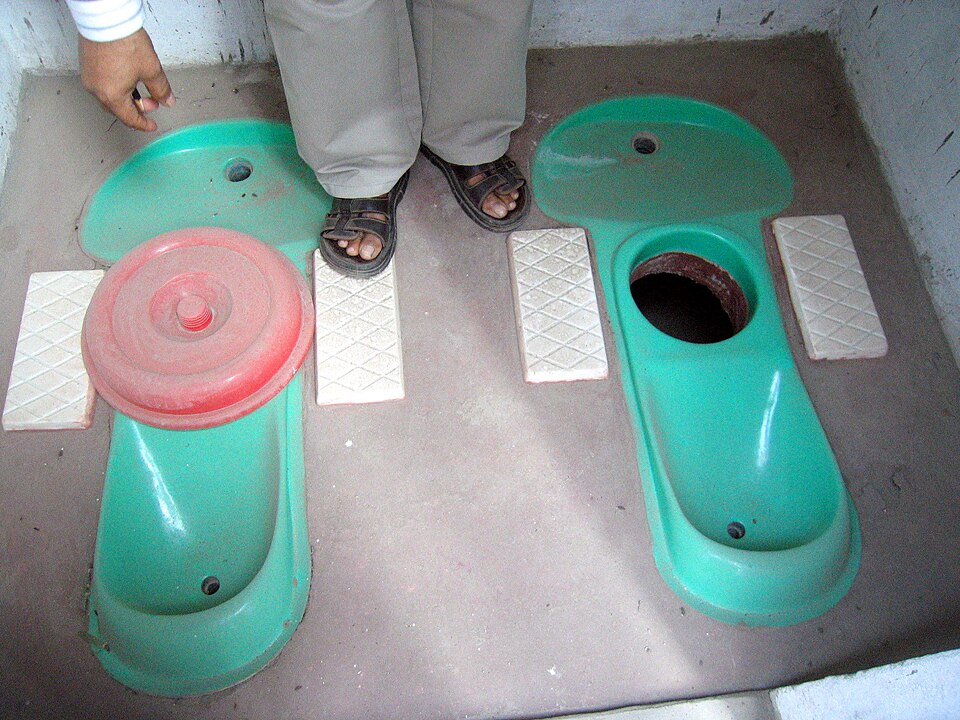
The Sulabh International Museum of Toilets, New Delhi
The Sulabh International Museum of Toilets in New Delhi is, to be clear, a serious museum. It was founded in 1992 by Dr. Bindeshwar Pathak, a social reformer who has dedicated much of his life to improving sanitation access in India, and the museum's collection - spanning 4,500 years of toilet history across multiple civilisations - is genuinely educational. There are commodes from ancient Mesopotamia, ornate Victorian-era chamber pots, and toilet-adjacent technology from medieval Europe. The underlying point, that sanitation is a public health issue that has shaped the trajectory of civilisation, is entirely valid and earnestly made.
All of that said: it is a museum about toilets. The gift shop sells toilet-related memorabilia. There is a throne that reportedly belonged to French King Louis XIII, who is said to have held court while using it, which is the sort of historical detail that Versailles somehow leaves out of the official tour. The museum makes a compelling case that the humble toilet represents one of humanity's greatest public health achievements, which is true and worth knowing, and also not quite what most people expect to be thinking about while visiting New Delhi. It is free to enter and has been described by visitors as 'informative,' 'surprisingly moving,' and 'something I would not have believed existed until I stood in front of it.'
The Museum of Bad Art, Boston
The Museum of Bad Art (universally known as MOBA) was founded in 1993 when a man named Scott Wilson found a painting discarded in a trash pile outside a Boston home and thought: this is too magnificently terrible to throw away. He showed it to friends. They agreed. A collection was born. MOBA now holds several hundred works, all of which have been rejected by, or are unsuitable for, display in any other museum - not because they are offensive, but because they are magnificently, irredeemably, sometimes even heroically bad.
The collection's defining piece, 'Lucy in the Field with Flowers,' depicts a woman with a posture that suggests a skeletal system designed by committee, in a field that appears to be emitting flames, next to a dog with the approximate weight and geometry of a small building. MOBA's curation is meticulous: the wall labels are written with the same scholarly seriousness as any major institution, the difference being that the subjects are paintings so bad they require active protection from disposal. The Dedham, Massachusetts location was famously housed in the basement of a cinema, reachable only through the men's bathroom - an access arrangement so perfect that it could not have been improved upon by design. The institution now has multiple locations across the Boston area. It takes bad art seriously. That is the joke. That is also, somehow, not the joke.
The Museum of Broken Relationships, Zagreb
The Museum of Broken Relationships began in 2006 as a touring exhibition conceived by two Croatian artists, Olinka Vištica and Dražen Grubišić, who were themselves breaking up. Their idea was disarmingly simple: collect objects donated by people from broken relationships - romantic, familial, platonic - together with a short text explaining what the object meant and what happened. No curatorial judgment, no narrative imposed from outside, just the accumulated wreckage of human connection, on display.
The response was overwhelming. The exhibition toured the world before a permanent home opened in Zagreb in 2010. It won the Council of Europe's Museum Prize in 2011. The collection includes an axe donated by a woman who used it to destroy her ex-partner's furniture ('It was better than a psychiatrist,' she noted, factually), a prosthetic leg donated following the end of a long relationship, garden gnomes, a wedding dress, and a toaster. The toaster's accompanying text is four words long: 'He turned cold suddenly.' In 2010, a sister museum opened in Los Angeles, which means that if you find yourself in Zagreb and feel oddly moved by a room full of donated toasters and prosthetic limbs, you are not alone. Millions of people have felt this. It is, without question, the most quietly devastating museum on this list, which is saying something given that the next entry involves a different kind of organ entirely.
The Icelandic Phallological Museum, Reykjavik
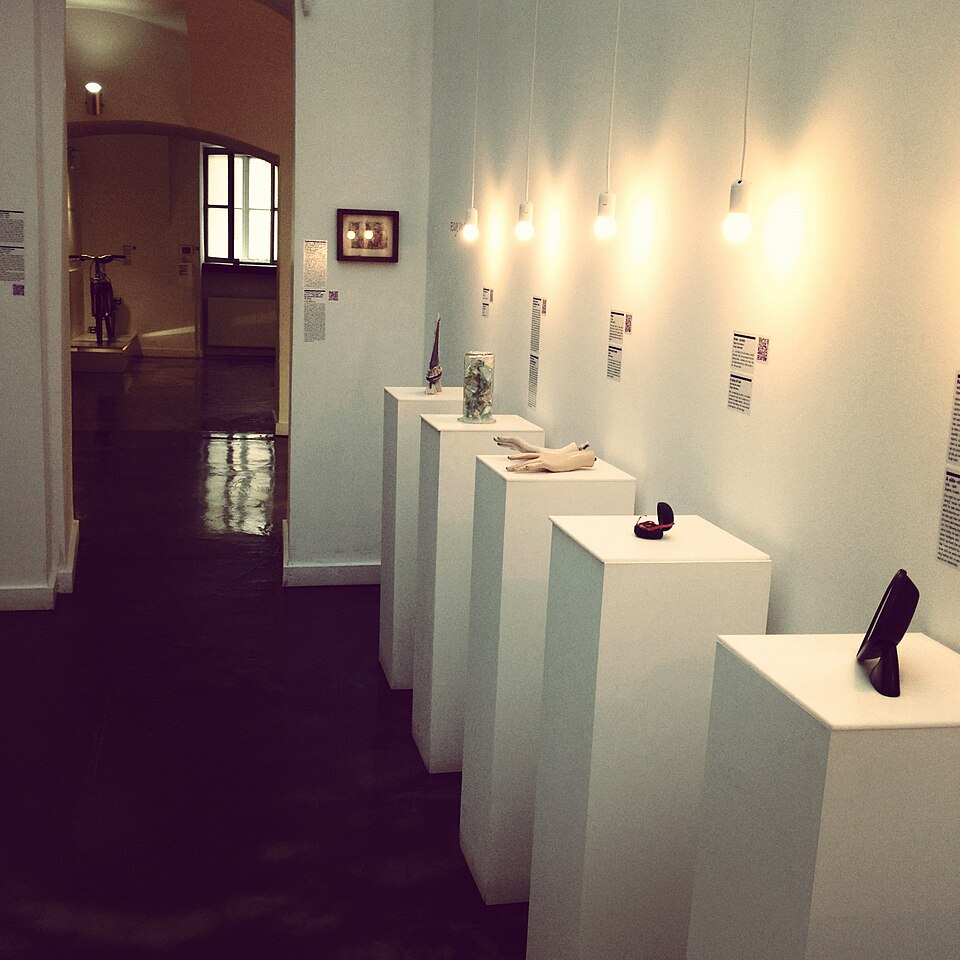
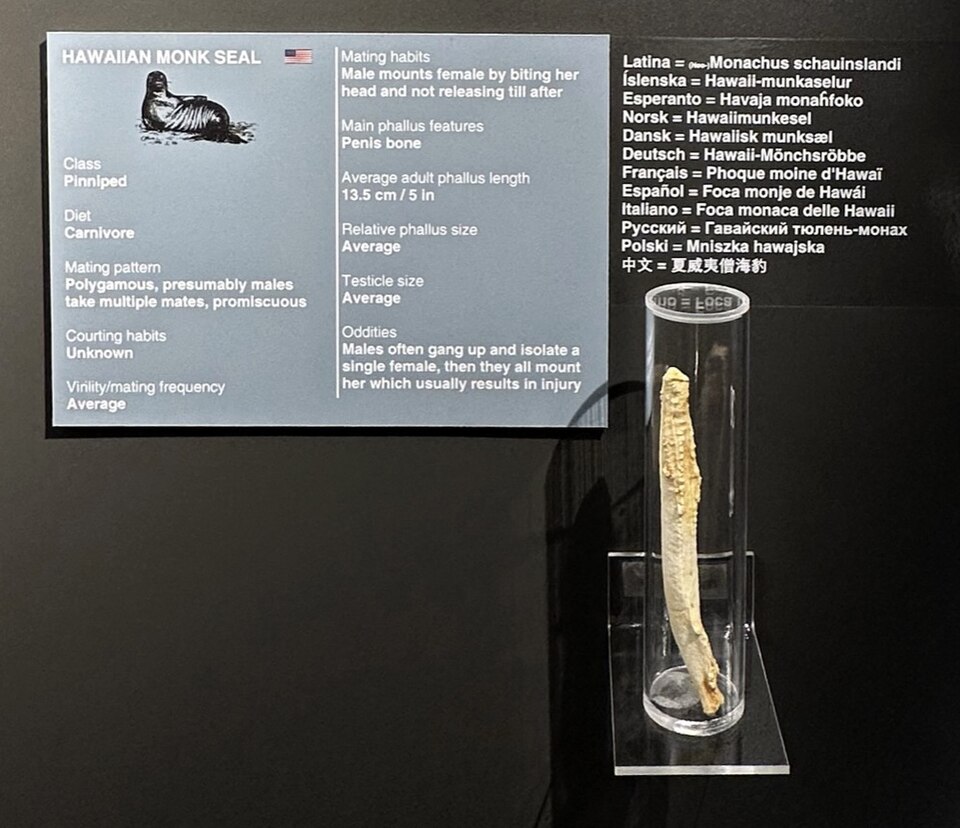
The Icelandic Phallological Museum in Reykjavik contains over 280 specimens representing the penises of 93 different animal species found in and around Iceland. This is a sentence that required no embellishment whatsoever, and was written with the same matter-of-fact tone in which the museum presents itself, because the museum is entirely matter-of-fact about its subject matter and has been since founder Sigurdur Hjartarson opened it in 1997 with a collection of 62 specimens. He started collecting, he has explained in multiple interviews, because a friend gave him a bull's pizzle as a joke in the 1970s, and the joke somehow never quite ended.
The collection includes specimens from sperm whales, walruses, and polar bears, as well as the complete specimen set from all Icelandic land mammals. There is a section dedicated to folklore, containing alleged specimens from trolls and elves (which are presented, correctly, as folklore). The human specimen - long promised, eventually acquired - was donated in 2011 by a 95-year-old Icelander who had specified the bequest in his will, which is the kind of legacy planning decision that most estate lawyers do not encounter. The museum attracts approximately 11,000 visitors annually, from every country in the world, many of whom are researchers. It is accredited as a serious natural history collection. It has won no awards, as far as can be established, but it has been visited by everyone from documentary makers to academic zoologists, which counts for something. Find it in Reykjavik, between a perfectly ordinary bakery and a shoe shop, as if this is normal. In Reykjavik, it essentially is.
The Momofuku Ando Instant Ramen Museum, Osaka
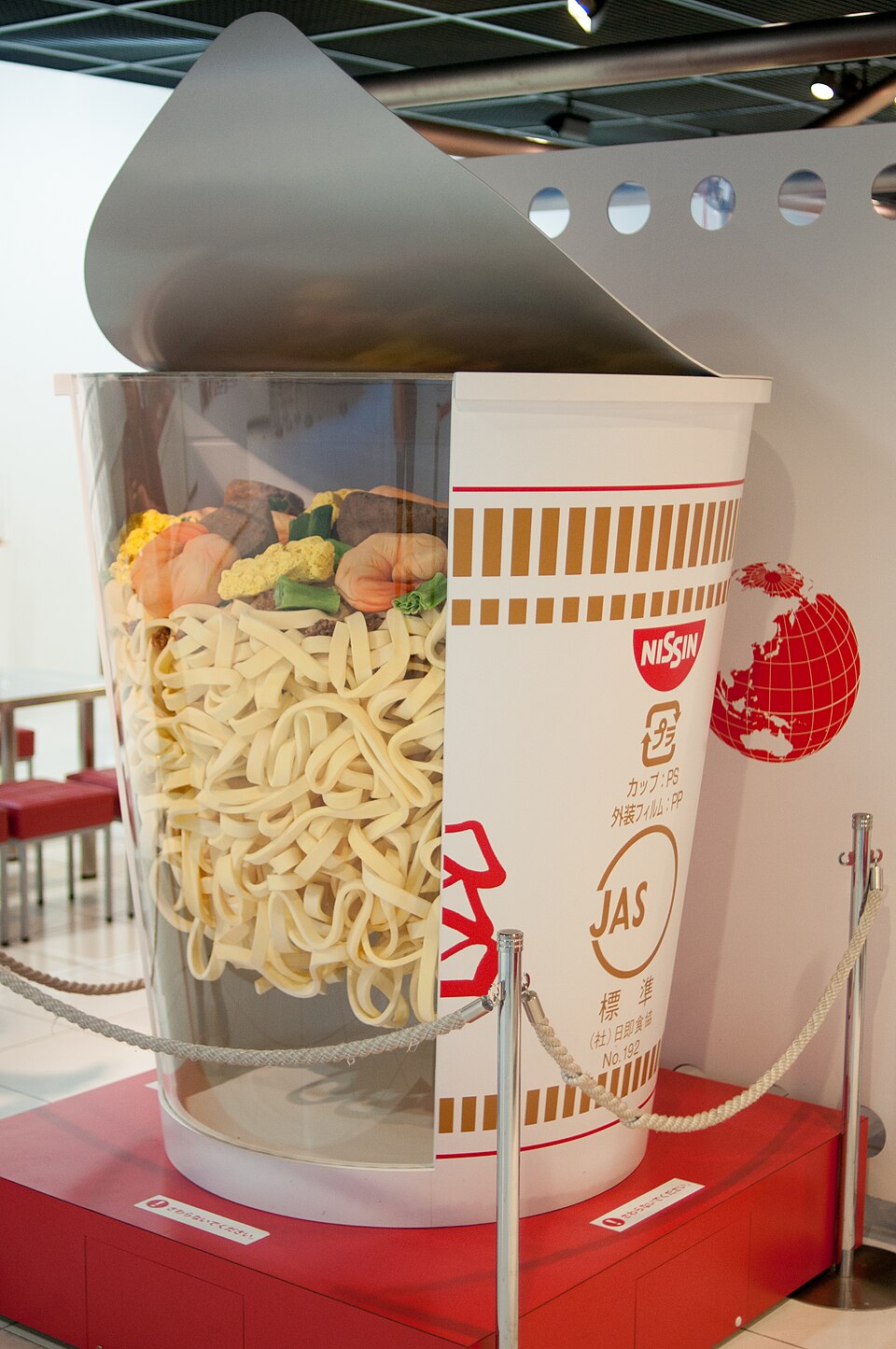
Momofuku Ando invented instant noodles in 1958 in a shed behind his house in Osaka, after months of obsessive experimentation aimed at finding a way to feed large numbers of people quickly and cheaply. He was 48 at the time, having previously spent years in various business ventures of variable success. Instant ramen went on to become one of the best-selling food products in human history, with approximately 100 billion servings consumed annually worldwide. Ando went on to invent Cup Noodles in 1971, at which point his legend was secure. He died in 2007 at the age of 96, having reportedly eaten instant noodles for lunch almost every day of his adult life.
The museum in Osaka - officially called the Momofuku Ando Instant Ramen Museum, though related facilities in Yokohama use the 'Cup Noodles Museum' branding - is a genuinely wonderful institution that takes the cultural and historical significance of instant noodles with complete seriousness, which is entirely appropriate because the cultural and historical significance of instant noodles is genuinely enormous. The museum's interactive highlight is the 'My Cup Noodle Factory,' where visitors design their own cup noodle packaging, select their own soup base and toppings, and have it sealed to take home. There is also a 'Chicken Ramen Factory' where you make the original dried noodle product by hand. Queues are long. The product you take home is, by any objective standard, worth queuing for. Osaka contains many excellent things; few are as unexpectedly moving as a museum about a man who spent a year in a shed perfecting dried noodles and changed what the world eats.
The Museum of Failure, Helsingborg
The Museum of Failure was founded by Swedish psychologist Samuel West, who had a simple and rather elegant idea: failure is instructive, failure is universal, failure is rarely documented, and failure deserves a museum. West began collecting failed products in 2016 and opened the first Museum of Failure in Helsingborg, Sweden, in 2017. The collection has since toured the world, with permanent or long-term installations in Los Angeles and elsewhere.
The collection includes products whose failures are instructive (Google Glass, which arrived before the world was ready for augmented reality and before anyone had thought carefully enough about what a camera built into glasses would mean socially), products whose failures are baffling (Harley-Davidson perfume, which Harley-Davidson launched in 1994 and discontinued after discovering that its customers did not particularly want to smell of Harley-Davidson), and products whose failures are simply very funny (Colgate frozen ready meals, which Colgate launched in 1982 under the apparent misapprehension that consumers who thought of Colgate as a toothpaste brand would enthusiastically eat lasagna branded with it). The museum's thesis - that understanding failure is how organisations and individuals improve - is serious. The objects themselves are frequently hilarious. Samuel West has described the museum as 'a celebration of the courage it takes to try new things and the inevitability of sometimes getting it terribly wrong,' which is the sort of sentence that sounds very reasonable and becomes increasingly funny the longer you contemplate Colgate frozen lasagna.
The MUSA Underwater Museum, Cancun
The Museo Subacuático de Arte (MUSA) off the coast of Cancun is a museum you can only visit by snorkelling or scuba diving, which is either the most brilliant access restriction in the history of art institutions or evidence that the curators did not want to deal with gift shop logistics. The collection consists of over 500 life-size sculptures installed on the ocean floor, created by British artist Jason deCaires Taylor beginning in 2009, at depths ranging from four to nine metres.
The sculptures are designed to encourage coral growth - cast in pH-neutral marine concrete with a textured surface that reef organisms can colonise - and photographs of the collection taken a decade after installation show figures now covered in coral, sea fans, and sponges, transformed by the ocean into something quite different from what Taylor originally placed there. The most famous piece, 'The Silent Evolution,' shows 450 human figures standing in formation, now partially consumed by reef life. It is, depending on your disposition, either deeply beautiful or precisely the kind of thing you do not want to encounter unexpectedly while snorkelling in the Cancun lagoon. There are no surprises in the sense that the museum is a known, mapped attraction; the surprise is more existential in nature, the feeling of turning an underwater corner and discovering a crowd of 450 silent reef-covered humans watching you. They are not haunted, technically. They are just reef. But still.
And there you have it: seven museums, each dedicated to something that had no museum until someone decided it should, and each of which is now better for existing. The lesson, if there is one, is possibly that the world could use more institutions willing to take seriously the things that everyone else has decided are too strange, too small, or too covered in reef to bother with. Also that Harley-Davidson should not have made perfume. That lesson was available without the museum, but it bears repeating.