The Most Bizarre Street Foods You'll Actually Encounter While Traveling
Street food, as a category, has been quietly Instagrammed into a sort of safe global commodity. Pad thai, banh mi, tacos al pastor, takoyaki - well-lit, well-loved, perfectly photogenic, the gateway drug. This article is not about those. This article is about the foods you will actually encounter at a real night market, when the kind man behind the cart hands you something warm and gestures encouragingly, and you have approximately four seconds to decide.
The street food covered below is all genuinely sold by genuinely working vendors in 2026, and is genuinely consumed by locals as a normal part of their week. Some of it is stunningly delicious. Some of it tastes like a thing you would not previously have believed could exist as food. Most of it costs less than a coffee at the airport. All of it is real.
If you are a vegetarian, the next 2,400 words are going to be a difficult time. If you are not, you may want to know what you're getting into before someone pulls a tarantula out of a wok and asks you for fifty cents.
Balut, Philippines
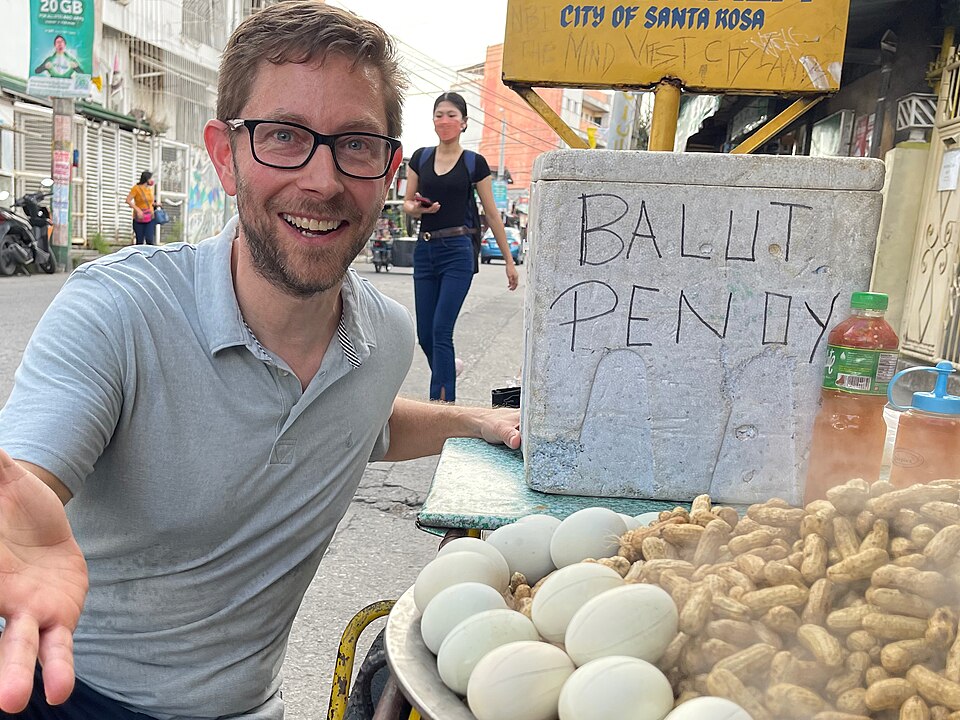
A balut is a fertilised duck egg, incubated for between fourteen and twenty-one days, then boiled and sold warm by street vendors who carry them in insulated baskets and announce themselves with a long, evening-time cry of "baluuuut". Inside the shell, depending on how mature the embryo is at the moment of boiling, you will find some combination of yolk, broth, partially-formed feathers, beak, and the unmistakable curled outline of a small duck. This is sold for the equivalent of about USD 0.40 from approximately every street corner in Manila after dark.
The eating procedure is precise. You crack open the top of the shell, sip the broth (which is genuinely good, like duck consommé, and is the part you are allowed to enthusiastically enjoy without commentary), peel away the rest of the shell, sprinkle salt or chilli vinegar, and eat what's inside. The standard advice for first-timers is to do it in one bite, in low light, and to chase it with the local beer San Miguel. The standard outcome for first-timers is that they don't.
Filipinos eat balut as a casual after-work protein snack, the way a Brit might eat a packet of crisps with their pint. It is reputed to be an aphrodisiac, which is a claim made about most foods that look upsetting and is almost certainly the result of placebo plus the kind of confidence that comes from having just eaten an embryo. The flavour, once you get past the visual, is rich, savoury, and reportedly genuinely good. We will take their word for it.
Sannakji, South Korea
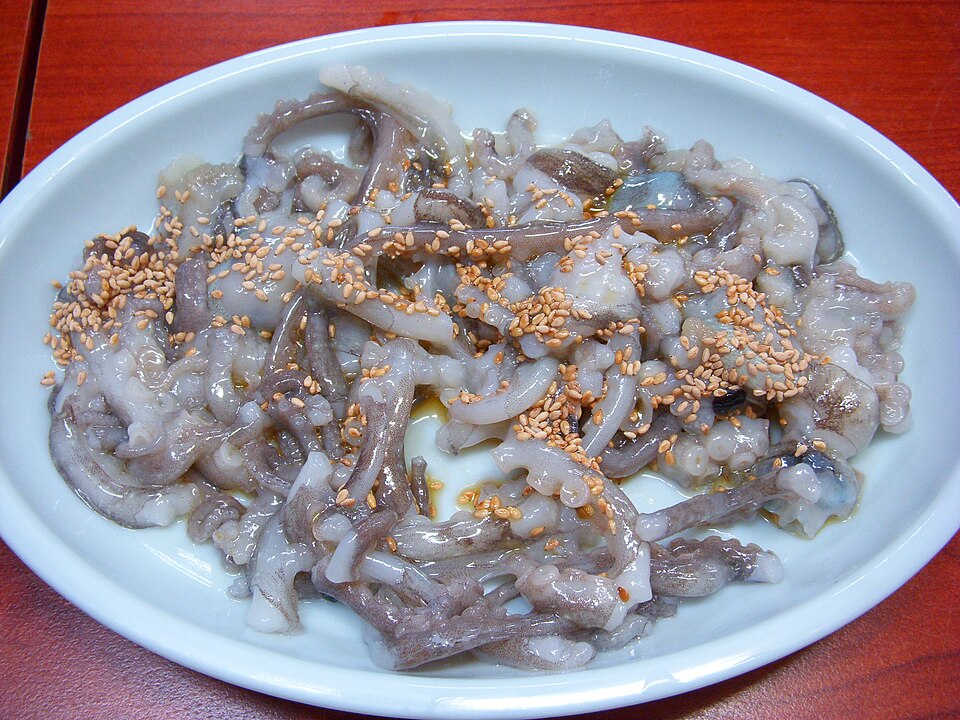
Sannakji is a Seoul speciality consisting of a small octopus that has been killed approximately thirty seconds before service, sliced into bite-sized pieces, dressed lightly in sesame oil and seeds, and served while the pieces are still actively wriggling on the plate. The neuromuscular activity in octopus tentacles can persist for up to several minutes after death because cephalopod nervous systems are largely distributed through the limbs rather than centralised in the brain. This is a fascinating biological fact and an extremely confronting dining experience.
The serious risk - and we are not being dramatic here - is that the suction cups remain functional. Each year, somewhere between three and six people in South Korea die from sannakji-related asphyxiation when the suckers grip the inside of the throat on the way down. The standard professional advice is to chew very thoroughly, never gulp, and decline if you have been drinking. The standard tourist advice is to order it at a real restaurant rather than a street stall, where the sliced pieces are smaller, the sesame oil is more generous, and someone competent is paying attention.
The flavour is, depending on who you ask, either subtle and clean (octopus is a fine ingredient) or entirely overwhelmed by the texture (because the texture is, again, that of a thing actively trying to climb back out of your mouth). It costs around 15,000 to 30,000 won at a market or restaurant in Seoul - call it USD 11 to 22. As a meal it is a study in trust between you and the rest of evolution.
Fried Tarantulas, Cambodia
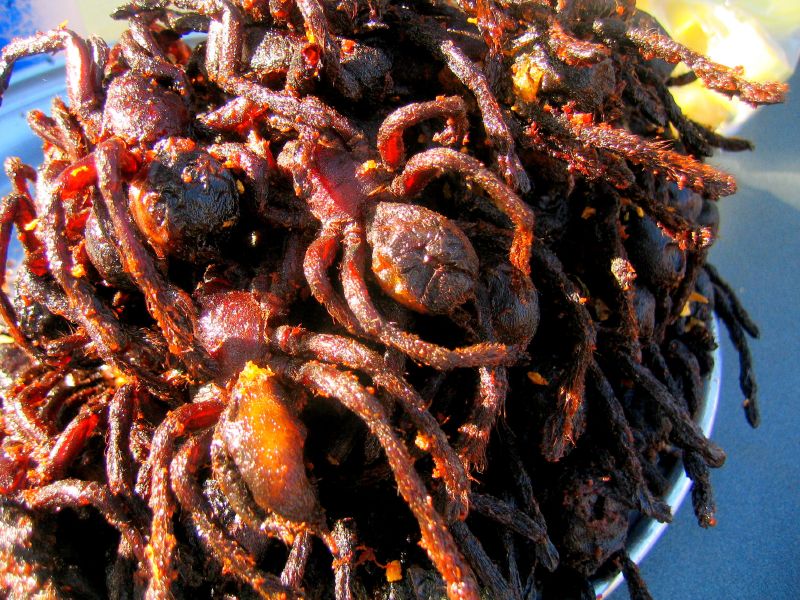
The town of Skuon, ninety minutes outside Phnom Penh, is internationally known as the place where you can buy a deep-fried tarantula from a roadside stall for around USD 0.80, hold it by a leg, and bite into the abdomen as if it were a particularly hairy crisp. The species in question is Haplopelma albostriatum, the Thai zebra tarantula, which is large, palm-sized, and surprisingly meaty in a way that should perhaps not be surprising given that everything is meaty in proportion to its bulk. Skuon's vendors sell them by the basket from racks behind the bus stops.
The preparation is straightforward: the spider is tossed in MSG, salt, sugar, and crushed garlic, then dropped into hot oil for about thirty seconds and removed crisp. The legs are reportedly the best part - crunchy, like prawn shells - while the abdomen is a soft brown paste of organs, eggs (if female), and silk gland that is either luxurious or grim depending on which travel show you watched first. Andrew Zimmern said it tasted like crab. Anthony Bourdain said it was "horrible". Both reactions are defensible.
The trade reportedly emerged during the Khmer Rouge famine years, when starving populations ate whatever was high in protein and easy to catch. It survived because the fried version turned out to be genuinely good, and is now eaten as a casual snack in the way one might eat fried calamari. We've covered Cambodia's grimmer tourist sites in our dark tourism guide; this is not one of them. This is just a snack with a great many legs.
Escamoles, Mexico
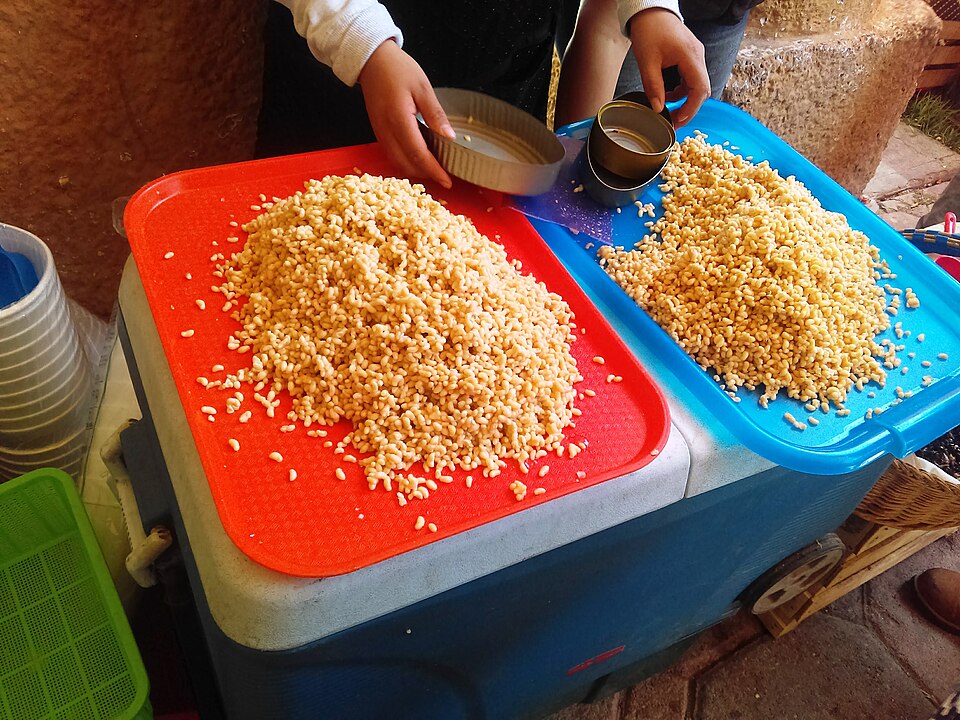
Escamoles are the larvae and pupae of the Mexican Liometopum apiculatum ant, harvested by hand from the roots of agave plants in the central highlands and sold at street stalls and restaurants throughout Mexico City. Marketing-wise, they are sometimes called "insect caviar", which is a phrase doing a great deal of heavy lifting. They have been eaten in central Mexico since well before the Spanish arrived, are seasonal (typically February to May), and at a good restaurant they are not cheap - a small portion can run USD 25 or more.
The traditional preparation is sautéed in butter with onion and chilli, then spooned into a warm corn tortilla with guacamole. The flavour is genuinely unusual - delicate, nutty, slightly sweet, slightly cottage-cheese-like, with a soft pop in the mouth that is mercifully gentle. The texture issue is much smaller than the description suggests, and reasonable people who would never consider eating a tarantula will eat escamoles without comment. They are the kind of insect food that is gently introduced to nervous foreigners as a starter dish, in the hope that the rest of the night menu (chapulines, jumiles, the occasional gusano) goes down more easily.
The harvest is hard physical work. The ants defend their nest aggressively, and the sting is worse than a typical fire ant. Escamoles are expensive partly because the workers who collect them have a genuinely difficult job, and partly because the colonies cannot be mass-farmed at scale - it remains, mostly, an artisanal seasonal product. A respectable mid-tier fonda in Mexico City will let you try them for around USD 12, in a quesadilla, with no fanfare.
Cuy, Peru
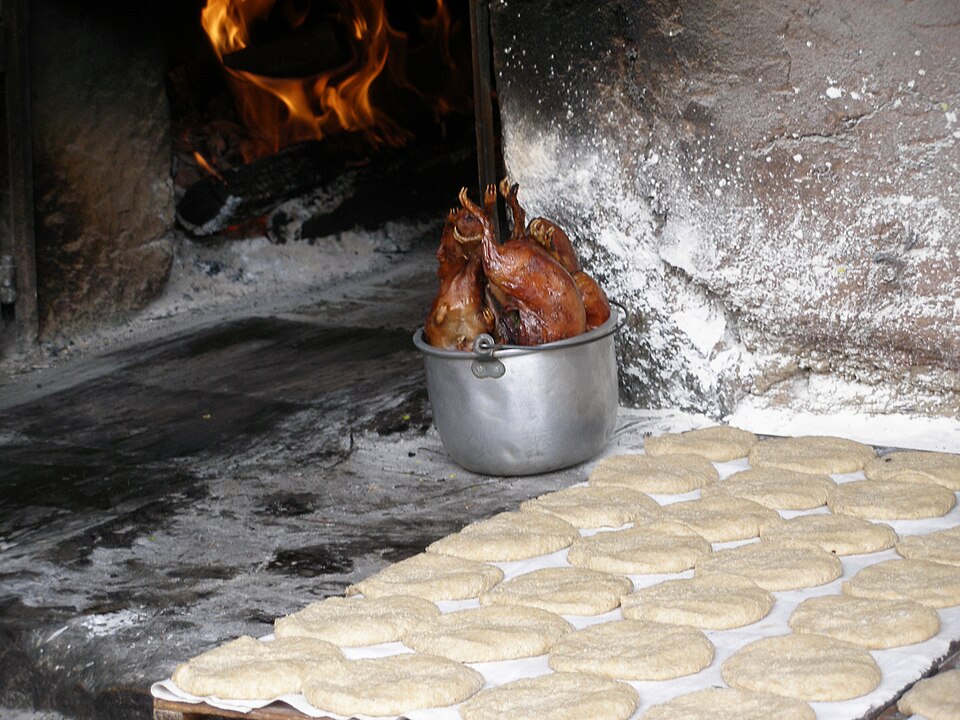
Cuy is a guinea pig, roasted whole, head and feet still attached, served on a plate looking up at you reproachfully. It has been the standard celebration meat of the Andean highlands since around 5,000 BCE, predating the Inca by several thousand years, and is consumed across Cusco, the Sacred Valley, and most of rural Peru at any meaningful family event. There is genuinely no Peruvian rural festival that does not involve cuy. The animal is raised in family kitchens, fed alfalfa and kitchen scraps, slaughtered, gutted, marinated, and either roasted (cuy al horno), spit-roasted (cuy al palo), or deep-fried (cuy chactado, pressed flat under a stone).
The problem - and we have to say this - is that guinea pigs have names. They have names because in your country they are pets. The Andean response to this is to point out, accurately, that the cow whose burger you had on Tuesday also had a name, and that selectively assigning personhood to one species and not another is a luxury of distance and refrigeration. There is no rebuttal to this. Order the cuy.
The flavour is gamy and rich, somewhere between rabbit and dark-meat chicken, and the skin is crackling-crisp in the deep-fried preparation. It costs about 30 to 50 soles in a Cusco market - USD 8 to 14 - which is a lot for a Cusco street meal but a meaningful bargain at a sit-down restaurant. The reason the head is left on, in case you were wondering, is that the cheek meat is the best part. You pick it off with your fingers. The waiter will not flinch. They have served thousands of these.
Snake Heart and Snake Wine, Vietnam
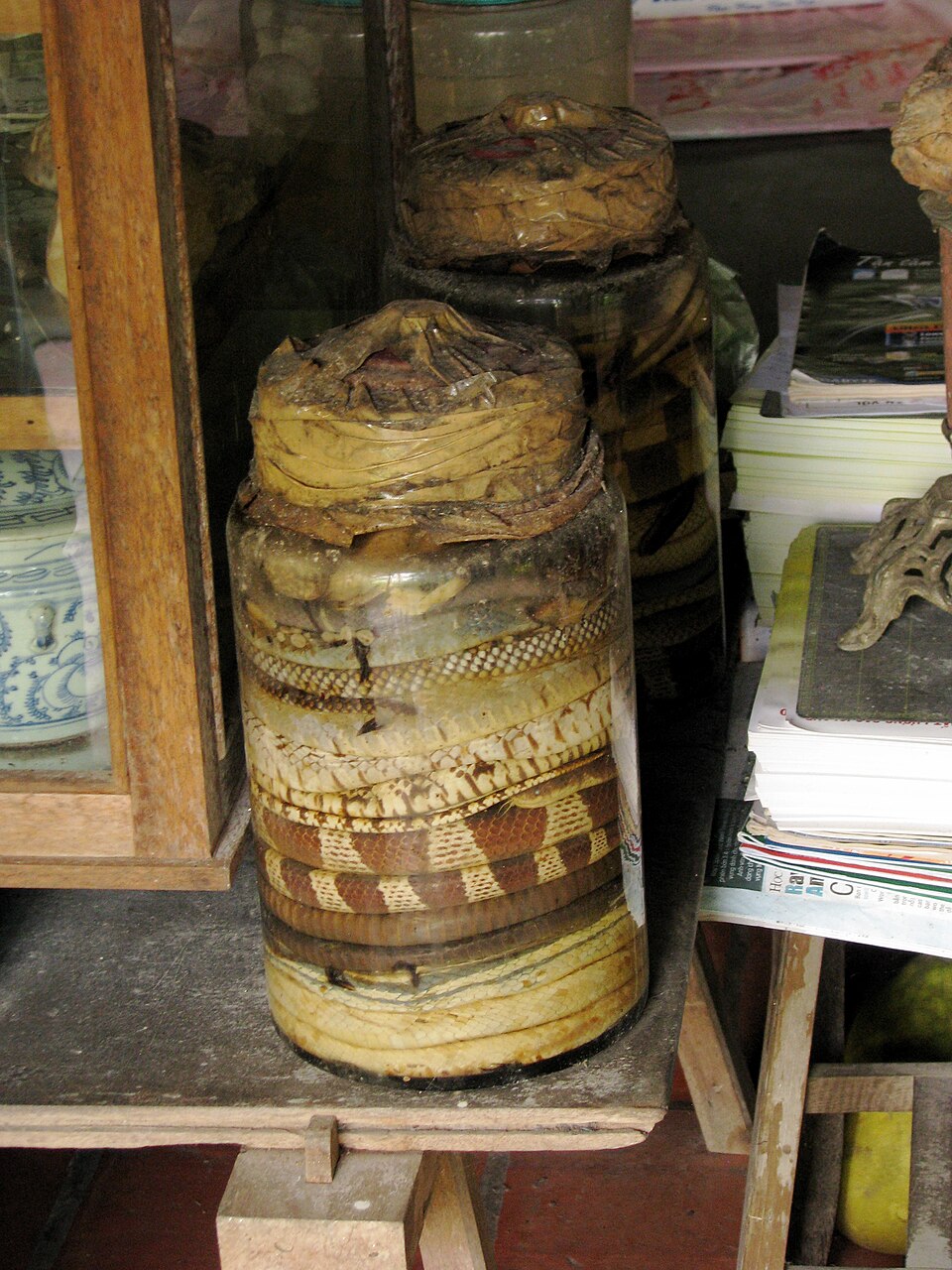
The village of Le Mat, on the outskirts of Hanoi, is the snake-eating capital of Vietnam, and has been for several centuries. The full performance, sometimes available to tourists who know to ask, involves a live cobra being killed at the table, the still-beating heart removed and dropped into a shot glass of rice wine, and the diner expected to swallow it in one before the muscle stops contracting. The blood and bile are also added to additional shots and consumed in sequence. The remaining snake is then prepared into a multi-course meal: spring rolls, soup, fried skin, grilled flesh, and so on through to about the seventh course.
This is genuinely controversial within Vietnam itself, both on animal-welfare grounds and on cobra-conservation grounds, and the practice is more limited than it was two decades ago - the species commonly used now are farmed king cobras and rat snakes, not the protected wild populations of the 1990s. Tourist-facing operations exist in Le Mat and around Ho Chi Minh City; serious local snake meals are quieter, smaller, and arranged through specific village restaurants. Expect to pay around USD 50 to 100 per person for the full ceremony, which is a great deal of money in Vietnamese terms and is roughly the price of importing one Australian to perform a viral TikTok.
The taste, by all accounts, is the least notable thing about the meal. The heart itself is muscular, slightly sweet, and small. The wine is bitter and herbal. The performance is the entire product. We've covered the broader category in our illegal and controversial foods article; this one is technically legal but increasingly side-eyed even by the locals, which is a useful piece of context to take with you if you find yourself being upsold the cobra menu in a market in Hanoi.
Century Eggs, China and Taiwan
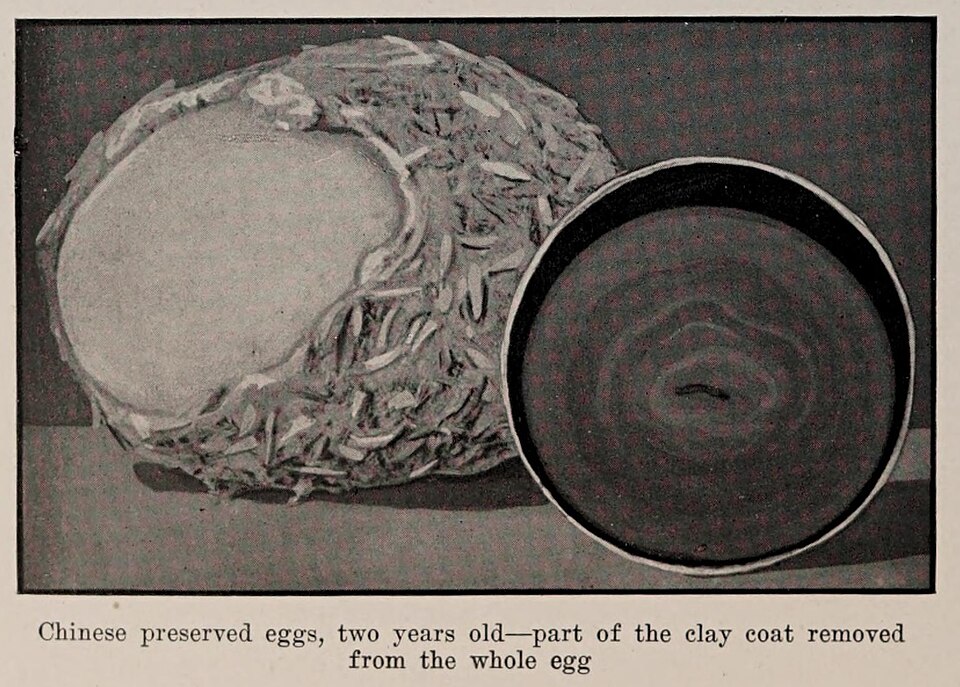
The century egg, also known as pidan, is a duck or chicken egg that has been preserved in a clay-and-ash mixture for several weeks (not, contrary to the name, a hundred years - the most aggressive versions get to about a hundred days). The chemical reaction with the alkaline coating turns the white into a translucent dark brown jelly and the yolk into a soft, dark green, slightly grey-blue centre with the consistency of slightly damp plasticine. The smell is distinctly sulphurous, in the way of an old hot spring, and the taste is salty and ammonia-rich.
This sounds, in writing, terrible. In practice it is a beloved breakfast staple eaten across China and at the night markets of Taipei, where it is most commonly served sliced over silken tofu with a soy and sesame dressing, or chopped through congee. The flavour, once your nose has accepted what is happening, is rich and savoury and oddly creamy. It costs roughly NT$30 (USD 1) per egg at a market vendor, and is one of the easier transitions on this list - the texture is the only real obstacle, and it is genuinely good with rice.
The reputational rehabilitation of the century egg is one of the small quiet victories of food writing in the last fifteen years. CNN once ran a poll declaring it the world's most disgusting food, which prompted the Chinese embassy in the UK to file a formal complaint. Anthony Bourdain ate it on television. It is now sold in more or less every Chinatown grocery in the world. It is, perhaps, the most accessible thing on this list. Try it before the snake heart. Definitely before the spider.
What we recommend, in descending order of bravery required
If you have read this far and are now wondering where to actually start, here is the rough on-ramp: century egg first (it is genuinely good and the obstacle is purely psychological), then escamoles (they taste better than they should), then cuy (it is good meat with a confronting presentation), then balut (drink the broth, brace, eat the rest), then fried tarantula (commit to the legs, decline the abdomen, no one will judge you), then sannakji (chew, chew, chew), and finally - if you are sure - the snake heart (which we recommend skipping; the conservation question alone is reason enough). For a calmer introduction to night-market eating, our Bangkok street food guide covers the same skill set with no animals dying at the table.
Most of these will end up being delicious in a way you did not expect. One or two will be exactly what they look like. All of them will give you a story. That, in the end, is what street food is for. Don't tell your mother.
Disclaimer: As a brand, Tripbase are accepting of all global cultures. The dishes covered above are normal, legal, and locally beloved foods in the regions where they are eaten. The humour is at the expense of the squeamish Western traveller, not the cuisines or the people who cook them. Try the food. Tip the cook.