Dark Tourism: The Disturbing Places People Pay Good Money to Visit
There is a particular kind of holiday in which you fly somewhere expensive, queue politely, pay an entry fee, and then spend the next two hours looking at the place where a lot of people died horribly. This is called dark tourism, and the world has been doing it on purpose for at least the last twenty years.
The numbers are not subtle. Auschwitz-Birkenau pulled in 1.67 million visitors in 2024. The Paris Catacombs, which are essentially a refrigerated bone library beneath the 14th arrondissement, sell out of timed entry slots months in advance. Pompeii, where the dead are still visibly dead in plaster, hosts roughly four million people a year and has done since approximately Caesar Augustus. None of this is fringe behaviour. None of it is what your grandmother would have done with a hard-won week of annual leave.
And yet here we all are, packing sunscreen for the gas chambers. The internal logic varies - history, education, rubbernecking, that uncomfortable thing where you want to feel something real after a year of spreadsheets - and the destinations themselves vary from "genuinely solemn UNESCO site" to "narco-tourism shop selling Pablo Escobar refrigerator magnets". What follows is a survey of the best-known ones, which is a phrase that requires a certain amount of contextual flexibility.
Chernobyl and Pripyat, Ukraine
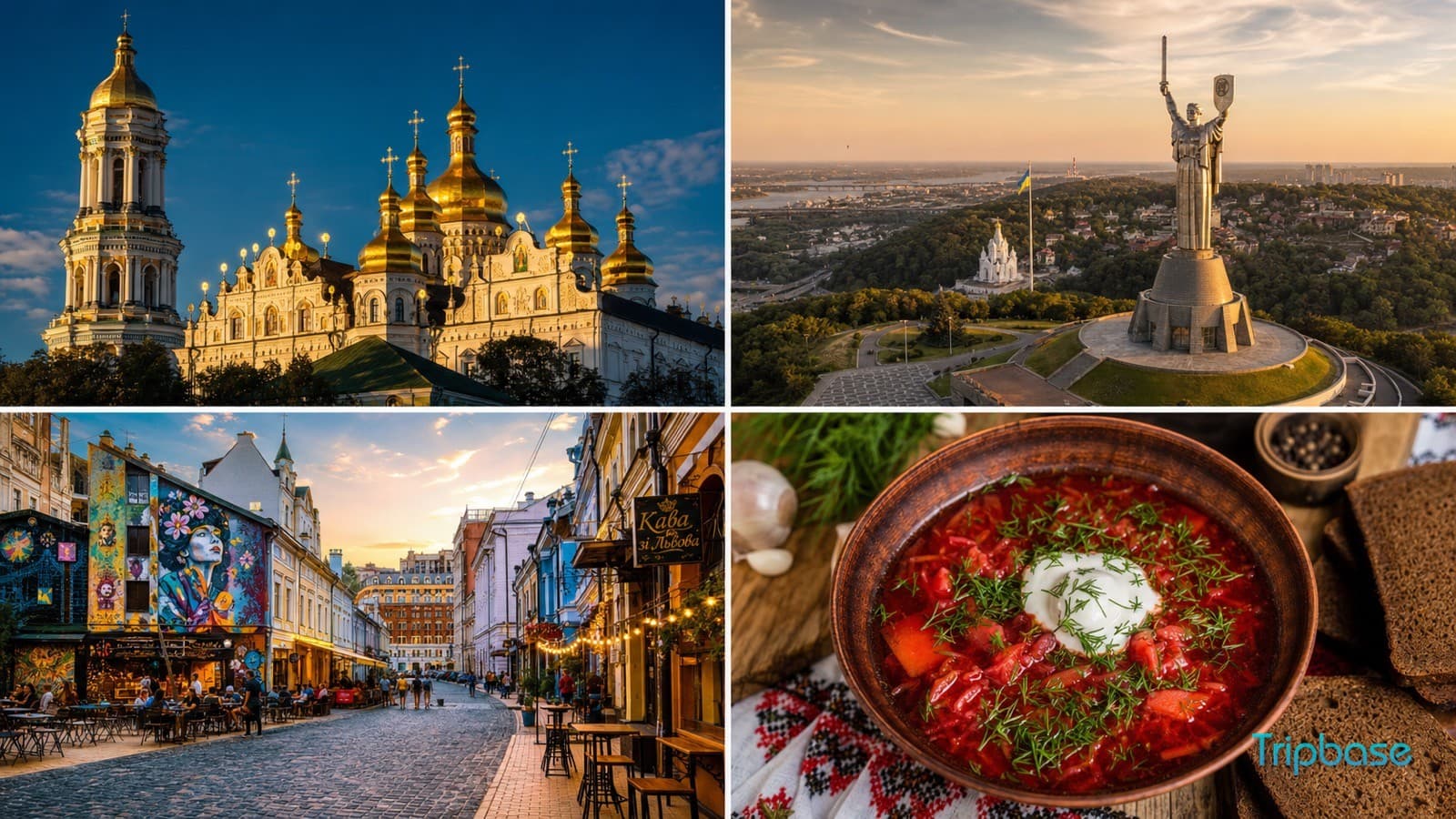
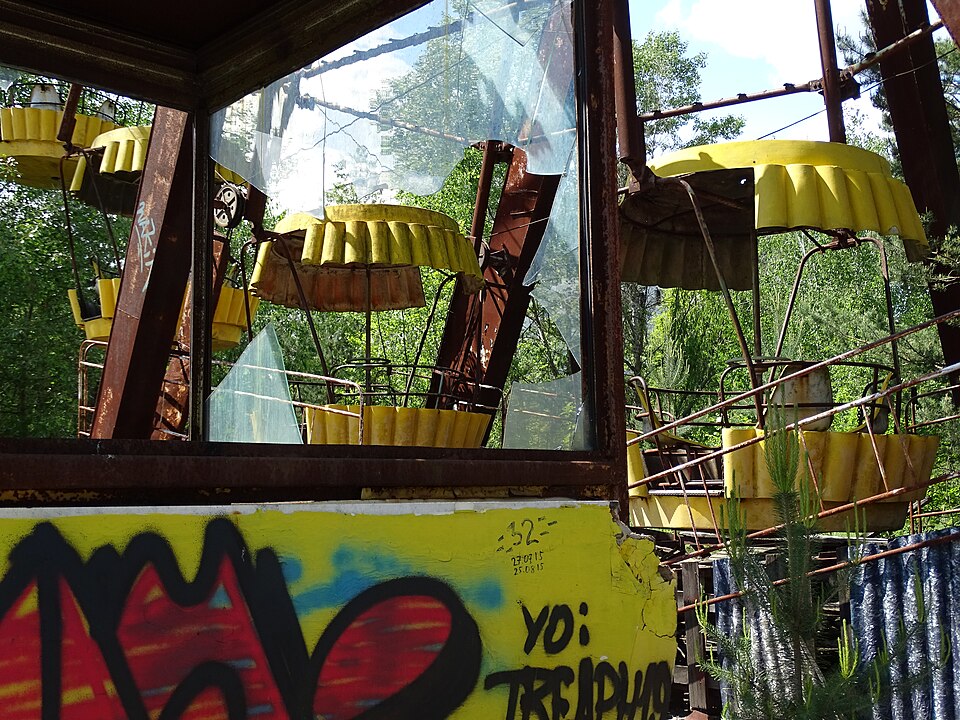
For roughly two decades after the 1986 reactor meltdown, the Chernobyl Exclusion Zone was the spiritual home of the kind of traveller who packed a Geiger counter for a long weekend. You could book a regulated day tour out of Kyiv, sign a waiver acknowledging you understood that radiation was, in fact, a thing, and walk through the abandoned city of Pripyat past the famous unused Ferris wheel - installed for May Day 1986, four days after the disaster, and never officially opened (the Soviet planning committee really committed to the bit).
HBO's Chernobyl in 2019 quintupled visitor numbers almost overnight. Tour operators added more buses. Influencers posed glamorously near the abandoned hospital basement, which still contains genuinely radioactive firefighters' uniforms and is therefore, perhaps, not the venue. Then in February 2022 the zone became an active military front and the tourism stopped, abruptly and for the obvious reason. Kyiv tours have not resumed at any meaningful scale, and serious dark-tourism people now treat this one as paused rather than cancelled.
The Ferris wheel is still there. The dosimeters still tick. The Pripyat school chairs are still arranged where the children left them in 1986. Whether you find that profound or grim is largely a question of whether you have ever sincerely used the word "vibes".
Auschwitz-Birkenau, Poland
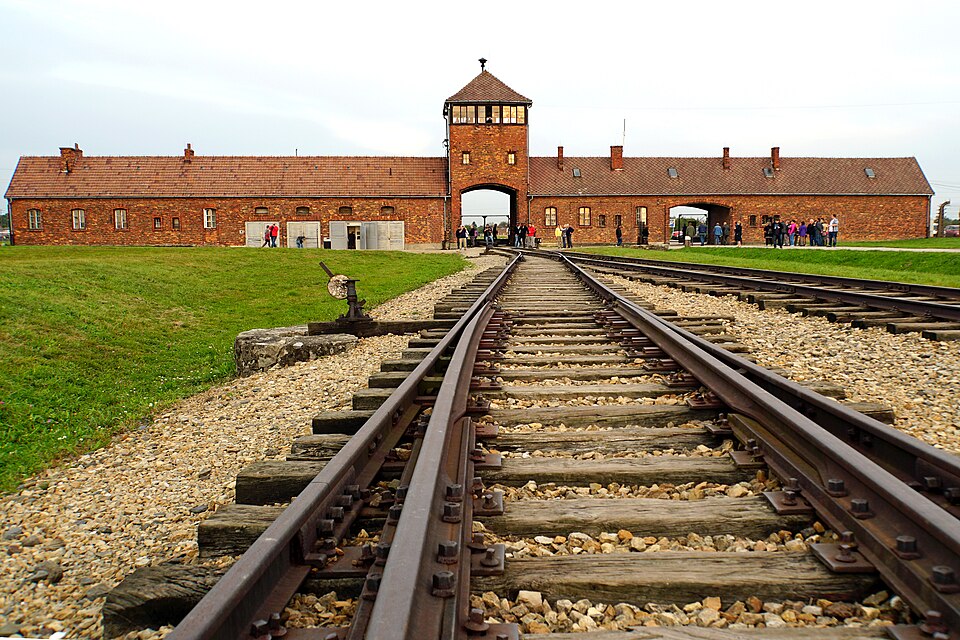
The most-visited dark tourism site on Earth, and easily the most morally complicated one, is the Auschwitz-Birkenau State Museum near Oświęcim, an hour west of Kraków. 1.67 million visitors passed through in 2024, almost all of them on the free three-and-a-half-hour guided tour that the museum runs in around twenty languages. Tickets must be booked online weeks in advance during the high season, which is one of the strangest sentences anyone has ever had to type.
The museum has, over the years, become quietly remarkable at managing the impossible problem of running a memorial site as a logistical operation. Photography is permitted in most areas but not in the Block 11 cells or the hair display. Children under 14 are discouraged. The guides take their work with a seriousness that the average traveller, dressed for a sunny weekend in southern Poland, is sometimes not prepared for. There are signs at the entrance reminding visitors not to pose for selfies. There were, until recently, signs reminding visitors not to balance on the railway tracks. The signs continue to be necessary.
What you do with the experience afterwards is up to you. Most people are very quiet on the bus back to Kraków. A non-trivial minority are not, which is its own answer to the question of why this kind of tourism exists.
The Killing Fields, Cambodia
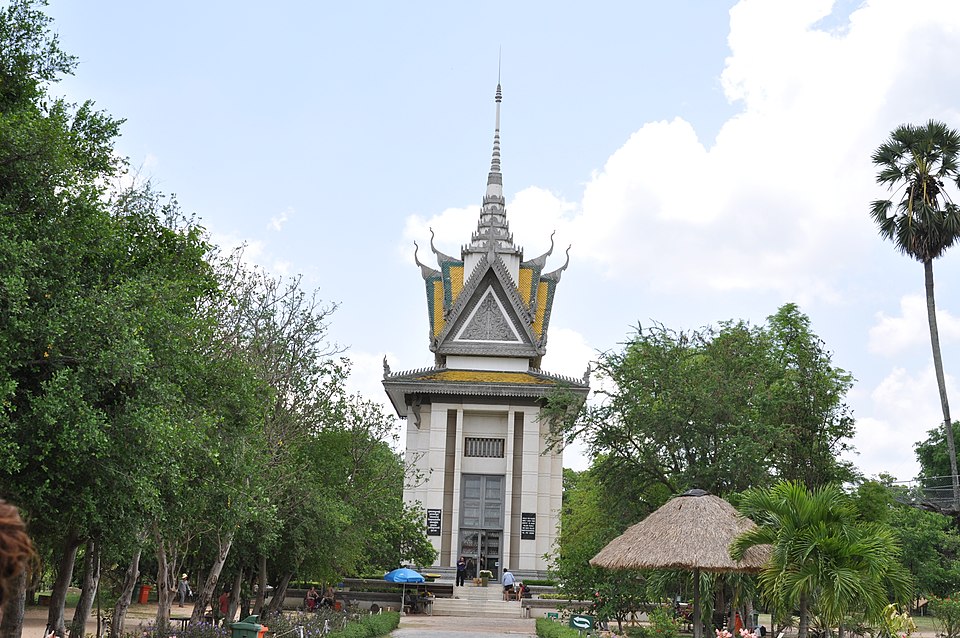
Choeung Ek, fifteen kilometres south of Phnom Penh, is the most-visited of the Killing Fields, the mass execution sites used by the Khmer Rouge regime between 1975 and 1979. Around 17,000 people were murdered at this single location, almost all of them transferred from the Tuol Sleng (S-21) interrogation centre in the city. The standard tourist circuit pairs the two sites in one half-day, in that exact order, because there is essentially no way to do them in the opposite order without ruining lunch.
The centrepiece at Choeung Ek is a Buddhist memorial stupa containing more than 5,000 human skulls, sorted by age and sex, visible behind glass. Visitors walk a circular path past the excavated mass graves and the famous and unbearable Killing Tree, against which infants were beaten to death. Each station has an audio guide segment. The audio guide is unflinching. The Cambodian state's position, broadly, is that the world having looked away once is sufficient grounds for not looking away again.
The visitors are mostly young European backpackers in their twenties, which is jarring until you remember that the only people remembering this on their own are the people who lived through it, and many of them are no longer alive to do so. Entry is around USD 6. The audio guide is included. Wear something with sleeves.
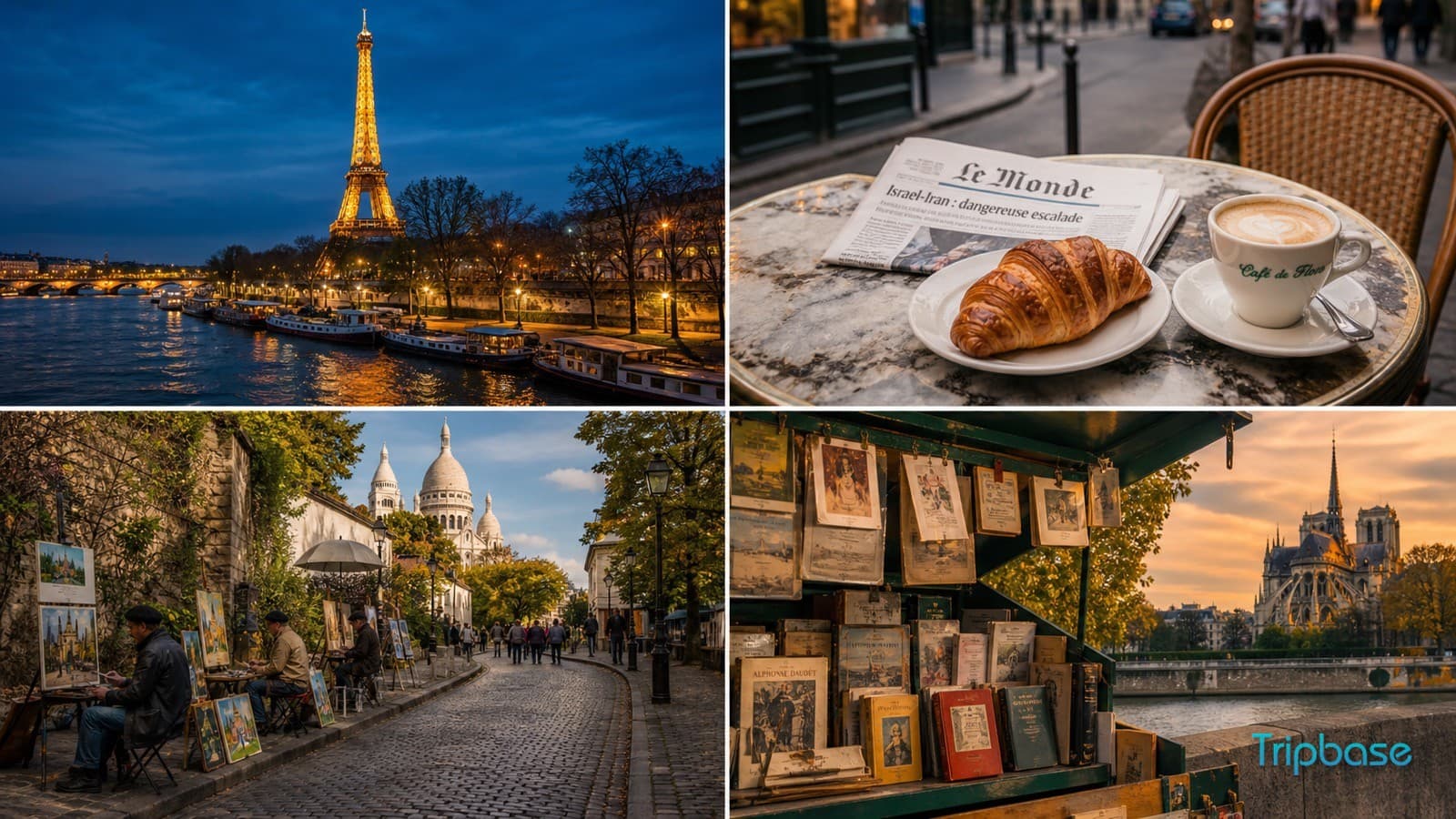
The Catacombs of Paris
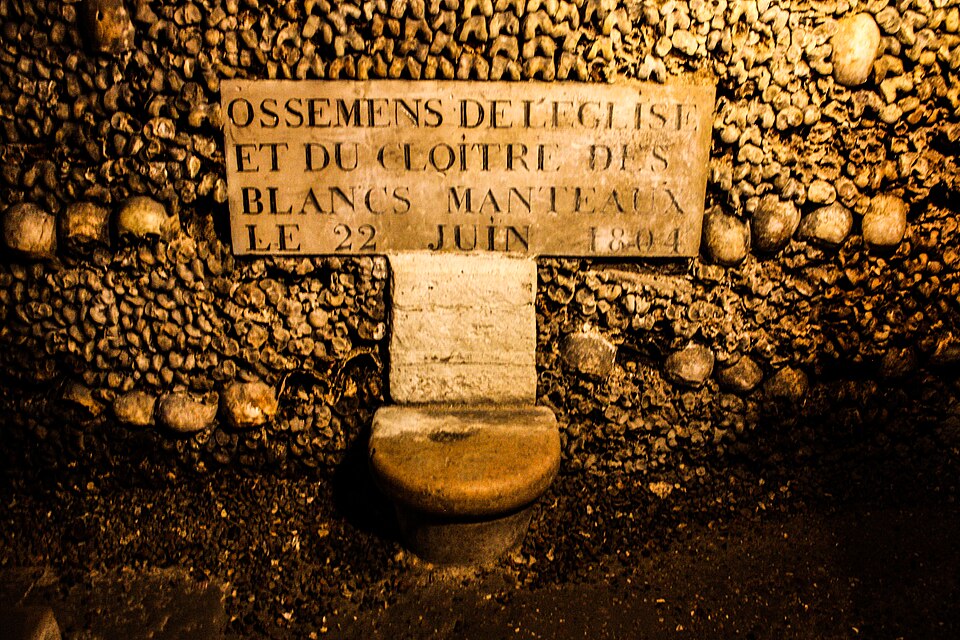
In the late 1700s, Paris had a problem common to all major medieval cities, which is that its cemeteries were overflowing into the basements of nearby restaurants. The municipal solution, between 1786 and 1814, was to dig up roughly six million bodies and stack them in the disused limestone quarries beneath the southern part of the city. The bones were not laid to rest so much as filed - femurs walled neatly into rows, with skulls inserted in patterned bands to break up the visual monotony.
This is, as a matter of historical record, the largest single ossuary on Earth. It is also a paid public attraction with a gift shop. You enter at Place Denfert-Rochereau, descend 130 stone steps, and walk approximately 1.5 kilometres past the vertical bone walls before climbing back out at a side street several blocks away, slightly disoriented and clutching a souvenir bag. Timed-entry tickets sell out months ahead. The official tour covers about 0.4 percent of the catacomb network; the remaining 200-plus kilometres are illegal to enter and are explored by the unofficially organised cataphiles, who throw underground parties past the bones, get periodically arrested, and treat the whole thing as a sort of subterranean members' club.
The temperature underground is a constant 14°C regardless of the season. Bring a jumper. The bones are real. There is, somewhere down a tunnel you cannot legally go down, a fully equipped underground cinema discovered by police in 2004, which had been running there for an unknown number of years. The operators were never identified.
Pompeii, Italy
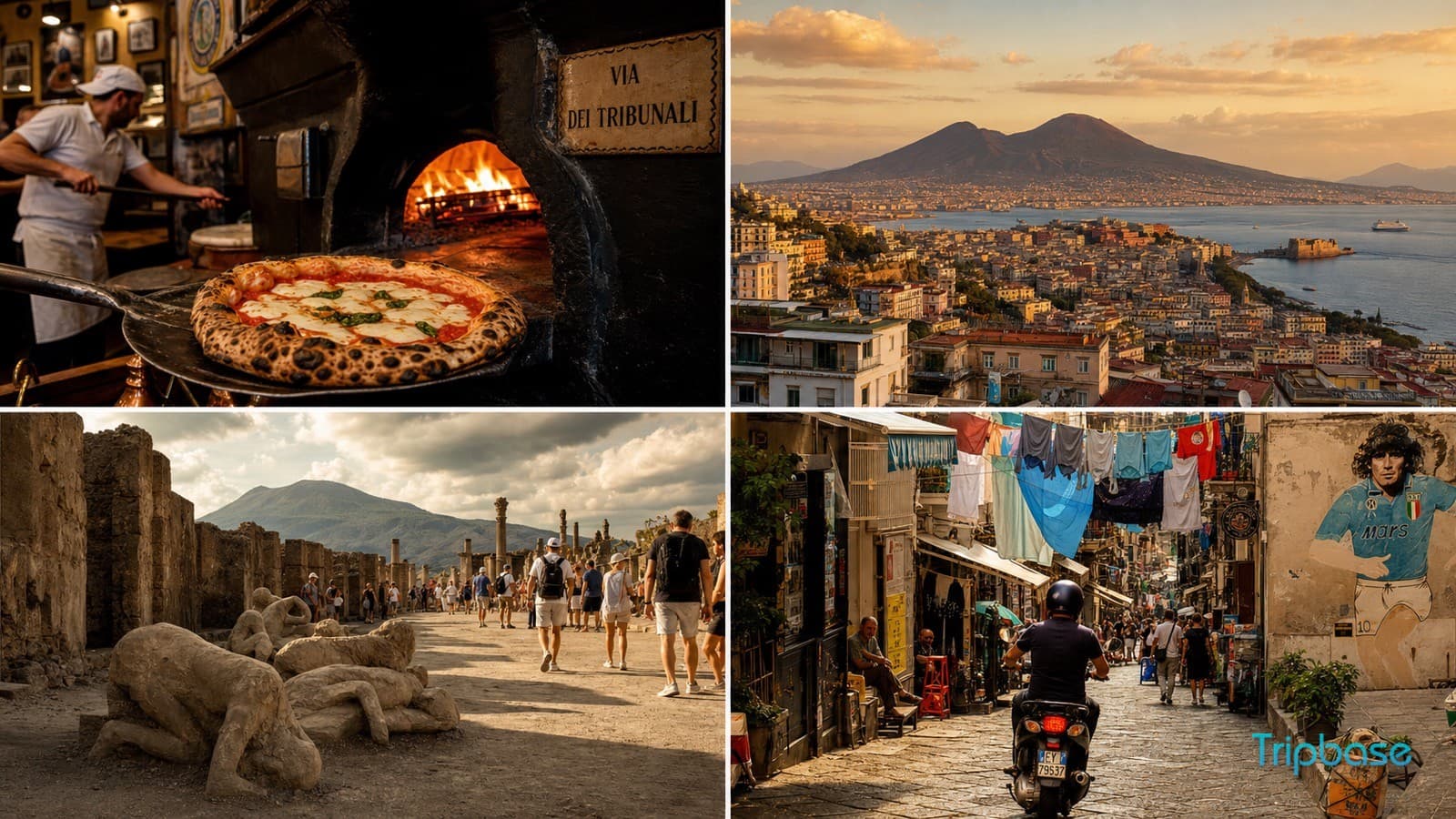
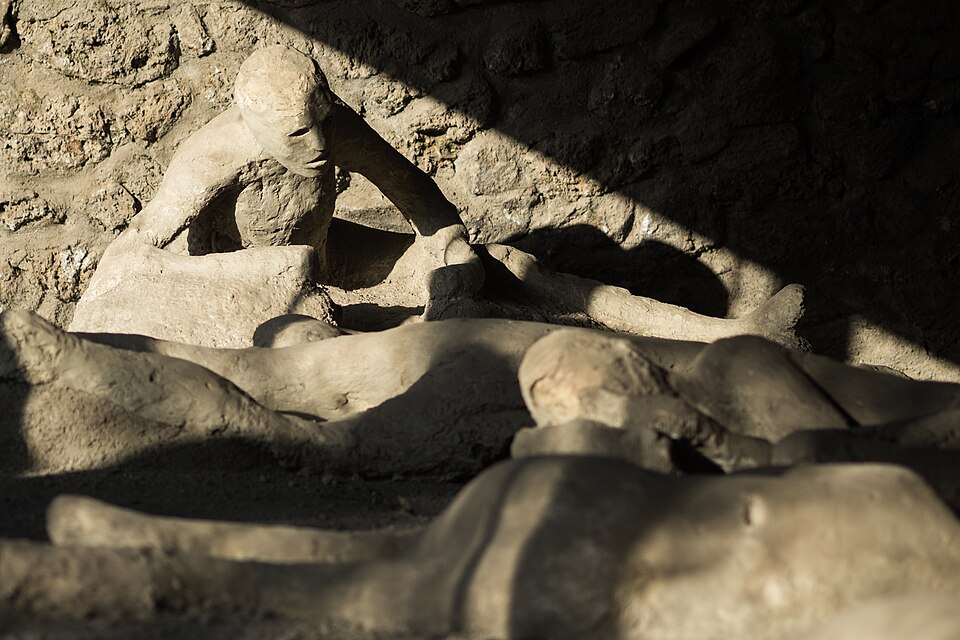
Pompeii is unique among dark tourism sites in that its dead are still visibly arranged in the postures of their dying, and have been for around 1,945 years. When Vesuvius erupted in 79 CE, the pyroclastic flow buried the city in volcanic ash that hardened around the bodies, which then decomposed in place, leaving body-shaped voids in the rock. In the 1860s, the archaeologist Giuseppe Fiorelli realised these voids could be filled with plaster, producing eerily detailed casts of the victims at the moment of death - hands raised, knees pulled up, faces buried in cloth. Several dozen of these casts are now on display, in glass cases, around the excavation site outside Naples.
The Garden of the Fugitives contains thirteen casts arranged where the victims fell, mid-flight. There is a cast of a chained dog. There is a cast of what is generally believed to be a child. The site receives roughly four million visitors a year, most of whom arrive on day trips from Rome or off Sorrento-bound cruise ships. The standard ticket is €22 and the standard mistake is to allocate two hours; the site is roughly 67 hectares of preserved Roman city, including a brothel with explicit frescoes still legible on the walls, and you will not see the half of it.
It remains the only place on Earth where you can stand inside an entire ancient city, look at the dead exactly where they died, walk into their bedrooms, and then buy a fridge magnet of the same on your way out. Italians have made their peace with this. So can you.
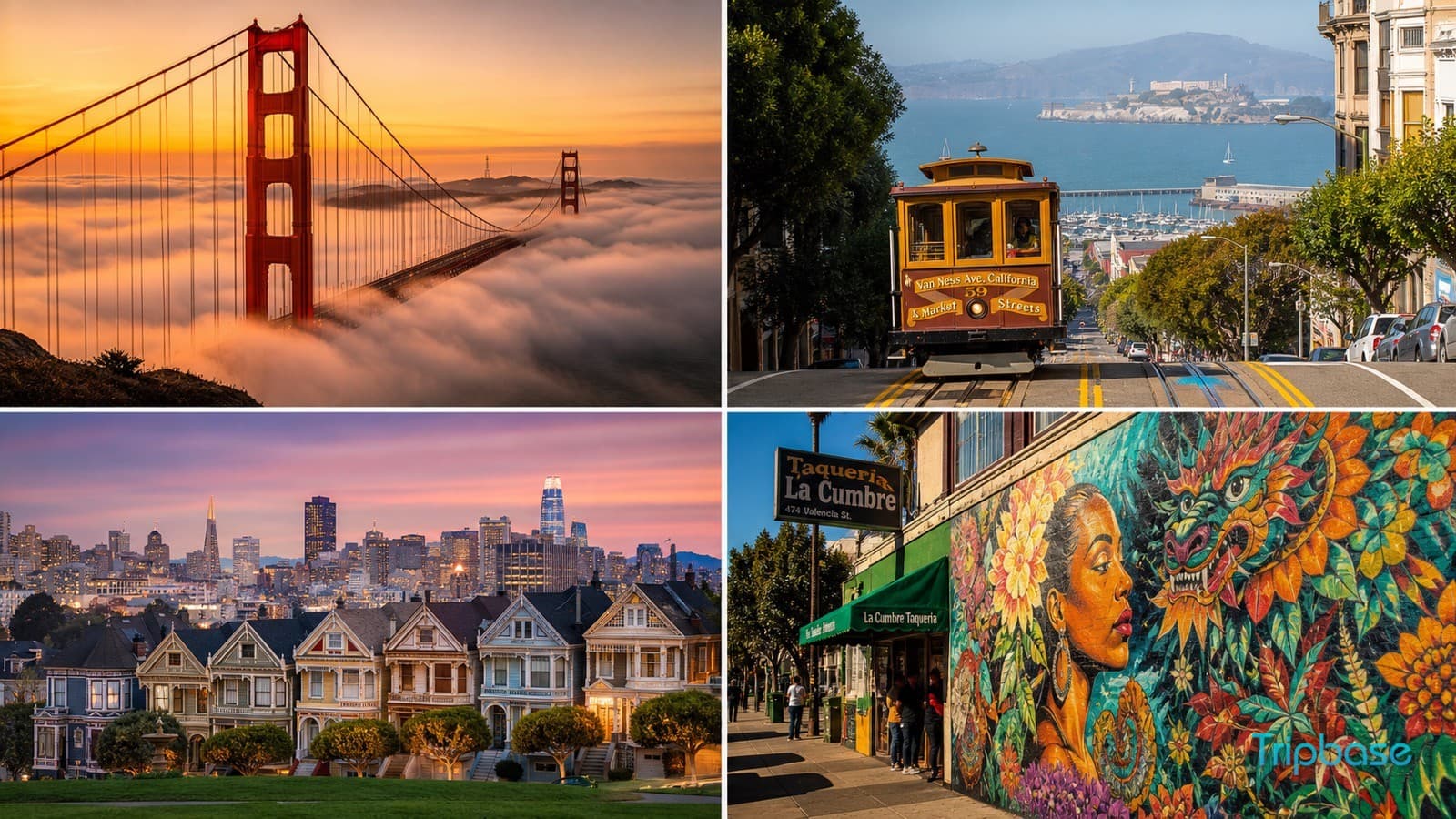
Alcatraz, San Francisco
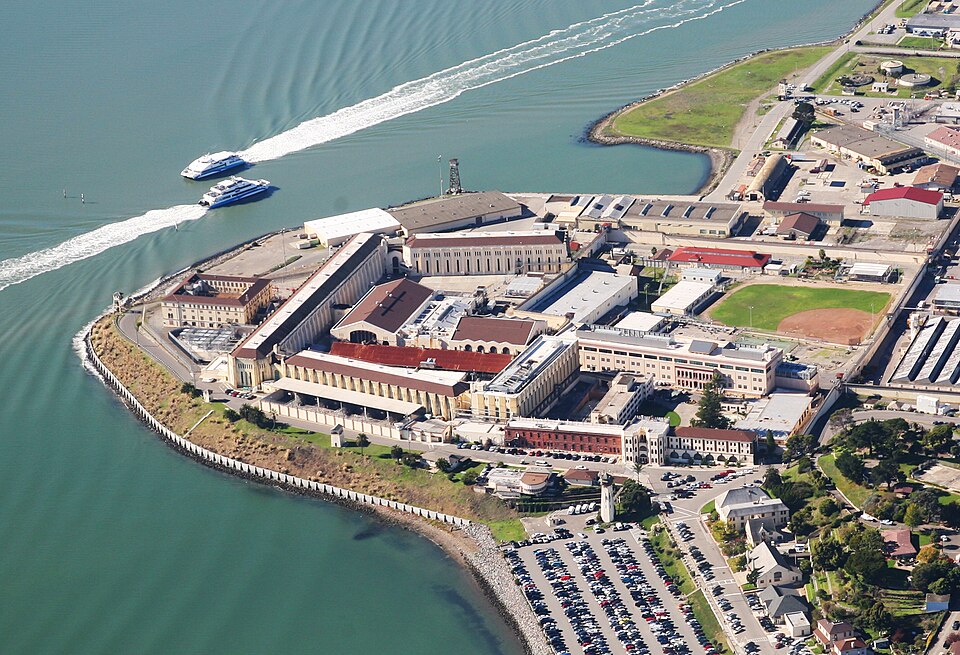
The federal penitentiary on Alcatraz Island operated for only 29 years, from 1934 to 1963, but in that time it housed Al Capone, Machine Gun Kelly, the Birdman of Alcatraz, and an absurdly photogenic combination of Hollywood and crumbling concrete that has kept the place economically viable for the entire six decades since. The island sits 2.4 kilometres off the San Francisco waterfront in genuinely cold water, surrounded by genuinely strong currents, and the official prison narrative was that no inmate had ever successfully escaped. The 1962 escape of Frank Morris and the Anglin brothers complicated this somewhat, in that they got off the island, were never recaptured, and have not been heard from in a way that proves either survival or death.
The official audio tour, narrated by former inmates and guards, is one of the better museum audio guides in existence and runs for about 45 minutes. You walk through the cell block. You stand inside D Block, where the solitary confinement cells are. You see the dummy heads the escapees left in their bunks. The whole thing takes about two and a half hours including the ferry, costs roughly USD 47, and sells out weeks in advance during the summer.
It is, at this point, a very polished operation. The National Park Service runs it well. The seagulls are extremely confident around your sandwich. The view back at San Francisco is spectacular, which is presumably exactly the view that drove some non-trivial percentage of the inmates slowly insane.
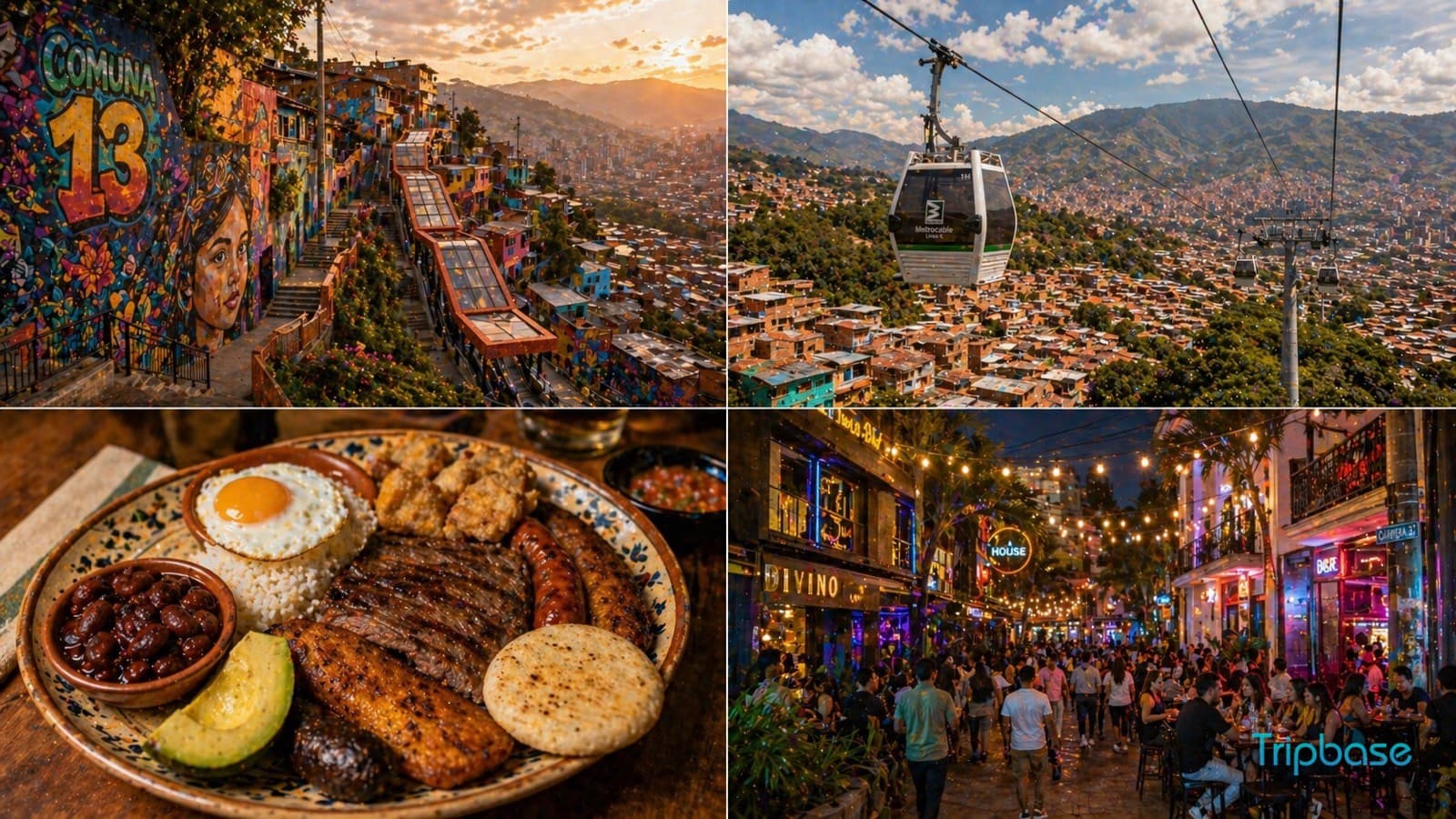
Pablo Escobar Tours, Medellín
This one is the most morally bracing entry on the list, partly because the man in question only died in 1993, and partly because the city of Medellín has spent the subsequent thirty years trying very, very hard to be known for something else. The murder rate in 1991 was 381 per 100,000, the highest in any major city in recorded peacetime history. By 2024 it was around 14, which is roughly the same as Atlanta. This was not an accident; it was the product of a deliberate, sustained, expensive municipal effort.
Then the Netflix series Narcos arrived in 2015 and a cottage industry of Pablo Escobar tours sprang up almost immediately. You can visit the rooftop in Los Olivos where he was shot in 1993. You can tour the (partially demolished) Hacienda Nápoles ranch with its surviving hippopotamuses, which were imported as pets and are now an invasive species multiplying happily across the Magdalena River basin. You can buy refrigerator magnets of his face. Many Medellín locals find this objectionable in a way that is entirely understandable; many tour operators are themselves former victims of the cartel violence, working to offer a more grounded counter-narrative; many tourists do not appreciate any of this nuance.
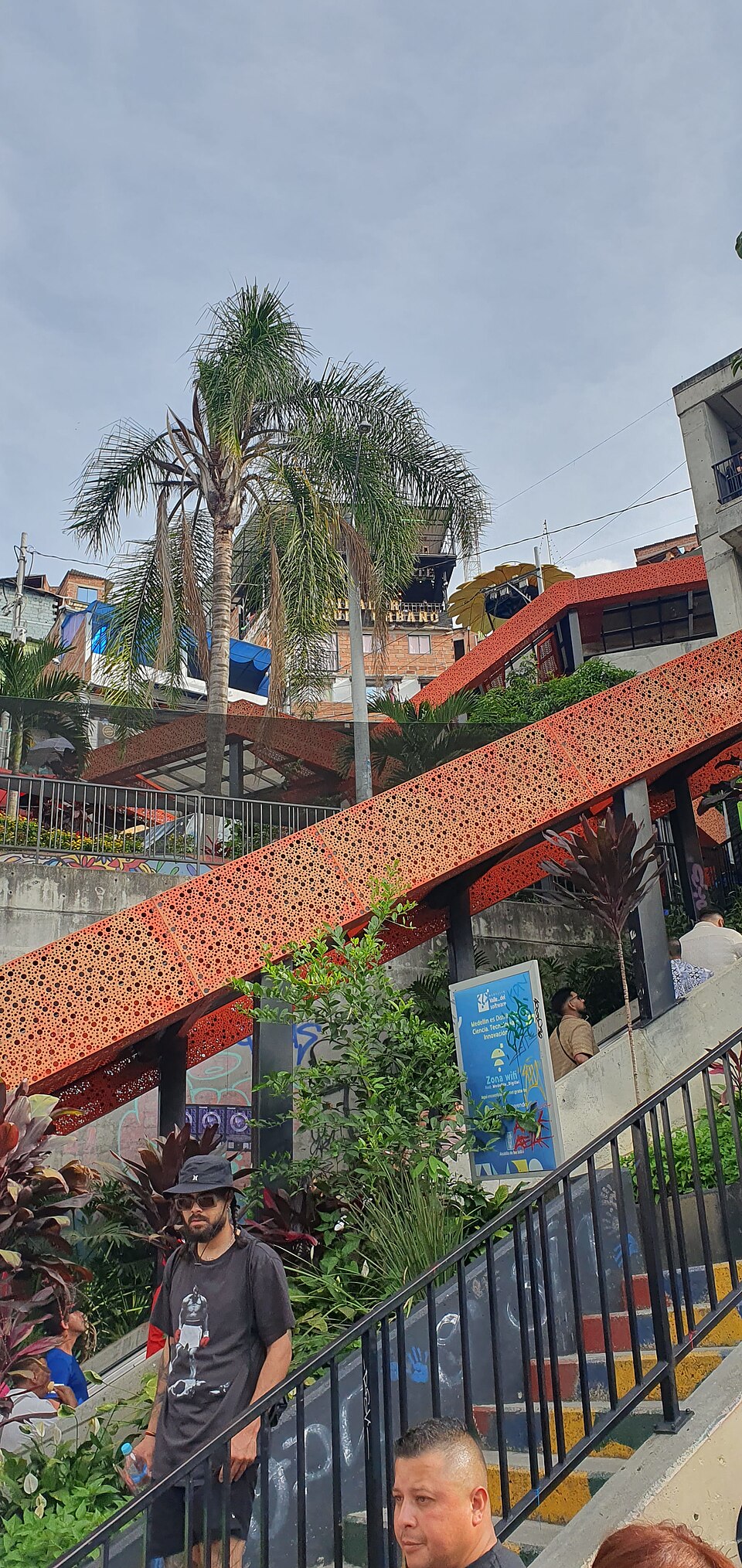
The morally serious version of this trip is the alternative-tourism circuit through Comuna 13, the formerly notorious hillside neighbourhood now reached by a series of municipal escalators (the only city in the world to install commuter escalators up a slum, and a genuinely interesting urban planning case study). Local guides explain what the neighbourhood was, what it is, and what it took to change. There is street art, there is decent street food, there are hip-hop performances. It costs about USD 25, and unlike the Escobar tour it leaves something behind that resembles dignity.
Hiroshima Peace Memorial, Japan
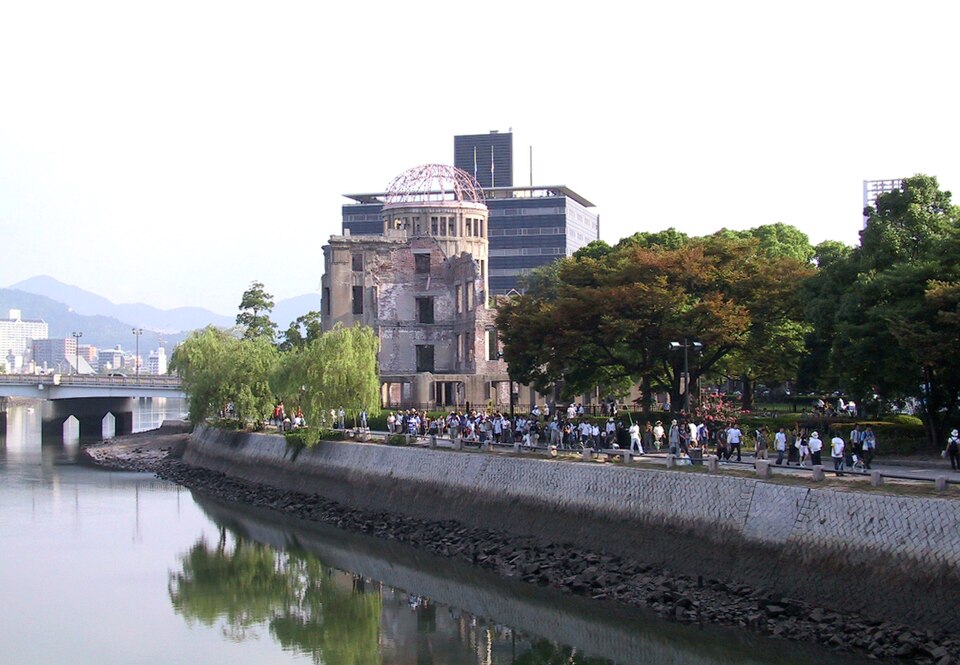
The skeletal dome of the Hiroshima Prefectural Industrial Promotion Hall, almost directly beneath the detonation point of the atomic bomb on 6 August 1945, has been preserved exactly as it was at 8:16 the next morning. It is the only structure in the immediate hypocentre that remained standing, on the theory (unsentimental, structurally accurate) that the bomb's force came straight down on it rather than sideways into it. Everything else for two kilometres in every direction was vapour. The building has been reinforced periodically, very subtly, to keep it standing without otherwise restoring it.
The Peace Memorial Museum next door is the most unflinching museum on this list, including Auschwitz, which is a high bar. The personal-effects exhibits - a child's tricycle, a fused stone shadow on a wall where someone had been sitting on a bank's front step at 8:15 a.m. - do not require captioning to land their point. Admission is 200 yen, which is approximately USD 1.30, and the museum receives around 1.5 million visitors a year. School groups outnumber tourists.
You leave changed. You leave through a gift shop. The latter feels worse than it should until you remember that the gift shop's existence is the entire point: the operating principle of the city is that the bomb must be remembered as long and as widely as possible, and remembering requires people to keep showing up, and keeping people showing up requires the museum to be financially viable, and financial viability requires a gift shop. There is no version of this that is not slightly uncomfortable.
What this is, exactly
The thing about dark tourism is that everyone who does it has a slightly different and slightly defensive answer for why. Some are educational - young people seeing for themselves what the textbook only described. Some are commemorative - relatives of the dead returning, or descendants of survivors. Some are purely transactional - the dark site is the famous thing in the city, and they came for it the way you would come for the Eiffel Tower. And some are simply rubbernecking, which is not a polite thing to admit but is empirically a real motivation, and the visitor numbers support it.
What the phenomenon mostly says is that humans, given a free Sunday and a paid annual leave allowance, will reliably choose to spend it standing in proximity to large-scale historical horror. We seem to need to. The places themselves seem to have made their peace with us doing so, on the condition that we pay the entry fee, behave on the audio guide, and refrain from posing on the railway tracks. We've covered some of the operating logic of the more morally fraught tourist sites in our guide to the most dangerous travel destinations, which overlaps less with this list than you might expect; danger and grief are different products, and the tourism industry sells them through different channels.
Disclaimer: As a brand, Tripbase are accepting of all global cultures. The sites covered above include active memorials and the resting places of murdered people. If you visit, behave like the guests you are. Don't pose on the railway tracks. Don't pose on the bones. Don't pose at the killing tree. The audio guide is right; you are wrong.