Tokyo's Kissaten: The Disappearing Coffee Shops That Deserve Your Attention
Somewhere in Shibuya, in a basement you'd walk past seventeen times without noticing, an 83-year-old man is making coffee. He has been making coffee in this exact spot for over fifty years. He uses a nel drip - a flannel filter that he rinses by hand, every time, with the focus and intensity of a surgeon performing an operation on someone he actually likes. The coffee takes four minutes. He will not rush it. You will sit in a wooden chair that has been polished smooth by five decades of human backsides, in a room that smells like dark roast and old books and the faintest ghost of cigarette smoke from the era when you could still light up indoors. There is no Wi-Fi. There is no oat milk. There is no barista with a man-bun and a tattoo of a coffee plant on their forearm. There is just coffee, made by a person who has been perfecting this single act for longer than most tech companies have existed. This is a kissaten, and it is one of the most beautiful things left in Tokyo.
What a Kissaten Actually Is (And Isn't)
The word kissaten translates roughly to "tea-drinking shop," which is a bit like calling the Sistine Chapel a "ceiling with some drawings." A kissaten is an independently owned coffee house, typically established somewhere between the 1950s and the 1980s, characterized by dark wood paneling, dim lighting, velvet or leather seating, and an atmosphere so aggressively analog that checking your phone feels like a moral failing. The coffee is brewed one cup at a time, usually by hand drip or siphon, using beans roasted on-site or sourced from a single trusted roaster. The menu will also feature napolitan spaghetti (ketchup-based, don't ask, it's incredible), thick-cut toast with butter and sometimes red bean paste, and cream soda served in a tall glass with a scoop of ice cream and a maraschino cherry, which is simultaneously the most childish and most sophisticated drink order you can make.
What a kissaten is not: a café. This is an important distinction that will mark you as either someone who understands Tokyo or someone who is essentially a well-dressed tourist with a guidebook. A café, in the Japanese context, is Starbucks, Tully's, Doutor, or one of the approximately nine thousand third-wave pour-over joints where very serious young people in aprons discuss extraction ratios as if they're splitting the atom. These places are fine. Some of them are very good. But they are not kissaten, in the same way that a microwave dinner is not a meal your grandmother made - technically the same category, spiritually a different universe.
The Ones You Need to Visit Before They're Gone
I say "before they're gone" because this is not hyperbole. Kissaten are disappearing from Tokyo at a rate that should alarm anyone who cares about cities having actual character. The economics are brutal: the owners are elderly, their children don't want to inherit a business that makes modest money in a basement, and the landlords would very much like to replace them with something that charges ¥1,200 for a latte with a foam leaf on it. The number of kissaten in Japan has dropped from over 150,000 in 1981 to under 60,000. Each one that closes takes something irreplaceable with it. Anyway, enough doom. Here's where to go.
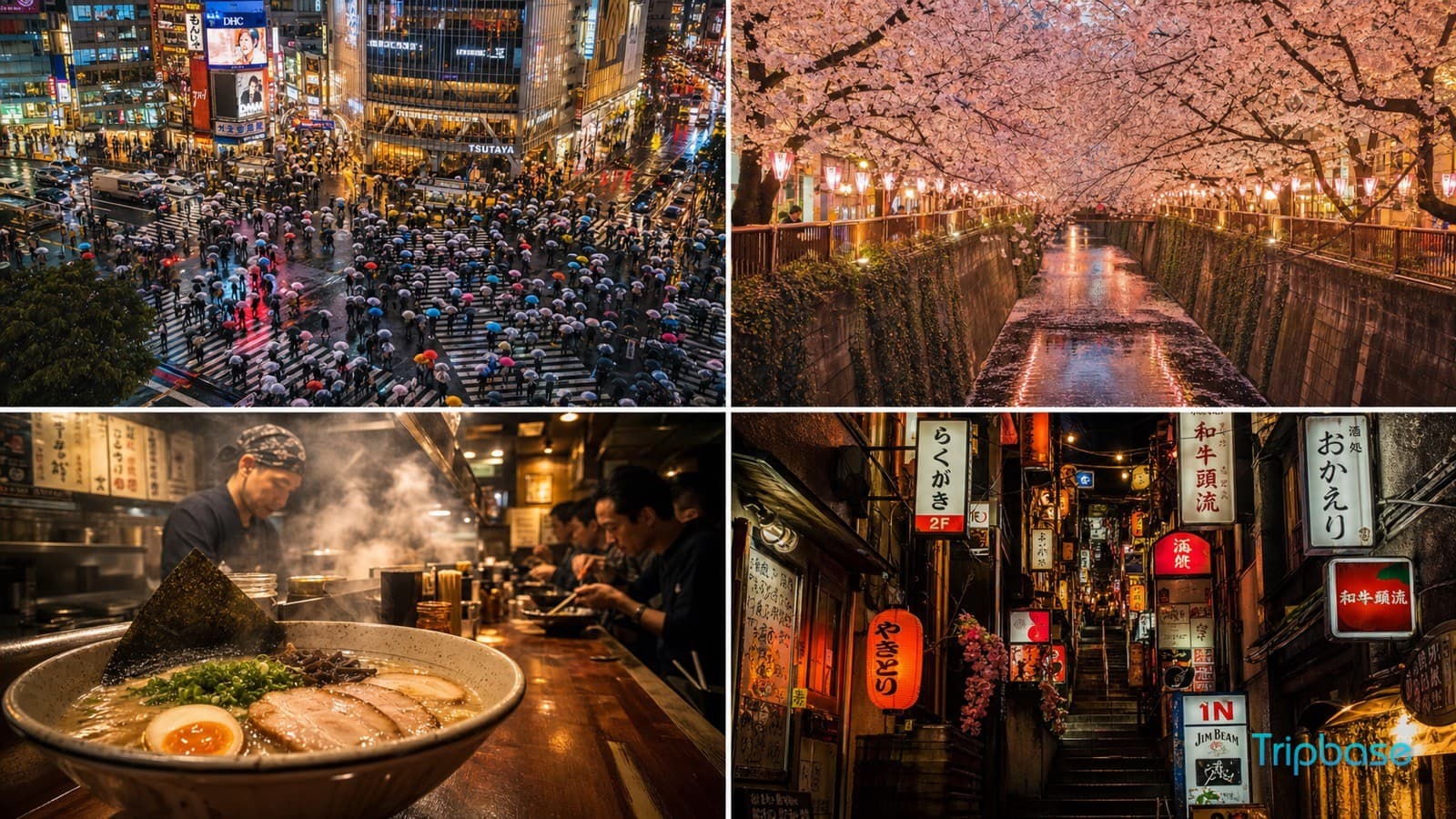
Chatei Hatou, Shibuya. This is the one I described at the top, and it is probably the single best cup of coffee I have ever had, a sentence that sounds like the kind of thing insufferable people say and yet is simply true. The master, Hatou-san, has been roasting and brewing here since the 1970s. The nel drip coffee arrives in a cup that is warm to the touch, black as theology, and possessed of a depth of flavor that makes you briefly reconsider every coffee you've previously consumed. The room seats maybe fifteen people. There is jazz playing at a volume calibrated to be heard but not listened to. You will sit there and feel, for twenty minutes, that the entire city of Shibuya - with its scramble crossing and its video screens and its howling commercial chaos - simply does not exist. It costs about ¥800. This is a bargain.
Café de l'Ambre, Ginza. Founded in 1948, which means this place has been serving coffee since before most of its customers' grandparents were born. The late founder, Ichiro Sekiguchi, was famous for aging green coffee beans - some for decades - before roasting them, a process that would strike most modern roasters as either visionary or clinically insane. The result is coffee with a smoothness and complexity that defies easy description; it's like drinking something that has had all its rough edges filed away by time itself. The interior is tiny and wood-paneled and feels like stepping into a particularly well-maintained time capsule from 1963. Order the aged blend. Accept that it has ruined you for ordinary coffee. Move on with your life.
Lion, Shibuya. Lion is not, strictly speaking, a coffee shop. It is a classical music kissaten - a meikyoku kissa - where you sit in church-pew seating between enormous floor-to-ceiling speakers and listen to classical records played on vintage audio equipment while drinking coffee. There is no talking. This is enforced by social convention rather than explicit rules, but the effect is the same: you shut up, you listen to Mahler or Debussy or whatever the owner has selected, and you contemplate your existence. It has been here since 1926, which makes it older than most countries. The fact that this place exists in the middle of one of the most frenetic commercial districts on earth is either deeply inspiring or evidence that the universe has a sense of humor. Both, probably.
Kayaba Coffee, Yanaka. This one nearly died. The original owner passed away, the building - a gorgeous two-story wooden townhouse from 1916 - was slated for demolition, and then a nonprofit stepped in to save it. It reopened in 2009 with the original interior largely intact: creaking wooden floors, a counter with stools, and windows that look out onto one of Tokyo's last old-fashioned shitamachi neighborhoods. The coffee is good, the egg sandwich is legendary, and the upstairs tatami room lets you sit on the floor and stare out at Yanaka cemetery, which is about as morbidly peaceful as Tokyo gets. It's one of the few kissaten that has successfully bridged the gap between "historic institution" and "place that younger people actually go," which gives me cautious hope for the form.
The Rituals: Why the Method Is the Point
Understanding kissaten means understanding that the coffee is almost beside the point - or rather, that the coffee is inseparable from the process of its making and the environment of its consumption. This is a concept that the modern world, with its emphasis on speed and optimization and getting your caffeine as fast as humanly possible so you can return to staring at a screen, finds fundamentally difficult to process.
Nel drip uses a cloth filter - flannel, specifically - that produces a cup with more body and less acidity than paper filtration. The cloth must be kept wet between uses, maintained daily, and replaced regularly. It is, by any rational efficiency standard, a terrible system. It is also the reason the coffee tastes the way it does. Siphon brewing - those gorgeous, vaguely scientific-looking glass contraptions you'll see on kissaten counters - uses vapor pressure to push water through coffee grounds in a process that looks like a chemistry experiment and produces a cup that is startlingly clean and bright. The performance of the siphon is part of the experience. You watch it happen. You wait. The waiting is the point.
Then there is the morning set: a thick slice of shokupan (Japanese milk bread) toasted until the outside is crisp and the inside is still impossibly soft, served with butter, maybe a hard-boiled egg, and coffee. It costs between ¥500 and ¥800 and it is one of the most perfect breakfasts in existence. The toast is cut about two inches thick - an amount of bread that would constitute a structural material in most other countries - and the butter melts into it in a way that creates a fleeting, perfect moment of carbohydrate bliss. If you have ever described your breakfast as "just a smoothie," I need you to understand that you have been doing mornings wrong.
Cream Soda: The Drink That Shouldn't Work But Absolutely Does
Every kissaten serves cream soda, and you need to order it at least once. It is melon-flavored soda - nuclear green, violently sweet, almost certainly artificial - topped with a scoop of vanilla ice cream and a cherry. It looks like something a child would design if given unlimited power over a beverage menu. It is also unreasonably delicious, in the way that things which refuse to take themselves seriously often are. In a kissaten, surrounded by dark wood and jazz and the quiet gravity of someone making coffee with fifty years of practice, ordering a cream soda feels like a small act of joyful rebellion. Do it.
Why This Matters (The Part Where I Get Slightly Earnest)
I realize I've spent most of this article being flippant, which is my natural defense against sincerity, but here's the thing: kissaten matter. They matter because they represent a model of public life that is being systematically eliminated from cities everywhere - the idea that you can sit in a room, alone or with someone, doing nothing productive, consuming something made with care, and that this is a valid use of time and money. Every Starbucks that opens, every co-working café that provides power outlets and strong Wi-Fi specifically so you can continue being economically productive while consuming your flat white, is another small victory for the idea that every moment must be optimized, every space monetized, every human interaction mediated by a transaction.
Kissaten reject this. Not loudly - they are profoundly quiet places - but completely. The owner of Chatei Hatou doesn't want to scale. The people who saved Kayaba Coffee didn't do it for the ROI. Lion has been playing classical music to silent strangers for a hundred years because the person who founded it believed that was a thing worth doing. In a city of fourteen million people, these small rooms full of dark wood and old cups are acts of resistance against the idea that everything must be new, fast, and photographable.
If you're going to Tokyo, skip one temple. Skip one robot restaurant or themed café or whatever algorithmically optimized "experience" your social media feed is insisting you need. Go sit in a kissaten instead. Order the nel drip. Wait for it. Drink it slowly. Listen to whatever's playing. For food-obsessed travelers, the toast set alone justifies the visit. For everyone else, it's a reminder that the best things in a city are usually the ones that aren't trying to get your attention.
The man making your coffee has been doing this for fifty years. The least you can do is sit still for twenty minutes. And if you really want to understand how locals eat and drink in the cities you visit, well - you already know what to do.