7 Destinations Where Food IS the Itinerary (Museums Optional, Eating Mandatory)
Some cities have great food as a nice bonus alongside the museums and the architecture and the guided walking tours where a man in a high-vis vest walks backwards while shouting about medieval drainage systems. And then there are cities where the food is so absurdly, life-alteringly good that scheduling anything else feels like a waste of your finite time on this planet. You could visit that cathedral. Or you could eat your eleventh taco. The cathedral will still be there tomorrow. Your appetite won't.
These are seven destinations where the correct itinerary is breakfast, second breakfast, a light snack to bridge the gap, lunch, an afternoon bite, dinner, and a late-night meal that you'll pretend was spontaneous but was actually planned with military precision. If you visit any of these places and come home the same weight, you've done it wrong.
For the truly unhinged food traveller, pair this with our guides to the world's weirdest foods and the rarest dishes on Earth.
Tokyo: The City That Treats Lunch Like Brain Surgery
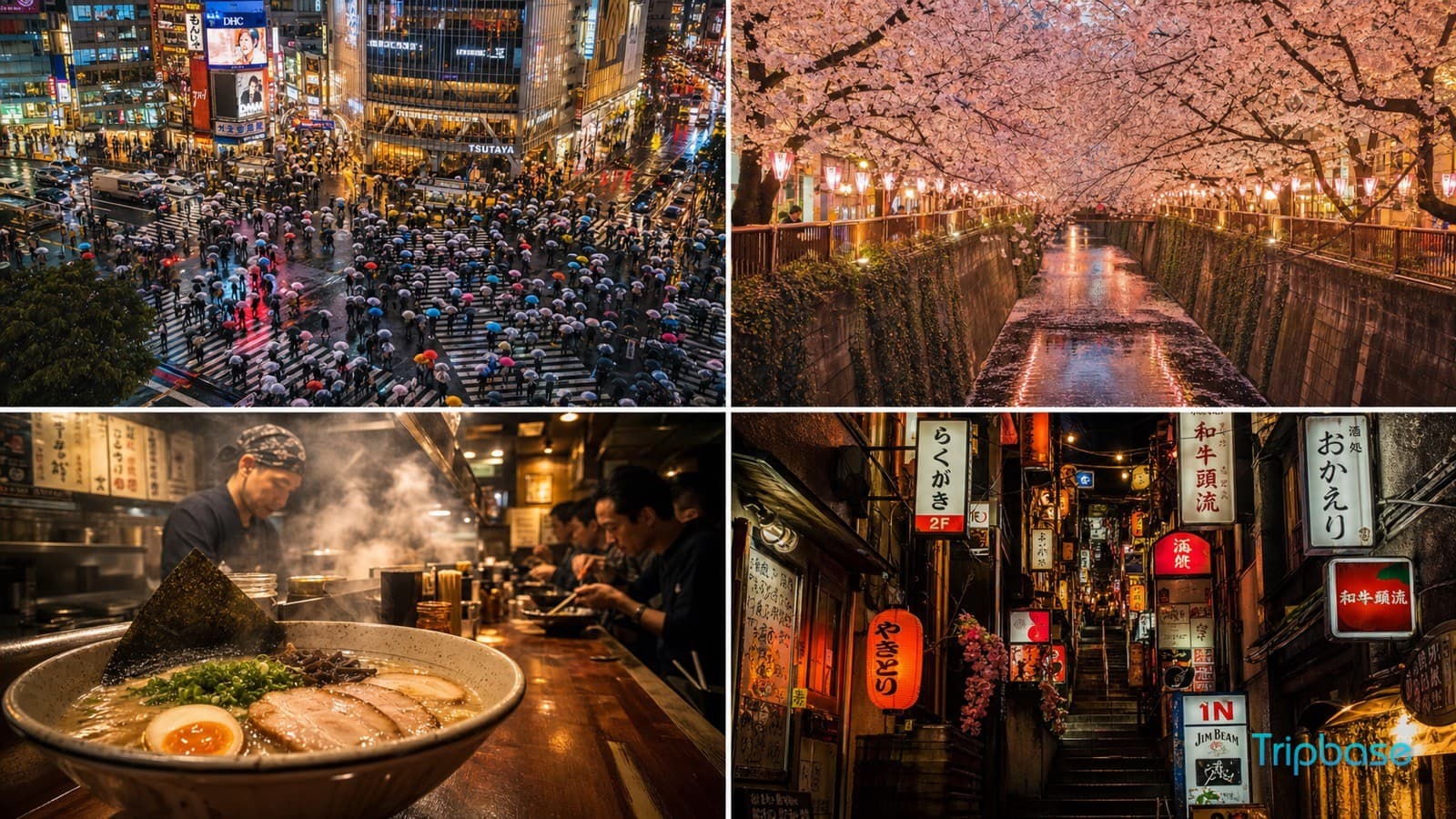
Tokyo has more Michelin stars than Paris. I'll let that settle in. A city where you can eat a transcendent bowl of ramen for ¥900 (about £5) also happens to be the fine dining capital of the known universe. This is either deeply inspiring or deeply unfair to every other city, depending on your perspective.
The Japanese approach to food is essentially: pick one thing, spend forty years perfecting it, never smile. There are ramen shops where the chef has been making the same tonkotsu broth since 1978 and regards the addition of a second menu item the way most people regard arson. There are sushi counters where the rice is seasoned with a vinegar blend that took three generations to develop, and the chef will silently judge your soy sauce usage with an intensity that borders on psychic violence. This is not a culture of casual cooking. This is a culture that treats a tempura batter like a matter of national honour.
The depachika: Tokyo's department store basement food halls are, and I cannot stress this enough, completely insane. Imagine if Harrods Food Hall and a fever dream had a baby and then gave that baby a budget of several billion yen. Rows upon rows of perfect bento boxes, wagyu beef samples, mochi in forty colours, and fruit - oh, the fruit. A single mango in a wooden box, nestled in tissue paper, costing more than your flight. It is a melon. It costs £100. It is the best melon you will ever eat. You will buy it. You will not regret it. (You will slightly regret it.)
Izakaya after dark: The smoky, shouting, glorious chaos of a proper izakaya is where Tokyo drops the precision and picks up the beer. Yakitori grilled over binchōtan charcoal, plates of edamame, tiny dishes of pickled everything - the izakaya is Japan's answer to the pub, except the food is approximately four hundred times better than anything you've ever eaten in a pub. Find one under a train track in Yurakucho. Sit at the counter. Point at what the salaryman next to you is eating. Trust the process.
Oaxaca: Seven Moles and a Mezcal Problem
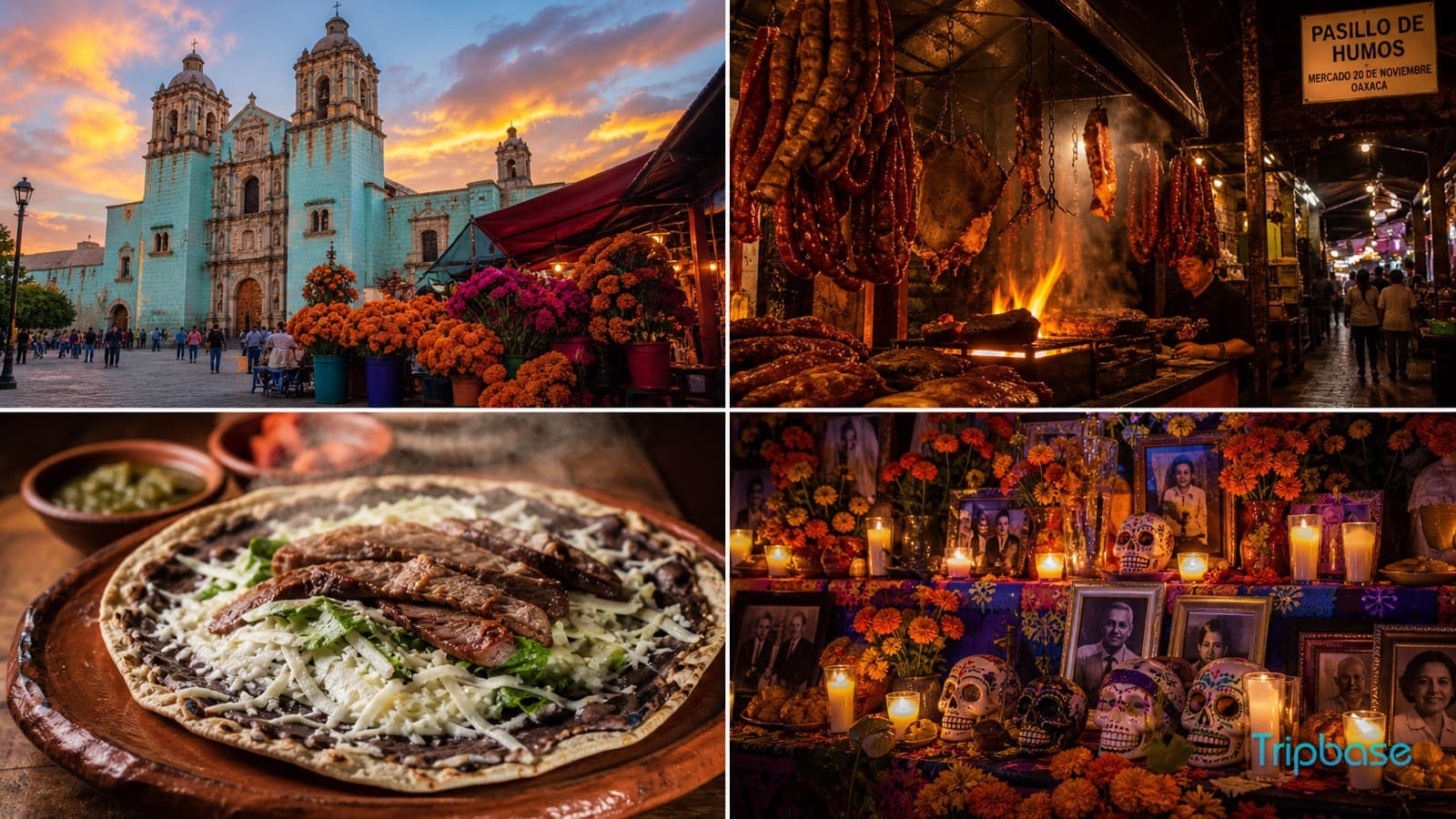
Oaxaca is a city that has seven canonical mole sauces, each one requiring approximately thirty ingredients, three days of preparation, and the spiritual fortitude of a saint. Mole negro alone contains chocolate, chilhuacle peppers, plantain, sesame, and what appears to be every spice that has ever existed, ground together into a sauce so complex it makes French cuisine look like beans on toast.
The women who make these moles - and it is almost always women, because Oaxacan food culture is matriarchal in the most delicious possible way - have been doing this since before colonial powers showed up and ruined everything else. The recipes are handed down like state secrets, adjusted by intuition rather than measurement, and served with a casualness that belies the fact that you're eating something that took longer to prepare than most university dissertations.
Tlayudas: Imagine a pizza, but made by someone who thinks pizza isn't trying hard enough. A massive, crispy tortilla the size of a dustbin lid, smeared with black bean paste and asiento (unrendered pork lard, because Oaxaca does not have time for your cholesterol concerns), topped with quesillo cheese, meat, and avocado. It is street food. It costs about £2. It is better than any pizza you have ever eaten, and yes, I am including that one in Naples. Come find me.
The mezcal situation: Oaxaca is to mezcal what Scotland is to whisky, except the distilleries are smaller, the producers are more passionate, and the drink itself tastes like smoke and agave and the fundamental essence of the earth. You will visit a mezcalería. You will try twelve varieties. You will develop strong opinions about espadín versus tobalá. You will tell everyone about it when you get home. They will not care. This is the mezcal cycle and it cannot be broken.
Bologna: The City That Invented Half Your Favourite Foods
Bologna is responsible for ragù (which you call Bolognese and pronounce wrong), tortellini, mortadella, and a significant percentage of Parmigiano-Reggiano. It is essentially the R&D department of Italian food, and it has been operating at peak capacity since approximately the 13th century. The rest of Italy acknowledges this with the nickname La Grassa - "The Fat One" - which is either an insult or the highest possible compliment depending on your values. (It is a compliment.)
Tortellini in brodo: Tortellini served in a clear broth is Bologna's signature dish, and if you order it with cream sauce, a Bolognese grandmother will materialise from thin air to express her disappointment. The filling is a mixture of pork, prosciutto, mortadella, and Parmigiano, wrapped in pasta so thin you can read a newspaper through it - though why you'd be reading a newspaper while eating tortellini is a question that reflects poorly on your priorities. The broth is made from capon. It takes hours. It looks simple. It is not simple. It is the product of several centuries of obsessive refinement, and it will make you genuinely angry at every tortellini you've eaten before this moment.
The Parmigiano-Reggiano pilgrimage: You can visit the dairies outside Bologna where wheels of Parmigiano are aged for 24 to 36 months in vast, cathedral-like warehouses. A single wheel weighs about 40 kilos and is worth roughly €500. The tour guide will crack one open with a special almond-shaped knife and hand you a chunk and you will stand there, in a cheese warehouse, having what can only be described as a spiritual experience. This is normal. This is what cheese is supposed to do to you. Everything you've been eating from the supermarket was a lie.
Balsamic vinegar (the real kind): Traditional balsamic vinegar from Modena (just up the road) is aged for a minimum of 12 years, sometimes 25, in a series of progressively smaller wooden barrels. A tiny 100ml bottle costs upward of €50. It is used by the drop, not the pour. Drizzle it on Parmigiano, on strawberries, on vanilla ice cream. It is sweet, syrupy, and so far removed from the stuff you put on chips that they should legally be required to have different names.
Seoul: Banchan, BBQ, and the 4 A.M. Stew
Seoul is a city where dinner is a performance, lunch is an institution, and a 4 a.m. bowl of sundubu-jjigae (soft tofu stew) after a night out is not a sad choice but a triumphant one. Korean food culture operates on the principle that no meal is complete without approximately fourteen side dishes, a grill in the middle of the table, and enough garlic to ward off every vampire in Eastern Europe.
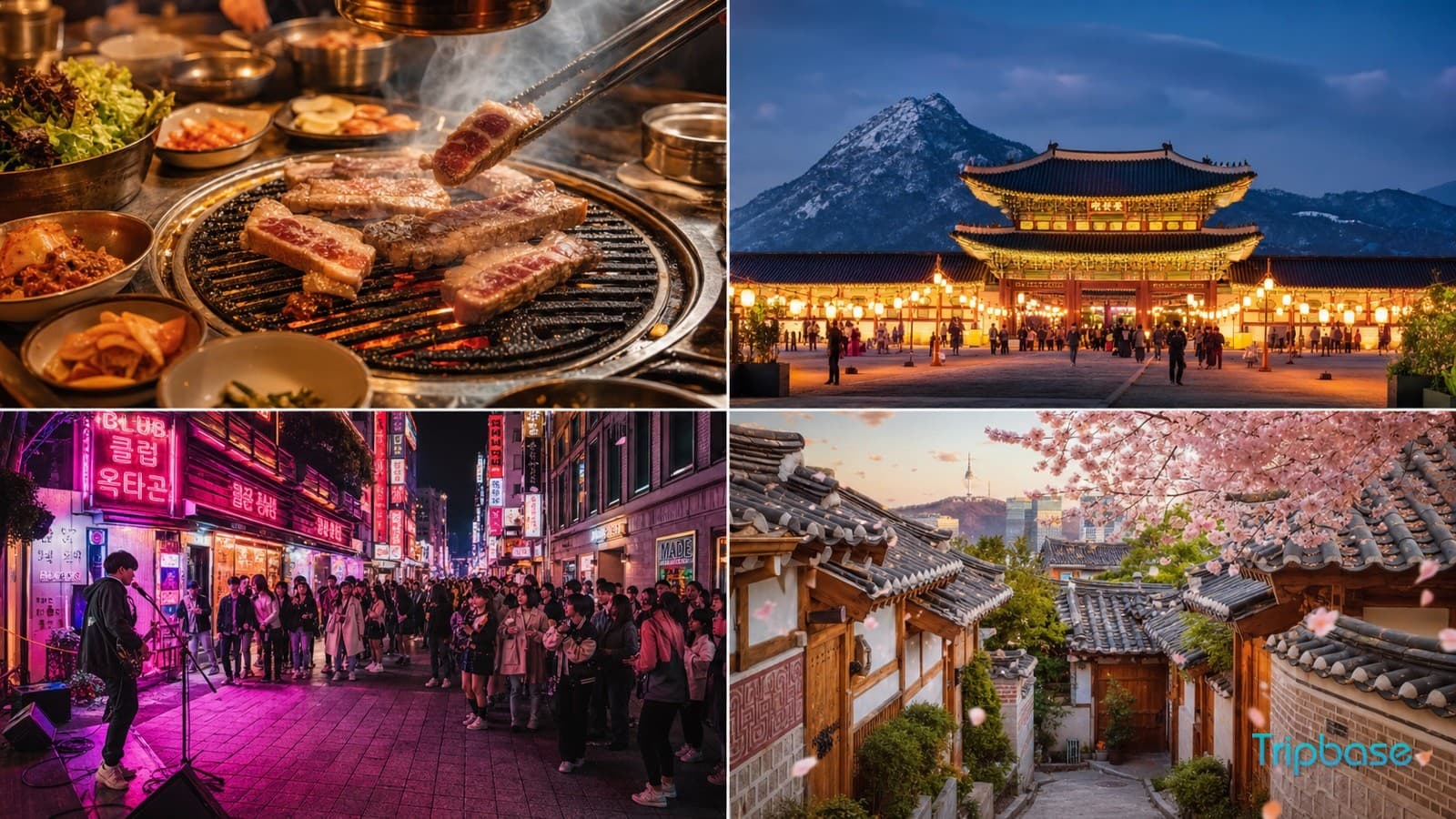
Korean BBQ: You already know about this and you're still not prepared. Sitting around a grill embedded in the table, cooking strips of marinated galbi and pork belly while someone keeps bringing you more banchan - the little side dishes of kimchi, pickled radish, bean sprouts, and things you can't identify but eat anyway - is one of the great communal dining experiences on Earth. The lettuce wraps. The ssamjang. The moment when the meat hits the grill and the entire restaurant fills with smoke and the extraction fans kick in and you realise you smell like a barbecue and will continue to smell like a barbecue for the next 36 hours. Worth it. Every time.
Gwangjang Market: This is Seoul's oldest market and it operates on the principle that anything can be eaten if you fry it, stuff it, or ferment it, ideally all three. The bindaetteok (mung bean pancakes) are fried to order in pools of oil so deep they border on philosophical. The mayak gimbap - "drug kimbap," so named because they're allegedly addictive - are tiny rice rolls dipped in mustard sauce that cost almost nothing and justify the nickname entirely. You will eat standing up, elbow-to-elbow with Korean grandmothers who got here at 6 a.m. and regard you with benign indifference. This is as it should be.
Pojangmacha: The orange tent-stalls that appear on Seoul's streets after dark, serving tteokbokki (spicy rice cakes), fish cake skewers, and soju in quantities that will test your resolve and your liver. Eating in a pojangmacha in winter - steam rising from the broth, condensation on the plastic walls, the city glittering outside - is one of those travel moments that no Instagram post will ever capture properly. Just go. Sit on the tiny stool. Order the odeng. Drink the broth from the cup. Feel alive.
Marrakech: Smoke, Spice, and Organised Chaos
Marrakech will assault your senses in the best possible way. The food here is not subtle. It is cumin and saffron and preserved lemon and slow-cooked lamb and it hits you like a freight train made of spices the moment you enter the medina.
Jemaa el-Fna at dusk: Every evening, Marrakech's main square transforms into the largest open-air restaurant in Africa, possibly the world. Rows of numbered stalls materialize from nowhere, each one staffed by men whose sales technique falls somewhere between enthusiastic and physically aggressive. Stall 14 wants you to try the merguez. Stall 31 is personally offended that you're even looking at Stall 14. The lamb heads - yes, whole heads, eyes and all - sit in steaming piles looking like props from a horror film, and they are delicious, and the fact that a lamb is staring at you while you eat it is something you simply have to make peace with. The harira (tomato and lentil soup) is perfect. The msemen (flaky flatbread) is perfect. The chaos is perfect. Eat everything. Argue about the price later.
Tagines: A tagine is both a clay cooking vessel and the stew made inside it, and the genius is in the slow cooking - lamb with prunes and almonds, chicken with preserved lemons and olives, vegetables with chermoula - everything goes in, the cone-shaped lid goes on, and three hours later you have a dish so tender and aromatic that it feels less like dinner and more like therapy. The best tagines are not in restaurants. They're in riads where someone's mother is cooking lunch and the menu is "what she decided to make today." Accept this. She decided correctly.
The spice markets: You will buy ras el hanout. You will buy too much ras el hanout. You will bring it home and use it once, on a chicken, and then it will sit in your cupboard for two years until you throw it away. This is the spice market cycle and I am powerless to stop it. But in the moment - standing in a narrow souk corridor surrounded by pyramids of turmeric and cumin and paprika so vivid they look photoshopped - you will feel like a person who cooks with spices regularly, and that feeling is worth the £3 you spent on a bag of saffron that may or may not actually be saffron.
Lima: The Dark Horse That Already Won
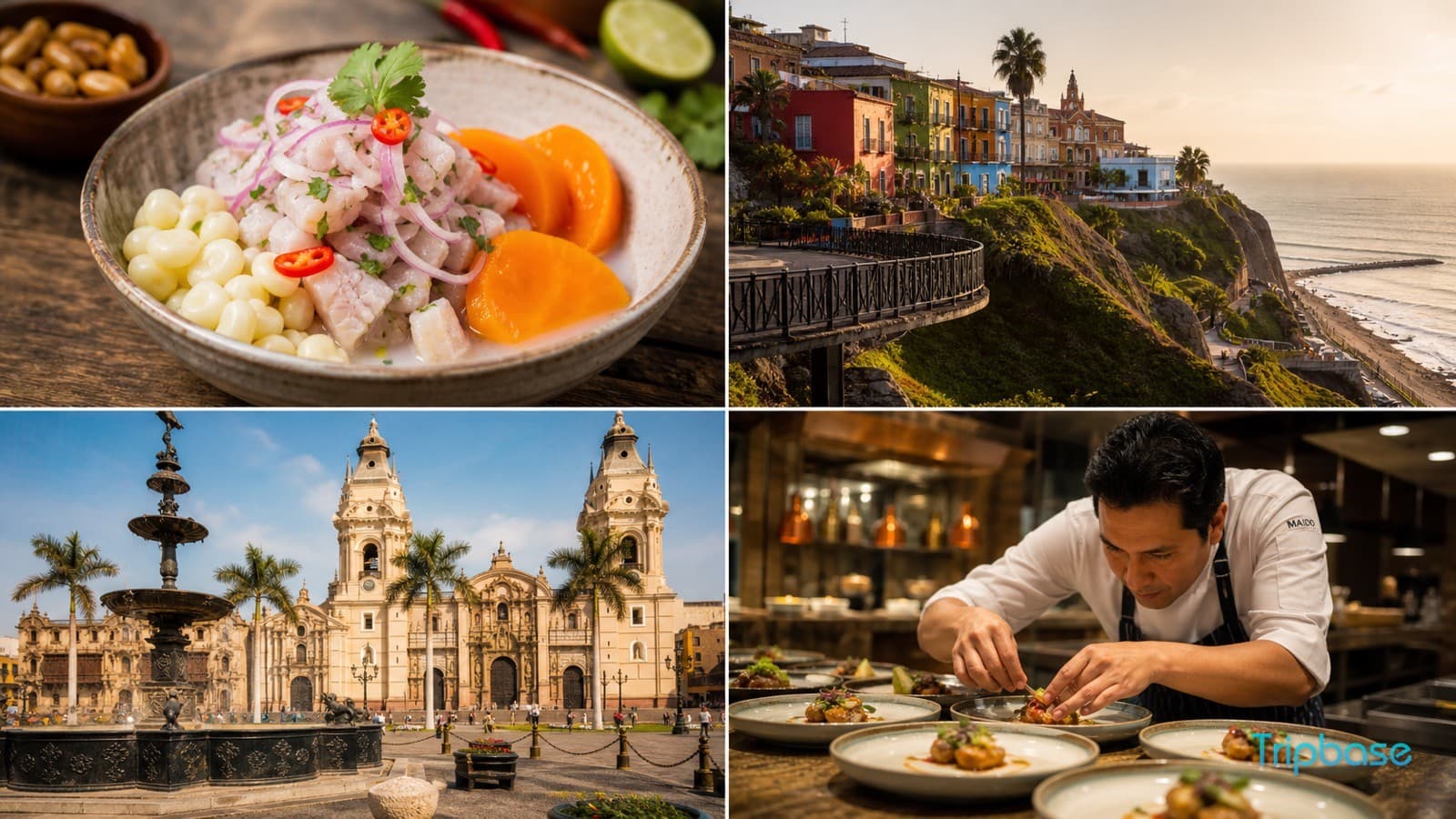
Lima has spent the last two decades quietly becoming one of the greatest food cities on the planet, and the rest of the world is only just catching on, which is frankly embarrassing for the rest of the world. Peruvian cuisine is what happens when Indigenous, Spanish, African, Chinese, and Japanese culinary traditions spend five centuries in a blender, and the result is a cuisine so layered and complex it makes fusion restaurants everywhere else look like someone just put mango on a burger and called it a day.
Ceviche: Raw fish cured in lime juice with red onion, chilli, and sweet potato. That's it. That's the dish. It should not be this good. And yet every cevichería in Lima serves a version that will make you question whether you've ever actually tasted fish before. The key is the leche de tigre - "tiger's milk" - the citrus marinade left at the bottom of the plate, which Peruvians drink as a hangover cure and which works, improbably but absolutely. The best ceviche is eaten before 2 p.m., because Peruvians believe fish is a morning food, and they are right about this and everything else related to eating.
Chifa: Chinese-Peruvian fusion that has been evolving since the 19th century and is now so thoroughly Peruvian that calling it "fusion" feels insulting. Lomo saltado - stir-fried beef with tomatoes, onions, soy sauce, and french fries, served with rice (carbs on carbs, as God intended) - is the national dish of Peru and it was invented in a chifa kitchen. Arroz chaufa (Peruvian fried rice) is better than any fried rice you've had anywhere, and yes, I'm including that place in Hong Kong you keep telling people about.
Anticuchos: Beef heart, marinated in aji panca and cumin, grilled on skewers over charcoal, and served with a boiled potato. It is street food. It is offal. It is one of the most delicious things you will ever eat. The anticucho carts come out at night, the smoke drifts across the pavement, and the queue is a mix of businesspeople, students, and taxi drivers, all eating the same magnificent charred organ meat. There is no food on Earth more democratic than an anticucho at 11 p.m. in Miraflores.
Crete: Where Olive Oil Is a Beverage
Crete operates on a dietary philosophy that can be summarised as: pour olive oil on it. Whatever "it" is. Bread? Olive oil. Salad? Olive oil. More olive oil? Believe it or not, also olive oil. Cretans consume more olive oil per capita than any other population on Earth, and they live forever, and scientists have been studying this for decades, and the conclusion is always "it's the olive oil and also the raki and also something ineffable about sitting in the sun eating cheese."
Dakos: A barley rusk (basically a rock-hard piece of dried bread) soaked in tomato juice and olive oil, topped with crumbled mizithra cheese and oregano. It sounds like poverty food because it was poverty food, invented by people who couldn't afford fresh bread. It is now the single greatest salad-adjacent dish in the Mediterranean, and I will not be taking questions at this time. The rusk must be Cretan. The tomatoes must be Cretan. The olive oil must be Cretan. The cheese must be Cretan. Cretans are, perhaps understandably, somewhat territorial about this.
The village taverna: Forget Chania harbour (overpriced, tourist-heavy, the waiters have dead eyes). Drive thirty minutes into the mountains. Find a village with four buildings and a church. One of those buildings is a taverna. The menu is whatever the owner's wife cooked this morning: snails in rosemary, rabbit stifado, fried courgette balls, and a horiatiki salad that will make you realise every Greek salad you've eaten outside of Greece was a pale, mealy-tomatoed imitation. The raki will arrive at the end, unbidden and free, because in Crete, raki is not a drink - it's punctuation. It ends every meal, every conversation, every transaction. You will drink it. It tastes like fire and anise and the general concept of hospitality. Poor liver.
The Cretan diet paradox: Cretans eat enormous amounts of fat, drink raki like water, smoke enthusiastically, and live to be ninety-five. Nutritional scientists have been trying to explain this since the 1960s and the answer always comes back to olive oil, wild greens, and what I can only describe as a fundamental refusal to be stressed about anything. It is not a diet you can replicate at home. It is a lifestyle that requires a mountain, a goat, and a grandmother who considers shop-bought bread a personal affront. But you can visit, and eat, and briefly pretend you'll live forever too.
The best meals of your life are not waiting in restaurants with reservation systems and dress codes. They're waiting in market stalls and family kitchens and street carts and tiny tavernas in villages you can't pronounce. Go find them. Eat everything. Come home heavier and happier. That's the whole itinerary.