Tokyo on Less Than $100 a Day (Yes, Really)
Tokyo has a reputation as one of the most expensive cities on Earth, which is technically true if you're the sort of person who insists on sleeping horizontally and eating food that hasn't been wrapped in plastic by a robot. For the rest of us - the gloriously cheap, the stubbornly resourceful, the people who consider a 7-Eleven egg sandwich a spiritual experience - Tokyo is, against all logic, one of the greatest budget destinations in Asia. You can eat like royalty, sleep in a coffin (voluntarily), and ride a train system so efficient it makes the rest of the world's public transit look like a prank. All for less than a hundred dollars a day.
This is not a guide about deprivation. This is a guide about the specific Japanese genius of making cheap things excellent, and how to exploit that genius with zero shame.
Breakfast Is a Convenience Store (And That's a Compliment)
In most countries, eating breakfast at a gas station convenience store is a cry for help. In Japan, it's a lifestyle choice endorsed by businessmen in immaculate suits. The holy trinity of konbini - 7-Eleven, Lawson, and FamilyMart - serve food that would embarrass most sit-down restaurants in other nations. We're talking about onigiri (rice balls stuffed with salmon or pickled plum, wrapped in seaweed that stays miraculously crispy), egg salad sandwiches on milk bread so soft it feels illegal, and coffee from machines that grind beans to order for about 100 yen. That's roughly seventy cents for coffee that a Brooklyn barista would charge you five dollars for while telling you about its "origin story."
A proper konbini breakfast runs about 300-500 yen ($2-3.50). You eat it standing outside the store, or on a bench, or while walking - nobody cares. FamilyMart's fried chicken (Famichiki) at 8 AM is a power move, and I respect it deeply. Lawson's egg sandwiches are the best in the country, which is a sentence I never expected to write about a chain with 14,000 locations. And 7-Eleven - specifically Japanese 7-Eleven, which shares approximately nothing with its depressing American cousin except a name - does a steamed pork bun that could make you weep into your IC card.
The $5 Ramen Revelation
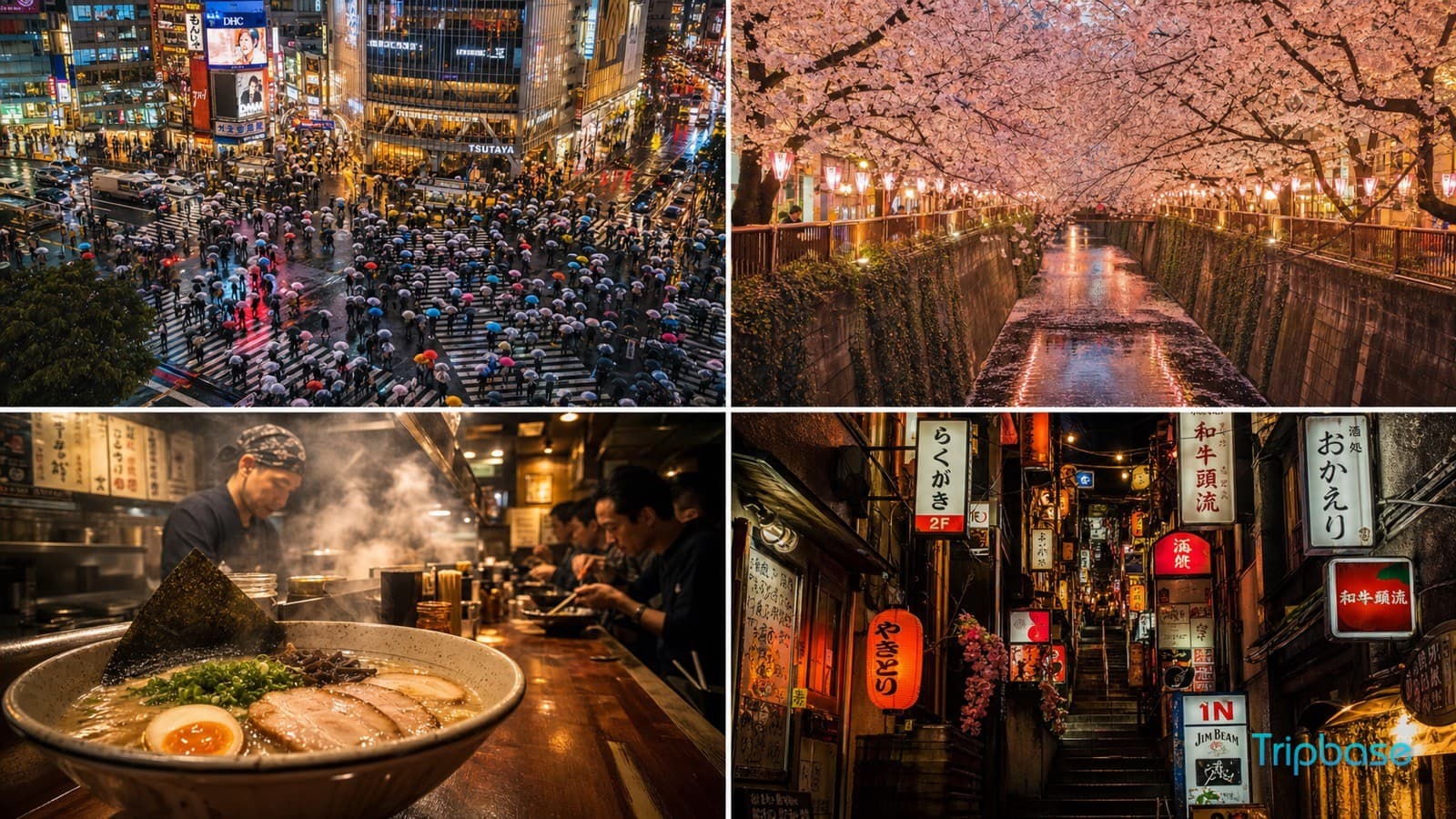
Ramen in Tokyo starts at about 600-900 yen ($4-6), which means you can have one of the great culinary experiences of your life for less than a sad desk salad back home. The system works like this: you find a ramen shop (they're everywhere; you literally cannot avoid them), you put money into a vending machine by the door, you press a button corresponding to what you want, you hand the ticket to someone who doesn't make eye contact with you, and then you sit at a counter and eat noodles so good you briefly reconsider every life choice that led you to not living in Japan permanently.
In Shinjuku, Fuunji does a tsukemen (dipping ramen) that attracts a line around the block. It costs 850 yen. In Asakusa, you can find bowl-you-over tonkotsu for 750 yen in shops where the steam alone could constitute a meal. The unwritten rule: if a ramen shop has more than six seats, it's already suspiciously large. The best ones fit four people and smell like pork bones have been simmering since the Meiji Restoration.
For variety, standing soba shops in train stations serve hot buckwheat noodles for 300-400 yen. You eat them in approximately 90 seconds while a salaryman next to you does the same. It's not romantic. It is, however, one of the most honest meals you'll ever have.
Free Things That Are Better Than Expensive Things
Tokyo's shrines and temples are, with a few exceptions, completely free. Meiji Jingu, set in a forest that makes you forget you're in a city of 14 million people, costs nothing. Senso-ji in Asakusa, the oldest temple in Tokyo, is free (the surrounding Nakamise shopping street will try to separate you from your money, but the temple itself won't). Yanaka, an old neighborhood that somehow survived both the 1923 earthquake and the firebombing of World War II, is essentially an open-air museum of wooden houses, tiny temples, and cats who look at you with the specific disdain of animals who know they're living in a better neighborhood than you.
Shimokitazawa is free to wander and will make you feel underdressed regardless of what you're wearing. It's Tokyo's vintage and indie culture district - second-hand shops stacked three stories high, tiny live music venues, and cafes run by people who have very strong opinions about pour-over technique. You can spend an entire afternoon here without buying anything, though you will almost certainly leave with a jacket from 1987 that you didn't know you needed.
Parks are free. Shinjuku Gyoen (200 yen, so nearly free) is better than parks in cities that charge nothing, which feels like a metaphor for Tokyo in general. Ueno Park has museums, a zoo, and homeless encampments that are, characteristically, extremely tidy.
The 100-Yen Shop: Temple of Magnificent Garbage
Daiso, Seria, Can Do - these are the 100-yen shops, and they are cathedrals of stuff you didn't know existed and now cannot live without. Everything costs 100 yen (about 70 cents). Kitchen gadgets that solve problems you've never had. Stationery so beautiful you'll start writing letters to people just to use it. Tiny containers for things that don't need containers. A ceramic cat. A better ceramic cat. The world's most specific egg slicer.
For the budget traveler, they're actually useful: chopsticks, travel-size toiletries, phone chargers, umbrellas (it rains a lot in Tokyo, and this is cheaper than the 500-yen convenience store umbrella, though those are also perfectly fine, and there is something beautiful about a city where the emergency umbrella infrastructure is this robust).
Sleep in a Capsule, Dream of Savings
Capsule hotels cost 2,500-4,500 yen ($17-30) per night. You get a pod roughly the size of a coffin - though considerably more cheerful - with a mattress, a light, a power outlet, and sometimes a tiny TV. Shared bathrooms are spotlessly clean because this is Japan, where shared spaces are maintained with a devotion that borders on religious observance. Some capsule hotels have saunas, rooftop areas, and lounges. You're essentially paying thirty dollars for a bed and a spa.
The catch: most traditional capsule hotels are men-only or have separate floors. Mixed and women-only options exist but require more research. Nine Hours, a chain that looks like it was designed by the people who made the movie Ex Machina, accepts everyone and costs about 4,000 yen. You will feel like you're sleeping inside an Apple product, which is either appealing or horrifying depending on your relationship with minimalism.
For the capsule-averse, hostels in Asakusa run 2,000-3,000 yen for a dorm bed. Some of them are excellent. Some of them are not. Read reviews. If someone mentions "thin walls" and "snoring," that's code for "I did not sleep."
Transit: The IC Card Is Your New Personality
Get a Suica or Pasmo card immediately. Load it with money. Tap it on everything. Trains, buses, vending machines, convenience stores, coin lockers - the IC card is accepted roughly everywhere except, presumably, at the gates of heaven (though I wouldn't be surprised if they're working on it). A day of moderate train travel costs 600-1,000 yen. The subway system will take you everywhere, and it runs on time with a precision that suggests the entire nation has a deeply personal relationship with punctuality.
Do not take taxis. A taxi in Tokyo costs approximately the same as buying a small house in some other countries. The train goes everywhere. Learn to love the train. The train is your friend. The train will never let you down, except during the last run at midnight, at which point you will need to either walk, take a night bus, or stay out until 5 AM when service resumes. Many people choose the third option, which is how you end up eating ramen at 4 AM in Shinjuku while a man in a suit sleeps peacefully at the counter next to you. Poor man. Also, great ramen.
Depachika: The Art of Eating for Free (Almost)
The basement floors of Japanese department stores - depachika - are food halls of staggering beauty and generosity. Isetan in Shinjuku, Takashimaya, Mitsukoshi - their basements look like what would happen if Willy Wonka pivoted to wagyu beef and pickled vegetables. And here's the secret that every budget traveler in Tokyo knows but nobody talks about openly: the samples are abundant, free, and offered with genuine enthusiasm.
You cannot, ethically, make a meal entirely of depachika samples. But you can wander through, accept the tiny cups of tea, the slices of cake, the pieces of grilled fish on toothpicks, and emerge twenty minutes later meaningfully less hungry than when you entered. Combine this with a 500-yen bento from the same depachika (marked down near closing time - look for the discount stickers) and you've got a dinner that cost less than a coffee in most airports.
Standing Bars and the Joy of Vertical Drinking
Tachinomi - standing bars - are where Tokyo goes to drink cheaply. No seats, no table charge, no pretense. Beer starts at 200-300 yen. Highballs (whisky and soda) are 150-250 yen. Small plates of food - edamame, fried chicken, grilled skewers - run 200-400 yen each. You can drink and eat for an hour and spend 1,000 yen, which is less than the cover charge at most bars in New York that are worse than this in every conceivable way.
The vibe is specific: fluorescent lighting, salary workers loosening their ties, old men nursing beers with the quiet dignity of people who have been doing this for forty years. Nobody is trying to impress anyone. The drinks are strong, the food is hot, and standing up means you're less likely to fall asleep, which is the kind of practical design thinking that defines Japan.
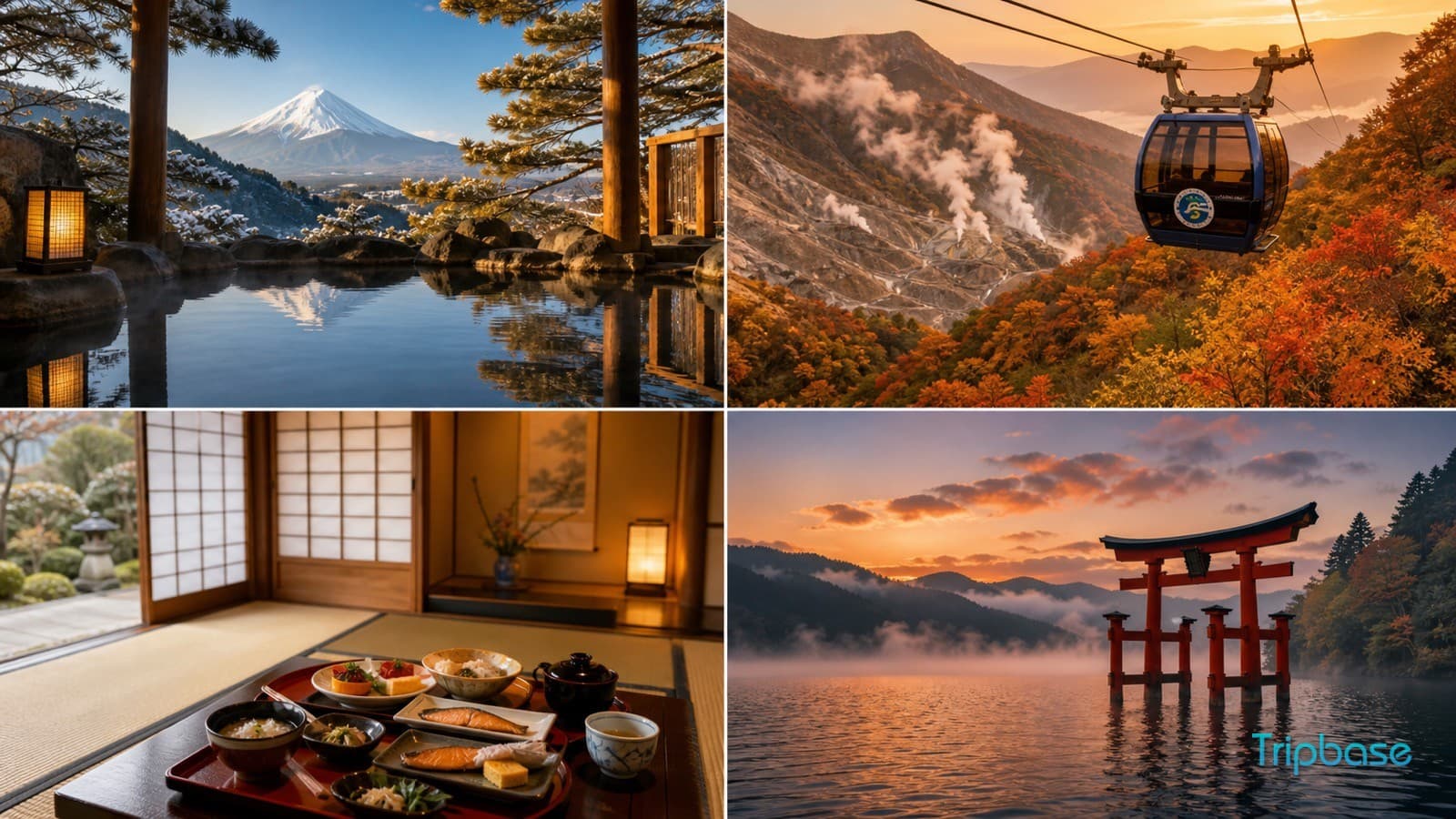
If you want to step up slightly, Hakone makes a spectacular day trip from Tokyo - and yes, your IC card works on the train there too.
The Daily Budget, Honestly
Breakfast at konbini: $3. Lunch (ramen or standing soba): $5-7. Dinner (depachika bento or cheap izakaya): $7-12. Snacks and drinks: $3-5. Transit: $5-8. Capsule hotel: $20-30. One tachinomi session: $7-10. Total: $50-75.
That leaves you $25-50 of your hundred-dollar budget for, I don't know, a museum entry, a slightly fancier meal, or forty-seven items from a 100-yen shop. Tokyo is not cheap by accident - it's cheap because Japan has spent decades perfecting the infrastructure of affordable excellence. The convenience stores are good because competition is fierce. The ramen is cheap because it's a populist food. The trains run on time because chaos is considered rude.
You will spend less money in Tokyo than you expected. You will eat better than you expected. You will sleep in a coffin and somehow feel rested. And when you get home, every 7-Eleven you walk into will feel like a personal insult.
For more on the noble art of eating your way through a foreign city without bankrupting yourself, read our guide to eating like a local. And if you're the type who believes that food is the itinerary - which it absolutely should be in Tokyo - we have thoughts on that too.