How to Eat Like a Local (And Stop Paying €22 for Carbonara Near the Colosseum)
There is a special circle of hell reserved for people who eat at restaurants with laminated menus and photos of the food, and it is located directly adjacent to every major landmark on Earth. You didn't fly 6,000 miles to eat microwaved lasagna served by a waiter who visibly hates you. You flew 6,000 miles to eat something transcendent, served by someone who also visibly hates you but at least made it from scratch twenty minutes ago.
Eating like a local is not some mystical skill reserved for people who spent a gap year "finding themselves" in Southeast Asia. It requires exactly three things: legs, a basic tolerance for ambiguity, and the willingness to sit in a plastic chair. That's it. No food tour. No TripAdvisor. No asking your hotel concierge, who will unfailingly direct you to his cousin's restaurant where everything costs triple and tastes like regret.
What follows is a field guide to eating properly in four cities that will ruin you for every other meal you've ever had. You're welcome. Also, I'm sorry.
The Universal Rules (Or: Stop Googling "Best Restaurants Near Me")
Before we get to specifics, some truths that apply everywhere from Bangkok to Buenos Aires and every city in between.
Follow the lunch crowd. Not the dinner crowd - the lunch crowd. Office workers on a 45-minute break do not have time for your nonsense. They know exactly where to go, they go there every day, and the food is cheap because it has to be. If you see a dozen people in business casual queuing outside a place with no English signage at 12:15 p.m., that is your restaurant now. Congratulations.
Eat where there are no other tourists. This sounds obvious and yet I have watched grown adults walk past a magnificent fonda serving handmade tortillas to stand in line at a Starbucks in Roma Norte. If you can see another backpack from your table, you've already lost.
Look for the family-run spots. The ones where grandma is in the kitchen and her grandson is doing homework at a corner table. These places don't have Instagram accounts. They don't need them. They've been serving the same neighbourhood for thirty years and their clientele would riot if they closed - which, economically speaking, they're always about to do, so eat there now.
Go ugly. Fluorescent lighting. Plastic tablecloths. A cat sleeping on the bar. A calendar from 2019 still on the wall. These are not red flags. These are green flags. The money is going into the food, not the interior design. If a restaurant looks like it was decorated by someone's mum in 1987 and never updated, you are about to eat the best meal of your trip.
Bangkok: Where the Pavement Is Your Dining Room
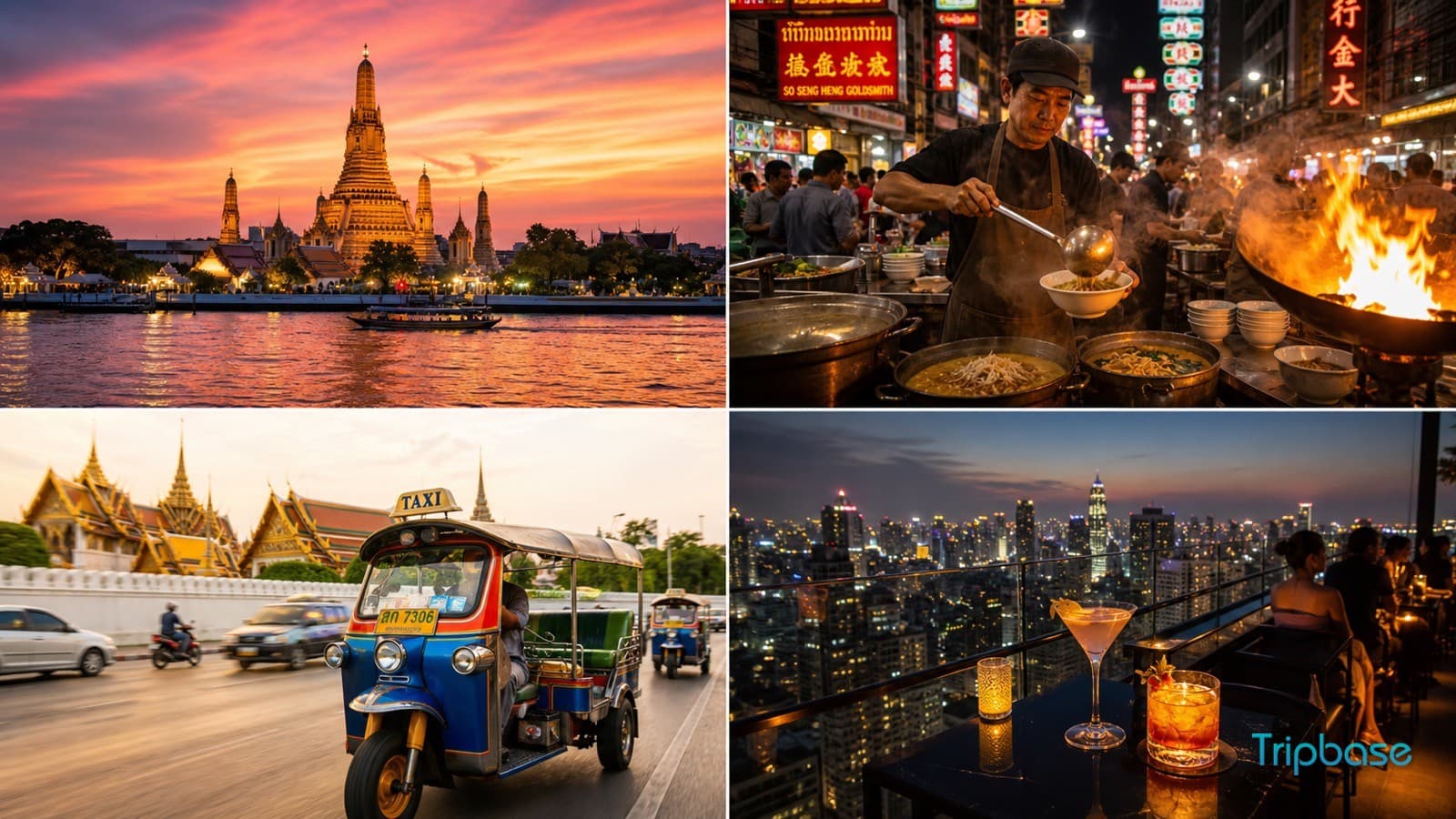
Bangkok's street food scene is so overwhelmingly good that eating indoors feels like a moral failing. The city has roughly 300,000 street vendors (a number I cannot verify but emotionally feels correct), and the average meal costs less than your morning coffee back home. This is a place where a Michelin-starred restaurant operates out of a shophouse with no air conditioning, and the correct response to that information is not surprise but respect.
Bangkok rewards the brave and the sweaty. Here's where to start.
Yaowarat (Chinatown): After dark, Yaowarat Road transforms into what can only be described as a fever dream of woks, smoke, and neon. The seafood here is obscene - massive prawns grilled over charcoal, crab omelettes that could make a grown man weep, and oyster dishes served at plastic tables approximately four inches from oncoming traffic. You will eat the best pad thai of your life here, and it will cost you about £1.50, and you will spend the rest of your days trying to replicate it at home and failing. Accept this.
Victory Monument: The area around the BTS station is a rotating cast of boat noodle stalls serving bowls roughly the size of a teacup. The correct move is to order six of them, because each one is about 15 baht and contains enough pork, herbs, and dark broth to qualify as a religious experience. The locals eat here standing up. You should too. Dignity is overrated.
Ari: This is where young Bangkok professionals eat, which means the food is trendy but still genuinely excellent. The soi (side streets) around Ari BTS are packed with tiny restaurants doing northern Thai sausage, som tum (papaya salad that will reorganise your sinuses), and iced coffee so sweet it should require a prescription. Ari is proof that gentrification doesn't always ruin everything - sometimes it just adds better coffee to already perfect food.
Buenos Aires: Beef, Obviously, But Also Everything Else
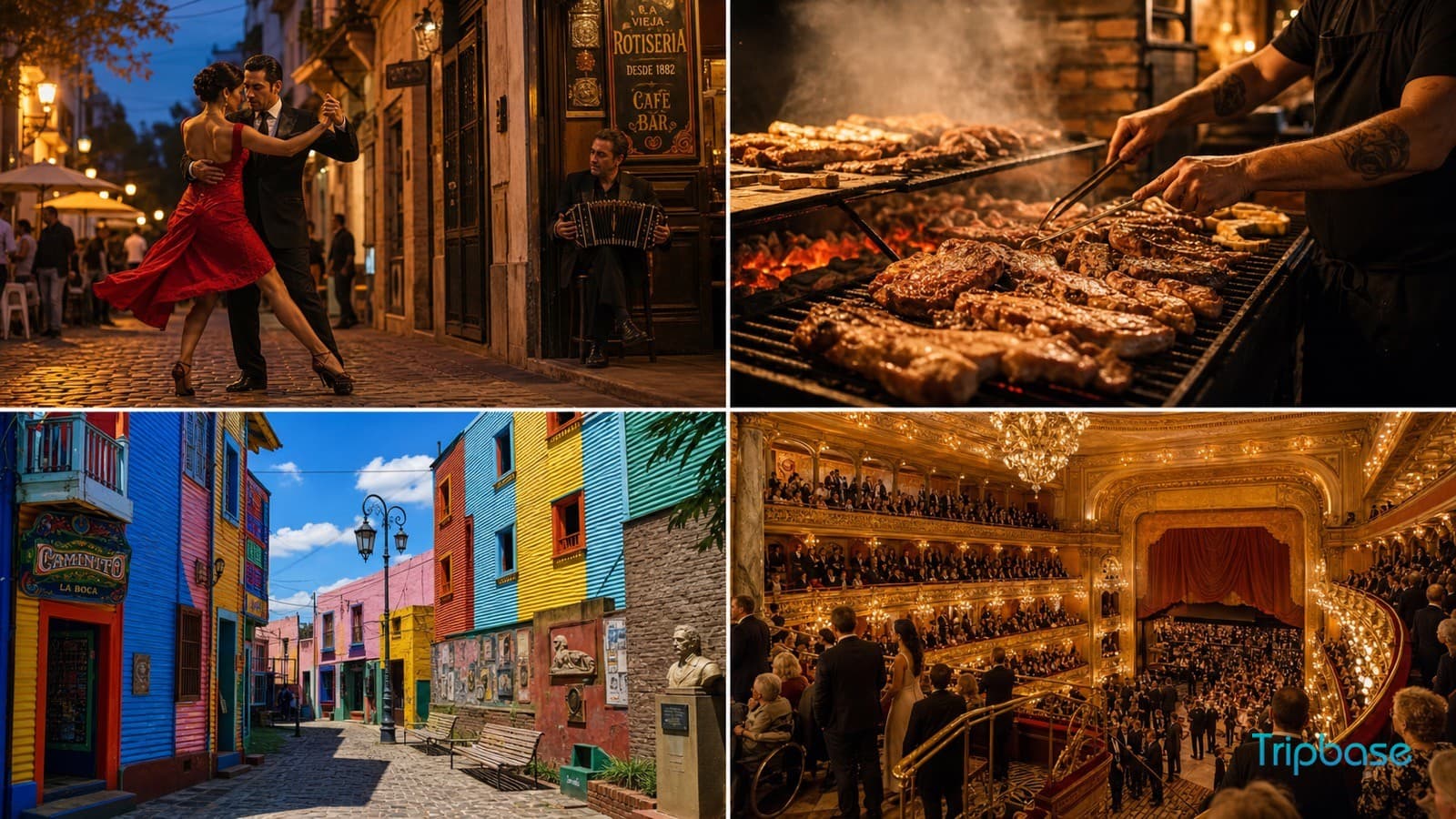
The Argentine relationship with beef is not a preference. It is a constitutional commitment. Suggesting to a porteño that you might skip the steak is roughly equivalent to suggesting you might skip breathing - technically possible, but why would you do that to yourself?
Buenos Aires has two tiers of eating. The first tier is the parrilla, which is a steakhouse in the same way that the Atlantic Ocean is a swimming pool. A proper neighbourhood parrilla will present you with cuts of beef you didn't know existed, cooked over wood and charcoal by a man who has been doing this since before you were born and regards your preference for "medium" with the quiet contempt it deserves. You will eat it rare. You will like it.
The second tier - and this is where the real magic lives - is the bodegón. These are neighbourhood joints that serve massive portions of home-style Argentine-Italian food: milanesas the size of your head, handmade ravioli drowning in tuco, and flan mixto (flan with both dulce de leche and cream, because choosing one would be cowardice). Bodegones have wood panelling, football scarves on the walls, and waiters who call everyone querido. They are perfect and I will not hear otherwise.
San Telmo on Sundays: Yes, the market is touristy. Go anyway, but skip the stalls selling empanadas for triple the normal price and walk two blocks in any direction. You'll find corner bars serving choripán (chorizo sandwich with chimichurri) for pocket change, old men drinking Fernet and Coke at 11 a.m. (this is normal and correct), and pizzerías serving fugazzeta - a cheese-and-onion pizza so aggressively topped that it borders on structural engineering. It is magnificent.
Mexico City: The Greatest Food City You're Still Somehow Sleeping On
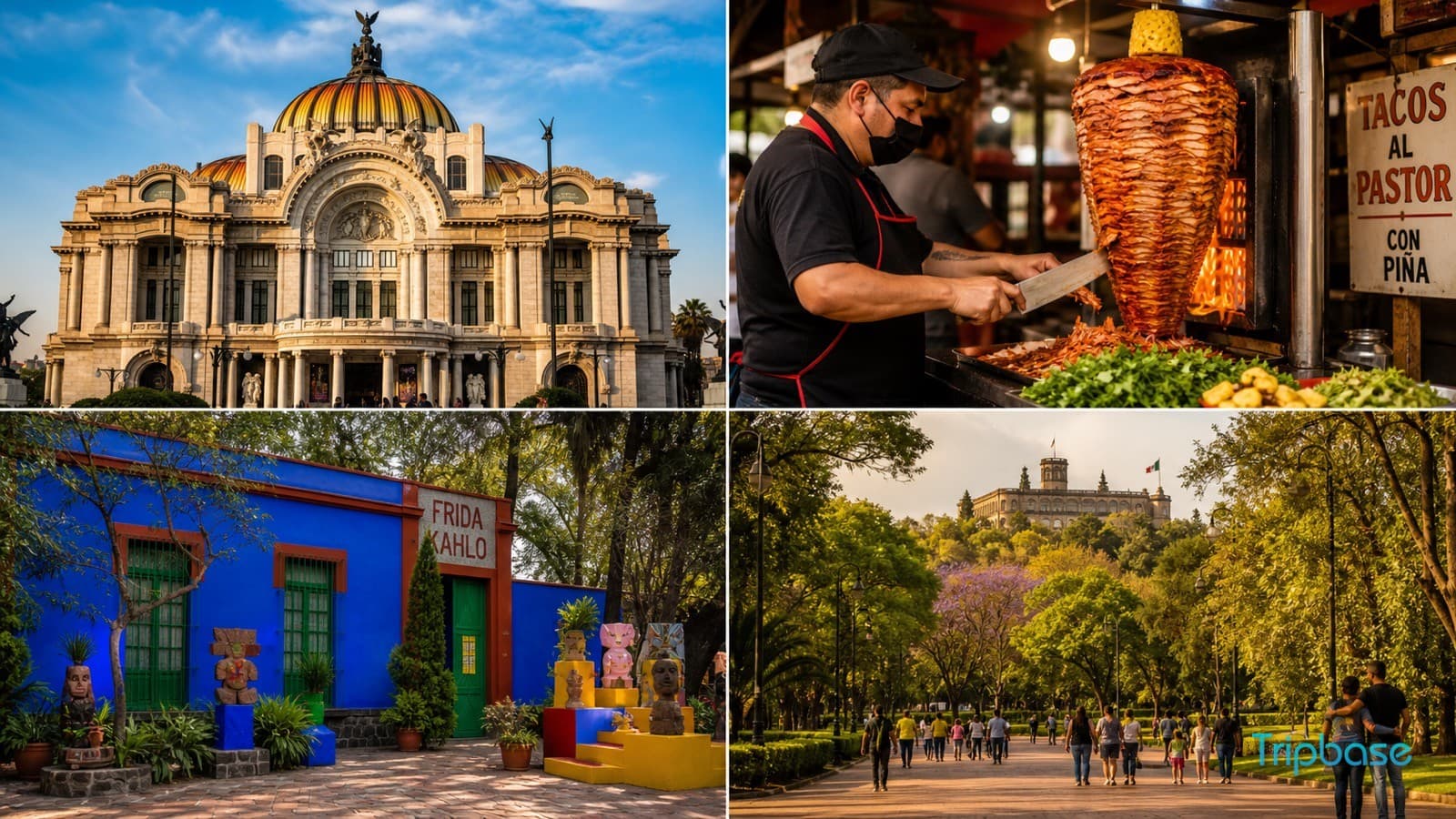
I need to say this clearly: Mexico City might be the greatest food city on the planet. Not "one of." Not "arguably." It is a 21-million-person monument to the proposition that corn, chilli, and lime can be combined in approximately infinite ways, every single one of them better than whatever you had for lunch yesterday.
The taco de canasta: These are "basket tacos" - soft tortillas filled with beans, chicharrón, or potato, steamed in a basket lined with blue plastic and carried around on the back of a bicycle. They cost about 10 pesos each (roughly 50p). They are not glamorous. They are, however, perfect. The canasta vendor is Mexico City's greatest unsung hero, and I will campaign for their Nobel Prize until my dying day.
The fonda: A fonda is a family-run lunch spot that serves a comida corrida - a set menu of soup, rice, a main course, agua fresca, and sometimes dessert, all for about 80 pesos. This is roughly £3.50 for a three-course meal made by someone's grandmother. If you eat at a fonda for lunch every day for a week, you will gain weight, save money, and develop a sincere emotional attachment to a woman named Doña María who doesn't know your name but always gives you extra salsa. This is the correct way to travel.
Al pastor after midnight: The trompo - that glorious vertical spit of marinated pork with a pineapple perched on top like a crown - reaches peak performance somewhere around 1 a.m. The best al pastor in the city is a matter of violent debate, and asking a chilango to name the best taquería is like asking a parent to name their favourite child (they have one, they just won't tell you). Find a trompo with a long queue. Stand in it. Order four tacos. Add the green salsa. Reconsider every life choice that delayed you getting here.
For more adventures in eating things that would alarm your parents, see our guide to foods that are literally illegal and the strangest national dishes humans have willingly put in their mouths.
Lisbon: Where Bacalhau Is a Personality Trait
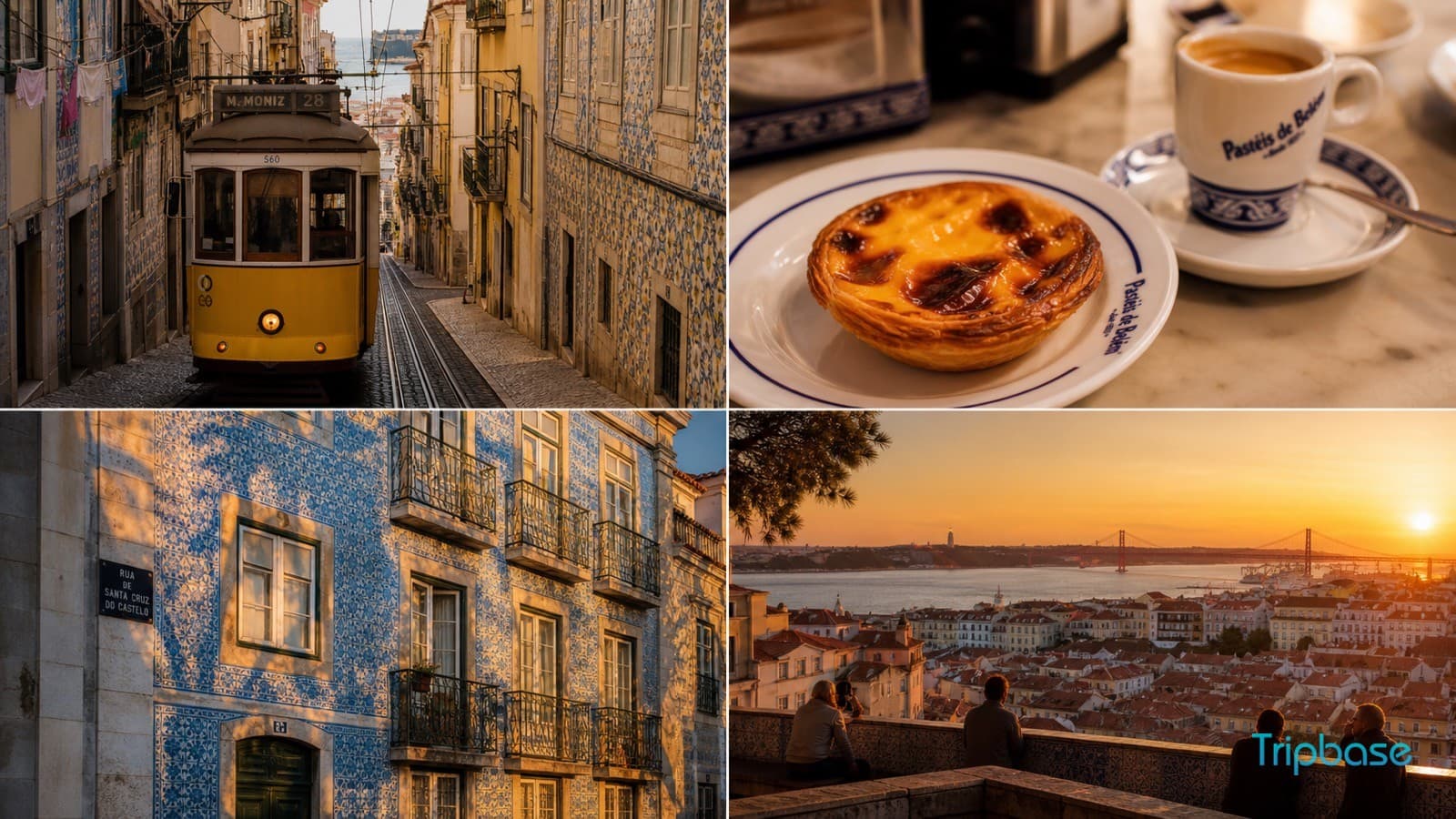
Lisbon is a city that has allegedly 365 recipes for salt cod - one for every day of the year - which is either an impressive feat of culinary creativity or a sign of profound national stubbornness. Possibly both. The Portuguese relationship with bacalhau makes the Argentine relationship with beef look casual.
But Lisbon's real magic is the tasca: a tiny, no-frills tavern where the menu is whatever the cook felt like making today, the wine comes from a box (and is better than most bottles you've paid £15 for), and the portions are calibrated for people who work for a living. A good tasca smells like garlic, sounds like an argument, and looks like it might fail a health inspection - which is Portuguese for "this place is exceptional."
Petiscos: These are Portugal's answer to tapas, and mentioning that comparison to a Portuguese person is a fantastic way to start a fight. Petiscos are small plates - pica-pau (cubed steak in garlic and pickles), ameijoas à Bulhão Pato (clams in white wine and coriander), tinned sardines that cost €4 and taste like the entire Atlantic. Order five or six, drink a bottle of Vinho Verde, and contemplate why you ever bothered eating anywhere else.
The pastéis de nata situation: Every travel article about Lisbon mentions Pastéis de Belém, and they're right to, because standing in that queue and eating a warm custard tart in the courtyard is a genuine life highlight. But here's the thing: almost every neighbourhood bakery in Lisbon makes excellent nata. The ones at your corner padaria at 7 a.m., still warm, with a coffee that costs €0.70? Those might be better. I realise this is heresy. I stand by it.
The Final Commandment
Here is the uncomfortable truth about eating like a local: it requires you to be slightly uncomfortable. You will point at things and not know what they are. You will mispronounce everything. You will sit in places where no one speaks your language and the menu is handwritten on a whiteboard. You will occasionally eat something you didn't intend to eat and it will be the best thing you've ever tasted.
This is the entire point. The tourist restaurant with the English menu and the stock photos exists to protect you from this discomfort, and in doing so, it protects you from the actual experience of being somewhere else. Stop being protected. Sit in the plastic chair. Eat the thing. Trust the grandmother.
She knows what she's doing. She's been doing it longer than you've been alive. And her rent is due, so order the special.