Street Food vs. Fine Dining: The Best Cities for Both
There is a particular kind of food snobbery that insists you must choose: either you're a person who queues barefoot at a market stall eating something unidentifiable off a banana leaf, or you're the sort who requests the wine list before the menu and uses the word "terroir" without visible embarrassment. The good news is that the world's greatest food cities have rendered this debate entirely academic.
Some cities manage to sustain both extremes of the culinary spectrum with equal brilliance - where a $2 bowl of noodles can be as life-changing as a $300 tasting menu, and where chefs who trained at Michelin-starred restaurants will cheerfully admit that the best meal they've ever eaten cost them eighty cents from a market stall. These are those cities, and if your stomach isn't already planning a trip, it will be shortly.
Bangkok, Thailand
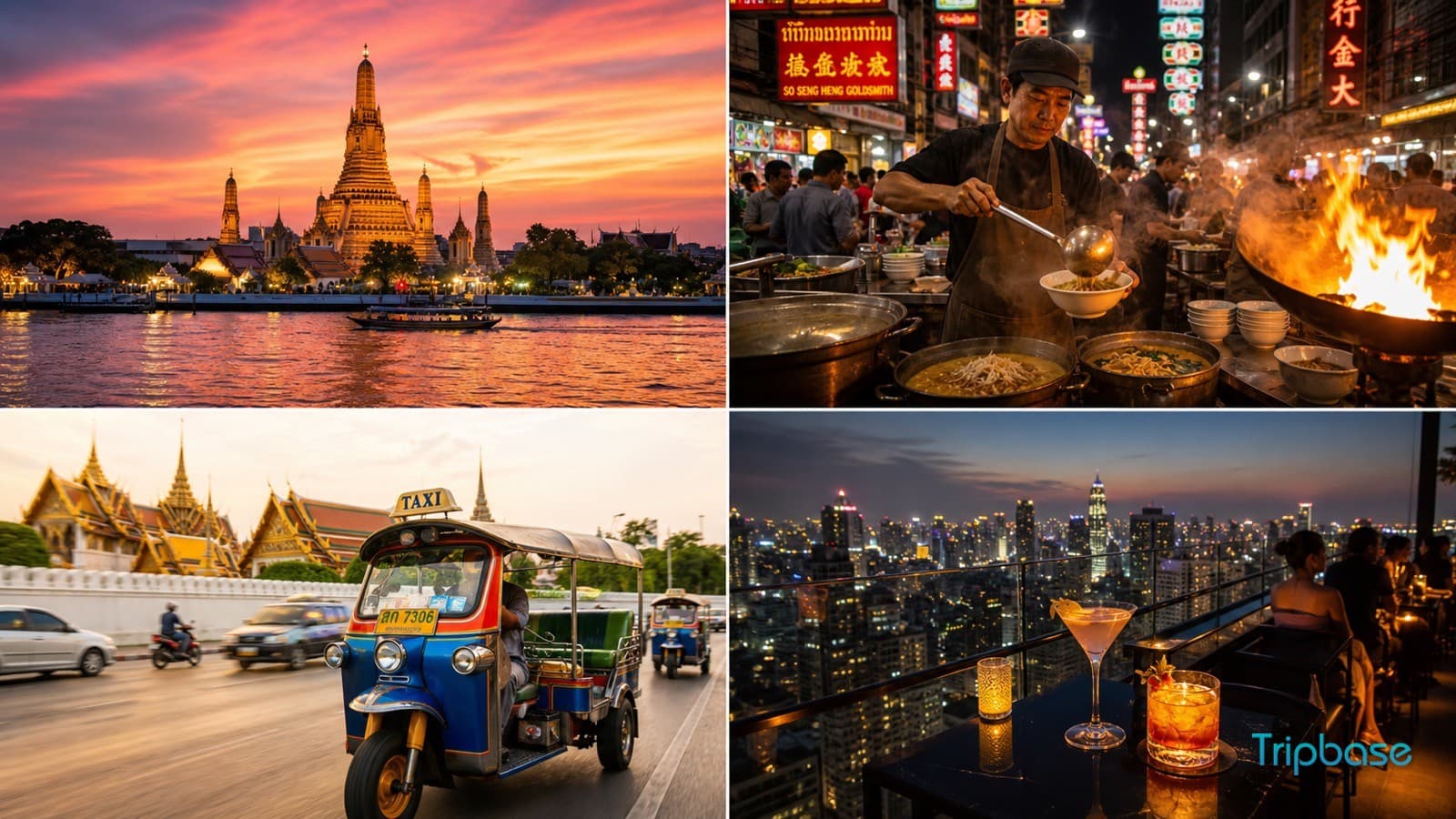
Bangkok operates on a food logic unlike anywhere else on earth. The same city that housed Gaggan Anand's eponymous restaurant (twice ranked among the world's top five, serving 25-course progressive Indian menus at around 7,000 baht per head) also contains Jay Fai - a cook in her seventies who wears oversized goggles, works over charcoal fires on a street corner, and charges roughly the same for her legendary crab omelette. She has a Michelin star. The goggles are, apparently, non-negotiable.
The street food baseline in Bangkok is so outrageously high that it makes every other city's street food scene look like it's simply not trying. A bowl of boat noodles from the Tha Pra Chan market will cost about 15 baht - roughly 40 cents - and taste of a slow-cooked broth that has spent longer on the stove than some marriages last. Pad thai at Thipsamai, a restaurant that has been doing essentially one thing since 1966, runs to about 100 baht and requires arriving either very early or very late to avoid a queue that stretches philosophically around the block.
For the fine dining side of things, Bangkok has grown into one of Asia's most serious restaurant cities. Nahm, Le Du, and Paste all operate at a level that would embarrass Michelin if it paid more attention to Southeast Asia - though it is paying increasing attention now, which means the prices at the good places are moving in a direction you'd prefer they didn't. Our Bangkok guide covers both ends of this spectrum in considerably more detail, for when this article has done its job of destroying your food contentment.
Singapore
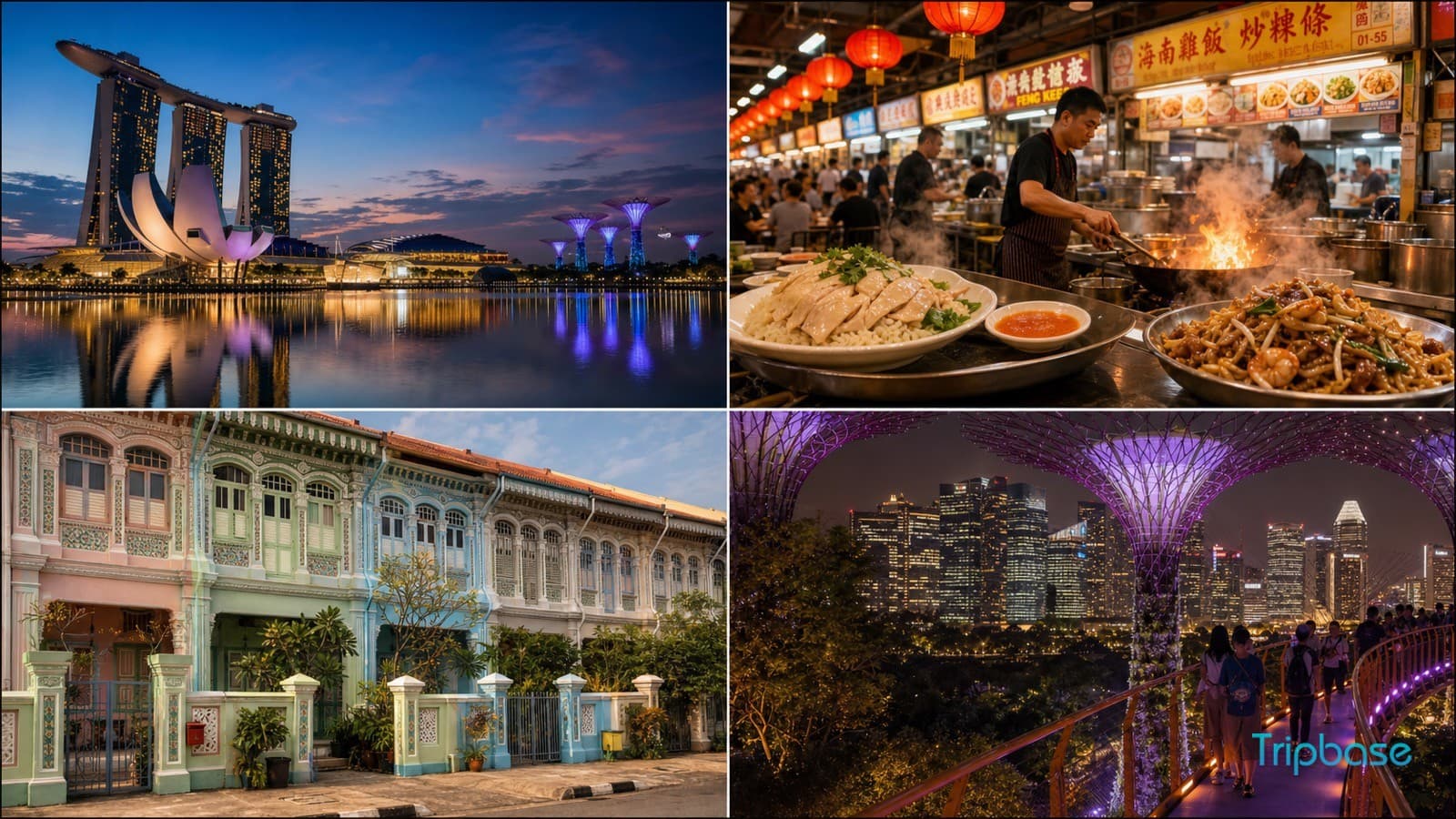
Singapore is the only city on earth where a government agency actively curates street food. The National Environment Agency licences and organises the country's hawker centres - covered, open-air food halls where generations of Singaporean families have quietly perfected single dishes across entire lifetimes. This is not a romantic notion: it is infrastructure, and it produces some of the finest cheap food anywhere in the world (which the Singaporeans will tell you without a trace of modesty, because they are correct).
Hill Street Tai Hwa Pork Noodle has held a Michelin star since 2016 and charges about S$6 for a bowl of bak chor mee - minced pork noodles in vinegar sauce with liver and dumplings. The queue starts before the stall opens and the owner is reportedly unmoved by the sustained global attention, being occupied with cooking. Lau Pa Sat, a Victorian cast-iron hawker centre in the financial district, does satay from about S$2 a stick in the evening and has the decency to make you feel like you're eating in something historically significant while you do it (because you are).
At the other end, Odette in the National Gallery has held three Michelin stars and serves modern French cuisine with Southeast Asian inflections at a price that requires either a special occasion or a creative relationship with the concept of "special occasions." Burnt Ends, the wood-fire barbecue restaurant that helped pioneer a new kind of deliberate casualness in Singapore's dining scene, has a months-long waiting list and charges more for a beef short rib than seems remotely reasonable - and yet the waiting list persists, which tells you something. The Singapore guide can help you decide which financial ruin to prioritise.
Tokyo, Japan
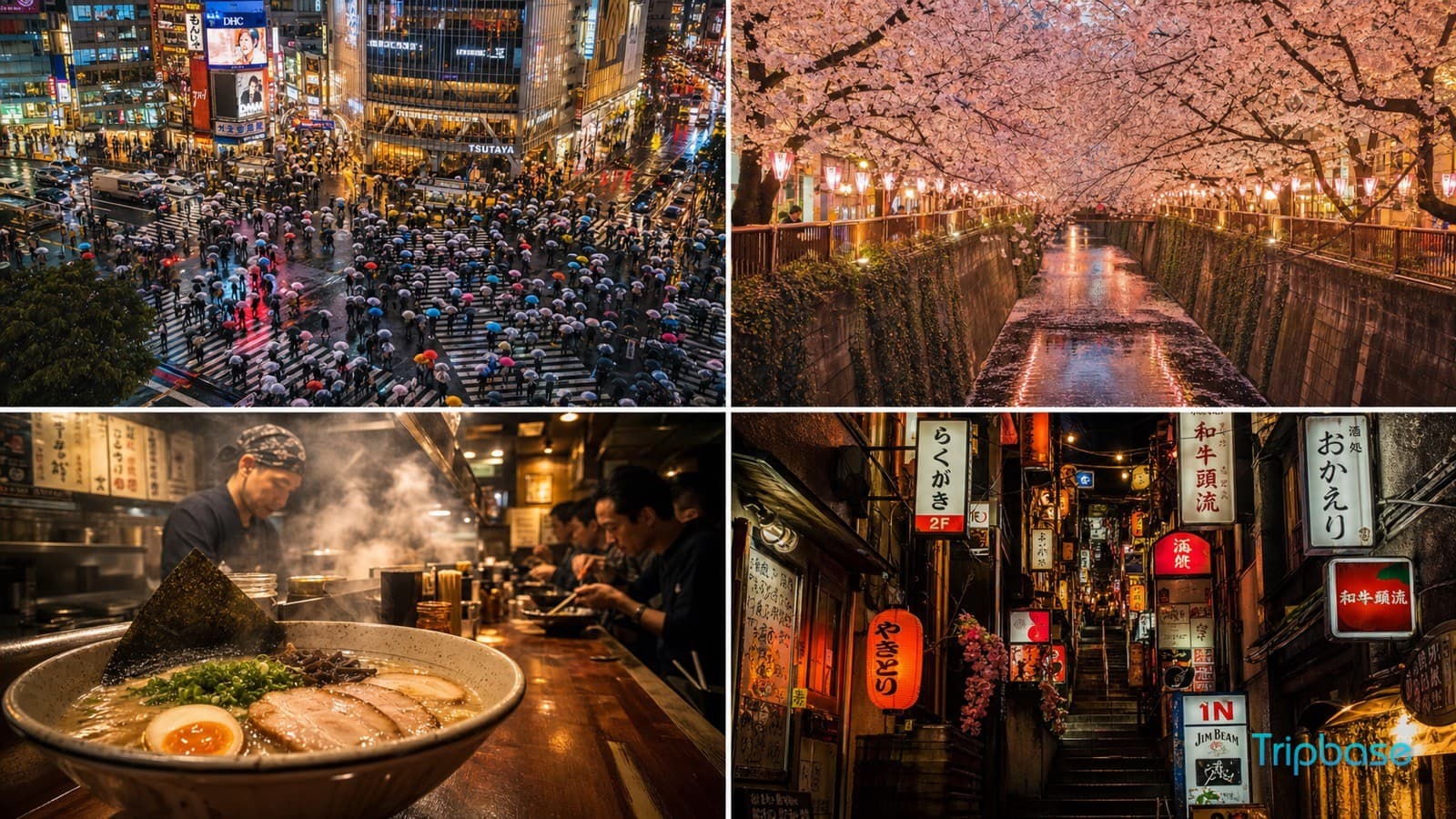
Tokyo has more Michelin stars than any other city on the planet. This either says something profound about Japanese culinary excellence or something awkward about how Michelin weights cities it happens to enjoy visiting. The result for the traveller is the same either way: you can eat a bowl of ramen at Ichiran - alone, in a privacy booth, at 2am, having a quietly spiritual experience - for about ¥1,000, and then spend the next morning at a sushi omakase counter where the chef trained for a decade under a master before being permitted to handle fish in front of paying customers.
The standing sushi bar phenomenon deserves special mention. Establishments like Sukiyabashi Jiro represent one extreme - reservations obtained through connections, meals measured in hushed reverence, a specific quality of silence in the dining room that suggests eating here is an act of cultural participation rather than lunch. The neighbourhood conveyor belt spots and standing bars serve perfectly good nigiri for under ¥2,000 without anyone noting that you're holding your chopsticks incorrectly. Both experiences are authentically Tokyo. The city has a generosity with food that is almost suspicious.
For breakfast: a kissaten (old-school Japanese coffee shop) doing morning set service - thick toast, a boiled egg, a small salad, coffee - costs about ¥400 and represents something very important about the Japanese understanding of hospitality, which is that feeding people well is not contingent on charging them aggressively for it. This is objectively a better value proposition than most European hotel breakfasts and significantly better than most airport options anywhere. Our Tokyo guide covers where to find these things before they disappear into the city's perpetual regeneration.
Lima, Peru
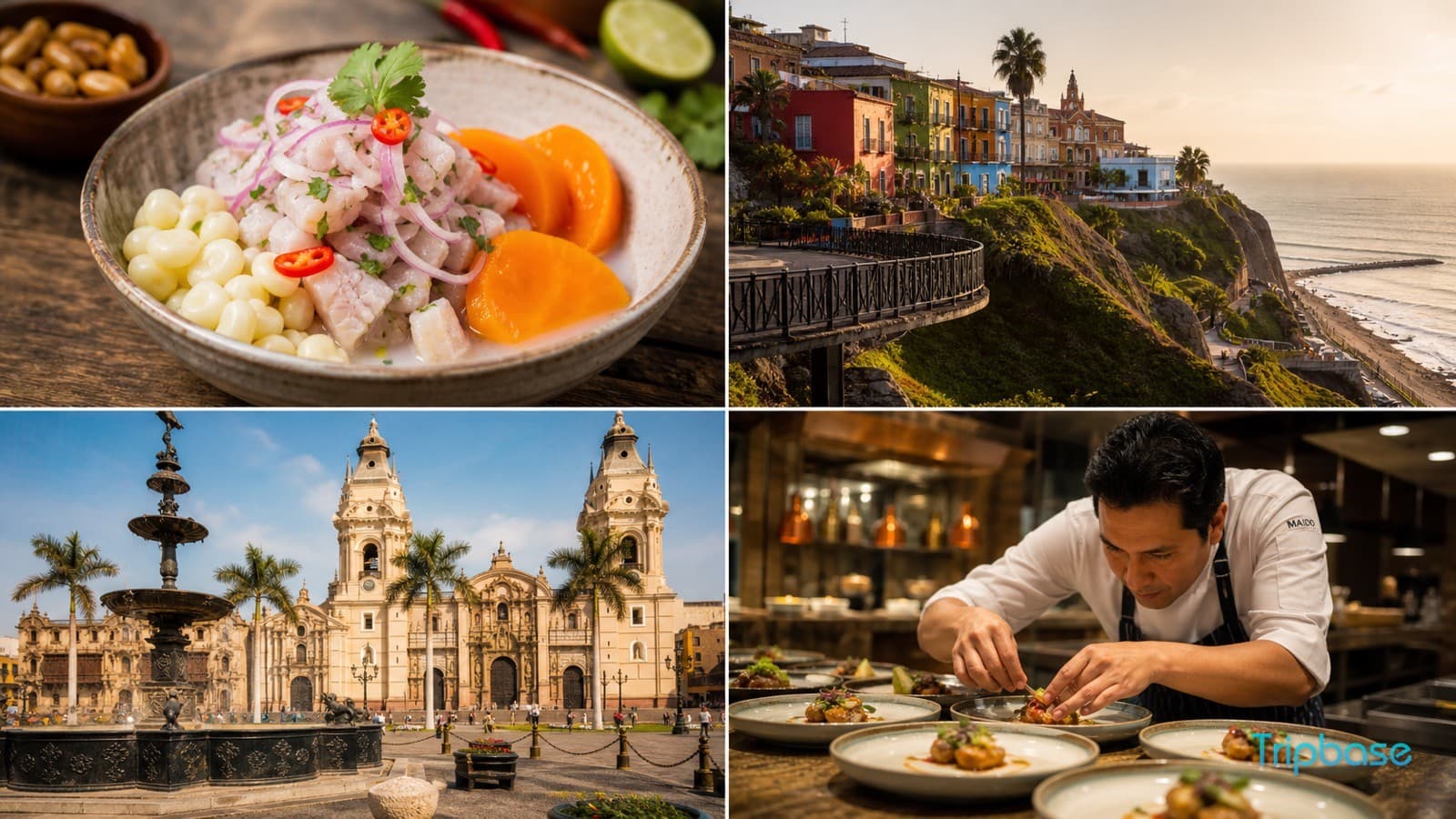
Lima's ascent to the top of the global food conversation has been one of the more unlikely culinary stories of the last two decades. Virgilio Martinez's Central restaurant has sat near the top of the World's 50 Best list for years - the menu organises itself by altitude, from ocean floor ingredients to high-altitude Andean produce, which is an idea that either sounds insufferable or extraordinary depending on your disposition (it is extraordinary). Maido does Nikkei cuisine, the Japanese-Peruvian fusion that should not work but aggressively does, to similar acclaim. These are restaurants engaged in a serious ongoing argument about what Peruvian food can be.
The bottom of the Lima food market is equally extraordinary. Ceviche - raw fish "cooked" in lime juice with aji amarillo chillies and red onion - can be found for S/15 to S/25 at the city's neighbourhood cevicherias. El Punto Azul in Miraflores does a version that would embarrass restaurants charging five times the price, in a setting that suggests the decor budget was zero and nobody noticed (or cared, which is the correct response). The central market sells ingredients that you will not have seen before and cannot name, which is either thrilling or disconcerting depending on how adventurous your relationship with food actually is, as opposed to how adventurous you tell people it is.
Anticuchos - grilled beef heart on skewers - are a Lima street food staple that cost next to nothing and taste magnificent (the heart being a muscle like any other, and one that benefits considerably from good marinating and charcoal heat). Señora Grimanesa Vargas, who runs a legendary anticucho stand in Miraflores, has cooked this single thing so well for so long that she has her own cult following and a restaurant bearing her name. Our Lima guide covers both the splurge and the shortcut options in more detail than seems strictly necessary.
San Sebastián, Spain
San Sebastián - Donostia, if you want to endear yourself to the Basque locals, which you should - operates on a food economy that makes economists uncomfortable. The city of 185,000 people in the Basque Country has more Michelin stars per capita than anywhere else on earth. It also has pintxos bars: Basque tapas bars where elaborately constructed small bites are arrayed along the counter at roughly €2-3 each, available to anyone who walks in, at any hour, without a reservation or a dress code, and without anyone asking how many of them you've already consumed at the last four establishments.
Arzak has held three Michelin stars since 1989 and represents something approaching a dynasty - Elena Arzak now runs the kitchen alongside her father Juan Mari, who essentially invented modern Basque cuisine while the rest of the world was still debating whether nouvelle cuisine was a passing fad. A meal runs to several hundred euros and is, by most accounts, worth it. Asador Etxebarri, in the nearby village of Axpe, does its own theatrical thing with fire and smoke at similar prices and with a waiting list measured in months. The bar Borda Berri in the Old Town will sell you a perfectly made prawn pintxo for about €2.50, standing up, surrounded by people doing exactly the same thing.
The ritual, for those unfamiliar: bar-hop through the old town, spending €15-20 over the course of two hours on excellent small things accompanied by a glass of txakoli - a tart local white wine, poured from a considerable height to add a light fizz, which is a charming affectation that nobody questions. Then, if the budget allows, make a reservation somewhere serious. If it doesn't, it barely matters. The pintxos bars have the situation covered at a standard that most cities would consider a fine dining achievement.
Hong Kong
Hong Kong does Cantonese food at both extremes with a seriousness that borders on constitutional obligation. Dim sum - that glorious wheeled-trolley procession of dumplings, buns, and steamed things in bamboo steamers - can be had at neighbourhood yum cha restaurants for HK$20-30 a basket, a form of breakfast that is simultaneously social, leisurely, and aggressively efficient (the trolleys do not wait for you to finish your sentence). The tradition of pushing carts around dining rooms is gradually dying out across the city, which means every time you encounter one, you are witnessing something worth preserving, and eating something worth eating.
At the more alarming end of the price spectrum, The Chairman in Central serves traditional Cantonese cuisine at a level that has made it one of Asia's most acclaimed restaurants. Bo Innovation applies molecular techniques to classical Cantonese flavours in ways that produce either wonder or confusion depending on your relationship with the phrase "deconstructed." Tim Ho Wan began as a tiny dim sum spot with a Michelin star, which made it briefly one of the cheapest Michelin-starred meals available anywhere - before expanding into a chain, which is the natural consequence of being discovered.
The real Hong Kong food secret is the dai pai dong - open-air cooked food stalls that have survived the city's perpetual drive toward efficiency and modernisation, mostly through hereditary licences and sheer stubbornness. They do wok-fried dishes, congee, and noodles at prices that make no economic sense given Hong Kong's rent situation. They are, unambiguously, among the best places to eat in the city. Our Hong Kong guide covers how to find them before the city gets around to fixing this situation.
New York, USA
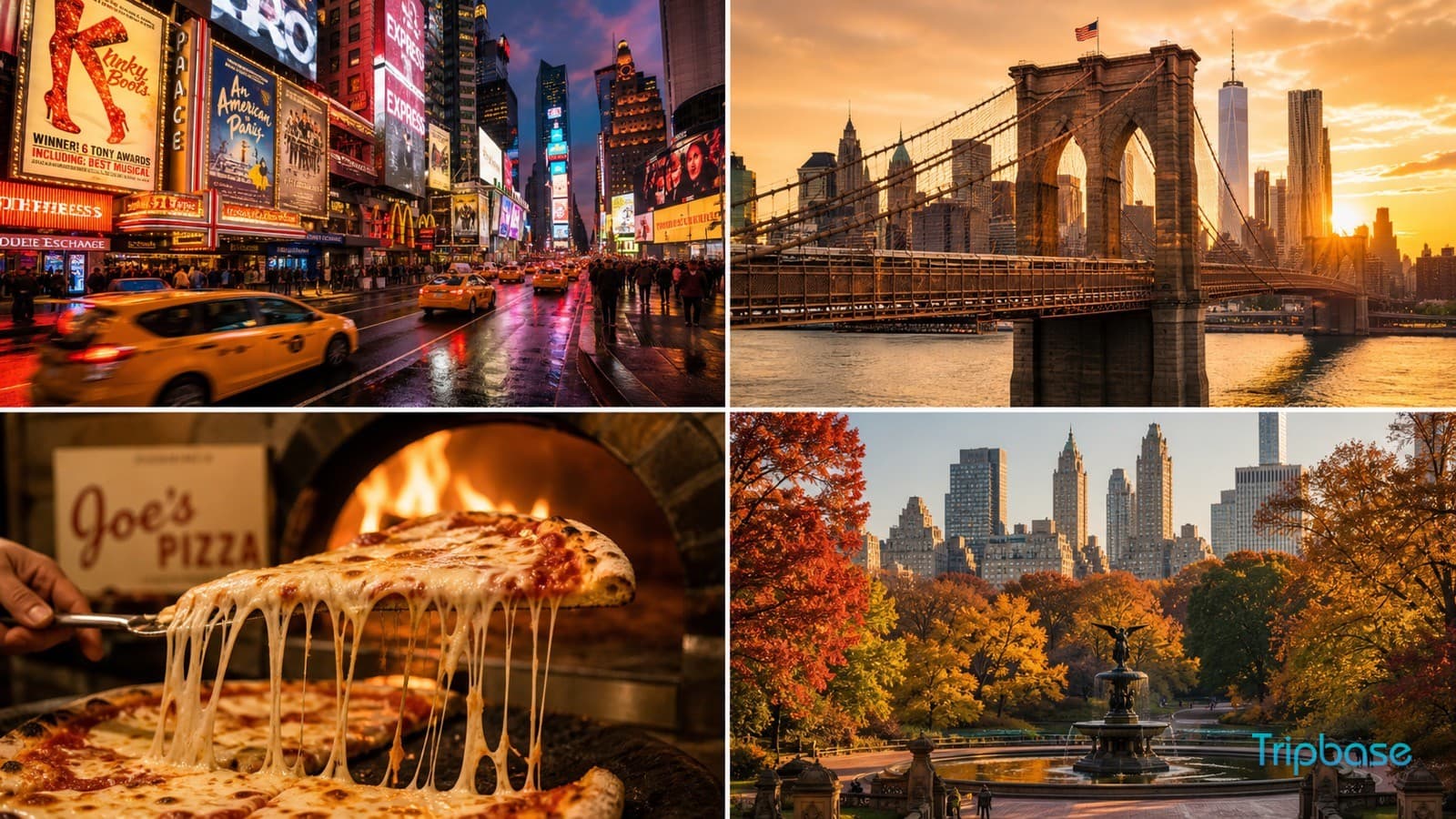
New York City has a dollar slice problem - not a problem in the negative sense, but a problem in the sense that it makes it nearly impossible to be hungry in Manhattan without encountering a slice of pizza (technically $1.50-2.50 these days, inflation being what it is) that is, depending on the establishment, anywhere from entirely adequate to genuinely transcendent. The city has managed to cultivate both a street food culture of staggering breadth and a fine dining scene that contains more serious restaurants per square mile than almost anywhere outside Tokyo.
Le Bernardin has held four Michelin stars for long enough that losing one would now constitute a civic incident. Masa, in Columbus Circle, charges north of $950 per person for its omakase menu - not including drinks - which is a number that requires either a very specific financial situation or a very committed approach to dining as an activity. Per Se does things with vegetables that seem implausible and charges accordingly. These are not merely restaurants - they are arguments about what food can be when resources are not a constraint, and the argument is, on the evidence, convincing.
The counter-argument is a chopped cheese from a Harlem bodega (around $6), a soup dumpling from Joe's Shanghai in Flushing ($2-3 each), or a dirty water hot dog from a cart outside Grand Central. The city contains hundreds of ethnic enclaves operating at a standard that many European capitals would struggle to match: Flushing for Sichuan cooking and soup dumplings that require no embellishment, Jackson Heights for South Asian everything, Brighton Beach for the kind of smoked fish and pickled things that make you want to reassess all your prior decisions about where to live. New York is a deeply unfair food city in the sense that it is almost impossible to eat badly if you pay any attention at all. Our New York guide attempts to make sense of this, with limited success.
There's more on eating well without a reservation - or an expense account - in our guides to eating like a local and to building a trip around food. The philosophy is the same regardless of price point: pay attention, go where the locals actually go, and stop apologising for wanting both the $2 bowl and the tasting menu. They are not in competition.
Disclaimer: All prices are approximate and subject to the general degradation of purchasing power. No food snobbery was intended in the writing of this article - both the $2 fish taco and the $200 tasting menu are entirely valid choices, and anyone who insists otherwise is selling something.