Places You Can Never Visit Again - Destinations Lost to Time, War, and Nature
The travel industry has, to be fair, a limited interest in destinations that no longer exist. You cannot monetise a place that is underwater, actively on fire, or reduced to rubble by either seismic activity or deliberate intent. This is an entirely reasonable position, and it does not stop us from presenting the following list of places that are, in various configurations and for various reasons, gone. Some are ancient losses. Some are disturbingly recent. All of them were, at some point, somewhere you could actually go - and now, to varying degrees, are not.
The Kowloon Walled City, Hong Kong
For most of the twentieth century, a small sliver of Kowloon belonged, technically, to nobody. The Kowloon Walled City occupied 0.026 square kilometres of Hong Kong and housed - at its peak in the 1980s - roughly 33,000 people. That is a population density of approximately 1.3 million people per square kilometre, which is a number that should make your pupils dilate even if you are reading this in a spacious room.
The Walled City existed because of an administrative anomaly: China never formally ceded it to Britain during the handover of Hong Kong, leaving it in a legal grey zone that neither government particularly wanted to deal with (governments, it turns out, are remarkably content to ignore things they find complicated). The result was a self-governing vertical labyrinth of 350 interconnected buildings, lit almost entirely by neon, with no official police presence, a thriving economy of unlicensed dentists, and a sky you could only see if you climbed to the roof and squinted. The food was said to be outstanding. The plumbing is not something the historical record dwells on at length.
Demolished in 1993 to make way for a park - a park, which the residents of one of the most densely populated places in human history presumably found extremely roomy - the Walled City now exists in photographs, academic papers, and one genuinely haunting architectural recreation in a Japanese video game. Can you visit what remains? The park is still there, with a small museum and a scale model. It is significantly less interesting than 33,000 people crammed into a building with no legal authority whatsoever.
Palmyra, Syria (Before 2015)
For two thousand years, Palmyra was one of the most remarkable ancient cities in the world - a caravan hub at the crossroads of the Roman and Persian empires, decorated with colonnaded streets, a staggering Temple of Bel, and a funerary tower complex that archaeologists spent generations studying. UNESCO called it a World Heritage Site. Travel writers called it unmissable. Both assessments were, it turned out, poorly timed.
In 2015, ISIS captured Palmyra and spent approximately eighteen months demonstrating what happens when an organisation with no respect for antiquity and a great deal of access to explosives encounters 2,000-year-old stone columns. The Temple of Bel was blown up. The Temple of Baalshamin was blown up. The Arch of Triumph, which had stood since the third century AD, was demolished with sledgehammers. The 83-year-old former director of antiquities for Palmyra, Khaled al-Asaad, was publicly executed for refusing to reveal where artefacts had been hidden. They must have been very important artefacts.
Syrian and Russian forces recaptured Palmyra in March 2016. It was subsequently recaptured by ISIS in December 2016, because even the aftermath was terrible. Much of what made Palmyra extraordinary is simply gone. Can you visit what remains? Syria is not currently considered a safe destination for tourists. Some restoration work continues. The ruins that survived are still standing, but the Palmyra that existed before 2015 is not among them.
Pompeii (As a Living City)
Pompeii is an interesting case because you can visit it. You can walk its streets, examine its frescoes, and see the plaster casts of people who did not successfully run away from Vesuvius on August 24th, 79 AD. What you cannot visit is the actual city - the thriving Roman settlement of 20,000 people with bakeries still warm from the morning's bread, election graffiti still fresh on the walls, and the specific ambient chaos of a port town in summer. That version was gone by the following morning, buried under six metres of volcanic ash and pumice.
The eruption was catastrophic but also, from a purely archaeological standpoint, extraordinarily convenient for future historians. The city was preserved rather than destroyed in the conventional sense, frozen in the middle of an ordinary afternoon with everyday objects exactly where someone set them down and never came back to collect. The bread in the ovens. The prices painted on the wine bar walls. The surprisingly explicit wall art that Victorian archaeologists discovered, catalogued carefully, and then locked away in a Secret Museum in Naples for several decades on the grounds that it was, as no contemporary scholar quite managed to commit to paper, a bit much.
Nearby Herculaneum was considerably less fortunate. The pyroclastic surge that finished it arrived at 300 kilometres per hour and 600 degrees Celsius, which is a situation that does not leave much time for philosophical reflection. Can you visit what remains? Yes - Pompeii receives roughly 2.5 million visitors a year. If you're combining it with broader Italian travel, our Rome guide covers the day-trip logistics, though the modern city around it is considerably livelier than the original.
The Aral Sea
In 1960, the Aral Sea was the fourth-largest lake in the world. It had a thriving fishing industry, port towns, abundant birdlife, and a reasonable expectation that it would continue being a lake for the foreseeable future. Then the Soviet Union decided that the two rivers feeding it would be more productively deployed irrigating cotton fields in Kazakhstan and Uzbekistan, and redirected them accordingly. This decision was made with the same level of ecological foresight that characterises most Soviet-era large-scale infrastructure projects (read: essentially none).
The lake began to shrink. And then it continued to shrink. And then, apparently finding that it had developed a taste for disappearing, it continued to shrink some more. By 2007, the Aral Sea had lost 90% of its volume. The fishing boats that worked its waters now sit in the desert, rusting magnificently, surrounded by former seabed. The port town of Moynaq, which once sat on the shore, is now 150 kilometres from any water. Salt and toxic pesticide residue from the former lakebed blow across the region in dust storms, causing public health consequences for communities that never asked to live in a desert and are now dealing with one anyway.
Kazakhstan has since built a dam that has partially restored the North Aral Sea. The South Aral Sea is, for practical purposes, gone. The ship graveyards near Moynaq receive a small but steady stream of visitors who describe the experience as 'haunting,' which is presumably not the tourism outcome the Soviet Ministry of Agriculture was hoping for when it authorised the irrigation scheme in 1960. Can you visit what remains? Yes. The journey is not straightforward, but the rusting trawlers half-buried in scrubland are among the more genuinely strange sights available to the dedicated traveller.
Centralia, Pennsylvania
In 1962, someone lit a fire in a coal seam beneath the borough of Centralia, Pennsylvania. Whether this was an accident during a routine refuse-burning operation or something more deliberate remains contested, and the relevant parties have had sixty-odd years to get their accounts into alignment. What is not disputed is what happened next: the fire was not put out. The underground coal seams simply continued burning.
Centralia's population in 1962 was around 1,100 people. By 2013, it was 10. The roads crack and steam. Carbon monoxide and other gases seep through the earth in concentrations sufficient to be extremely problematic for anyone nearby, which is why the remaining houses were condemned and residents were offered - and most accepted - relocation assistance. A handful of people declined and remain, their exact number something of a mystery, living above a fire that geologists estimate could continue burning for another 250 years. Pennsylvania officially eliminated the borough's ZIP code. The underground fire did not take the hint.
If reading our guide to the world's most deadly places left you feeling that you'd like to see one in person, Centralia is technically accessible - an empty grid of cracked, smoking streets with a few remaining structures and an inordinate amount of graffiti. The church is still standing. The mine fire is still burning. Can you visit what remains? Yes, though there is not a great deal to see beyond the cracked pavement, the smoke, and the lingering question of who exactly signed off on not dealing with this in 1962.
The World Trade Center's "Top of the World" Observatory
The observation deck on floors 107 and 110 of the South Tower was, in its time, the highest observation deck in the world - 411 metres above street level, with views across Manhattan, New Jersey, and on a clear day, several states. It was called Top of the World, a marketing decision that was carrying rather more weight than its creators intended. The deck operated from 1975 to September 11, 2001. In those 26 years, it received over 50 million visitors.
The original observation deck was famous for visibility of up to 80 kilometres on good days. It was also briefly famous for the 1993 bombing, which closed it temporarily before it reopened - a detail that now sits uncomfortably in the retrospective account of everything that happened on the site. The second closure was more conclusive.
Can you visit what remains? One World Observatory now occupies floors 100 to 102 of One World Trade Center, the skyscraper built on the footprint of the original towers. It is, by most accounts, an excellent observatory. It is a different thing. This seems worth acknowledging quietly and moving on from.
Pripyat, Ukraine
Pripyat was a Soviet model city, built in 1970 to house workers at the Chernobyl Nuclear Power Plant. Population: 49,360. Average resident age: 26. A funfair opened on April 27, 1986. It operated for exactly one day before the evacuation order arrived, which gives it a claim to the most inauspicious opening week in the history of amusement parks. The bumper cars are still there, rusting quietly while the forest grows back around them.
The evacuation of Pripyat began the morning of April 27, 1986, with residents told they would be gone for approximately three days and should bring only personal items for that duration. The city was left essentially intact - toys on floors, books on shelves, wedding photographs on walls, a classroom with chalk still on the blackboard, a hospital with X-rays still clipped to the light boxes. The residents never returned. The things they left behind are still there, which is either a remarkable accident of preservation or, depending on your relationship with decay and abandoned children's hospitals, deeply unsettling. Probably both.
The exclusion zone has become, somewhat improbably, a tourist destination. Guided tours operate, radiation levels in accessible areas are described as comparable to a long-haul flight, and Pripyat regularly appears on lists of the world's most extraordinary places to visit - though our guide to dangerous travel destinations contains the relevant caveats. Can you visit what remains? Yes. Whether you should is a question the exclusion zone tour guides are paid not to answer.
Ancient Babylon, Iraq
Babylon was once the largest city in the world - home to the Hanging Gardens (which you have definitely heard of but which archaeologists have never conclusively located, because history enjoys this kind of irony), the Tower of Babel (a project that the Book of Genesis did not record as going particularly well), and one of the most sophisticated legal codes of the ancient world. The city controlled an empire stretching from the Persian Gulf to the Mediterranean. It was, by any reasonable measure, extraordinary.
The ruins are located near Al Hillah, about 85 kilometres south of Baghdad. They survived Alexander the Great, the Parthians, the Sassanid Empire, various caliphates, and several thousand years of general historical inconvenience. They did not survive Saddam Hussein's 1980s restoration project, which involved building a replica palace on top of the ancient ruins and stamping bricks with his own name in imitation of Nebuchadnezzar - a gesture that archaeologists described as 'not ideal' and which caused extensive damage to the original structures. US military operations in 2003 added helicopter landing pads and used archaeological material to fill sandbags. UNESCO designated Babylon a World Heritage Site in 2019, approximately two millennia after it would have been most useful.
Can you visit what remains? In theory, yes. In practice, Iraq's security situation has made tourism to Babylon difficult for most of the past two decades. Conditions vary significantly. Check current Foreign Office advice before booking, and also before deciding that checking Foreign Office advice is probably not necessary.
Fordlândia, Brazil
In 1928, Henry Ford decided to build an American city in the middle of the Amazon. Not a small outpost - a proper planned city, complete with American-style houses, a golf course, a hospital, a library, and a company policy prohibiting alcohol, women, and anything else that might make the Amazon feel insufficiently like Michigan. He called it Fordlândia. He had not consulted the Amazon about any of this, and the Amazon's response was ultimately definitive.
The scheme failed for reasons that were, in retrospect, entirely foreseeable. Rubber trees grown in plantation conditions in their native Amazon are far more susceptible to fungal disease than the same trees grown in Southeast Asian plantations - which is precisely why all the commercially viable rubber plantations were in Southeast Asia. The trees died. The workers rioted over the canteen's insistence on serving American food, which they found less appealing than local alternatives. The jungle, which had not been invited to participate in the project, continued being the jungle. Ford spent the equivalent of roughly $300 million and abandoned the entire enterprise in 1945, selling the land back to the Brazilian government for $244,200. The accountants presumably did not circulate this particular document widely.
A few thousand people live in Fordlândia today. The original American-style houses are being gradually reclaimed by vegetation. The water tower stands in a clearing, Ford's logo still faintly visible on its side. If the world's most remote inhabited places left you feeling inspired rather than alarmed, Fordlândia is a several-hour boat trip upriver from Santarém and entirely worth the commitment. Can you visit what remains? Yes. You will mostly be visiting the jungle, but the ruins are genuinely strange and the failure is documented in extraordinary detail.
Ancient Carthage, Tunisia
Carthage was, for several centuries, one of the most powerful cities in the Mediterranean - capital of a trading empire that dominated North Africa, Sicily, Corsica, and Sardinia, and home of Hannibal, who transported war elephants across the Alps to attack Rome and came rather closer to succeeding than Rome was subsequently comfortable acknowledging. The two civilisations fought three wars. The third time, in 146 BC, Rome won conclusively, and the aftermath was thorough.
What followed was one of the more comprehensive acts of urban destruction in ancient history. Rome besieged Carthage for three years, then spent seventeen days burning it to the ground, then sold 50,000 survivors into slavery. The famous story that they then salted the earth to prevent anything growing back is, modern historians note, probably apocryphal - the Romans may not have literally salted it, which is a clarification that somehow makes Rome seem both more and less frightening simultaneously. A new Roman city was eventually built on the ruins. A Roman city was subsequently built on top of that one. The Carthage of Hannibal and the Barcid dynasty is buried under all of it.
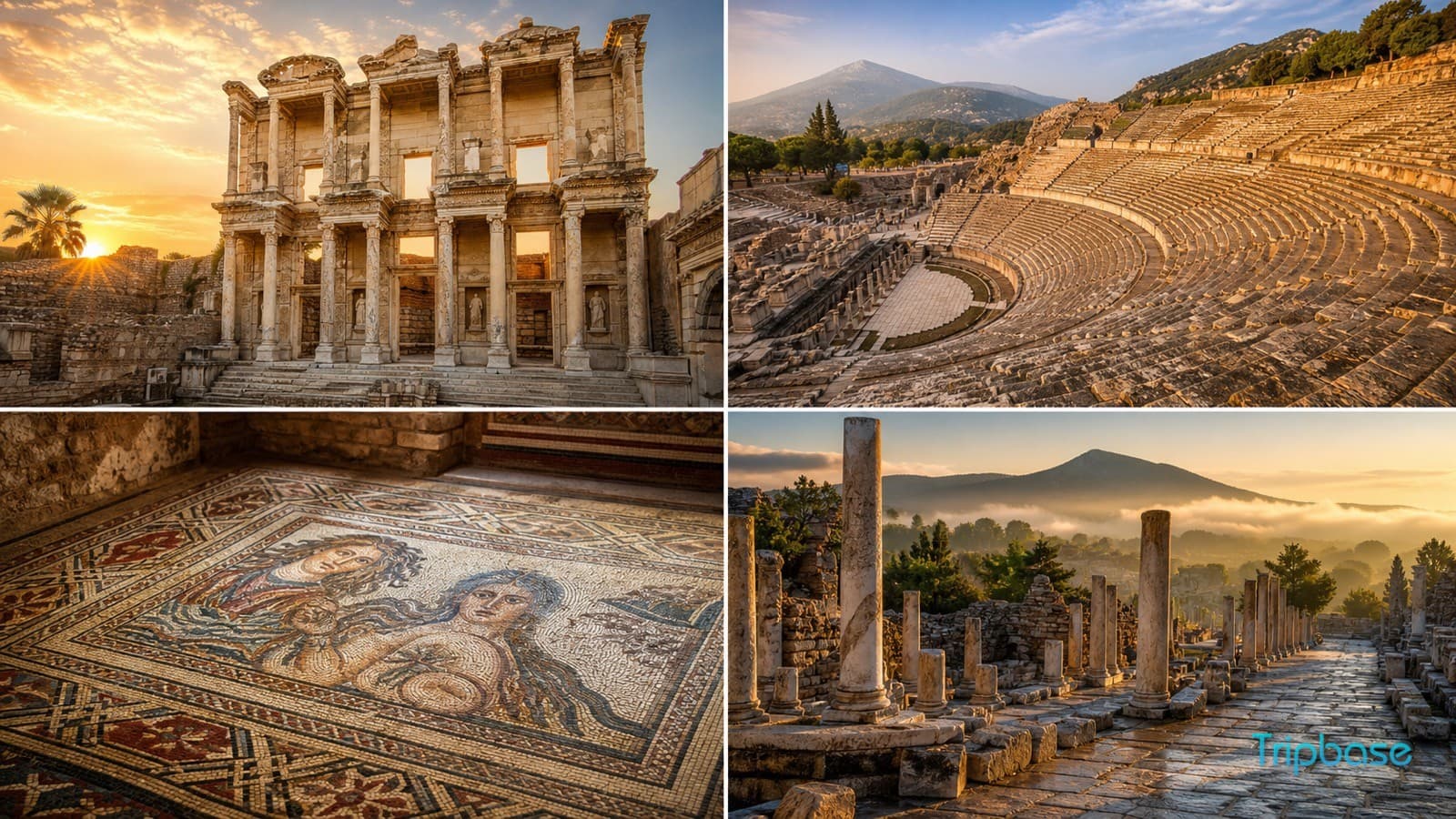
Carthage today is a suburb of Tunis, with archaeological sites, a national museum, and the impressive remains of the Roman Baths of Antoninus. If ancient ruins in states of varying preservation interest you, our Ephesus guide covers a site where the preservation is considerably more complete - and the Romans, notably, chose renovation over demolition. Can you visit what remains? Yes. The Roman-era Carthage is well-preserved. The Phoenician city underneath it is considerably harder to access, because Rome was thorough about this kind of thing.
The Roanoke Colony, Virginia
In 1587, John White led 115 English colonists to Roanoke Island on the coast of what is now North Carolina, established a settlement, and then sailed back to England to arrange additional supplies. He was delayed for three years by a minor inconvenience called the Spanish Armada. When he returned in 1590, the settlement was empty. All 115 colonists - men, women, children, including his own granddaughter Virginia Dare, the first English child born in the Americas - had disappeared without apparent violence or obvious distress. They left behind one word carved into a fence post: CROATOAN, the name of a nearby island.
Nobody has ever satisfactorily explained what happened. The prevailing theory is integration with local Croatoan or other Native American communities - there is some genetic and linguistic evidence consistent with this. There are also theories involving disease, conflict, and starvation, which are less optimistic and equally unresolved. Archaeological excavations at several sites continue. The mystery has now persisted for 436 years, which is long enough that it seems fair to conclude that a definitive answer is either forthcoming very shortly or not coming at all, and the historical record is not giving strong signals either way.
Fort Raleigh National Historic Site on Roanoke Island has a museum, reconstructed earthworks, and an outdoor theatre production that re-enacts the colony's story every summer - necessarily improvising the third act, since nobody knows what it is. Can you visit what remains? Yes. There is not much to see in terms of original structures, but the landscape is relatively unchanged and the mystery is fully intact, which is more than can be said for most things on this list.
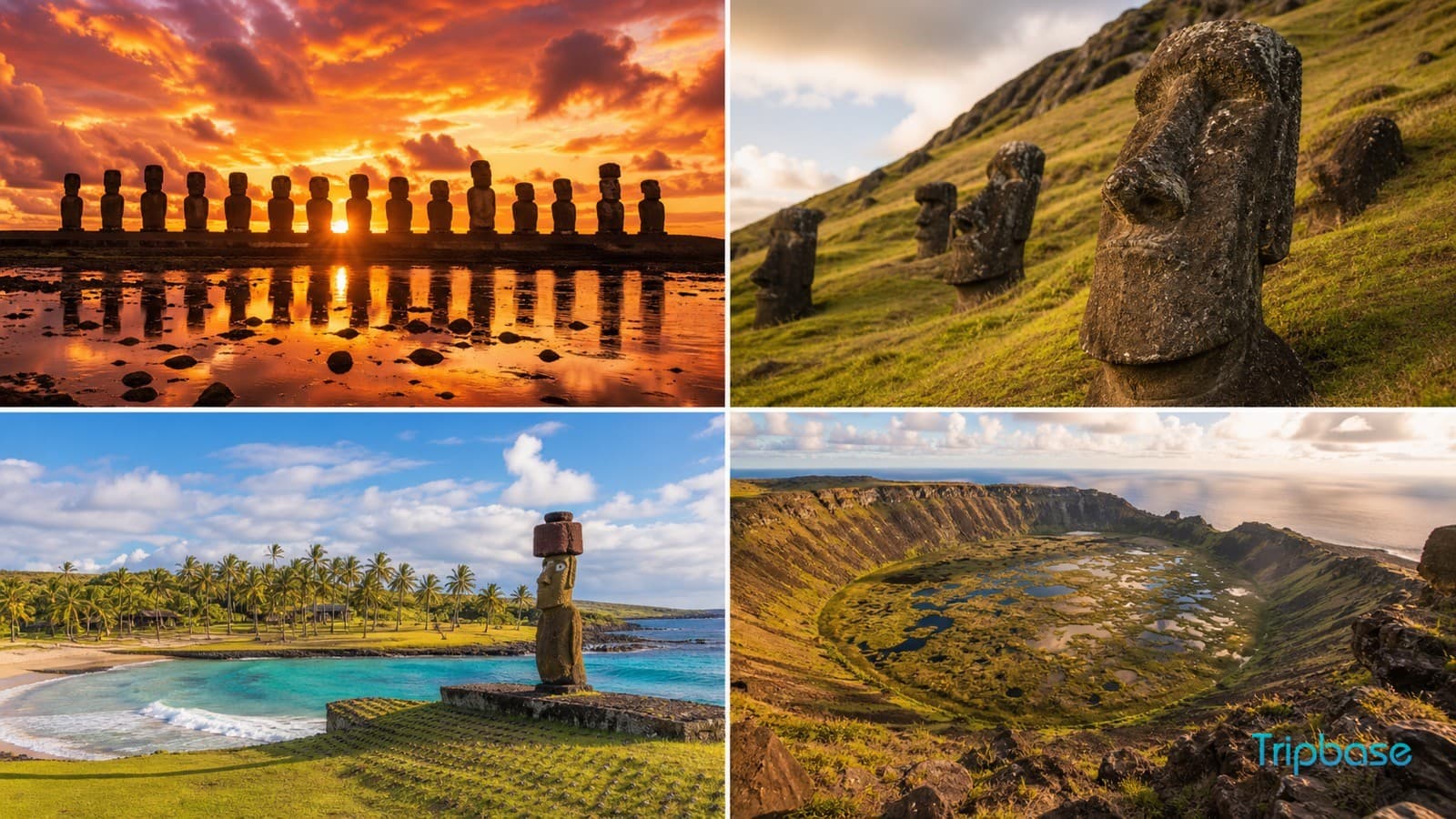
If this article has left you with the impression that places you intended to visit have a worrying tendency to stop existing before you get there, you are not entirely wrong. The consolation is that the places which do survive tend to be extraordinary - Easter Island is still there, still baffling, still full of moai that nobody can entirely explain. Some mysteries stay accessible. Some places simply don't. Travel, as in most things, rewards urgency.
Disclaimer: As a brand, Tripbase are accepting of all global cultures and histories. This article is written with humour, but the losses described - particularly Palmyra and the Aral Sea - represent genuine human and ecological catastrophes, and are meant to be understood as such.