
The Strangest National Dishes in the World
The World's Strangest National Dishes
Every country has a dish that makes outsiders raise an eyebrow. Often it's a food born from necessity - using every part of an animal, preserving things through fermentation because refrigeration didn't exist, or eating what was available in a harsh or isolated landscape. Sometimes the strangeness is purely a matter of cultural perspective. What's horrifying to one person is entirely ordinary breakfast to another.
This is a tour of some of the most unusual, challenging, and genuinely extraordinary national dishes in the world - and the stories behind why people eat them.
Hákarl - Iceland
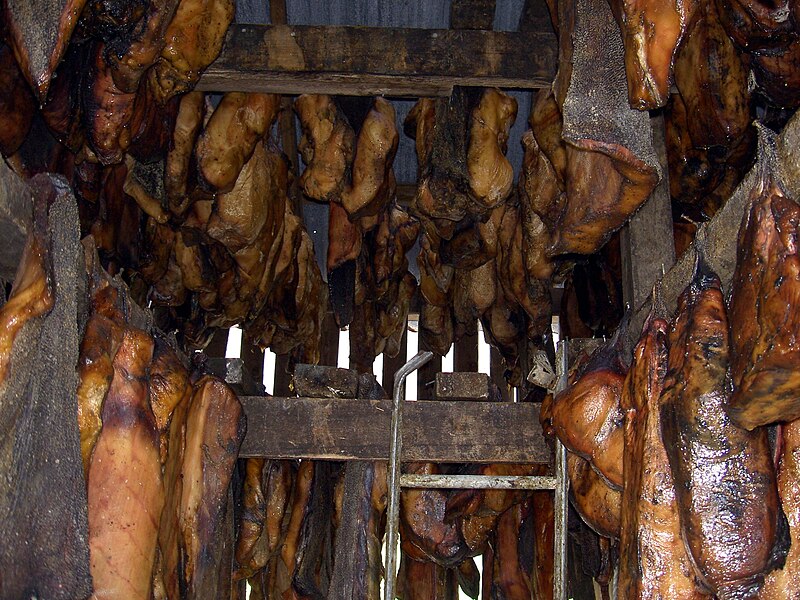
Hákarl is fermented Greenlandic shark - a species whose flesh is toxic when fresh due to high concentrations of trimethylamine oxide and urea. The traditional Icelandic preparation involves burying the shark in gravel for 6-12 weeks to allow it to ferment and the toxins to drain away, then hanging it to dry for several months. The result is a strongly ammoniated, rubbery protein with a smell that chef Anthony Bourdain memorably described as "the single worst, most disgusting and terrible tasting thing" he had ever eaten.
Icelanders, understandably, feel differently. Hákarl is a traditional food associated with the mid-winter feast of Þorrablót, eaten with a shot of Brennivín (a caraway-flavored schnapps sometimes called "Black Death"). It represents centuries of survival in an environment where you ate what was available - including a fish that requires months of toxic decomposition before it becomes edible.
Balut - Philippines
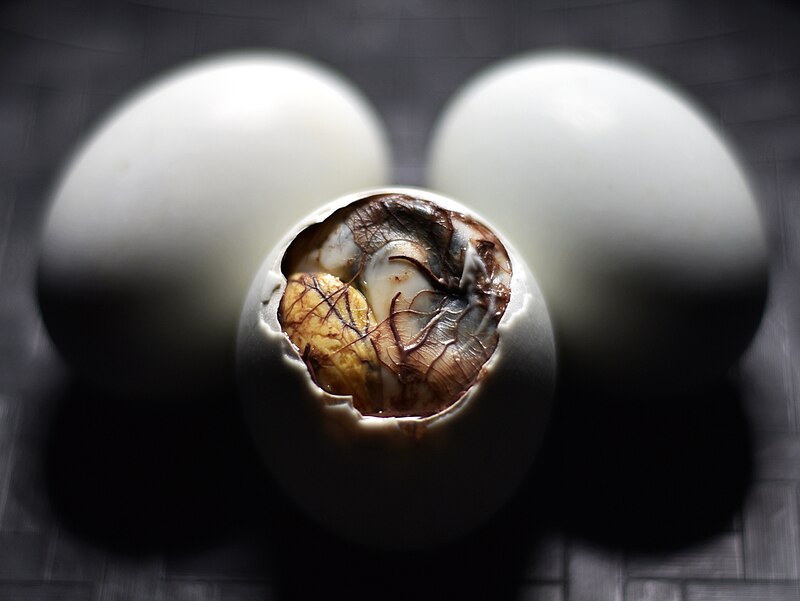
Balut is a fertilized duck egg, incubated for 14-21 days, at which point the embryo has developed enough to be visible (and sometimes to have a beak, feathers, and bones) before being hard-boiled and eaten from the shell. It's sold by street vendors throughout the Philippines and across parts of Southeast Asia, seasoned with salt, chili, and vinegar.
The experience varies significantly depending on how developed the embryo is - younger balut (around 14 days) are more like a rich, creamy egg; older balut (18-21 days) include crunchy cartilage and distinct body parts. Filipinos eat it for its protein content, for the nutritional density, and because it's been part of the food culture for centuries. First-time eaters from outside the tradition tend to struggle more with the concept than the flavor.
Fugu - Japan
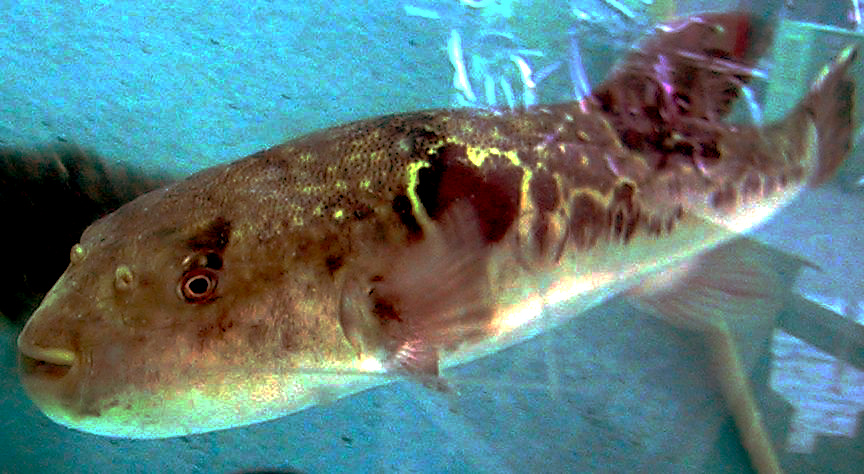
The puffer fish, or fugu, contains tetrodotoxin - a neurotoxin with no antidote that is 1,200 times more lethal than cyanide. A single fish contains enough toxin to kill 30 adult humans. In Japan, it is a delicacy. Preparing it legally requires a license obtained through three years of training and a notoriously difficult examination in which candidates must correctly prepare and eat fugu (the most common cause of failure is preparing the fish incorrectly and suffering the consequences).
Properly prepared fugu is served as sashimi, in a hot pot, or fried, with a clean flavor that connoisseurs describe as subtle and delicate. Part of the appeal is undeniably the frisson of danger: a slight tingling of the lips, caused by minute traces of toxin, is considered a sign of authentic preparation. Deaths from fugu poisoning do still occasionally occur, almost always involving home preparation rather than licensed restaurants.
Nattō - Japan
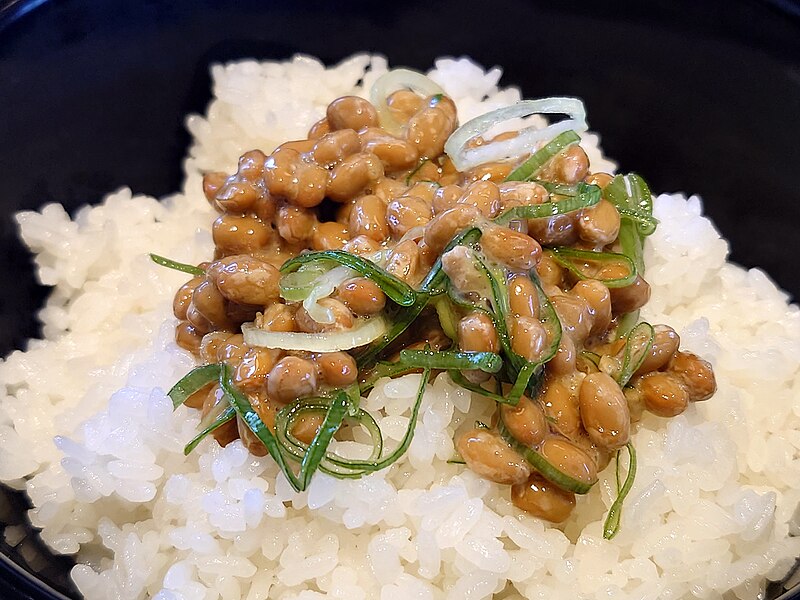
Nattō is fermented soybeans, produced by mixing boiled soybeans with Bacillus subtilis and leaving them to ferment at around 40°C for 24 hours. The result is a deeply pungent, sticky food with a flavor described as a combination of strong cheese, ammonia, and concentrated umami, and a texture that produces extraordinary, almost grotesque strings of goo when stirred or picked up with chopsticks.
Nattō divides even Japan along regional lines - Kanto (Tokyo area) residents are significantly more likely to eat it than Kansai (Osaka/Kyoto) residents. Non-Japanese visitors are famously split between those who find it intensely satisfying and those who struggle to finish a mouthful. It's extraordinarily good for you: rich in vitamin K2, protein, and beneficial bacteria, and associated with lower rates of cardiovascular disease in populations that consume it regularly.
Haggis - Scotland
Scotland's national dish is sheep's offal (heart, liver, and lungs) minced with oatmeal, onions, suet, and spices, traditionally cooked in the animal's stomach. Modern commercial haggis is usually made in an artificial casing. It's eaten on Burns Night (January 25th, celebrating poet Robert Burns) to the accompaniment of "Address to a Haggis" - Burns's poem written in honor of the dish - and served with "neeps and tatties" (turnip and potato).
The flavor is deeply savory and peppery, with the oatmeal giving it a texture unlike most sausages. Many people who try it without knowing what it contains find it delicious. The stomach casing is the part that typically gives visitors pause rather than the taste.
Mopane Worms - Southern Africa
Mopane worms are the caterpillars of the Emperor moth, harvested from mopane trees across Zimbabwe, Botswana, South Africa, and Zambia. They are pinched to remove internal matter, dried or smoked, and eaten either as a snack or cooked in tomato and onion sauce. Protein content per 100g exceeds that of beef. Dried mopane worms are also a significant export product.
The flavor is variously described as resembling smoky, earthy chicken or slightly bitter dried mushroom. They are genuinely nutritious, environmentally sustainable (insects require dramatically less land and water to produce than livestock), and an important source of protein for millions of people across the region.
Surströmming - Sweden
Surströmming (sour herring) is Baltic Sea herring that has been salted just enough to prevent rotting, then sealed in cans and allowed to ferment for several months. When the can is opened, it releases what is widely considered to be one of the most unpleasant odors in the world - a combination of sulfur, rancid cheese, and decomposition. Airlines have banned it from checked baggage because pressurization can cause the cans to burst.
It is a traditional food from Norrland in northern Sweden, where it's eaten outdoors (by social convention - the smell indoors is considered antisocial), wrapped in flatbread with potatoes, onions, sour cream, and chives. Swedes who grew up with it describe the smell as much worse than the flavor, which is intensely salty and savory.
Have you tried any of these? Which would you be brave enough to eat? Tell us in the comments - and nominate any dishes we've missed.
Also on Tripbase: our guide to the world's most disgusting foods - from live octopus to lutefisk soaked in lye, and the people who actually love them.