Cherry Blossom Season Beyond Tokyo: 6 Unexpected Places to See the Bloom
Every year, the internet helpfully reminds you that Tokyo's cherry blossoms are extraordinary, that you absolutely must go, and that the best spots are the Meguro River at night and Shinjuku Gyoen at dawn. The internet is correct about all of this. The internet does not mention that you will be sharing this experience with approximately four million other people who read the same article, all of whom also arrived at dawn, and all of whom are also attempting to photograph the same tree from the same angle while standing in the same configuration of complete strangers.
Japan has roughly 3,000 cherry tree varieties, and the country collectively loses its mind for about two weeks every spring in a way that feels genuinely unhinged if you're new to it. Cherry blossom viewing - hanami - is a 1,200-year-old tradition, which is a polite way of saying Japan has been finding institutional excuses to drink outdoors under trees since before the Norman Conquest. The blossoms are genuinely spectacular. The crowds at the famous spots are also spectacular, in the way that a traffic jam is spectacular. Elsewhere in Japan, and further afield than most people bother to look, the same bloom is happening in places where you can see the trees rather than the backs of other people's heads. Six of the best are below.
Hirosaki, Japan
Hirosaki sits at the northern end of Honshu, in Aomori Prefecture, which most people fly through en route to somewhere warmer and stop paying attention to shortly afterwards. This is their loss. Hirosaki Castle is surrounded by approximately 2,600 cherry trees, and the moat - which has been sitting at the base of the castle since 1611 (take that, most other things built in 1611) - fills with fallen petals during peak bloom to create a floating carpet of pink on the water. The Japanese have a word for this: hanaikada, or flower raft. It is an entirely accurate description of something that looks too beautiful to be real and yet entirely is.
The practical advantage of Hirosaki is that its peak bloom runs from late April into early May (cherry trees, like certain houseguests, bloom later the further north they are), meaning you haven't just spent a fortune on a last-minute flight to catch Tokyo's window only to arrive two weeks after it closed. The town produces 60% of Japan's apples (this is a real statistic, delivered here without elaboration because it requires none) and has one Michelin-starred restaurant, a fraction of the crowds of its famous counterparts, and the particular pleasantness of being somewhere genuinely good that nobody has yet convinced themselves is mandatory. Go before someone does.
Yoshino, Nara, Japan
Mount Yoshino has 30,000 cherry trees. Thirty thousand. The mountain has been a UNESCO World Heritage Site since 2004, and has been one of Japan's most revered pilgrimage destinations since the 7th century, which is a level of sustained enthusiasm for a hillside that most countries couldn't manage. The trees are divided into four zones - lower, middle, upper, and inner - each blooming at slightly different times depending on altitude, which means that if you time the visit correctly you can catch successive waves of blossoms as you ascend. If you time it wrong, you get a pleasant mountain walk with some interesting bare branches and a valuable life lesson about reading forecasts before booking things.
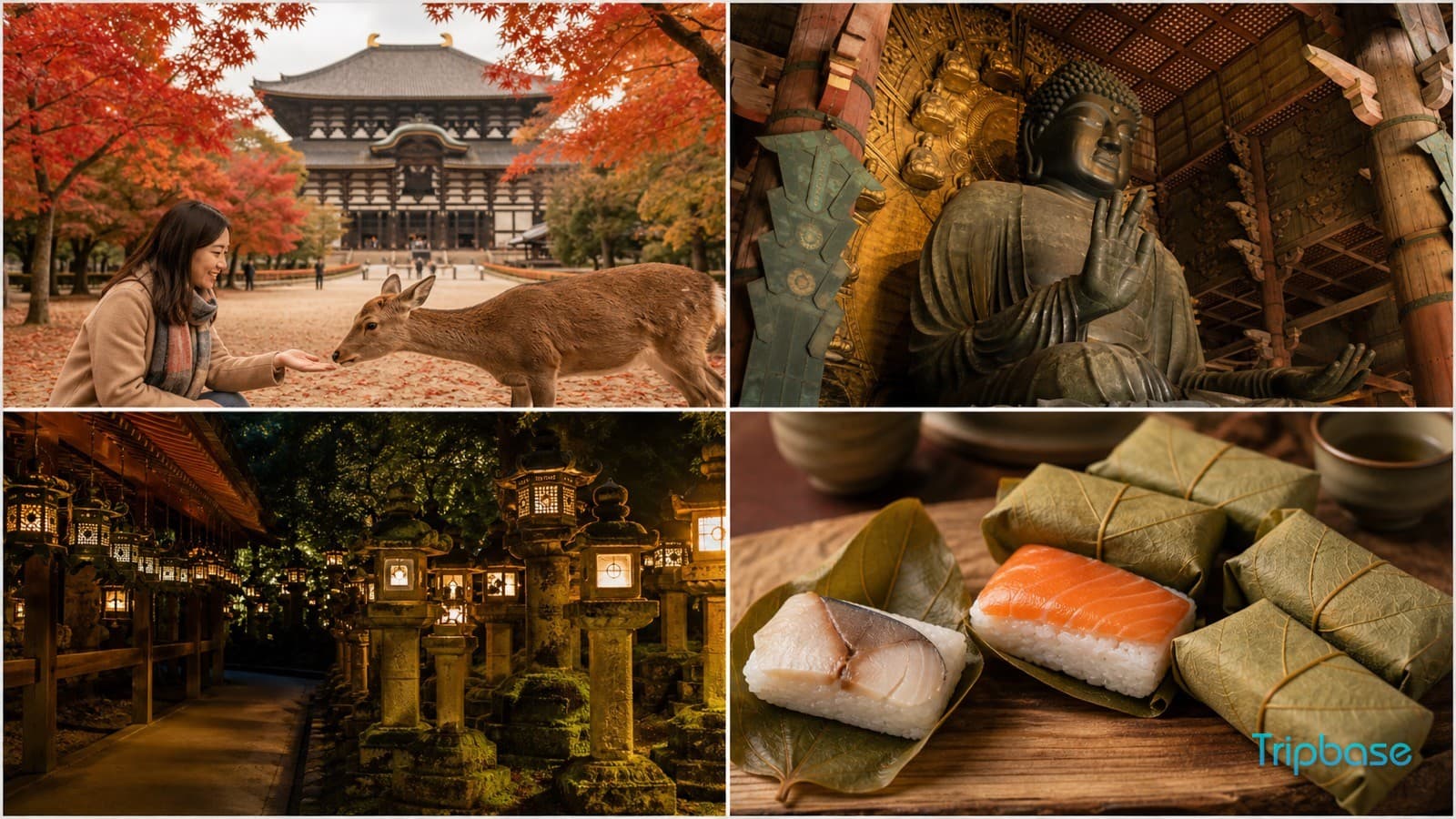
The village of Yoshino at the base is the kind of place that makes you suspect someone has done a considerable amount of deliberate set-dressing: narrow lanes, wooden buildings several centuries old, shrines appearing around corners with the casual frequency of convenience stores in a Tokyo suburb. It sits about 90 minutes from Nara by bus, and combining the two makes for a day that is difficult to fault. Our Nara guide covers the surrounding region in more detail, including the famous deer who have concluded, correctly, that humans are an inexhaustible source of free crackers and have organised their entire social behaviour around this insight.
Gyeongju, South Korea
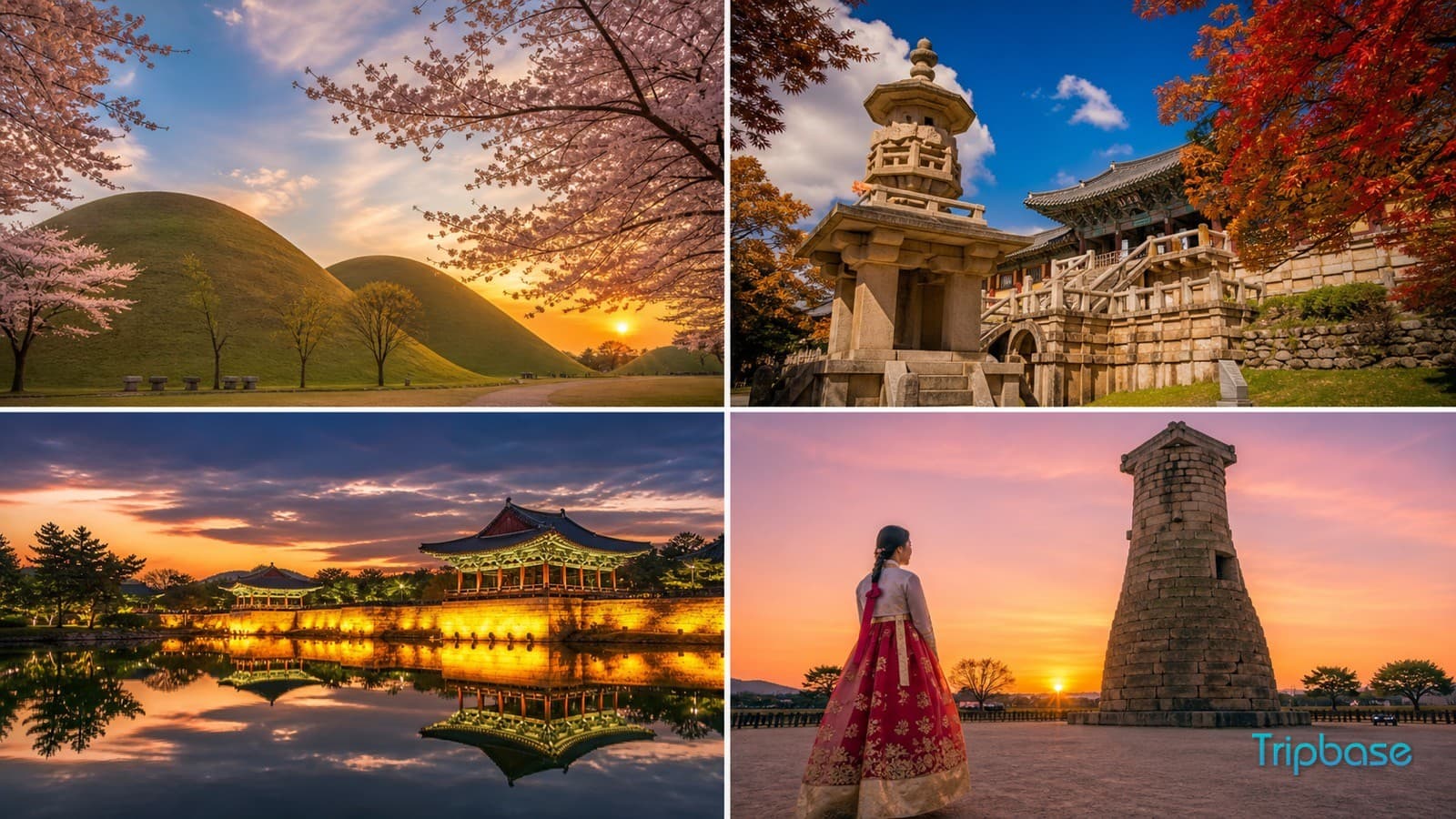
You may have read about Jinhae, the South Korean city that hosts an annual cherry blossom festival attracting two million visitors in ten days, which is either a festival or a minor logistical emergency depending on your tolerance for crowds. Jinhae is genuinely magnificent and also genuinely rammed. Gyeongju, about an hour north, offers something rarer and considerably less documented: cherry trees in full bloom draped over the burial mounds of Silla Kingdom royalty who have been underground for approximately 1,500 years. The specific visual effect of pink flowers cascading over grass-covered ancient tombs while people sit on picnic blankets in between them is the sort of thing that sounds invented. It isn't.
Gyeongju is described as a museum without walls, which would be insufferable as marketing copy if it weren't almost literally accurate - the city contains so many UNESCO-listed sites that counting them becomes tedious. The cherry-tree path around Bomun Lake offers 4km of blossoms at a completely flat grade, which in a country that has managed to situate most of its interesting things on steep hillsides represents a genuine act of geographical mercy. Peak bloom falls in early to mid-April. Our Gyeongju guide is worth a read before you go, on the basis that context makes things substantially more interesting, and context here involves dynasties, astronomers, and a stone observatory dating from 632 CE that is still standing without any particular fuss about it.
Alishan, Chiayi, Taiwan
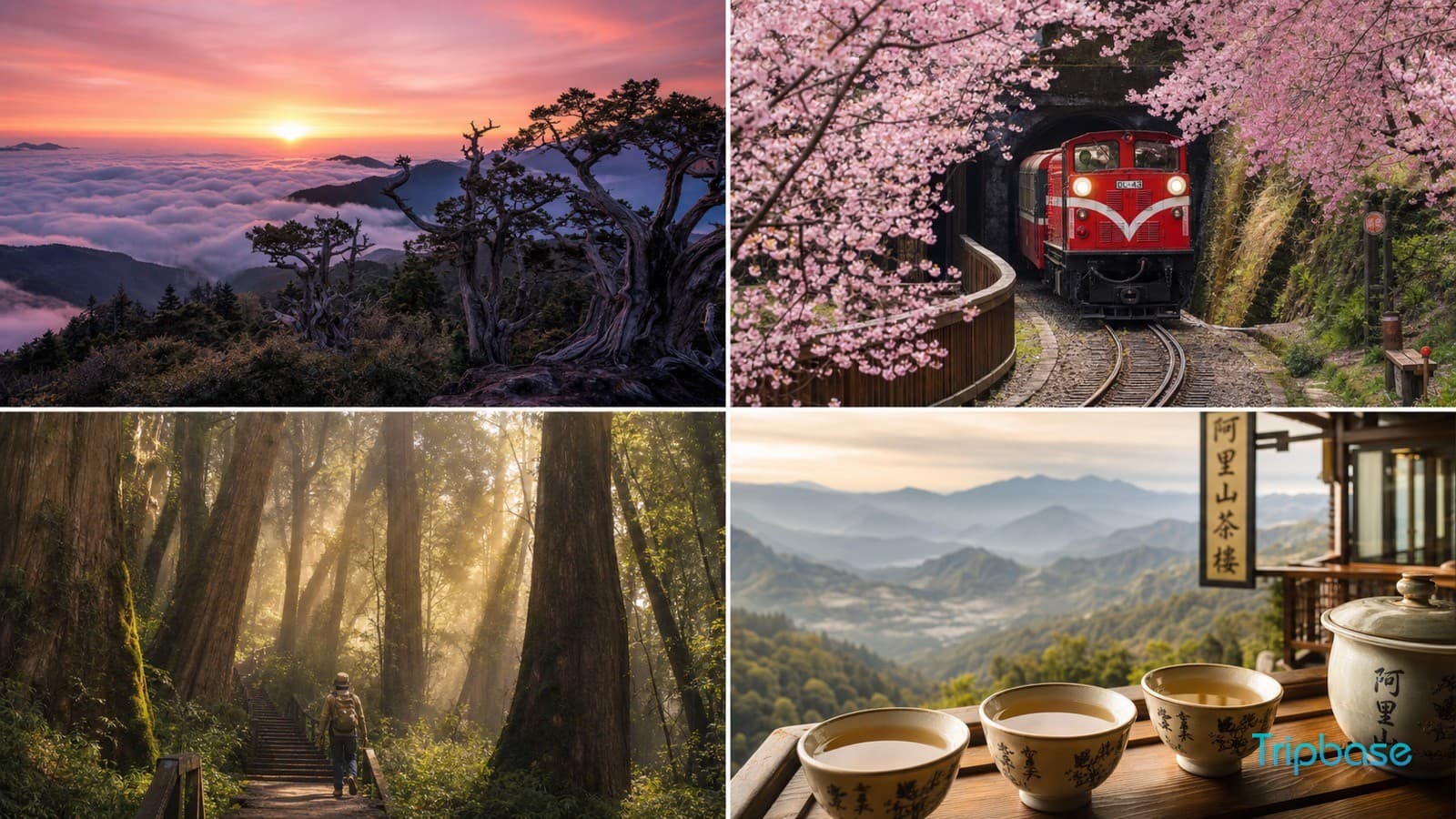
The Alishan mountain range sits at around 2,000 metres, which has two useful consequences for cherry blossom tourists. First, the altitude pushes the bloom into late March and early April - a window that overlaps helpfully with Japan's peak season and makes Alishan a viable alternative if you've discovered, somewhat late, that every hotel in Kyoto is full for the relevant weeks and costs more than you'd prefer. Second, the cherry variety that grows here in abundance is the Formosan cherry (Prunus campanulata), which blooms hot pink rather than the delicate white-pink of Japan's Yoshino cherry. The effect is a forest that appears to be on fire, in a good way.
The Alishan Forest Railway, originally built in 1912 to carry lumber down the mountain and now carrying tourists up it (at approximately the same speed, which is to say slowly but charmingly), passes through cloud forest at an altitude where the air is noticeably cooler than the plains below and things become genuinely cinematic. The cloud sea phenomenon - where a low layer of cloud fills the valleys and the mountain rises above it like an island - occurs most often at dawn, which explains the early trains full of passengers gripping camera equipment that seems entirely disproportionate to what a reasonable person would need. Our Alishan guide covers the logistics, which require some advance planning but are not complicated. The planning is mostly for the train seats. The pink forest requires no preparation beyond showing up and accepting that you will take more photographs than you expected.
Bonn, Germany
Germany is not the country that springs to mind when someone mentions cherry blossom season. Germany's more recognisable contribution to spring tourism is the beer garden, which serves an overlapping but technically distinct purpose. Bonn is therefore a genuine surprise: a residential street called Heerstrasse in the city's south transforms for roughly two weeks in early April into a tunnel of interlocking cherry branches so completely covered in pink blossom that the road itself becomes secondary to the experience of walking through it. The trees were planted in 1984. They are now tall enough to have grown toward each other over the street and formed a canopy, which was not necessarily anyone's intention when they were planted but has worked out extremely well regardless.
The particular pleasure of Bonn's cherry blossom situation is the complete absence of tourist infrastructure around it. There's no festival, no viewing platform, no special event. There's a street lined with trees, the trees are pink, and you stand among the people who actually live there and who are visibly, endearingly bemused by the number of cameras pointed at their front gardens. It is unstagey in a way that has become genuinely rare. Bonn also has the mild advantage of being substantially less talked about than Cologne, which is visible across the Rhine and draws most of the regional tourist attention, leaving Bonn to its Beethoven birthplace, its excellent Rhine promenade, and its two weeks of unplanned pink magnificence in modest peace.
Philadelphia, Pennsylvania, USA
The Shofuso Japanese House and Garden in Fairmount Park is a historically accurate recreation of a late 17th-century Japanese scholar's house, built in 1953 for a Museum of Modern Art exhibition in New York and relocated to Philadelphia in 1958 - making it one of the more circuitous routes a building has ever taken to its permanent home. It sits in a formal garden with cherry trees that bloom in April, surrounded by a reflecting pool. The combination of an authentic Japanese structure, water, and pink blossoms in a park the size of a small European country produces something that feels implausible given its location in Pennsylvania and yet is completely real and entirely accessible.
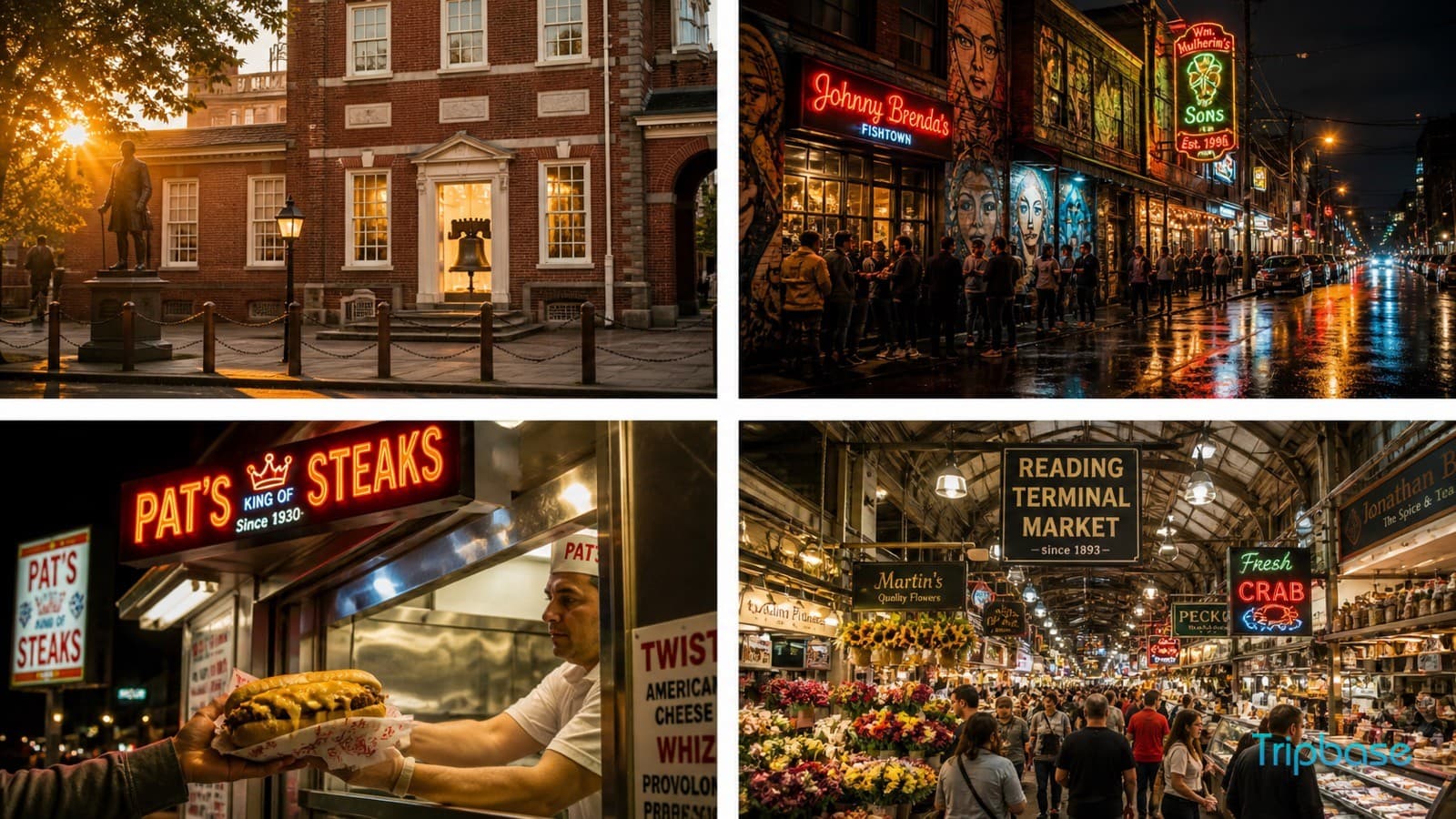
Fairmount Park spans over 2,000 acres - larger than Central Park and considerably less famous, which is either a tragedy or an advantage depending on what you're there for. Our Philadelphia guide covers a city that has more going for it than its reputation suggests: genuinely excellent food, a walkable centre, and a price-to-experience ratio that embarrasses most comparable American cities. The Japanese garden is technically a side effect of someone's 1953 exhibition logistics, which is the kind of happy accident that rewards people who look slightly to the left of where everyone else is looking.
A note on timing: the bloom window at any of these locations is genuinely narrow - one to two weeks, sometimes less if the weather has opinions. The spring travel calendar is worth consulting before you book anything, and the bloom forecasts (which Japan produces with a rigour usually reserved for seismology) are more accurate than they used to be but are still at the mercy of weather systems that have not read your itinerary. Book with some flexibility. Arrive with low expectations for the photography and high expectations for the experience, and the photography will also turn out fine.
The consistent thing reported by everyone who has seen cherry blossoms in an unexpected location - a castle moat in Aomori, a Pennsylvanian garden, a residential street in Germany - is the specific pleasure of not having pre-sold the experience to yourself with a hundred photographs before you got there. The blossoms are the same. The crowd situation is considerably different. Both of these facts are worth something. The photographs will be better too, if only because there is no one else standing in them.