The Worst Tourist Traps in the World (And What to Do Instead)
Every year, millions of people fly thousands of kilometres, queue for two hours in the rain, and then stand in front of something that makes them quietly wonder if travel was a mistake. This is not a coincidence. This is a system. The tourist industrial complex has spent decades training us to treat certain landmarks as mandatory pilgrimages, when in fact several of them are, upon honest inspection, a bronze statue the height of a labrador, a painting the size of an A2 poster, or a perfectly ordinary stretch of pavement with celebrity names on it. Consider this your intervention.
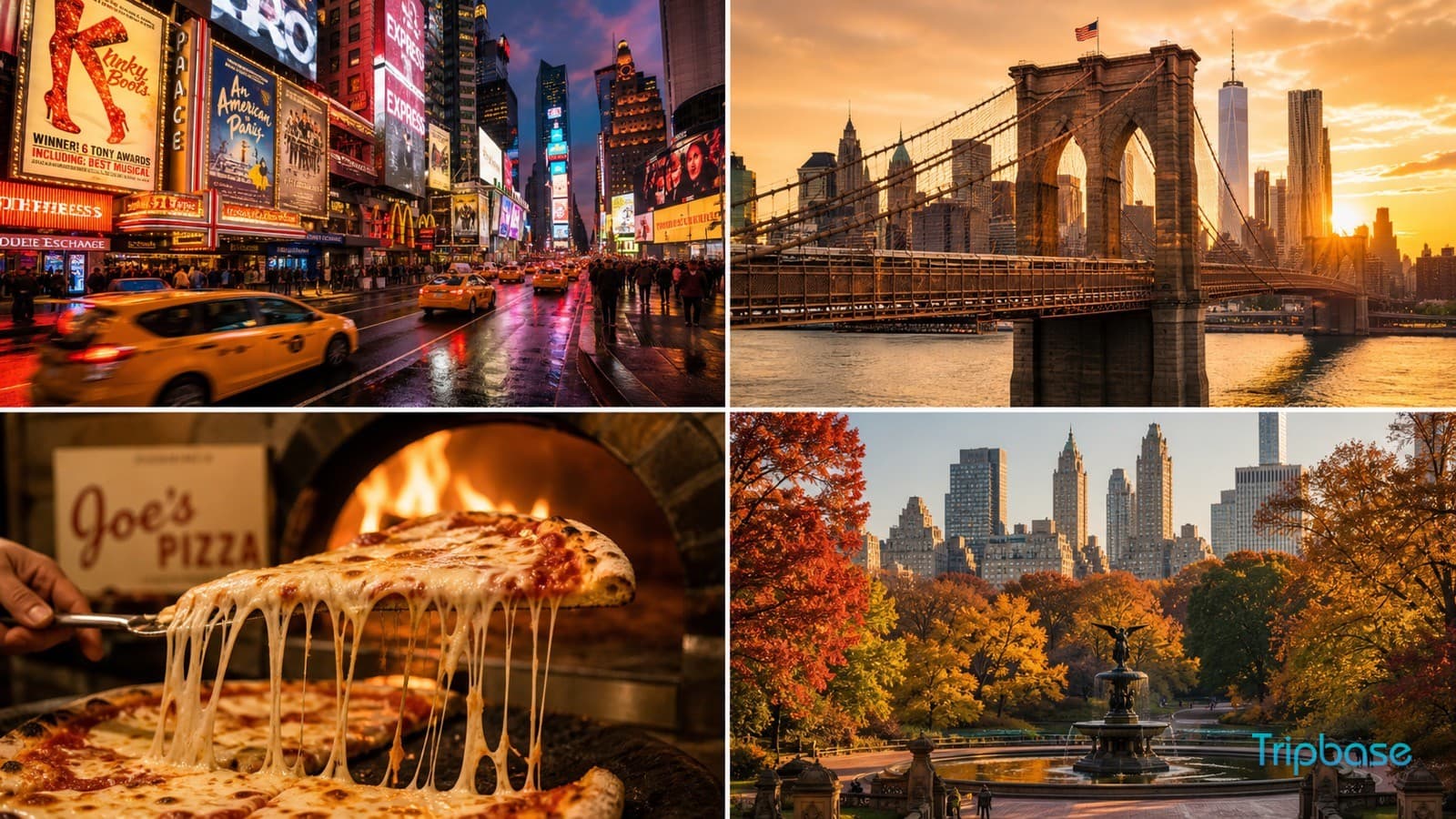
Times Square, New York
Times Square is not New York. This is the single most important piece of travel intelligence you will ever receive. Times Square is a 200-metre stretch of midtown Manhattan that has been converted into a continuous advertisement for products you can buy at home, populated primarily by costumed characters charging $20 for a photograph and by other tourists who also came because they'd heard it was famous.
The actual New York - the one people write songs about - is happening everywhere else. The West Village has cobblestone streets and restaurants so good you'll end up eating there twice. The High Line threads through Chelsea on an elevated park built on a defunct railway. Brooklyn's bookshops and parks would be the highlight of most European cities. All of these places have one notable advantage over Times Square: nobody dressed as the Statue of Liberty will lunge at you and demand payment.
Times Square at night does have a certain deranged spectacle to it, like standing inside a pinball machine. See it once, from a moving taxi, and then spend your actual time in New York eating a proper slice of pizza in a borough that doesn't charge $14 for it.
The Hollywood Walk of Fame, Los Angeles
The Hollywood Walk of Fame is fifteen blocks of pavement in Hollywood with 2,700 brass stars embedded in the concrete. That is the entire thing. You will walk along it and be impressed for approximately ninety seconds, then notice that you are standing on a busy pedestrian street that smells like sunscreen and low-grade disappointment, and that someone nearby is arguing with Darth Vader about the terms of a photograph.
The stars themselves require some explanation. Not every famous person has one, and some people with stars are not famous (the committee charges a $50,000 sponsorship fee, which does clarify a few things). The surrounding area is, if we're being polite, not Hollywood's finest neighbourhood. The best thing about the Hollywood Walk of Fame is that it's on the way to Griffith Observatory, which sits in the hills above Los Angeles, is completely free to enter, and offers views that will actually make you feel something.
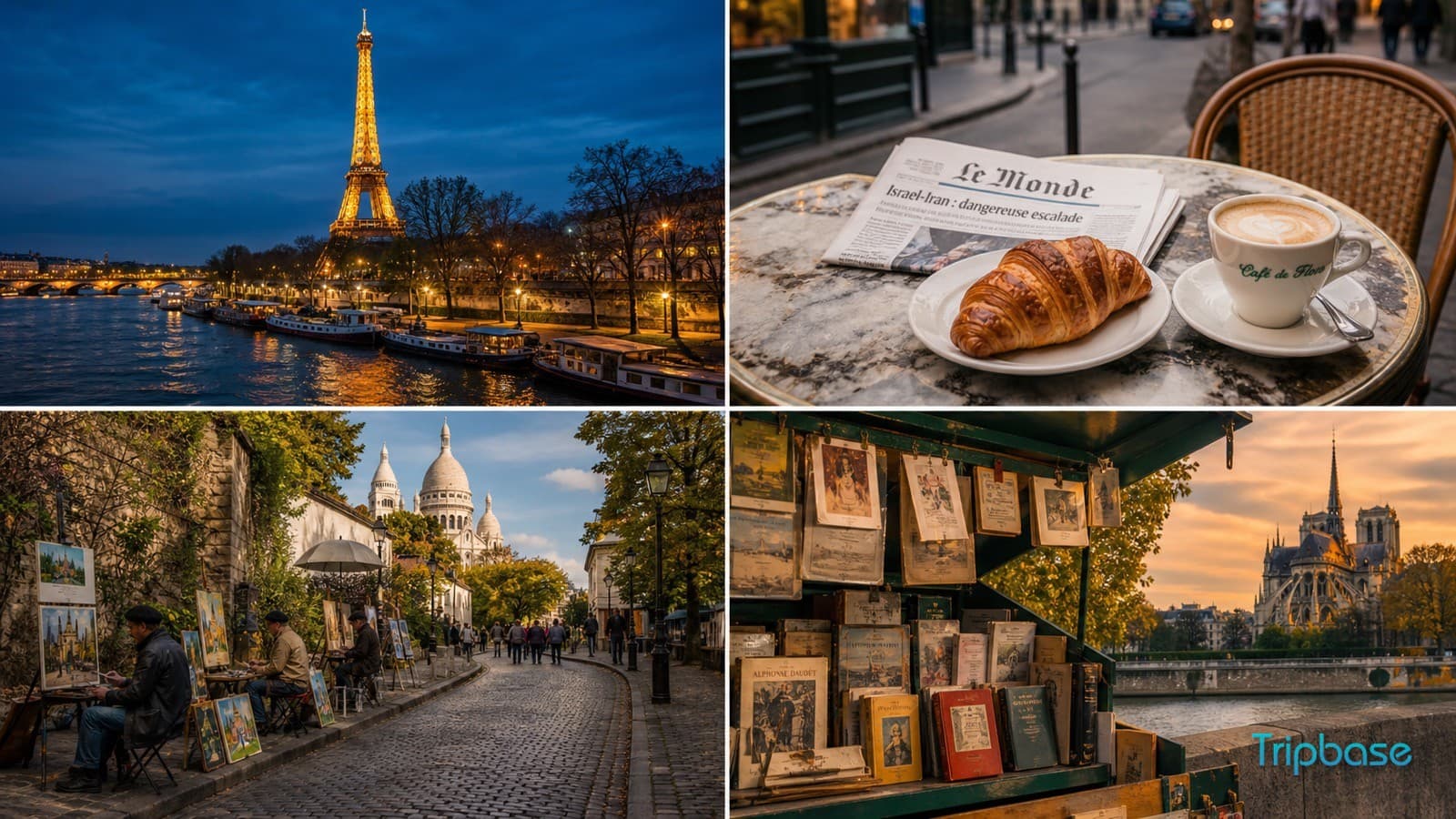
The Mona Lisa, Paris
The Mona Lisa is 77 by 53 centimetres. It lives behind bulletproof glass, alone on a wall at the far end of a room, and you will view it from approximately eight metres away, past the raised phones of three hundred other people doing the same thing. The smile is faint because at that distance, in those conditions, you cannot actually see it clearly. You will have a better view of it on your phone screen using the photo you just took of it.
Here is what nobody tells you: the room next to the Mona Lisa contains some of the most staggering paintings in the Louvre, and nobody is in it because everyone is queuing for the Mona Lisa. Paolo Veronese's The Wedding at Cana is directly opposite her and is roughly the size of a tennis court. It has been described as one of the greatest paintings ever executed. On a normal Tuesday, you can stand three feet from it, completely alone, and look at it for as long as you like.
The Musée d'Orsay, a ten-minute walk from the Louvre, houses the world's best collection of Impressionist art and rarely has queues that would test your patience. Paris has enough brilliant museums to fill a week. The Mona Lisa will take twelve minutes including the queue to get a spot at the barrier.
The Leaning Tower of Pisa
The Leaning Tower of Pisa is a medieval bell tower that is slightly wonky. It leans at approximately 3.99 degrees, which is not a lot. It is located in Pisa, a city with nothing else particularly compelling about it, approximately two hours from Florence by the time you've factored in transport logistics. The tower is 56 metres tall and you can climb it for €20, which means you will spend €20 to be on top of a slightly wonky tower in Pisa, having traveled two hours each way from somewhere that has Michelangelo's David and the Uffizi Gallery.
The surrounding Piazza dei Miracoli is genuinely beautiful, in the way that most medieval Italian piazzas are. But the photographs that have made this tower famous - you know the ones, with the person appearing to hold it up with their hand - require you to stand in a specific spot in the middle distance, jostling with hundreds of other people, doing the exact same pose. This is the closest modern tourism comes to a performance art installation about the death of authentic experience.
Instead, take the train an hour south from Florence to Lucca, where you can walk the full circuit of 16th-century city walls that now form a tree-lined promenade above the city. You will almost certainly have them to yourself. Nobody poses on the walls of Lucca pretending to lean.
The Manneken Pis, Brussels
The Manneken Pis is a 61-centimetre bronze statue of a small boy urinating into a fountain. It was completed in 1619. You will queue or navigate crowds to see it and then stand there for a moment processing what has just happened to you. Sixty-one centimetres is less than two feet. It is, to be absolutely precise about this, about the height of a standard shoebox tower. Guides in Brussels call it with a straight face "one of the symbols of the city." It is. It is a famous bronze child urinating. This is the symbol.
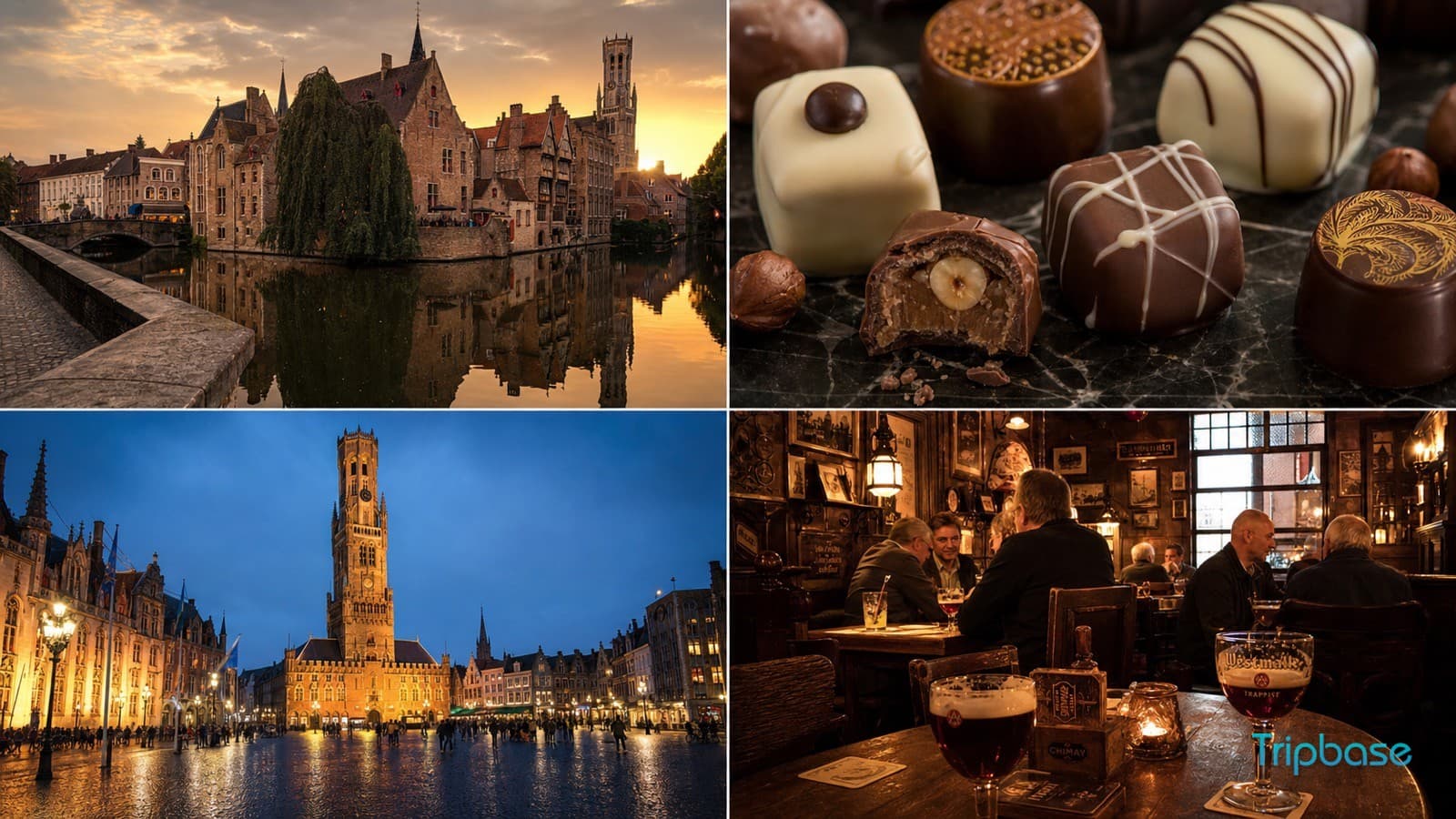
Brussels is a genuinely excellent city - spectacular Art Nouveau architecture, the world's best beer culture, chocolate shops that will rearrange your relationship with the concept of chocolate - and all of it gets overshadowed by the tourist pilgrimage to a very small urinating statue. Take the train to Ghent instead, which has a medieval city centre that looks like Brussels' more atmospheric older sibling and receives a fraction of the crowds. Or stay in Bruges, which looks as if it was specifically designed to make you feel you'd stepped inside a Flemish painting (because, in a sense, it was).
The Little Mermaid, Copenhagen
Like the Manneken Pis but sadder, the Little Mermaid in Copenhagen is a 1.25-metre bronze statue sitting on a rock in the harbour. She has been beheaded twice, had her arm sawn off once, and been repeatedly painted, covered in graffiti, and blown off her rock entirely. She is enduring this treatment on behalf of tourists who come to Copenhagen specifically to see her and then are visibly confused by how small she is. She is 1.25 metres tall. She is sitting down.
Copenhagen is a world-class city with extraordinary food, one of Europe's most elegant historic centres, and a harbour that actually has things happening in it. The Rosenborg Castle gardens are free to wander on weekdays. Nyhavn, the coloured canal houses, is a far more satisfying photograph and has excellent beer. You have flown to one of the world's most design-conscious cities and you are standing on a cold harbour edge looking at a small bronze woman who was attacked with power tools by anarchists in 1964. You deserve better.
The Blarney Stone, Ireland
The Blarney Stone is a block of limestone set into the battlements of Blarney Castle, which you have to climb 127 steps to reach. At the top, in order to kiss it and receive the fabled gift of eloquence, you must lie on your back, lean your head over a gap in the battlements, and bend backwards to press your lips against the underside of a stone that approximately 400,000 other people have kissed that year alone (and that number doesn't account for rain runoff from the battlements above). Attendants hold your legs. You can tip them.
There is a persistent rumour - which Blarney Castle officially denies, but which everyone in Ireland knows - that castle guards have been urinating on the stone for generations as a practical joke on tourists. This has not been definitively disproved. The castle grounds themselves, to be fair, are lovely. Genuinely lovely. But Ireland has the Rock of Cashel, which is a ruined medieval cathedral on a limestone outcrop above the Tipperary plain, and which will give you a more profound sense of Irish history than kissing a stone that is either imbued with ancient eloquence or is a centuries-old toilet, depending on whom you believe.
Fisherman's Wharf, San Francisco
Fisherman's Wharf exists in a state of permanent tourist limbo - not quite theme park, not quite fishing district, but a continuous strip of overpriced clam chowder served in sourdough bread bowls while someone plays a banjo nearby. The famous seafood is fine. The prices are not. A crab cocktail here costs roughly what you'd pay for an entire dinner in the Mission District, where the food is substantially better and the neighbourhood is one of the most interesting in the city.
The actual Alcatraz tour, which departs from Pier 33 nearby, is genuinely worth it (book weeks in advance) and has nothing to do with the Wharf's souvenir shops. San Francisco's best character lives in its hills, its Victorian architecture, its fog-draped parks, and in the Tartine Bakery queue, which is a more authentic San Francisco experience than any crab shack with laminated menus and illustrated maps of the bay area on the walls.
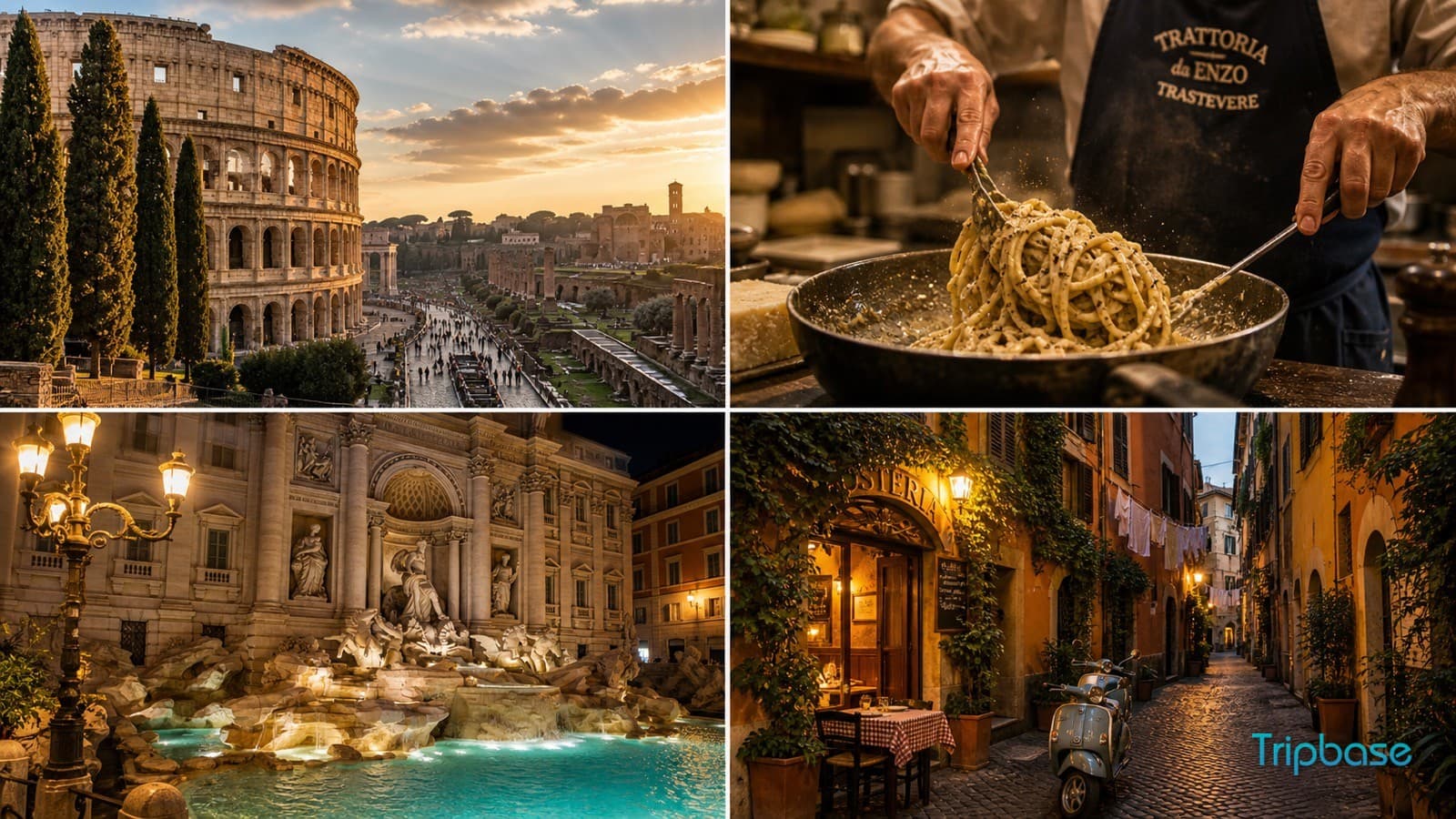
The Trevi Fountain Area, Rome
The Trevi Fountain itself is magnificent - genuinely so, a baroque eruption of horses and gods and cascading water pressed into a building's back wall. The problem is the 300-metre radius around it, which is the most comprehensively tourist-extracted zone in Rome: €7 espressos, restaurants with photographs on menus, and an ambient noise level somewhere between a crowded beach and a minor riot. The fountain is also extremely small relative to its fame, and the square it sits in can barely contain the people trying to throw coins into it.
Visit it at 5am if you're a morning person, or simply look at photographs of it. The Rome worth your time is in Testaccio, where locals actually eat, or in Trastevere on a weekday morning before the coach parties arrive. Both neighbourhoods contain food and wine that will recalibrate your understanding of what Italian cooking is supposed to taste like, and neither of them requires you to be a coin's throw from several hundred strangers.
Venice Gondola Rides
A gondola ride in Venice costs a standard €90 for thirty minutes, though the gondolier may suggest various upgrades, scenic routes, or in some cases apparently just charge more if he thinks he can. This is €180 per hour. For this you will be ferried slowly through canals on a boat designed to carry standing passengers while the gondolier either sings O Sole Mio or, more commonly in practice, checks his phone and occasionally pushes off a wall with a pole. You will have a nice time. €180 per hour is a lot of money for a nice time.
The traghetto - the gondola ferry that crosses the Grand Canal at various points - costs €2 per person and operates on exactly the same vessels piloted by exactly the same people. There is an art to riding a traghetto, specifically that you should stand up in it, ideally without visibly gripping anything, which is what Venetians do and which makes you feel briefly like a person who actually lives somewhere extraordinary, which is better than feeling like a tourist being paddled through the canals at €3 per minute.
Cape Town's V&A Waterfront
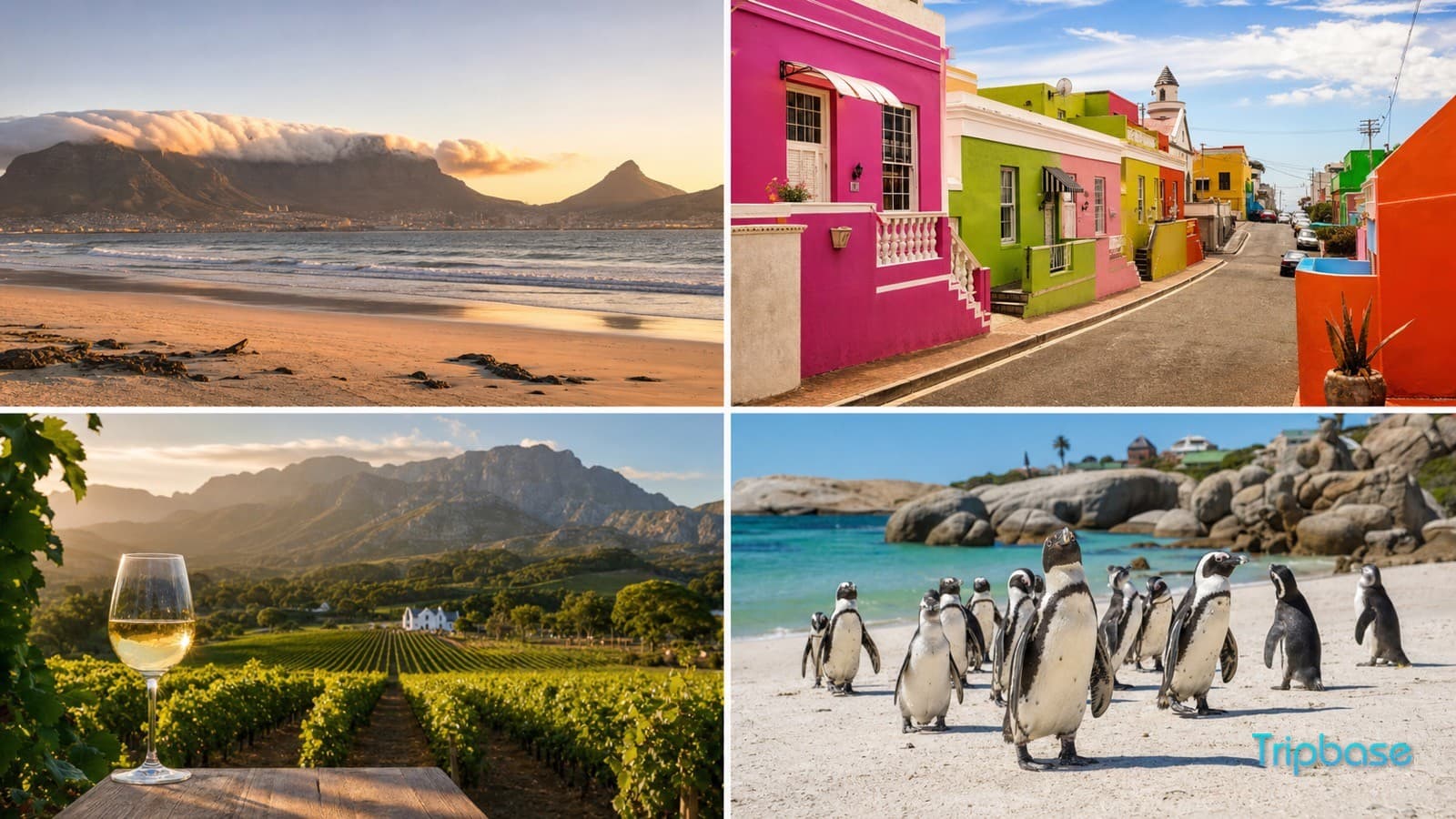
Cape Town has one of the most dramatic natural settings of any city on earth: Table Mountain, the Atlantic coastline, the Cape Peninsula stretching south into the Southern Ocean. The V&A Waterfront is where you are directed from the airport and where you will spend money in chain restaurants attached to a large mall. It is a very pleasant mall with good harbour views. It is also the most aggressively developed, sanitised, and tourist-facing district in a city that has extraordinary neighbourhoods that most visitors never reach.
Cape Town's Bo-Kaap - the neighbourhood of painted houses above the CBD - requires twenty minutes from the Waterfront and will deliver more striking imagery than any hotel pier. The wine estates of Constantia are thirty minutes by car and offer a version of the Cape that actually feels like the place you imagined before you arrived. Table Mountain itself, if you're not stuck in cloud, produces views that will make you feel appropriately small in the best possible way.
The Sydney Opera House Interior
The exterior of the Sydney Opera House is, without exaggeration, one of the most beautiful pieces of architecture constructed in the twentieth century. The shell roofs are extraordinary. The harbour setting is extraordinary. Approaching by ferry from Circular Quay at dusk is one of those travel experiences that lodges somewhere permanent in the memory.
The interior is a standard performing arts complex. The main concert hall has good acoustics. The Joan Sutherland Theatre has decent sightlines. Both have the beige-and-concrete atmosphere of many mid-century performance venues. The guided architectural tours are worth taking if you're interested in how Jørn Utzon's vision was partially compromised during construction - the politics of it are fascinating - but the €40 ticket for the tour itself should be set against the fact that watching the building for free from the harbour, at any time of day, is the actual experience. Sydney's Harbour is a free attraction. It is also better than almost everything you could pay for inside it.
The Champs-Élysées, Paris
The Champs-Élysées is supposed to be the most beautiful avenue in the world. In its current form it is a 1.2-kilometre commercial strip of global luxury brands (Louis Vuitton, Cartier, Sephora), chain cinemas, and tourist-facing restaurants charging €22 for a croque-monsieur. The avenue is genuinely wide and the Arc de Triomphe at one end is genuinely magnificent. The experience of walking it, however, is broadly similar to walking through a very grand outdoor shopping centre - one that happens to be full of people walking very slowly in both directions simultaneously.
Nobody who lives in Paris eats on the Champs-Élysées. They eat in the residential streets of the 11th arrondissement, or in the covered passages of the 2nd, or along Canal Saint-Martin in the 10th, where the restaurants are local, the prices make sense, and no one is going to charge you €8 for a Coke. If you want a grand boulevard, Boulevard Saint-Germain has the same width, better cafés, and actual French people sitting in them. If you want Arc de Triomphe views, climb it - the panorama from the top looking down the twelve radiating avenues is one of the great Paris vistas, and far more satisfying than shuffling along the avenue itself at the pace of international tourism.
Disclaimer: Tripbase acknowledges that reasonable people disagree on what constitutes a tourist trap. The Mona Lisa is a masterpiece. The Trevi Fountain is genuinely beautiful. Times Square on New Year's Eve has a particular kind of collective madness to it that is worth experiencing once. This article is not telling you not to go. It is telling you to manage your expectations, book things in advance when necessary, and under no circumstances pay €7 for a coffee because you are standing within sight of a famous fountain.