
The World's Most Bizarre Sports That Are Somehow Real
Every four years, the International Olympic Committee adds sports like sport climbing and breaking to the Olympic programme, presumably after an extremely long lunch. Meanwhile, several thousand people in Wales are completing timed laps of a peat bog in snorkeling equipment. The IOC has its priorities. What follows is a collection of sports that are absolutely real, taken extremely seriously by the people who play them, and would make far better television than anything currently on offer.
Kabaddi
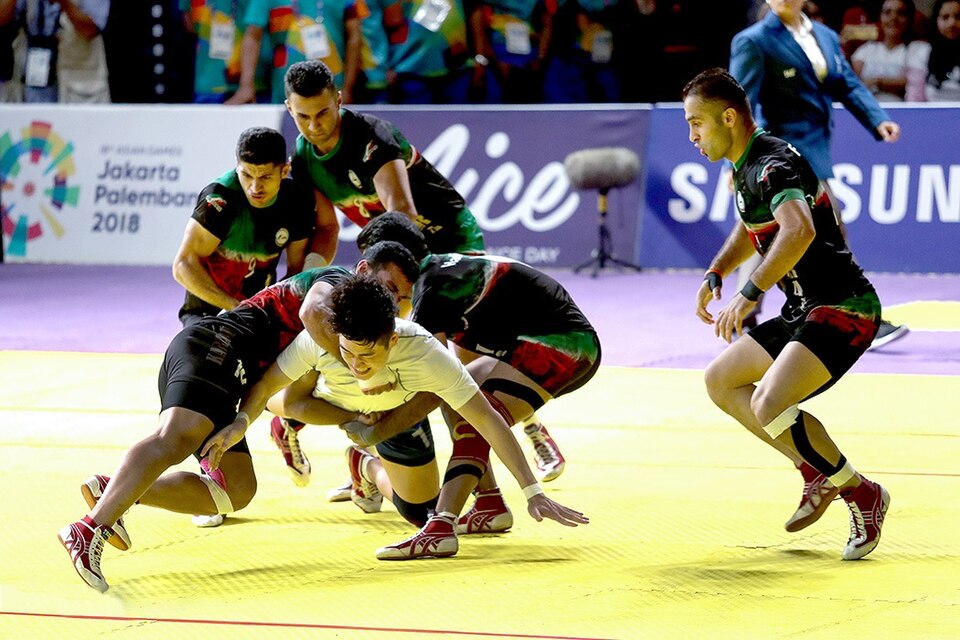
Kabaddi is perhaps the most straightforward sport on this list to explain, in the same way that a Rube Goldberg machine is straightforward once you understand the physics. One player - the raider - crosses into the opposing team's half, tries to tag as many defenders as possible, and must return to their own half before running out of breath. The catch is that they must prove they haven't inhaled during the raid by chanting "kabaddi, kabaddi, kabaddi" continuously until they get back. This is either an ingenious anti-cheating mechanism or the work of someone who thought traditional sport wasn't quite humiliating enough.
If the raider tags defenders and escapes, those defenders are out. If the defenders tackle the raider before they can get back, the raider is out. The defending team can tackle by essentially any means available to seven large human beings in close proximity to one raider who is rapidly running out of breath. The sport has roots stretching back thousands of years in South Asia, where it presumably functioned as both entertainment and a method of settling disagreements that had escalated beyond the point where a stern letter would help.
Today, kabaddi has a fully professional Pro Kabaddi League in India with franchises, TV deals, and audiences that routinely reach into the hundreds of millions. The India-Pakistan fixture is watched with approximately the intensity one brings to geopolitical events that involve nuclear arsenals. For more on the country where kabaddi became a professional spectator sport, see our Delhi guide.
Buzkashi
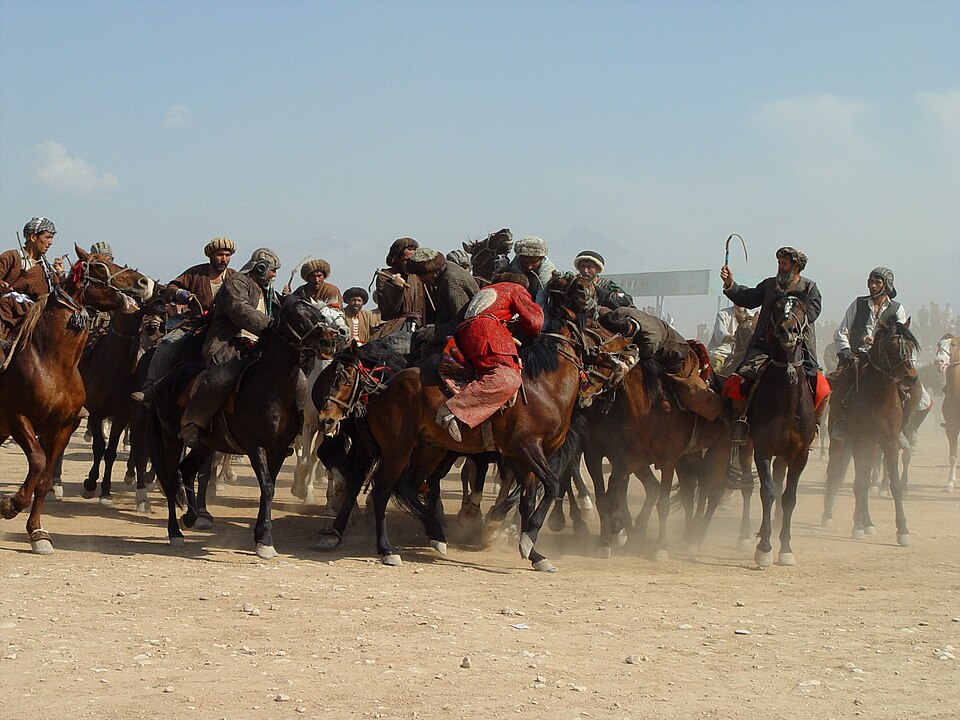
The name means "goat dragging" in Persian, which tells you almost everything you need to know. Buzkashi is a sport played on horseback across Afghanistan, Kyrgyzstan, and other parts of Central Asia, in which teams of riders compete to grab a decapitated goat carcass (or calf carcass - the sport has evolved slightly over the centuries, though perhaps not as much as you'd hope), haul it around a flag, and deposit it in a circular target zone. The team that does this most often wins. There are, notionally, other rules.
In practice, buzkashi involves hundreds of horses occupying a field with no defined edges, riders charging into each other at speed with the social niceties suspended for the duration, and an atmosphere somewhere between medieval jousting and a particularly intense farmers' market dispute. The sport is thought to have originated with Mongol cavalry, who used it as both entertainment and military training, which explains the complete absence of regulations about how hard you're allowed to ride into the other team.
Winning the goat carcass is considered a significant honor. The game is played to mark weddings, funerals, and national holidays, which gives the celebrations a certain consistency of theme. If you find yourself in Central Asia and hear the sound of several hundred hooves approaching at speed, it may be worth checking whether there is a buzkashi match in progress before stepping into the road.
Calcio Storico
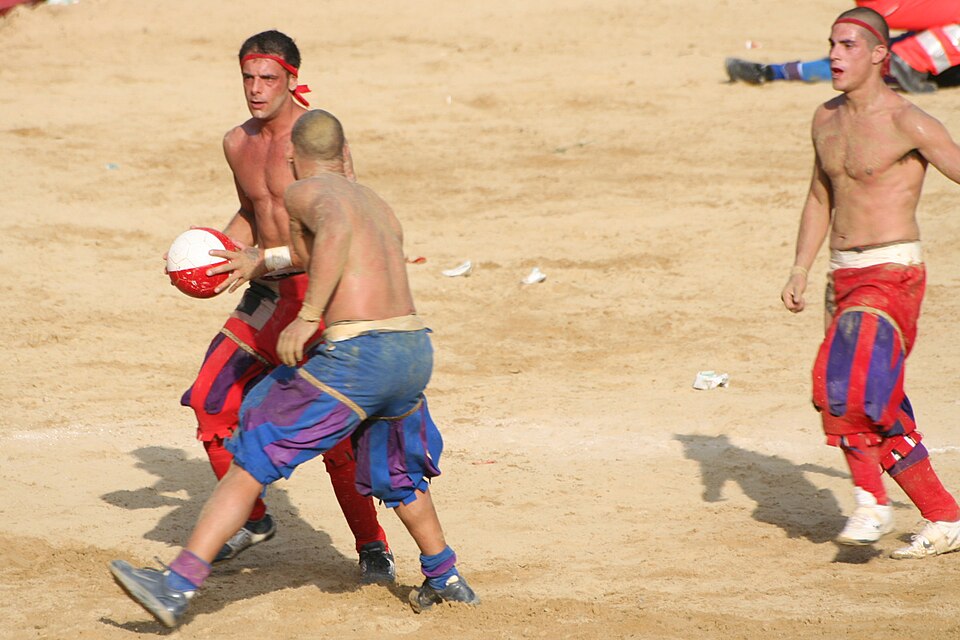
Florence is famous for the Renaissance, the Uffizi, and the Duomo. It is less famous for hosting an annual tournament in which teams of twenty-seven men representing the city's four historic neighborhoods compete in what is officially described as "historical football" and could be more accurately described as a rugby match staged inside a brawl. Calcio Storico dates to the sixteenth century, when Florentine noblemen played it in the Piazza Santa Croce - a tradition that has continued ever since, presumably because nobody has been able to think of anything that would cause more drama.
The rules are essentially this: get the ball into the opposing team's net. Everything else is permissible, with two narrow exceptions (sucker punches and kicks to the head), which gives you a sense of how the designers felt about the wider category of violent acts. Players can punch, wrestle, tackle, headbutt, and generally menace each other with a freedom that would cause significant regulatory difficulties in professional football. There are referees, though their function is largely ceremonial - they are there to observe rather than intervene, in the way that a museum docent watches you but does not stop you from anything.
The prize for winning the tournament is a Chianina cow - a breed famous for producing Florentine bistecca - which is an appropriately carnivorous conclusion to an event of this nature. If you would like to watch without participating (which seems wise), games are played each June in the Piazza Santa Croce. Our Florence guide covers getting there. The cultural sensitivity disclaimer writes itself.
Sepak Takraw
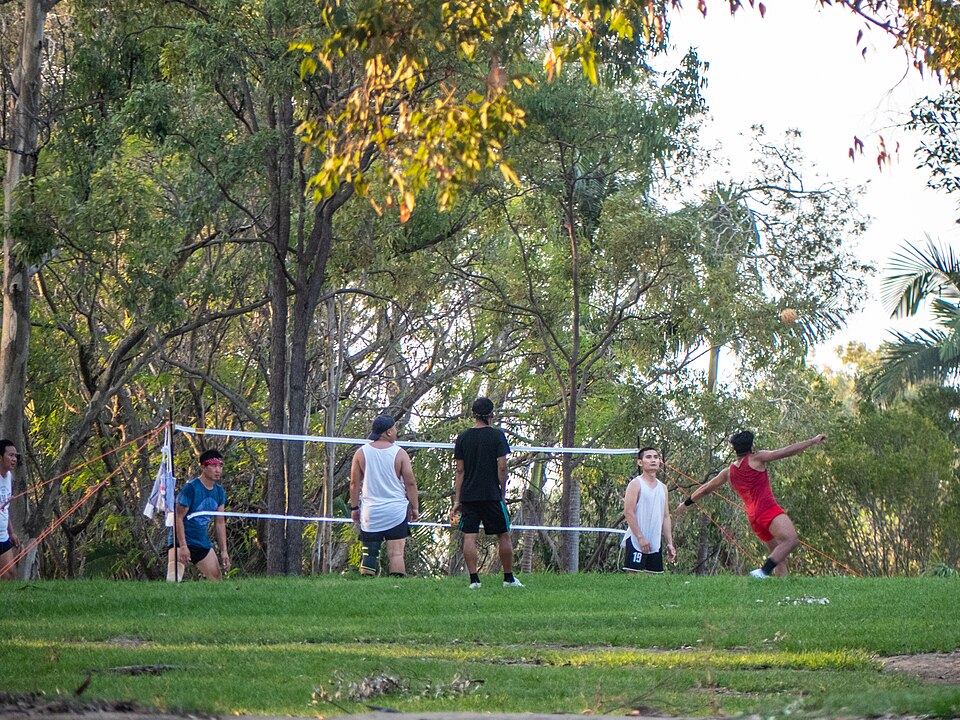
Volleyball is a reasonable sport. It has established rules, comprehensible objectives, and athletes who are tall but not alarming. Sepak Takraw is what happens when someone looks at volleyball and decides the fundamental problem is the hands. The name comes from the Malay and Thai words for "kick" and "woven ball" respectively, and the sport is played like volleyball except that the ball may only be contacted using the feet, chest, knee, or head. This is, it turns out, a different proposition entirely.
What this produces, at the competitive level, is a sport in which players regularly perform bicycle kicks at heights that should not be physically possible for a human being, spinning over the net in maneuvers that competitive gymnasts would find ambitious. The sport has been played across Southeast Asia for centuries in various forms, and is now an official discipline at the Southeast Asian Games, where it is taken with the full seriousness of any Olympic sport, up to and including the training regimes that make ordinary fitness routines feel like light housework.
Thailand is the traditional powerhouse, though Malaysia, Indonesia, and South Korea compete at the highest levels. If you happen to be in Bangkok, it is entirely possible to find locals playing casual sepak takraw in parks, performing bicycle kicks over makeshift nets with an ease that suggests the rest of us have been using our hands far too much. We've also covered some of the bizarre street foods you'll find while watching.
Pato
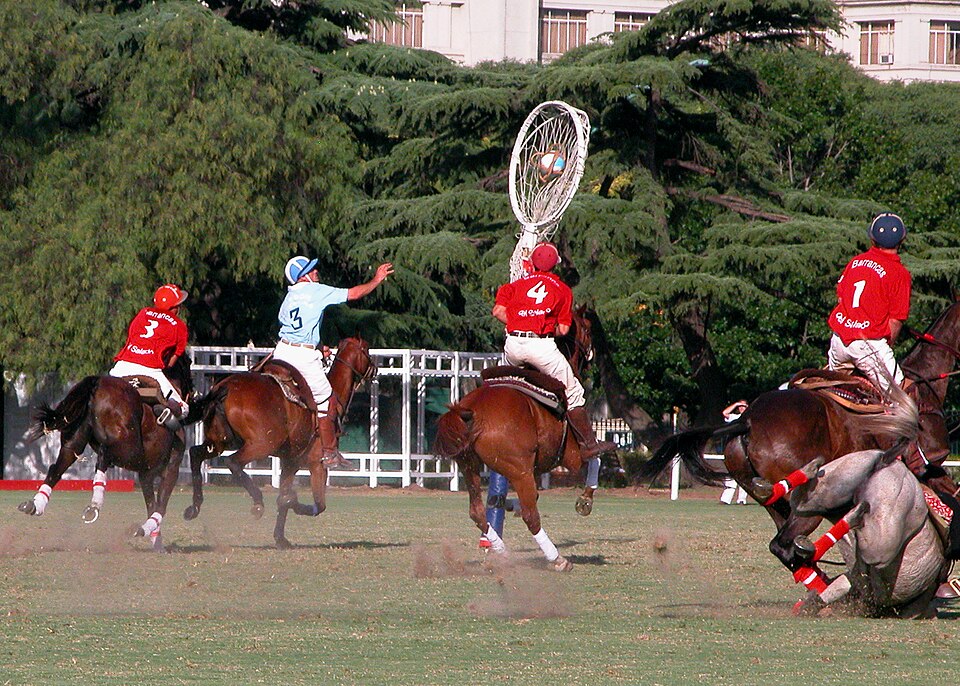
Argentina's national sport is not football. Many people assume it is football. It is not. Argentina's official national sport, as designated by the government, is pato, which means "duck" in Spanish. This is because the sport was originally played using a live duck inside a basket, which the horseback competitors would grab and carry toward the opposing team's goal. The duck was retired from the sport sometime in the seventeenth century - whether voluntarily or otherwise, history does not record - and replaced with a six-handled leather ball.
The modern game is essentially polo combined with basketball, played on horseback, with points scored by throwing the ball through a vertically mounted ring rather than hitting it into a goal on the ground. There is genuine skill involved, particularly the element where you must offer the ball to an opponent who asks for it at full gallop - a rule that was instituted, one assumes, after earlier versions of the sport produced outcomes that concerned the medical establishment. For much of its early history, pato was banned outright by the Argentine government as excessively violent and disruptive, and participants were at various points excommunicated from the Catholic Church. It is now the official national sport. Argentina contains multitudes.
The sport has a governing body, a professional league, and is played nowhere near as widely as this article might suggest. But it is unambiguously Argentina's national sport, which you can file alongside the country's other significant contributions to global culture in our Buenos Aires guide.
Extreme Ironing
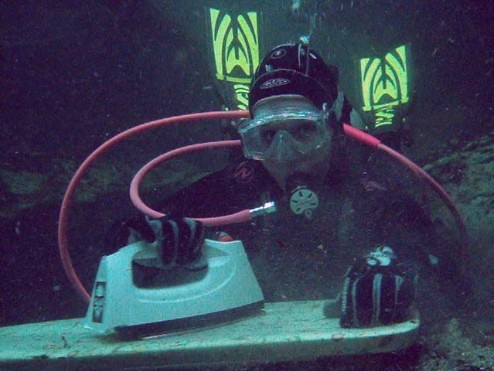
In 1997, a man named Phil Shaw returned home from a long shift at his knitwear factory in Leicester, England, to find a pile of shirts requiring ironing and a voice in his head suggesting he combine this task with rock climbing. The result was extreme ironing, which the Extreme Ironing Bureau (a real organization) defines as "the latest danger sport that combines the thrills of an extreme outdoor activity with the satisfaction of a well-pressed shirt." This is, without significant competition, the most British sentence ever constructed.
Extreme ironing competitors take a board and iron to the tops of mountains, the bottoms of swimming pools, the midpoints of ski runs, and any number of other locations where the presence of laundry equipment is surprising. There are formal disciplines: Alpine (ironing on a mountainside), Underwater (ironing with scuba equipment in a lake or pool), Freestyle (ironing in unusual ways rather than unusual places), and Urban (ironing in inconvenient city locations, which is the discipline that suggests the competitors may have run out of mountains). The annual World Extreme Ironing Championship has been held since 1999.
The sport requires a generator or battery-powered iron, a stable enough surface to not drop said iron on yourself, and the kind of personality that looks at extreme sports and thinks the main thing missing is domestic chores. We have covered a range of other activities that exist at the intersection of dedication and questionable judgment in our extreme travel records article.
Bog Snorkeling
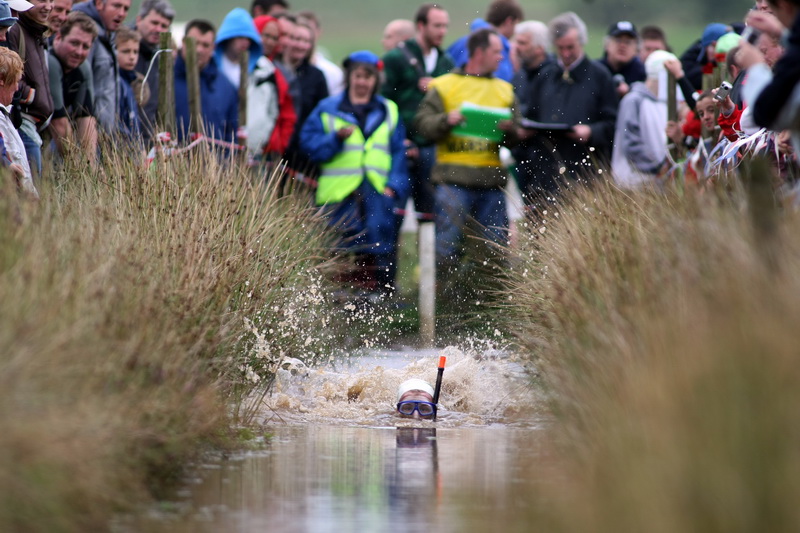
Llanwrtyd Wells, Wales, is the smallest town in Great Britain. It has approximately 600 residents. It has, since 1985, hosted the World Bog Snorkeling Championship, in which competitors complete two lengths of a sixty-yard trench cut through a peat bog using only flippers for propulsion (conventional swimming strokes are prohibited, which is the rule that really makes you understand what you've entered into). The bog in question is called Waen Rhydd, which is pronounced by people who speak Welsh and transcribed by people who don't.
Competitors wear wetsuits, snorkels, and fins. They do not wear noseplugs, which seems like an oversight given that the trench is dug through ancient peat bog that smells precisely as you are imagining it smells right now. The water is approximately the color and consistency of cold tea brewed by someone who has given up. The current world record stands at around one minute and eighteen seconds, which is genuinely impressive given that the course is effectively designed to be unpleasant in every quantifiable respect.
If a single bog snorkel leaves you feeling unfulfilled, Llanwrtyd Wells also hosts the World Mountain Bike Bog Snorkeling Championship, which adds a bicycle to the proceedings (submerged, pedaled through bog water, because of course), and a Bog Snorkeling Triathlon combining the swim with a mountain bike section and a running leg. We have also covered this kind of organized self-inflicted difficulty in our most dangerous travel destinations piece, though this might be a different category of danger entirely.
Underwater Hockey
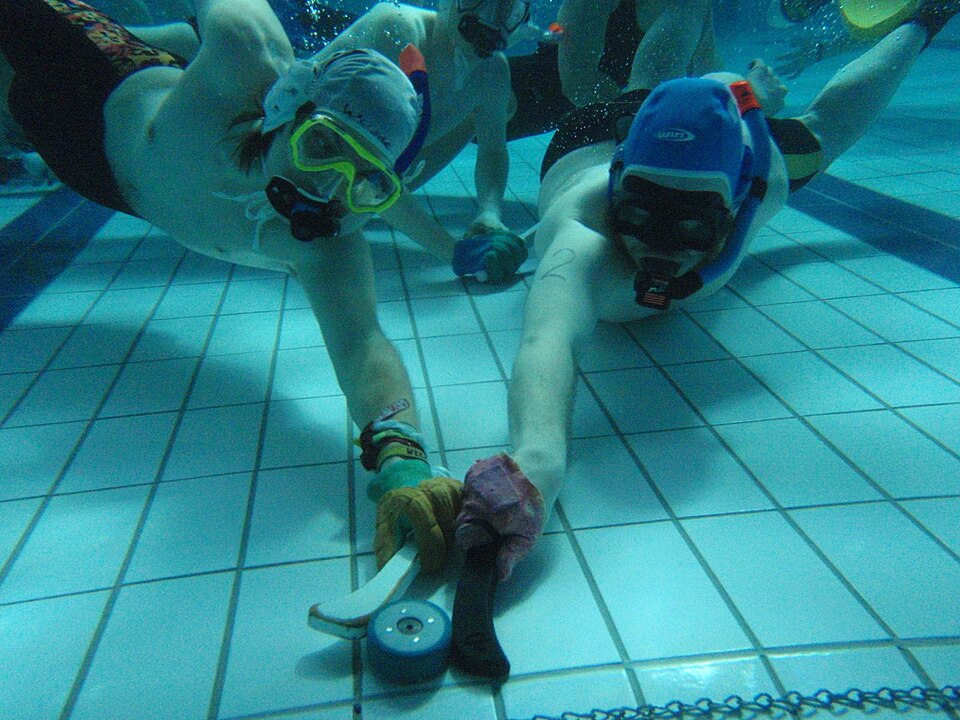
Officially known as Octopush in Britain (where it was invented), underwater hockey was created in 1954 by Alan Blake of the British Sub-Aqua Club in Southsea, Portsmouth, as a method of keeping divers fit and engaged during winter. The sport involves two teams of six players competing on the bottom of a swimming pool, pushing a weighted puck along the pool floor using short curved sticks, with the objective of getting it into the opposing team's goal tray. Players are not permitted to use scuba equipment. They surface to breathe as needed, which is both a practical requirement and, at the competitive level, a genuine tactical element - because while you are breathing, your opponents are playing.
The strategic complexity of underwater hockey hinges primarily on breath control, positional awareness in three dimensions, and the ability to see where you're going through a fogged-up mask while someone else's elbow is near your face. There are World Aquachallenge Championships, held by the World Aquachallenge Association. The sport is played in over thirty countries. It is, objectively, much harder to watch than ordinary hockey, because the action is happening under the water and the spectators are above it, squinting through a pool window or watching via underwater cameras while standing in a damp observation area.
The name Octopush, it should be noted, comes from the original eight-player format and the pushing action. It is a better name than "underwater hockey" in every respect, and the fact that international governing bodies moved away from it represents one of the minor tragedies of sports administration. You can explore the full range of competitive activities that test human endurance in creative ways in our world's weirdest festivals piece, where several other sports-adjacent events make an appearance.
Disclaimer: Tripbase does not endorse the participation in any sport involving headless livestock, a peat bog, or submerged laundry equipment without appropriate safety precautions. If you are currently planning to take up extreme ironing, the authors of this article wish to make clear that this was not their intention, and also that they are sorry.