The World's Weirdest Annual Festivals (That People Actually Attend)
Every year, thousands of people voluntarily travel hundreds or thousands of miles to throw tomatoes at each other, jump over infants, or break bones chasing a cheese wheel down a hill.
We tend to think of travel as being about beaches, monuments, and food. This is a perfectly reasonable approach to seeing the world, and it produces perfectly reasonable photographs. But there exists a parallel tradition of travel - one in which the destination is secondary and the entire point is participation in an event that, when described to someone who wasn't there, sounds like it was designed by a committee of people who should probably be talking to a professional. These festivals are real. They happen every year. People come from around the world specifically to attend them. This is their story.
The Wife-Carrying World Championships, Finland
Every July, in the Finnish town of Sonkajarvi, men carry women through an obstacle course - over hurdles, through water pits, across sand - in the most efficient manner they can manage, which turns out to involve the woman hanging upside down with her legs over the man's shoulders, her head approximately level with his lower back, and both of them managing this arrangement at sprint speed. The winner receives their partner's weight in beer and a cash prize. The loser receives what we can only describe as a very particular kind of relational context.
The sport has its own international federation, its own official carrying styles (the Estonian style - the inverted back carry - is the dominant technique used by serious competitors; the traditional over-the-shoulder carry is considered inefficient and used primarily by those who value dignity over finishing positions), and an annual championship that draws competitors from over thirty countries. The event originated, allegedly, from a 19th-century local bandit named Ronkainen who used to raid villages and carry off food and women (not a compliment to the origin story). Whether the organizers intend this as a tribute to tradition or an opportunity for ironic commentary is somewhat unclear. The championship has been running since 1992 and shows no sign of reconsidering itself.
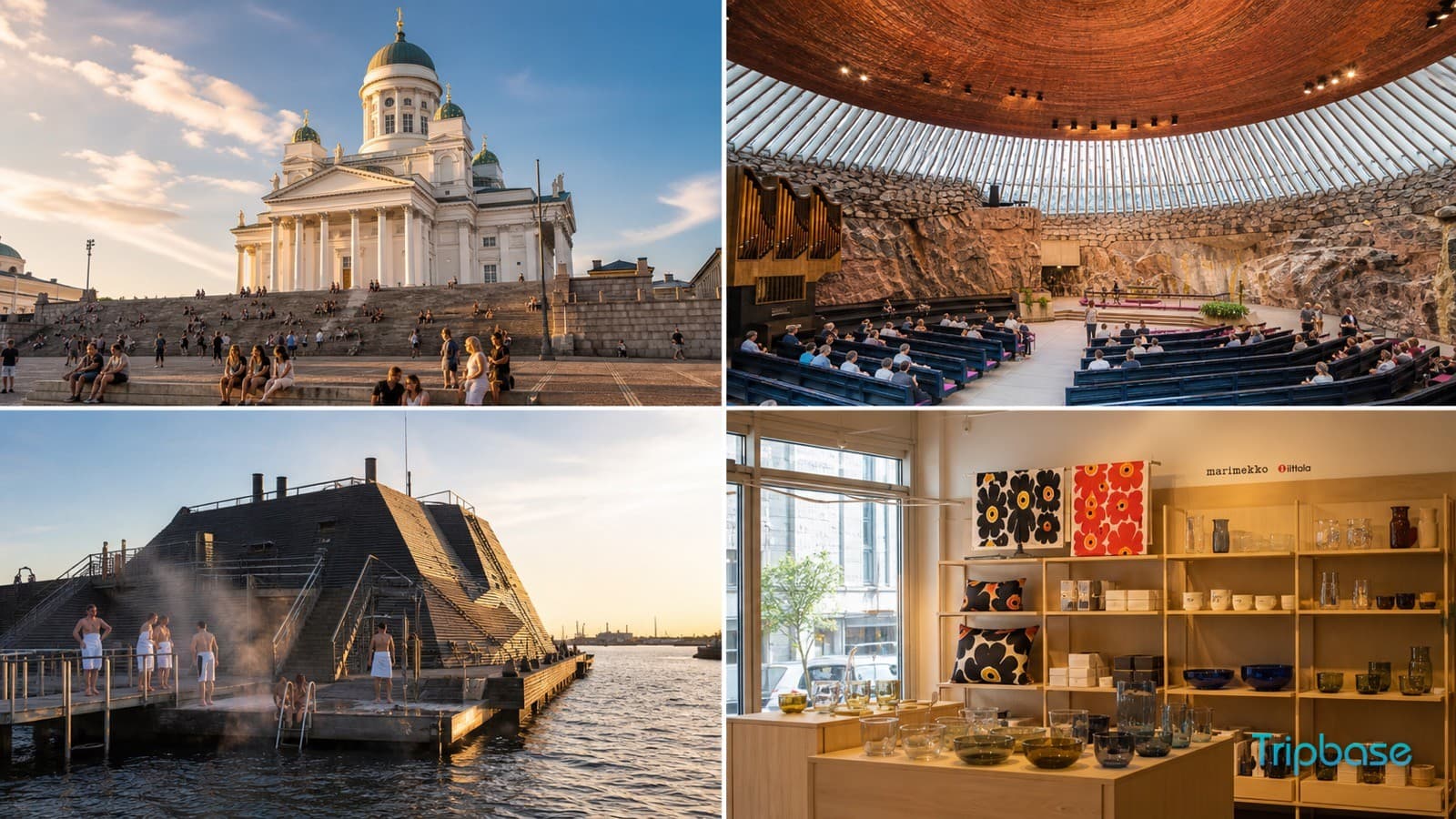
Finland, which produced this event and hosts the world championship, appears entirely unbothered by the international publicity. This is consistent with Finland's general approach to everything, which involves a level of self-assuredness that other countries would find alarming and Finns would describe as simply practical. Helsinki is the obvious base for anyone interested in experiencing Finnish culture in a format more likely to preserve their spinal integrity.
El Colacho: The Festival Where Men Jump Over Babies
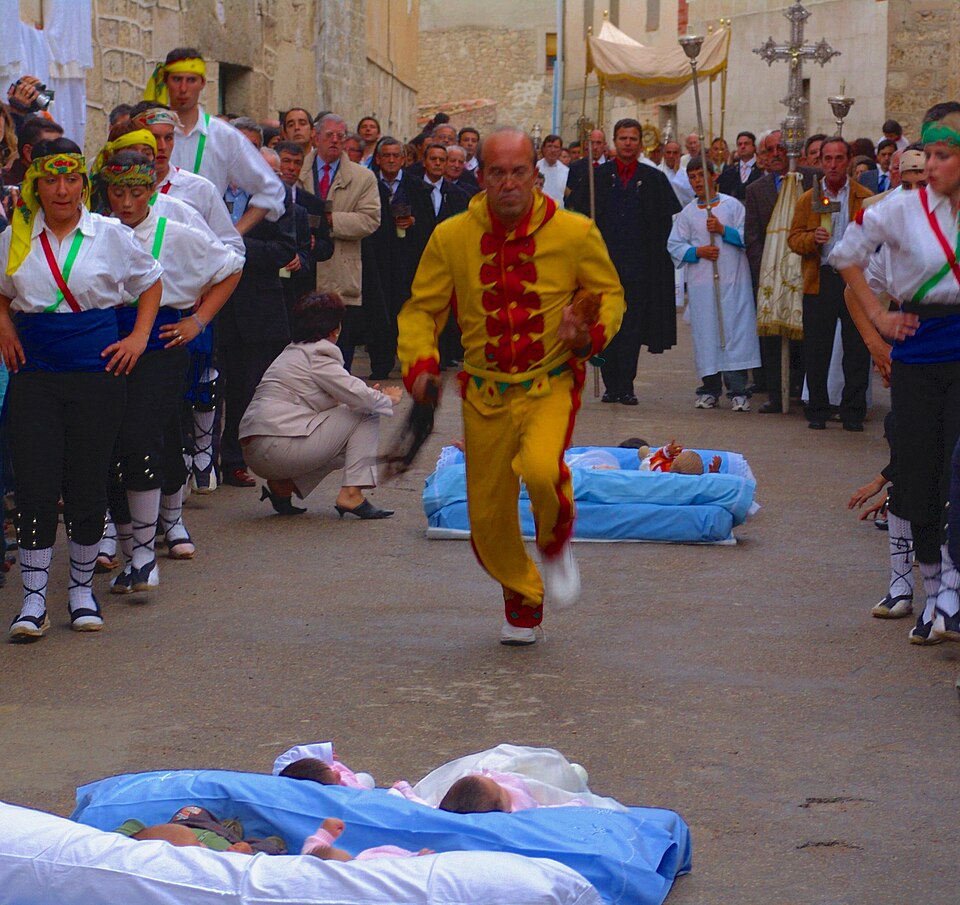
In the village of Castrillo de Murcia, in the province of Burgos in northern Spain, there is a festival that has been running since 1620 and has, in that time, failed to produce a single injury despite involving grown men in devil costumes leaping over rows of babies laid on mattresses in the street. This is either a testament to the precision of the participants or a commentary on what four hundred years of practice can accomplish. Probably both.
The festival is called El Colacho, and it is technically a Catholic celebration of Corpus Christi. The official theological reasoning is that the devil - costumed and committed to the task - literally jumps over the babies, symbolically taking their sins with him as he clears them: a kind of extreme spiritual dry-cleaning for infants who have not yet had the opportunity to accumulate sins in the conventional manner. The Catholic Church has at various points expressed reservations. The Vatican issued a statement in 2010 suggesting that parishes "consider suppressing" the baby-jumping element, which worked about as well as all ecclesiastical suggestions to stop doing things that are extremely popular and have been happening for several centuries.
The babies are typically between zero and two years old, belong to families from the village, and are arranged in rows of up to five on the mattresses. The Colacho - the man in the devil costume - runs the full length of the street and clears each row in a single jump. No baby has been injured in four hundred years. This is a safety record that puts a lot of more sober-sounding recreational activities to shame. Spain's relationship with festivals that appear alarming from a distance extends considerably beyond this one - we've covered the broader tradition in our strangest food festivals guide, but El Colacho operates in a category that food festivals simply cannot compete with.
Cooper's Hill Cheese Rolling, Gloucestershire
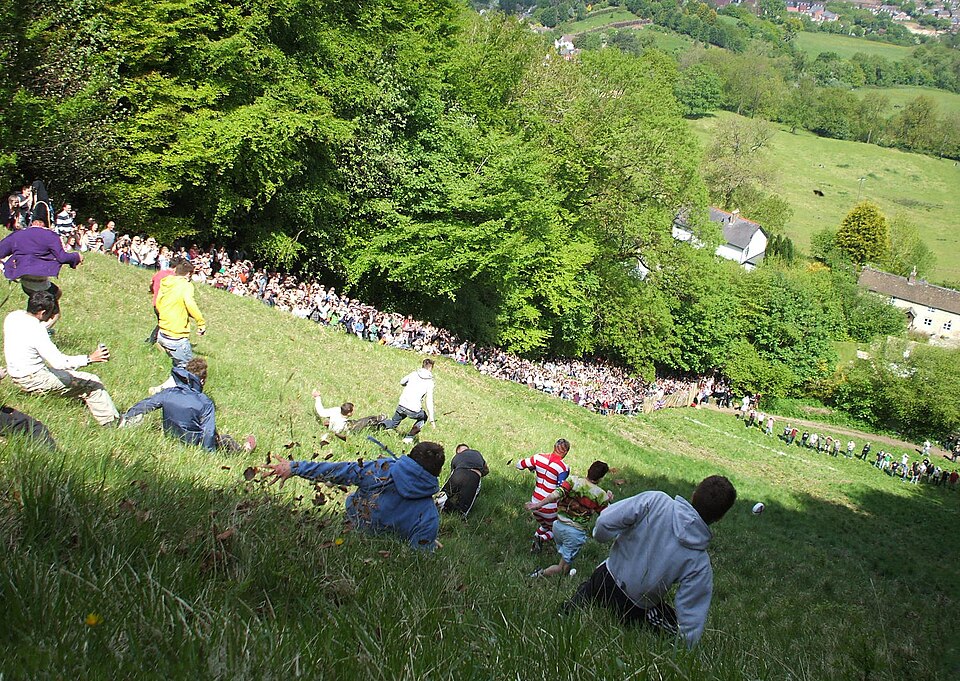
The hill at Cooper's Hill in Gloucestershire is approximately 200 metres long and drops at a gradient of roughly 1 in 2 in places - about 50 degrees. This is not a slope. This is a vertical surface that has agreed, in a charitable moment, to lie at a slight angle. Every May, a wheel of Double Gloucester cheese is rolled down this surface, and people throw themselves after it. The cheese reaches speeds of approximately 70 miles per hour. The people do not. The people, generally speaking, do not reach any planned destination at all - they simply accelerate beyond the point where running is a meaningful description of what they're doing, and achieve what might technically be classified as "consecutive falling" rather than "competitive pursuit," eventually arriving at the bottom via a combination of momentum, grass stains, and whatever the medical term is for what happens to a human body when it rolls.
Cooper's Hill Cheese Rolling is, on the face of it, inexplicable. The local council banned it from 2010 to 2011 on safety grounds and also, presumably, their own sanity. It came back, because no bureaucratic intervention has successfully stopped people from doing things they enjoy, especially things that involve cheese, a hill, and a substantial crowd of spectators positioned safely at the side. Medical teams attend every year. The injuries are consistent: twisted ankles, sprained knees, the occasional broken collarbone. The winner gets the cheese. This is important to emphasize. There is a prize. The prize is cheese. Competitors from around the world travel to Gloucestershire specifically to break their bodies on a hillside and receive, if successful, a wheel of Double Gloucester that retails for approximately eight pounds.
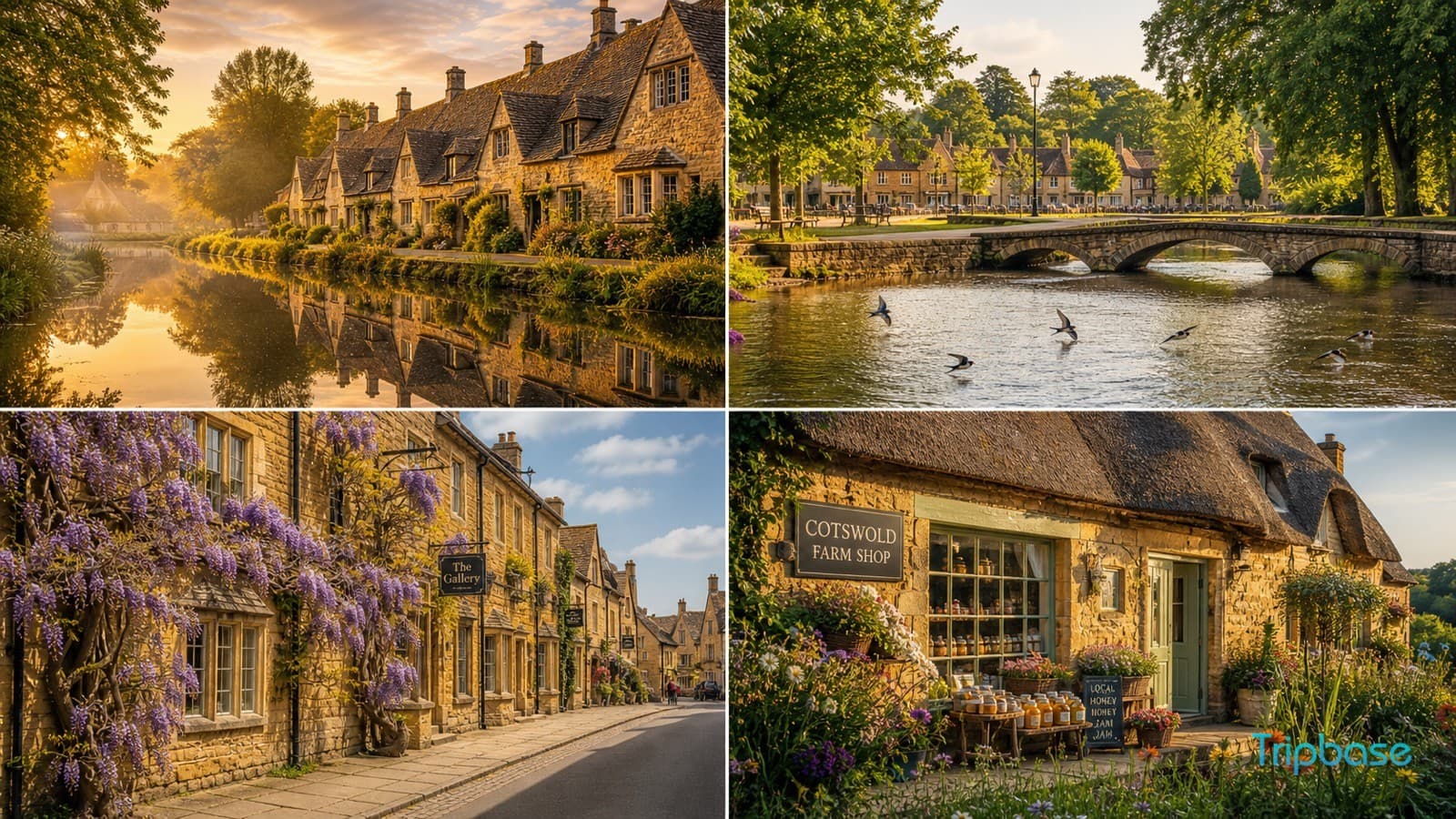
If you find yourself in the Cotswolds in late May and the cheese rolling appears on your itinerary, we recommend attending as a spectator. The view from the top of the hill is excellent and all the interesting things happen below you. You can be the person who tells the story rather than the one who is in it. The cheese, for the record, is very good. Worth the trip. Not worth the hill.
La Tomatina: Forty Thousand People, One Hundred and Fifty Thousand Tomatoes
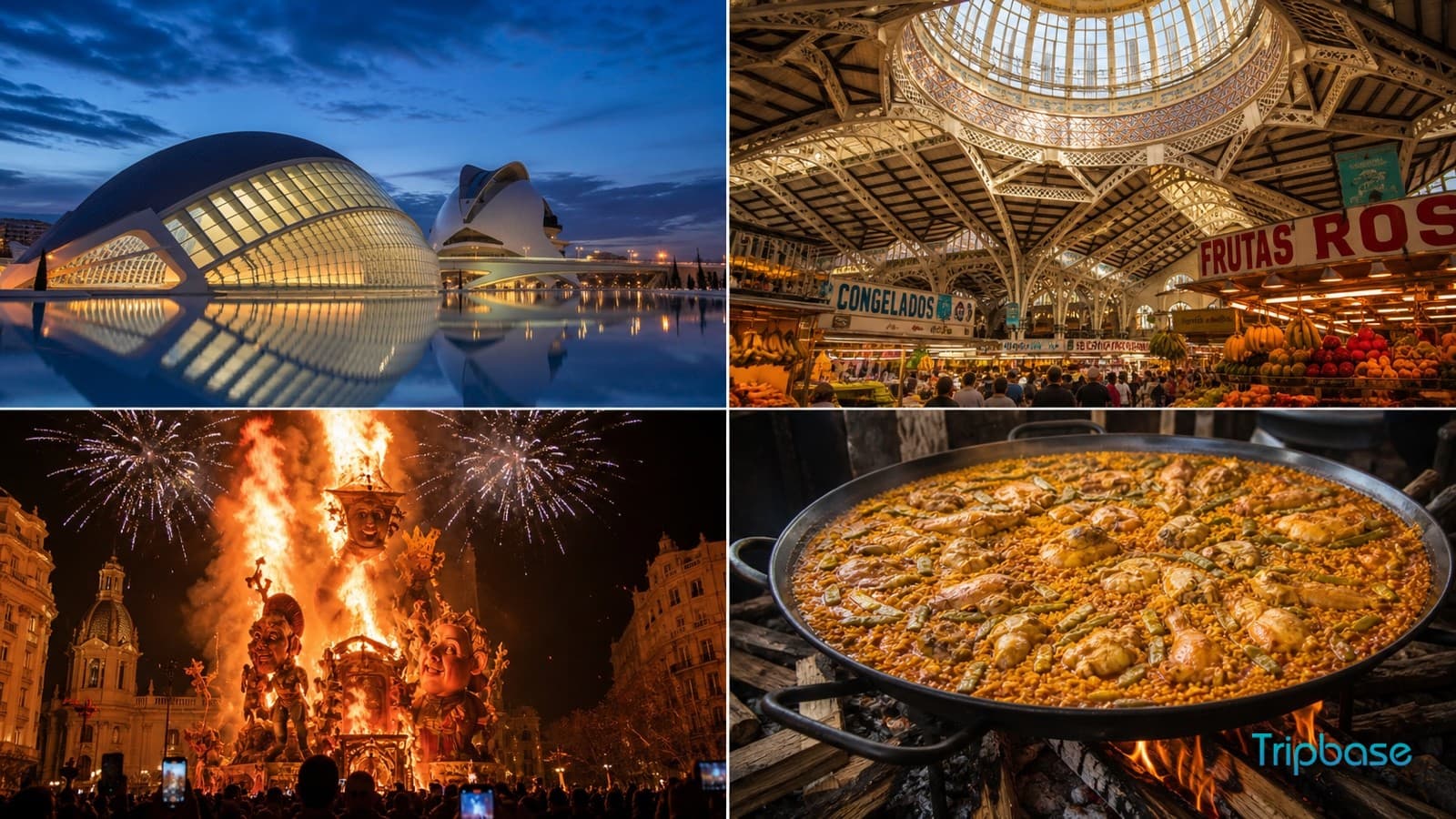
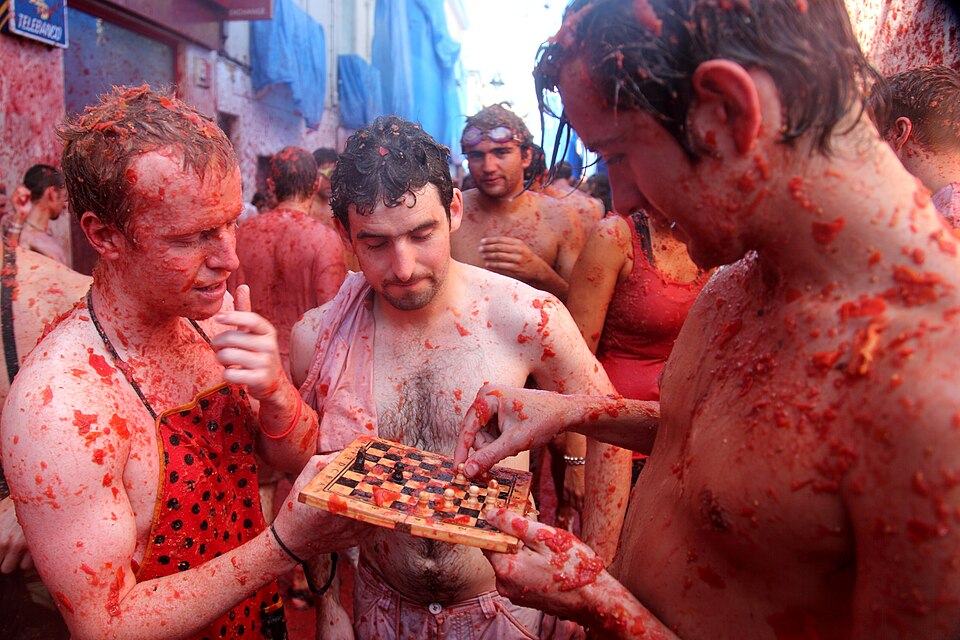
Every last Wednesday of August, the town of Buñol - population 9,000, located about 40 kilometres inland from Valencia in Spain - receives approximately forty thousand visitors, most of whom have traveled there specifically to throw tomatoes at each other for one hour and then leave. One hundred and fifty thousand kilograms of overripe tomatoes are trucked in for the purpose. The streets run red. The local drainage system handles what is essentially a minor flood of tomato juice. This is La Tomatina, and it has been running since 1945 despite no one being entirely certain how it started.
The origin stories are numerous and mutually incompatible, which is usually a sign that no one was writing things down particularly carefully at the time and various participants have since constructed narratives that make them look more dignified. The most commonly repeated version involves a group of young men fighting their way into a local parade in 1945, knocking over a market stall, and then continuing to throw tomatoes at each other once they noticed the tomatoes were there and also it was very funny. The Franco government banned the festival twice. It came back both times. After Franco died in 1975, La Tomatina was officially reinstated and has run continuously since.
Practical guidance for the aspirational attendee: tickets are now required and capacity is capped (the event became popular enough that unregulated crowd sizes were creating genuinely dangerous conditions). You will need goggles or at minimum a willingness to close your eyes when the tomatoes are in the air, clothes you do not intend to keep, and an acceptance that tomato juice reaches places you would prefer it didn't. Some participants report that the acidity of the overripe tomatoes is actually beneficial for the skin. This is either accurate or something people say to make themselves feel better about spending the rest of the afternoon smelling faintly of marinara. The bizarre laws archive has more on Spain's uniquely creative relationship with public event regulation, if La Tomatina's twice-banned history has piqued your interest.
The Monkey Buffet Festival, Lopburi, Thailand
The town of Lopburi, located about 150 kilometres north of Bangkok, has a macaque problem of some duration. The long-tailed macaques of Lopburi have coexisted with the human population for centuries, concentrated primarily around the ancient Khmer temples at the center of town, and they have developed over that time a level of confidence in their relationship with humanity that goes well beyond comfortable. They steal food. They steal phones. They steal glasses directly off faces. They have been observed opening bags and rummaging through them with the methodical thoroughness of customs officials. The people of Lopburi have, to their considerable credit, mostly made peace with this.
In 1989, a local businessman named Yongyuth Kitwattananusont decided that rather than managing the monkeys, he would celebrate them. The result is the Monkey Buffet Festival, held every year in late November at Prang Sam Yot temple, in which an elaborate feast of fruit, vegetables, and other primate-appropriate food is laid out specifically for the macaque population. Roughly two thousand monkeys attend. A substantial number of tourists also attend, having traveled to Lopburi specifically to watch macaques eat a banquet, which is either one of travel's more unusual experiences or exactly as charming as it sounds, depending on your relationship with monkeys and your tolerance for extremely photogenic chaos.
The festival has attracted animal welfare criticism in recent years - aggregating large numbers of macaques around food and tourists encourages dependency and can increase aggressive behavior - and the town's relationship with its monkey population has become complicated enough that Thai authorities have periodically discussed population management programs. None of this has stopped the Monkey Buffet, which continues to operate as both a local tourism event and an annual reminder that coexistence with wildlife is considerably more nuanced than a buffet table makes it appear. This is probably true of most things.
The Boryeong Mud Festival, South Korea
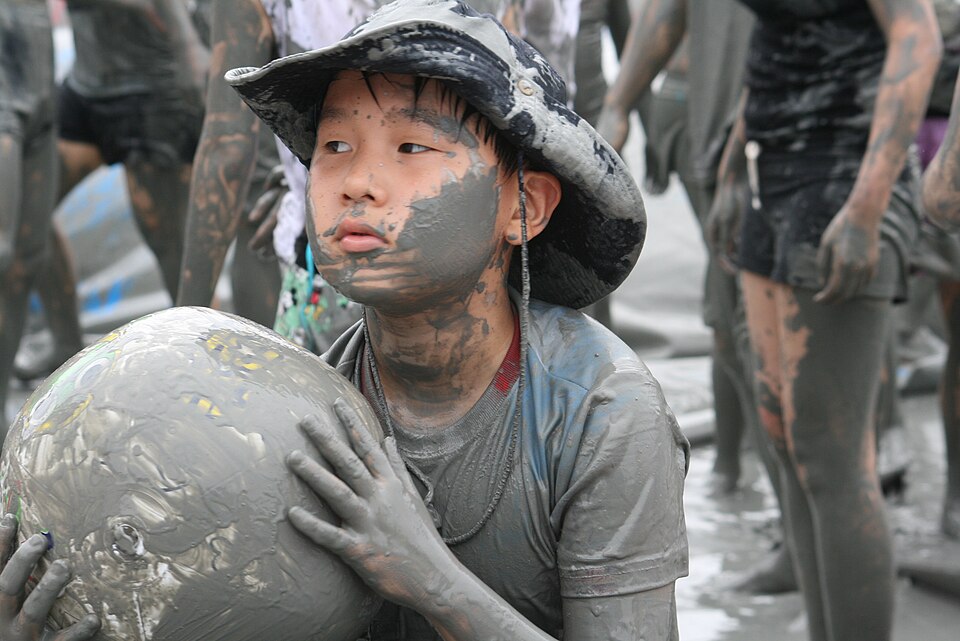
In 1998, a cosmetics company in the South Korean coastal city of Boryeong hit on the idea of promoting its skincare products by holding a festival that let visitors play in the mineral-rich mud from which those products were made. This was, on paper, a marketing event with a reasonably clear commercial rationale. It is now one of the largest annual festivals in South Korea, drawing over two million visitors annually.
The mud festival runs for two weeks in July at Boryeong's Daecheon Beach, and the infrastructure is exactly what it sounds like: mud slides, mud pools, mud wrestling, mud obstacle courses, and the general experience of spending a day covered in gray-brown mineral mud for reasons that are simultaneously cosmetic (Boryeong mud genuinely contains minerals associated with skin health), recreational (large muddy slides are, by most accounts, enjoyable), and probably simpler than either of those explanations suggests. The international dimension is considerable - Boryeong has become a significant destination for visitors from across Asia and beyond, and has accumulated enough coverage in the writings of English teachers working in South Korea to constitute a secondary tourism industry in its own right.
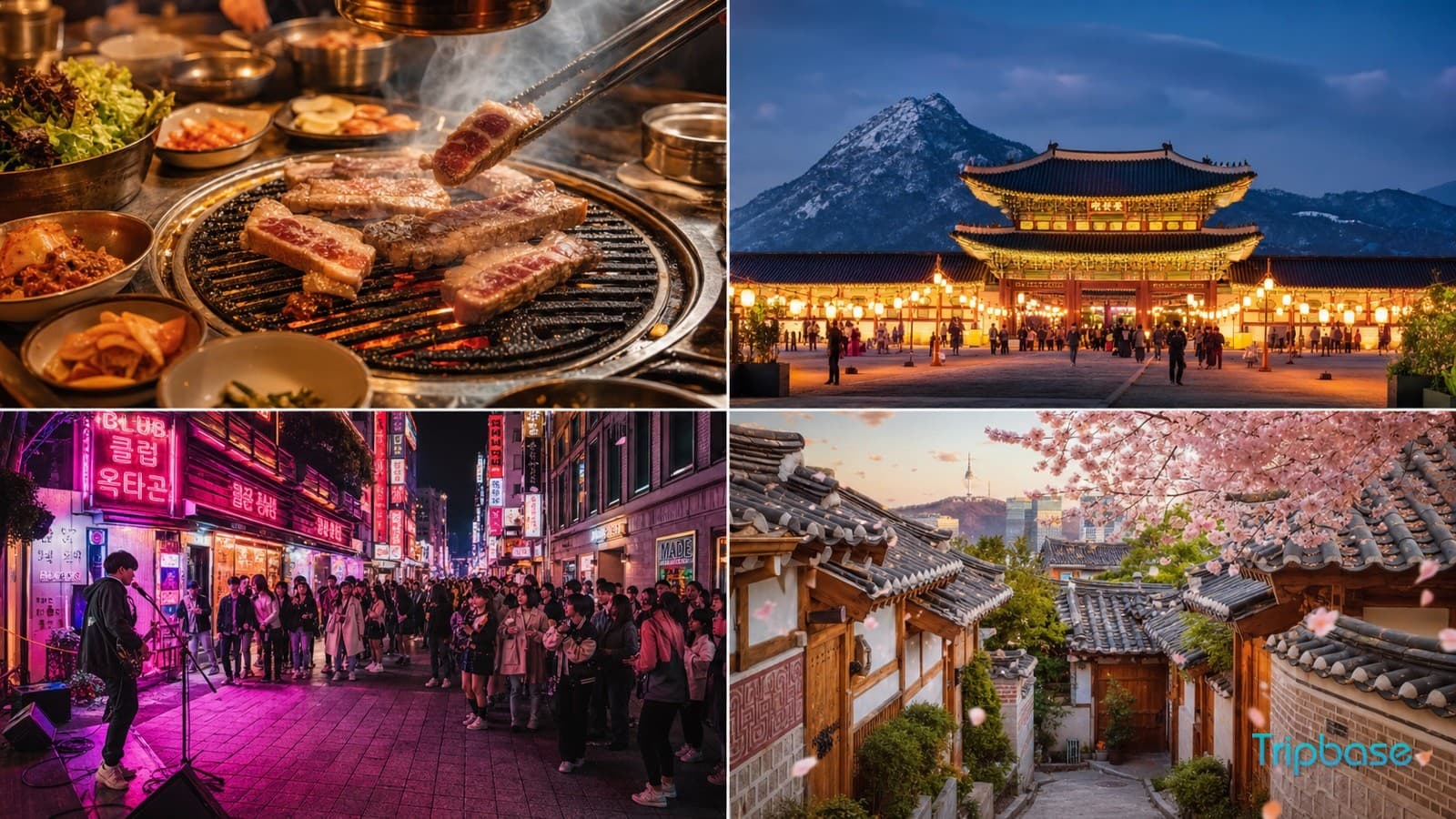
Seoul is the practical base for Boryeong, with the city about two and a half hours south by bus. The festival has won multiple tourism awards that the organizing committee presumably cleaned themselves up before accepting. The mud, for the record, is tested for quality prior to each festival season. Whatever you think of the concept, the execution is thorough. We covered some of the weirder extremes of what countries do to attract tourists in our guide to laws you can accidentally break abroad, and while none of them involve voluntary mud immersion on this scale, several have a similar energy.
It is perhaps worth noting that every event described here has safety procedures, organized committee structures, permit systems, and in some cases, international governing bodies. This is what humanity does with its most impractical enthusiasms - it institutionalizes them, creates rulebooks, establishes records, and issues press releases. The cheese wheel at Cooper's Hill has a specific release mechanism and a designated finish line. The tomato trucks in Buñol arrive on a scheduled route. The mud in Boryeong is tested for quality. The babies at El Colacho lie on mattresses that meet specifications. We are a species that takes things seriously, and what we choose to take seriously tells you a great deal about us.
Have you attended any of these festivals? The comments section is, as always, available. Although if your answer is "I broke something at the cheese rolling," we ask that you consult a medical professional before writing to us. The cheese, we sincerely hope, was worth it.