
How Much Does an Air Ambulance Cost? A Complete Price Breakdown
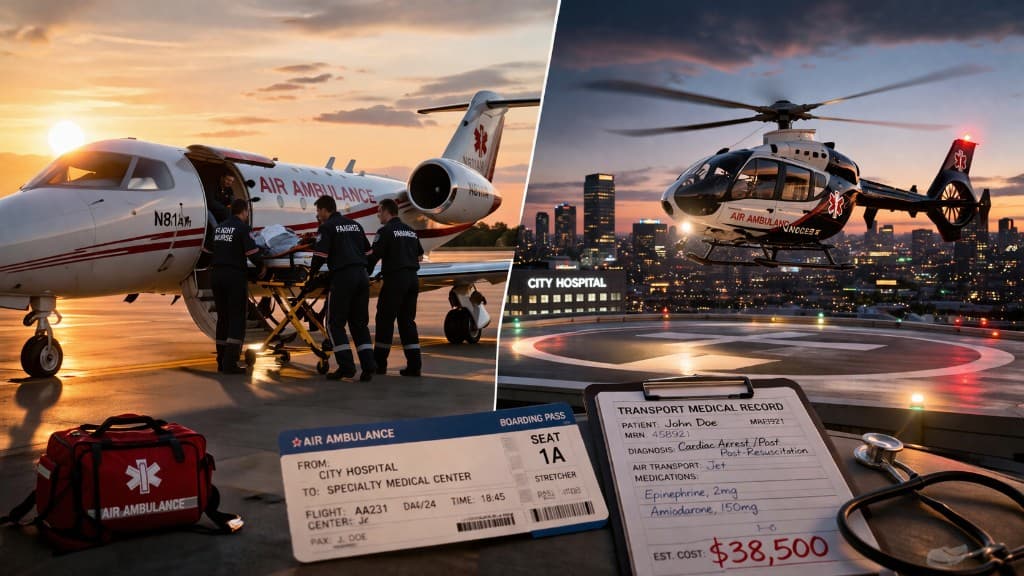
A single air ambulance flight can cost more than a house deposit. Domestic helicopter transports start around $12,000, while an international fixed-wing repatriation can exceed $300,000. Understanding what drives these costs - and how to protect yourself - is essential for any traveler heading somewhere remote.
Domestic Air Ambulance Costs in the United States
Within the US, air ambulance costs depend primarily on whether the transport uses a helicopter or a fixed-wing aircraft, and how far the patient needs to travel.
Helicopter (rotor-wing) transport is used for short-range emergencies - typically under 150 miles. These are the aircraft you see landing at accident scenes or on hospital rooftops. The average cost ranges from $12,000 to $25,000 per flight. A 2022 study by the Government Accountability Office found that the median charge for a helicopter air ambulance flight was approximately $36,000, though negotiated insurance payments were significantly lower.
Fixed-wing (airplane) transport handles longer distances. A domestic flight on a turboprop or light jet typically costs $25,000 to $75,000. Cross-country transfers - say, from a rural hospital in Montana to a specialist center in Houston - can run $75,000 to $150,000 when you factor in the medical crew, ground ambulances at both ends, and the return positioning of the aircraft.
International Air Ambulance Costs
International medical repatriation is where costs escalate dramatically. The aircraft must fly longer distances, carry more fuel, navigate international airspace permits, and the medical crew may need to spend days away from base.
- Europe to the US: $120,000 - $200,000
- Southeast Asia to the US: $200,000 - $300,000
- Africa to Europe: $80,000 - $180,000
- Caribbean to the US: $30,000 - $80,000
- South America to the US: $100,000 - $250,000
These are ranges for a dedicated air ambulance - a medically equipped jet with a full crew. There is a significantly cheaper alternative for stable patients: a commercial medical escort, where a flight nurse accompanies the patient on a regular airline. This typically costs $10,000 to $35,000, including the escort's fees and any stretcher installation on the commercial aircraft.
What Drives the Cost of an Air Ambulance?
Air ambulance pricing is not arbitrary. Several factors contribute to the final bill:
- Aircraft operating costs: Jet fuel alone runs $2,000 - $8,000 per flight hour. A Learjet 45 burns roughly 190 gallons per hour, and jet fuel averages $5 - $7 per gallon.
- Medical crew: A standard crew of a flight nurse and paramedic costs $3,000 - $8,000 per mission in wages and expenses. Add a physician for critical patients and costs increase by $5,000 - $15,000.
- Equipment and supplies: Air ambulances carry $500,000+ worth of medical equipment. Consumable supplies - medications, IV fluids, oxygen - add $1,000 - $5,000 per flight.
- Ground ambulance transfers: Ambulances at the origin and destination add $1,500 - $5,000 total.
- Permits and fees: International flights require overflight permits ($500 - $3,000 per country), landing fees ($500 - $5,000), customs clearance, and sometimes handler fees at each airport.
- Positioning flights: If the nearest suitable aircraft is 500 miles from the patient, the operator must fly the empty aircraft there first - and back to base afterward. Positioning can double the flight hours billed.
- 24/7 readiness: Air ambulance operators maintain aircraft, crew, and operations centers around the clock. This fixed overhead is baked into every mission.
How to Compare Air Ambulance Quotes
If you or a family member needs an air ambulance and you have time to compare options (which is common for hospital-to-hospital transfers and repatriations, less so for roadside emergencies), there are a few things to know:
- Get multiple quotes. Prices for the same route can vary by 30-50% between operators. A price comparison service can gather quotes from multiple vetted providers simultaneously.
- Ask what is included. Some quotes include ground ambulances, medical crew, and all permits. Others are "flight only" with significant add-ons.
- Check accreditation. In the US, look for CAMTS (Commission on Accreditation of Medical Transport Systems) accreditation. In Europe, EURAMI certification is the equivalent standard.
- Understand the aircraft. The type of aircraft matters for patient comfort and capability. A pressurized jet is safer for patients with head injuries, respiratory conditions, or recent surgery than an unpressurized turboprop.
- Confirm the medical crew credentials. At minimum, a Certified Flight Registered Nurse (CFRN). For critical patients, insist on a physician.
Insurance and Air Ambulance Bills
The question every traveler should ask before departure: who pays if I need an air ambulance?
Within the US, the No Surprises Act (effective January 2022) protects patients from balance billing when they receive emergency air ambulance services from an out-of-network provider. You pay only your in-network cost-sharing amount, and the insurer and operator negotiate the rest. This was a landmark change - before 2022, out-of-network air ambulance bills of $50,000 - $100,000 were common and legally collectible.
For international travel, the picture is murkier. Standard health insurance (including Medicare) generally does not cover medical transport outside the US. Travel insurance policies vary wildly - basic plans cap medical evacuation at $50,000 - $100,000, which may not cover an intercontinental flight. Premium plans offer $500,000 or more, and dedicated medevac membership programs like Medjet ($300 - $500/year) cover evacuation to your hospital of choice with no dollar cap.
The bottom line: if your trip takes you somewhere remote - a safari in Tanzania, diving in the Maldives, trekking in Nepal, skiing in the Swiss Alps - your air ambulance exposure could be six figures. A $300 annual membership or a well-chosen travel insurance policy is the cheapest protection available.
The Real Cost of Not Being Prepared
The most expensive air ambulance is the one you did not plan for. A 2023 analysis by the Association of Air Medical Services found that the average charge for an air ambulance transport in the US was $39,000, but uninsured patients paid significantly more out of pocket. International repatriation without coverage is financially devastating - families have been known to crowdfund six-figure medical flights when insurance fell short.
Whether you are booking a beach holiday, a mountaineering expedition, or a business trip to a developing country, spending 10 minutes reviewing your medical evacuation coverage before departure could save you from the most expensive cab ride of your life.
Have you ever had to deal with a medical emergency while traveling? What was your experience with insurance coverage? Share your story - it could help another traveler prepare.