
Medical Evacuation While Traveling: What Happens When You Need an Air Ambulance Overseas
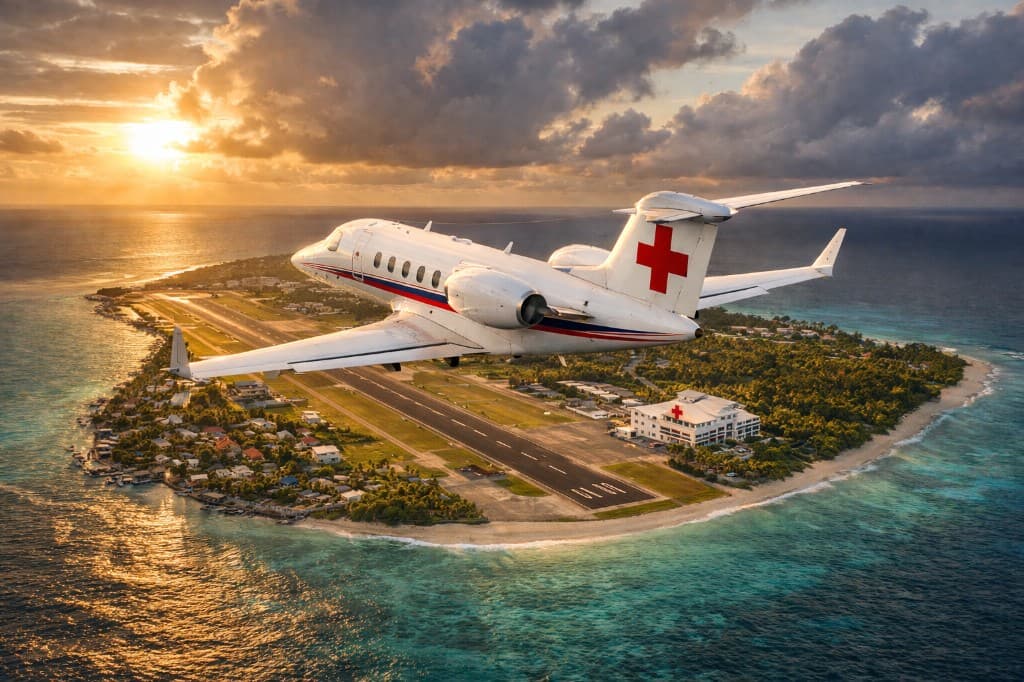
You are in a hospital bed in a country where you do not speak the language, your family is 6,000 miles away, and the doctor is telling you that you need surgery that this facility cannot perform. What happens next? Who do you call? How does a medical evacuation actually work? This is the step-by-step reality.
Step 1: The Emergency Call
The first and most important action is contacting your travel insurance provider's 24/7 emergency assistance line. This is not the same as calling the insurance company's general customer service number - every reputable travel insurance policy includes a dedicated emergency hotline staffed around the clock by medical professionals and logistics coordinators.
If you have a medevac membership (Medjet, Global Rescue, etc.), call their operations center directly. They will take over coordination from that point.
What to have ready when you call:
- Your policy or membership number
- The name and address of the hospital you are in
- Your diagnosis (as best you understand it)
- The name and phone number of the attending physician
- A contact number where the assistance company can reach you or a companion
If you are incapacitated and traveling alone, the hospital's international patient coordinator (most large hospitals in tourist areas have one) can make this call on your behalf. Your embassy or consulate can also help establish contact, though they cannot arrange or pay for medical transport.
Step 2: Medical Assessment and Authorization
Once your assistance company is contacted, their medical team - typically physicians and nurses working from an operations center - begins a case assessment. They will:
- Contact the treating hospital directly and speak with your physician
- Review your medical records, imaging, and lab results
- Determine whether evacuation is medically necessary
- Decide on the appropriate mode of transport: ground ambulance, commercial medical escort, or dedicated air ambulance
- Identify the most appropriate receiving facility
This assessment phase typically takes 2-12 hours, depending on the urgency and the complexity of communication with the local hospital. The assistance company's medical director must formally authorize the evacuation before any aircraft is dispatched.
This is where policy language matters. If your insurance covers evacuation to the "nearest adequate facility," the medical director may authorize transport to a better hospital in the same country rather than repatriation home. If your policy - or medevac membership - covers transport to a hospital of your choice, you have more say in the destination.
Step 3: Logistics and Coordination
Once evacuation is authorized, a logistics team springs into action. For an international air ambulance flight, this involves:
- Aircraft selection: The assistance company contacts air ambulance operators (they typically have contracts with multiple providers globally) and selects an aircraft based on distance, patient needs, and availability. Common aircraft include the Learjet 35A, Learjet 45, Hawker 800, and Beechcraft King Air.
- Overflight and landing permits: International medical flights require diplomatic clearance to enter and overfly each country along the route. In some regions (particularly Africa and parts of Asia), this can take 12-48 hours. Assistance companies have relationships with permit agencies to expedite this.
- Customs and immigration: Medical equipment, medications (including controlled substances), and the stretcher-bound patient all require customs clearance at each stop. The logistics team arranges this in advance.
- Ground ambulances: Ambulances must be arranged at both the origin hospital (to transfer the patient to the airport) and the destination airport (to transport to the receiving hospital).
- Receiving hospital coordination: The medical team contacts the destination hospital to confirm bed availability, ensure the appropriate specialists are standing by, and transfer medical records.
- Fuel and crew rest stops: Long-distance flights require fuel stops and mandatory crew rest periods. A flight from Bangkok to London, for example, may stop in Mumbai and Istanbul. Each stop requires landing permits, fuel arrangements, and ground handling.
Step 4: The Flight
On the day of transport, a ground ambulance brings the patient from the hospital to the airport, where the air ambulance is waiting on the tarmac. The medical crew - typically a flight nurse and flight paramedic, with a physician for critical patients - receives a handoff briefing from the hospital's medical team.
The patient is loaded into the aircraft via a hydraulic stretcher system. Once airborne, the medical crew monitors the patient continuously - vital signs, IV medications, ventilator settings (if applicable), and pain management. The aircraft cabin is pressurized, but the effective cabin altitude (typically 6,000-8,000 feet) can affect patients with certain conditions, so the crew manages this proactively.
Flight times vary enormously:
- Caribbean to US East Coast: 3-5 hours
- Western Europe to US East Coast: 8-10 hours
- Southeast Asia to US West Coast: 15-22 hours (with fuel stops)
- East Africa to Western Europe: 8-12 hours
- Australia to US West Coast: 18-26 hours (with fuel stops)
For stable patients, a commercial medical escort on a regular airline is a viable and significantly cheaper alternative. The patient flies in business or first class (or on a stretcher installed across economy seats), accompanied by a flight nurse. This option requires the patient to be hemodynamically stable, not require continuous IV medications, and be able to tolerate the commercial cabin environment.
Step 5: Arrival and Hospital Handoff
Upon landing, a ground ambulance meets the aircraft on the tarmac. The medical crew provides a detailed handoff to the ambulance team, including all medical records, medication logs, and in-flight observations. The patient is transported directly to the receiving hospital, where the admitting team has been briefed in advance.
The entire process - from the initial emergency call to arrival at the home hospital - typically takes 24 to 72 hours for international evacuations. Extremely remote locations (rural Africa, Pacific islands, high-altitude regions) can take longer due to permit delays and limited aircraft availability.
What Your Embassy Can and Cannot Do
A common misconception is that your country's embassy will arrange and pay for your medical evacuation. They will not. Here is what embassies and consulates can actually do:
- Provide a list of local hospitals and English-speaking doctors
- Contact your family or emergency contacts
- Help replace a lost passport (which you will need for international medical transport)
- Visit you in the hospital if requested
- Assist with repatriation of remains in the event of death
They cannot pay for medical treatment, arrange air ambulances, override hospital decisions, or intervene in insurance disputes. Your insurance company or medevac membership is your actual lifeline.
How to Prepare Before You Travel
The best time to think about medical evacuation is before you need one. A few minutes of preparation can save days of confusion in a crisis:
- Carry a printed emergency card with your insurance policy number, 24/7 assistance hotline, and two emergency contacts. Keep one in your wallet and one in your luggage.
- Download your insurer's app. Most major travel insurance companies offer apps with one-tap emergency calling, digital policy cards, and hospital locators.
- Research hospitals near your destination. Know which facility you would want to be taken to before there is an emergency.
- Register with your embassy. The US Smart Traveler Enrollment Program (STEP), UK's FCDO registration, and similar programs ensure your government knows you are in-country.
- If you have a pre-existing condition, carry a medical summary in English (and ideally in the local language) listing your diagnoses, medications, allergies, and treating physician's contact information.
- Keep digital copies of everything. Passport, insurance policy, medical records, and emergency contacts - accessible offline on your phone and backed up to cloud storage.
Medical evacuations are rare events, but when they happen, preparation is the difference between a smooth, well-coordinated transport and a chaotic, financially devastating crisis.
Have you ever had to navigate a medical emergency overseas? What would you tell other travelers to prepare for? Your experience could help someone in the same situation.