
Does Travel Insurance Cover Air Ambulances? What Most Policies Miss
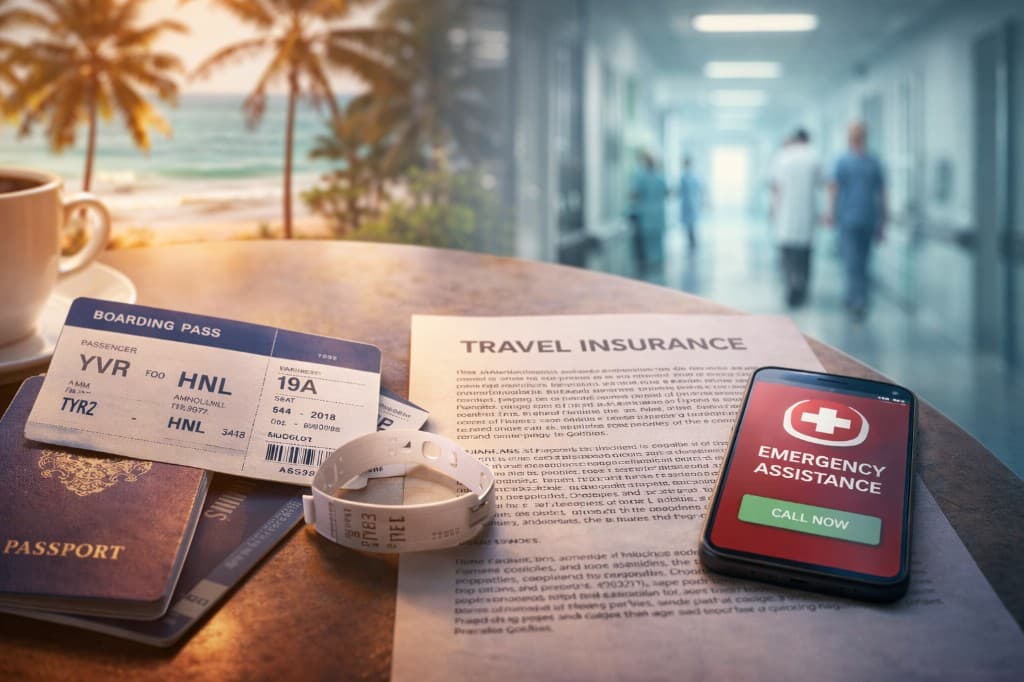
You bought travel insurance. You feel covered. Then you break your femur on a hiking trail in rural Laos and discover your policy's "medical evacuation" benefit gets you to the nearest hospital in Vientiane - not home to your family and your own doctors. The air ambulance to bring you back to the US would cost $250,000. Your policy's cap is $100,000. That gap is real, and it catches thousands of travelers every year.
What Standard Travel Insurance Actually Covers
Almost every travel insurance policy advertises "emergency medical evacuation" as a covered benefit. The devil, as always, is in the fine print. Here is what you need to understand about what that phrase actually means:
"Medical evacuation" usually means transport to the nearest adequate medical facility - not to your home country, not to your preferred hospital, and not necessarily by air ambulance. If there is a capable hospital 200 miles away by ground ambulance, your insurer may decide that is adequate.
"Repatriation" is a separate benefit - and many policies either do not include it, cap it at a low amount, or only cover it under narrow conditions (e.g., the patient must be stable, the local medical team must certify transfer is appropriate, and the insurer's own medical director must authorize it).
The distinction matters enormously. Evacuation to a regional hospital might cost $5,000 - $20,000. Repatriation to your home country by air ambulance could be $100,000 - $300,000. If your policy only covers the first scenario, you are exposed to the most expensive one.
Common Coverage Limits and What They Mean
Here is what typical travel insurance tiers offer for medical evacuation:
- Basic plans ($30 - $80 per trip): $50,000 - $100,000 medical evacuation limit. Adequate for transport within a country or region. Unlikely to cover intercontinental repatriation by dedicated air ambulance.
- Mid-range plans ($80 - $200 per trip): $250,000 - $500,000 medical evacuation limit. Usually sufficient for most scenarios, including international repatriation. Read the fine print on whether repatriation is included or treated separately.
- Premium plans ($200+ per trip): $1,000,000+ or "unlimited" medical evacuation. The safest option, but verify what "unlimited" actually means - some policies define it as "reasonable and customary charges" for the transport, which still allows the insurer to dispute costs.
The Five Fine Print Traps
Even policies with generous headline limits can deny or reduce air ambulance claims based on fine print exclusions. Watch for these:
1. "Nearest adequate facility" language. If the insurer's medical team determines that a local or regional hospital can treat you, they may refuse to authorize a longer evacuation - even if you would strongly prefer treatment at home. You have limited ability to override this decision.
2. Pre-existing condition exclusions. If your emergency is related to a condition you had before the trip (e.g., a cardiac event with a history of heart disease), many policies exclude coverage entirely. Some offer a pre-existing condition waiver if you purchase the policy within 14-21 days of your initial trip deposit.
3. Adventure activity exclusions. Standard policies often exclude injuries sustained during activities like mountaineering above a certain altitude, scuba diving below 30-40 metres, motorbike riding, paragliding, or bungee jumping. If you plan any of these, you need a policy that explicitly covers them - or a separate adventure sports rider.
4. Alcohol and substance exclusions. Most policies include a blanket exclusion for injuries sustained while under the influence of alcohol or drugs. The threshold is often not specified, giving insurers broad discretion to deny claims.
5. Authorization requirements. Many policies require you to contact the insurer's assistance line before incurring evacuation costs. If you (or the local hospital) arrange an air ambulance independently without prior authorization, the insurer may refuse to pay - even if the transport was medically necessary and the policy limit was not exceeded.
Medevac Membership: An Alternative to Insurance
For frequent travelers or anyone heading to remote destinations, dedicated medical evacuation membership programs offer a different model entirely. These are not insurance - they are service agreements where the company arranges and pays for your evacuation directly.
- Medjet: $99 - $500/year depending on coverage level and age. Covers air medical transport to a hospital of your choice (not just the nearest facility). Operates globally with a network of air ambulance providers.
- Global Rescue: $329 - $529/year. Combines medical evacuation with security evacuation (useful in politically unstable regions). Includes field rescue from remote locations.
- MASA (Medical Air Services Association): $198 - $396/year. Covers air and ground ambulance transport in the US, Canada, and Mexico with no distance limits or dollar caps.
The key advantage of membership programs is simplicity: you call one number, they handle everything, and there is no claim to file or dispute afterward. The key limitation is that they typically cover only the transport itself - not the medical treatment at the destination hospital.
Real Scenarios: When Coverage Falls Short
Consider these real-world situations that expose coverage gaps:
Scenario 1: Heart attack in rural Thailand. A 62-year-old retiree suffers a myocardial infarction on Koh Lanta. The nearest cardiac catheterization lab is in Bangkok - a $15,000 air ambulance flight. His family wants him home in the UK. That repatriation flight costs $180,000. His travel insurance covers "evacuation to nearest adequate facility" (Bangkok) but not repatriation to London. Out of pocket: $180,000.
Scenario 2: Motorcycle accident in Bali. A 28-year-old sustains a compound fracture riding a scooter. Her travel insurance has a $250,000 medevac limit - plenty of coverage. But the policy excludes motorbike injuries unless the rider holds a valid local motorcycle licence. She was riding on an international driving permit without a motorcycle endorsement. Claim denied.
Scenario 3: Diving emergency in the Maldives. A diver develops decompression sickness and needs a hyperbaric chamber - the nearest one is in Male, a seaplane flight away. His policy covers the seaplane transfer but caps "medical evacuation" at $50,000. The total cost including the chamber treatment and subsequent repatriation is $120,000. Out of pocket: $70,000.
How to Actually Protect Yourself
The best approach depends on how you travel:
- Occasional travelers (1-2 international trips per year): Buy a per-trip travel insurance policy with at least $250,000 in medical evacuation coverage. Read the repatriation clause. Check adventure activity exclusions against your itinerary.
- Frequent travelers: Consider an annual multi-trip policy with high evacuation limits, plus a medevac membership as a backup. The redundancy is intentional - if one program denies the claim, the other may cover it.
- Adventure travelers (trekking, diving, skiing, motorcycling): You need a specialist policy or adventure sports rider. Mainstream travel insurance will almost certainly exclude your highest-risk activities.
- Retirees and long-stay travelers: Standard travel insurance often has trip length limits (30-90 days). If you are spending months abroad, you need an expat health insurance policy or a long-stay travel policy with explicit evacuation benefits.
The cost difference between a basic policy and one that would actually cover an air ambulance home is often less than $100. Compared to a potential six-figure bill, that is the best travel investment you will ever make.
Have you ever had to use your travel insurance for a medical emergency? Did the coverage match what you expected? Share your experience - the fine print stories are the ones that help other travelers most.