
The Wildest Things TSA Has Ever Confiscated
The ritual is familiar to anyone who has flown commercially in the past two decades: remove your shoes, surrender your dignity, throw away the overpriced water bottle you definitely meant to drink before the checkpoint, and shuffle through the scanner looking vaguely criminal while a stranger examines your socks.
This is the public face of airport security - an enormous bureaucratic machine whose apparent primary purpose is the aggressive confiscation of toothpaste and the theatrical handling of perfectly innocent laptops. Which is why it comes as something of a surprise to discover that somewhere between the arguments about 3.4 ounces and the passive-aggressive bin attendants, the Transportation Security Administration is also, quietly, finding grenades. And cannonballs. And live snakes. And, on one memorable occasion in New Orleans, a human skull with flesh still attached.
The TSA screens over 900 million passengers a year across more than 430 airports. They publish an annual review of their highlights - and "highlights" is the correct word, because the list reads less like a security report and more like the inventory of a very confused antiques dealer who also dabbles in herpetology. For the full catalogue of what you're theoretically not supposed to pack - including the considerably more mundane category of banned food items - see our guide to foods banned on planes, which covers the part of the story that does not involve cannonballs.
The Firearms Problem (Also: Everyone Has Forgotten They Own Guns)
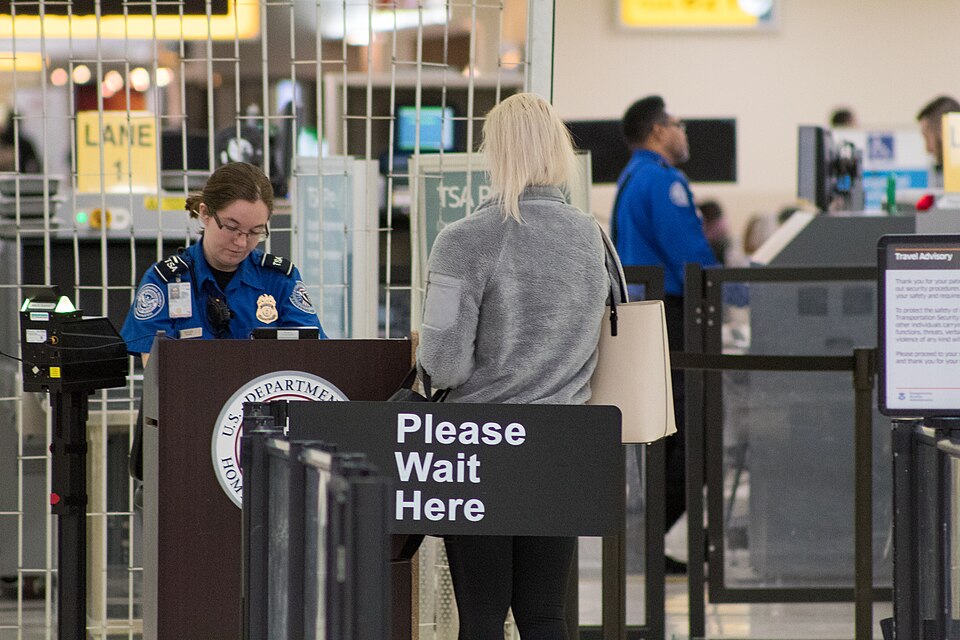
The single most common serious find at TSA checkpoints is the one you'd expect but probably hoped wasn't true: loaded firearms. In fiscal year 2023, TSA officers found 6,737 firearms at security checkpoints. That's roughly 18 per day. Approximately 93% of them were loaded - and of those, about 27% were additionally cocked and ready to fire, because when you're forgetting you packed a gun, you might as well do it thoroughly.
The official explanation, which TSA has grown wearily familiar with, is that passengers "forgot" they had a firearm in their bag. This happens often enough that it has effectively become a genre. Passengers are genuinely surprised, genuinely apologetic, and genuinely cannot explain how the loaded pistol ended up in the same bag as their noise-canceling headphones and the novel they haven't started yet. The busiest airports for firearm discoveries tend to be those in states where concealed carry is most common - Dallas/Fort Worth, Houston, and Miami appear with alarming regularity in the year-end tally. New York and Los Angeles contribute their share too, suggesting that the problem is less regional than it is universal.
The fine for bringing an undeclared loaded firearm to a checkpoint can reach $15,000, which does seem like a fairly strong incentive to check your bag before leaving the house. And yet. Here we are. Eighteen firearms per day, and counting. The fine has gone up several times. The number of firearms has also gone up several times. There may not be a causal relationship here, but there's certainly a pattern.
The Ordnance Collection
If loaded firearms represent the boring end of TSA's confiscation catalogue, the ordnance finds represent the extraordinary end - the territory where you stop asking "how did they forget?" and start asking "how do you even own this?"
Inert grenades are, by a comfortable margin, the most common type of military ordnance found at checkpoints. Veterans, collectors, and people who apparently treat WWII-era hardware with the same casual attitude other people have about forgetting a travel-size shampoo regularly arrive at checkpoints with deactivated grenades packed somewhere in their carry-on. The grenade is inert. It cannot explode. It is, in every technical sense, just a lumpy metal object. And yet there is something about a grenade-shaped object in an X-ray that causes airport security staff to lose their sense of irony entirely, which is understandable, because it's a grenade. A single checkpoint has confiscated fourteen inert rocket-propelled grenade rounds in one go from a single traveler - a find that, according to the passenger, was entirely innocent, which is technically possible and deeply unhelpful as an explanation.
In 2013, a passenger at T.F. Green Airport in Providence, Rhode Island caused a full terminal evacuation by presenting a genuine 19th-century cannonball for carry-on inspection. The cannonball was real, antique, inert, and approximately the size of a large grapefruit. The airport was evacuated. The bomb squad was called. The cannonball was confiscated. The passenger, who had purchased the artifact at an estate sale and clearly underestimated the social complexity of transporting it via commercial aviation, had to find another way home. The cannonball has probably never been anywhere since.
TSA has also confiscated, at various checkpoints: inert claymore mines (from the "I collect them" school of explanation), a 14-inch mortar shell at Bradley International in Connecticut, and various arrangements of military souvenir that their previous owners assumed fell into the "it's basically a paperweight" category. They do not. The checkpoint is not a place where context is generously extended.
The Animal Kingdom's Travel Plans
One consistent truth that emerges from any serious study of TSA's confiscation records is that animals do not care about the 3.4-ounce liquid rule. They do not care about the shoe removal protocol. They are simply trying to make it through the checkpoint, concealed in increasingly creative ways by the humans who for some reason decided that the best method for transporting a living creature internationally was to hide it in their clothing.
Smuggled birds are among the most commonly intercepted live animals at US airports - tropical species, typically, wrapped in fabric or concealed in socks and pockets worn directly on the person. The birds are usually alive at the point of discovery, which is impressive given the circumstances, and usually not particularly grateful for the ordeal. Snakes have been found in luggage and, on occasions compelling enough to make national news, stuffed into clothing in ways that make it very difficult to claim you were simply unaware of their presence - which, to be clear, is the claim people make anyway.
Aquatic life presents its own subcategory. Live tropical fish have been seized at checkpoints, transported in water-filled bags concealed in checked luggage - a method that invites questions about both the structural integrity of the concealment and the fish's quality of life during a five-hour flight. At Miami International - which, given Florida's reptile situation, does a particularly brisk trade in animal confiscations - wildlife inspectors working alongside TSA have intercepted sea turtles, live iguanas, and exotic reptiles whose owners seemed genuinely startled to be informed that "it was in my bag" does not constitute a valid import document. Live turtles have been found taped to torsos, wrapped in socks, and on one occasion hidden in underwear, which represents a level of commitment to the plan that the plan did not deserve.
The live-animal finds are technically the jurisdiction of US Customs and Border Protection and US Fish and Wildlife Service rather than TSA directly. The X-ray machines don't know that. Neither does the iguana.
Creative Pharmaceutical Architecture
Drug trafficking at airports is, by definition, a game of concealment - and the perpetual one-upmanship between smugglers and detection technology has produced a body of work that would be genuinely impressive if it weren't for the crimes involved.
The standard concealment methods - hollowed-out book spines, modified electronic devices, false-bottomed suitcases - are so well-documented that they have graduated from "clever" to "expected." TSA officers find these regularly enough that they've developed what can only be described as a professional familiarity with the genre. More creative attempts have involved drugs packed inside raw meat (which requires the perpetrator to believe that airport security will not notice the unusual density of a piece of chicken), methamphetamine packed inside the hollow tubing of crutches (confiscated, presumably ruining whatever story the traveler had prepared about a sports injury), and narcotics arranged inside religious statues, industrial food cans, and the interior of musical instruments.
The general principle seems to be that if it can be hollowed out, someone has tried to put drugs in it. The counter-principle is that X-ray machines are excellent at detecting density anomalies in objects that should not have density anomalies, which means the can of soup with an inexplicably solid centre tends to attract attention. This dynamic has been playing out for decades and shows no signs of resolution in either direction.
The Category That Defies Classification
And then there are the items for which no simple explanation exists. The things that suggest a breakdown not just of judgment but of some more fundamental category of reasoning - the kind of finds that make the world's strangest laws seem, by comparison, like a perfectly rational response to lived experience.
In 2006, security staff at Louis Armstrong New Orleans International Airport discovered a human skull - with flesh still attached - in a carry-on bag. The passenger, who was returning from Haiti, explained that the skull was a religious artifact intended for ritual purposes and was not, to their knowledge, subject to the 3.4-ounce liquid rule. This is technically true. It was confiscated anyway, on the grounds that US customs regulations require permits for importing human remains, which is a rule that exists specifically because of situations like this one.
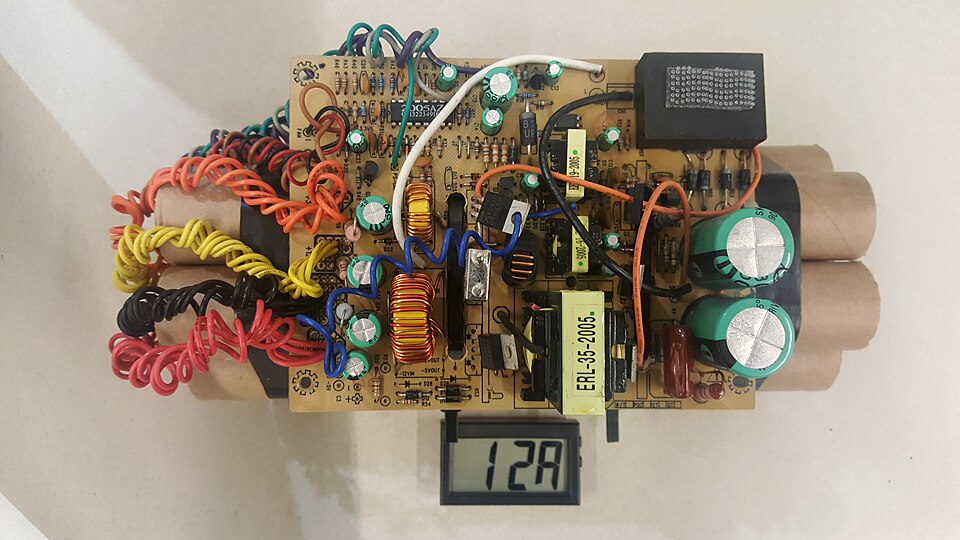
The replica explosive device category is its own genre: homemade devices, theatrical props, and training aids that their owners were confident would not raise concerns when passed through an X-ray scanner. They were wrong. Replica improvised explosive devices - designed, by definition, to be indistinguishable from the real thing on X-ray - reliably cause the kind of checkpoint disruption that results in terminal evacuations, missed flights, and explanatory conversations that are extremely difficult to make go smoothly. "It's not real" is not, as a sentence, improved by the fact that it's also true.
Other items found at various points in TSA's documented history: a four-foot decorative sword in a carry-on bag (souvenir, apparently), a bag of bear claws belonging to an actual bear and formerly attached to one, uranium ore samples (technically legal to own in small quantities; deeply inadvisable to bring to a checkpoint), and so many sword canes that TSA has developed what amounts to a standard procedure for them. Sword canes are more common at airports than anyone involved in designing airports anticipated.
TSA's Accidental Social Media Career
In 2008, the TSA launched a blog. This seemed, at the time, like a reasonable attempt at public communication about security procedures. It became, over the following years, something considerably stranger: an inadvertently entertaining chronicle of the worst decisions in carry-on packing history.
The blog's "Week in Review" series - which documents the strangest, most dangerous, and most genuinely baffling items found that week - developed a dedicated readership that has nothing to do with travel plans and everything to do with the sustained human comedy of people arriving at airport security with a grenade in their backpack and an expression of genuine surprise. The TSA's Instagram account, @tsa, has built a following of several million people on the same principle: photographs of confiscated items, accompanied by captions that manage to be simultaneously informative and deeply tired of having to explain this again.
There is something philosophically satisfying about a government agency becoming a social media sensation not through polished brand management but simply by photographing the contents of other people's bags. The sharks in water bottles. The antique pistol inside the stuffed animal. The enormous collection of ninja stars someone was apparently planning to transport as carry-on. The loaded firearm in the bag of a passenger who, for the eighteenth time today, had "forgotten" it was there. The TSA did not ask for this. And yet here they are, one of the most followed accounts in the federal government, sustained entirely by the infinite capacity of travelers to make extraordinary choices.
Disclaimer: Attempting to recreate any of the above at an airport checkpoint will result in outcomes substantially worse than a missed connection. The TSA is not, contrary to how it sometimes feels, primarily in the business of confiscating water bottles. They are also, as it turns out, in the business of finding the cannonball you forgot you packed. Everyone always forgets about the cannonball.