
Foods You Can't Take on a Plane (And Why Airlines Actually Ban Them)
Foods Banned on Planes
Airport security focuses on liquids, gels, and objects that might be used as weapons - but planes have another category of forbidden items that doesn't get as much attention: foods so strongly smelling, potentially dangerous, or impractical that airlines have formally prohibited them. Some of these are bans driven by safety concerns with genuine technical basis. Others are driven by the simple reality that a metal cylinder carrying 300 people at 40,000 feet has nowhere for a terrible smell to go.
Durian
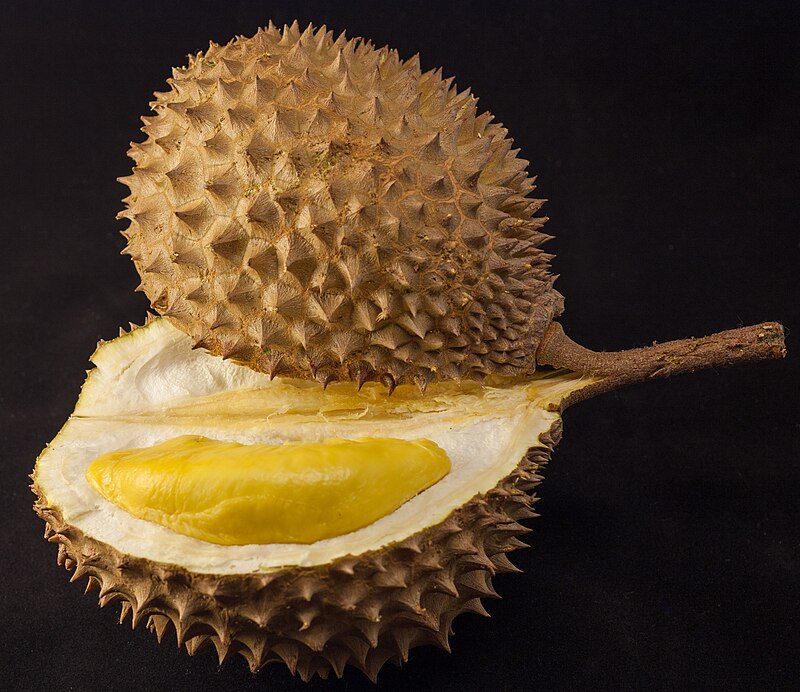

The durian is banned on most major Southeast Asian airlines, including Singapore Airlines, Thai Airways, Air Asia, and others. This is not a recent policy - the bans have been in place for decades, and some airlines display explicit durian pictograms in the no-carry-on section of their published guidelines. The reason is straightforward: aircraft recirculate approximately 50% of their cabin air through HEPA filters, while the other 50% is fresh outside air. The recirculated component can carry odors through the entire cabin within minutes.
Durian's smell - which contains a combination of sulfur compounds, esters, and other volatile molecules - is powerful enough at close range to cause nausea and strong physical reactions in people unaccustomed to it. In a sealed tube with 200 people, the smell would be inescapable and would persist for the duration of the flight and potentially through the aircraft's subsequent flights before cleaning. Several incidents of passengers attempting to smuggle durian and being caught by smell before the aircraft took off have been documented in Asian aviation press.
The SMRT subway in Singapore has had explicit no-durian rules since 1995, and the fruit is prohibited from many hotels and hostels across Southeast Asia.
Surströmming (Fermented Herring)
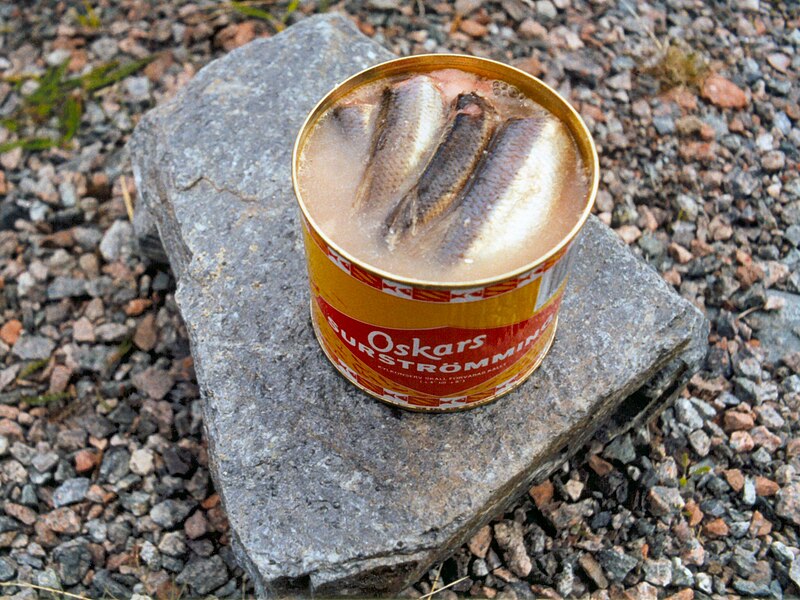

Surströmming - Swedish fermented herring - has been explicitly banned by several European airlines including British Airways, Air France, and Finnair. The ban is driven by two separate concerns. The first is the smell: surströmming, when cans are opened, releases a combination of hydrogen sulfide, propionic acid, and butyric acid that is described by most people as one of the most unpleasant odors in existence. The second is a safety concern: surströmming is a pressurized can of fermenting fish. At altitude, where aircraft holds are pressurized but undergo pressure changes, cans have been known to expand and burst - releasing their contents in the cargo hold and potentially rendering the area non-functional for the duration of the flight and requiring extensive cleaning thereafter.
Most airlines that explicitly ban surströmming do so under the category of "pressurized containers" rather than just smell - though both apply. Swedish travelers bringing surströmming home from abroad have learned to refrigerate it in their checked luggage and hope for the best.
Liquids Over 100ml - The 3-1-1 Rule
The 100ml liquid rule, implemented across almost all international airports after the 2006 liquid explosives plot in the UK, catches numerous foods that most travelers don't initially think of as liquids. Liquid yogurt, fresh olive oil, wine, honey, fresh salsa, thick pesto, and liquid chocolate are all technically "liquids or gels" under TSA/airport security definitions. Honey in particular surprises many travelers - it is explicitly listed as a liquid by the TSA and must comply with the 100ml rule in carry-on bags.
Peanut butter, somewhat controversially, is also classified as a gel and restricted to containers under 100ml in carry-on bags by the TSA, despite being a solid food. The TSA has a tweet from 2018 confirming this, which caused significant online controversy at the time.
Certain Fruits and Vegetables - International Biosecurity
This is less a safety concern than a biosecurity one, and it applies to importing rather than flying per se - but the mechanism is the same: customs officers at your destination. Fresh fruits, vegetables, seeds, and plant matter are restricted or prohibited for entry into many countries because of the risk of introducing agricultural pests and diseases. Australia and New Zealand are among the strictest in the world: apples, fresh tomatoes, certain nuts, and many plant products from outside approved sources cannot be brought in, and on-the-spot fines for undeclared items can be very significant.
The United States prohibits many fresh fruits and vegetables from certain countries due to fruit fly or other pest concerns. Japan restricts rice imports. Hawaii has additional rules even for items coming from the continental US, due to its island ecosystem's vulnerability to invasive species.
Strong-Smelling Cheeses
No airline has formally banned strong cheese (unlike durian), but there is a recurring debate about whether they should. Époisses de Bourgogne - a washed-rind French cheese with a famously powerful smell - is reportedly prohibited on public transport in France, though this appears to be informal rather than regulatory. Limburger, Taleggio, Stinking Bishop, and other high-bacteria-surface cheeses can release smell profiles in a warm environment (like a cabin) that passengers in proximity find difficult to endure.
The informal passenger convention is to keep strong cheeses in carry-on bags rather than checked luggage (where they would warm and ripen over a long flight), sealed in multiple layers of plastic, and only opened at the destination.
Alcohol You Brought Yourself
Bringing your own alcohol onto a plane and consuming it is technically prohibited on most airlines under their terms of service and under aviation law in many jurisdictions. The reason is not the alcohol itself but the dosage: flight attendants are legally required to manage passenger alcohol consumption to prevent incidents, and a passenger who has been self-medicating with their own spirits before the service trolley arrives represents an unknown consumption quantity. Several countries explicitly prohibit consuming non-aircraft-supplied alcohol on commercial flights; fines and removal from the aircraft are the standard consequences.
Have you ever had a food confiscated at an airport, or had a flight disrupted by a food incident? Tell us in the comments.