The Unwritten Rules of Travel That Nobody Tells You
Nobody gives you a briefing before your first trip abroad. There is no pamphlet. There is no orientation session. There is just you, your luggage, and a departure board in a language you can partially read, at which point the accumulated social norms of an entirely different civilisation become your problem to navigate without prior warning.
The guidebooks cover the monuments. The travel blogs cover the restaurants. What neither covers is the invisible layer of unspoken protocol that experienced travellers move through automatically and newcomers discover the wrong way - often in front of witnesses, occasionally in the middle of a market transaction, once in a while in circumstances that require a sincere and slightly mortified apology to someone who was only trying to serve you dinner.
Here, assembled from the kind of hard-won experience that does not appear on a CV, are the rules nobody writes down.
The Left Hand Rule
Across South Asia and most of the Middle East, the left hand is traditionally reserved for hygienic tasks, and the right hand is used for everything else - eating, passing food, receiving gifts, greeting people. This is not an obscure cultural detail. This is a fundamental aspect of daily social interaction in a significant portion of the world's population, and it will affect every meal, every market transaction, and every introduction you have in these regions.
The practical application is straightforward: eat with your right hand, accept food with your right hand, pass dishes with your right hand. Do not hand money to someone using your left hand. Do not gesture at something while describing how delicious it looks using your left hand (which, to be fair, most people would find peculiar regardless of hand preference). Nobody will necessarily say anything if you get this wrong. What will be briefly visible on their face is a small, controlled recalibration of their expectations for the rest of the transaction. This is, in some ways, worse than being corrected.
Tipping: The Great International Misunderstanding
In the United States, tipping is not optional and not a reward for exceptional service. It is the mechanism by which service workers receive a functional wage, the other portion having been withheld by the employer on the understanding that tips will make up the difference. This is a structural feature of the American economy, not a social suggestion. Not tipping in America is not a principled position. It is a financial action with real consequences for a real person who served you dinner, and 15-20% on a restaurant bill is the number at which the arrangement functions as intended.
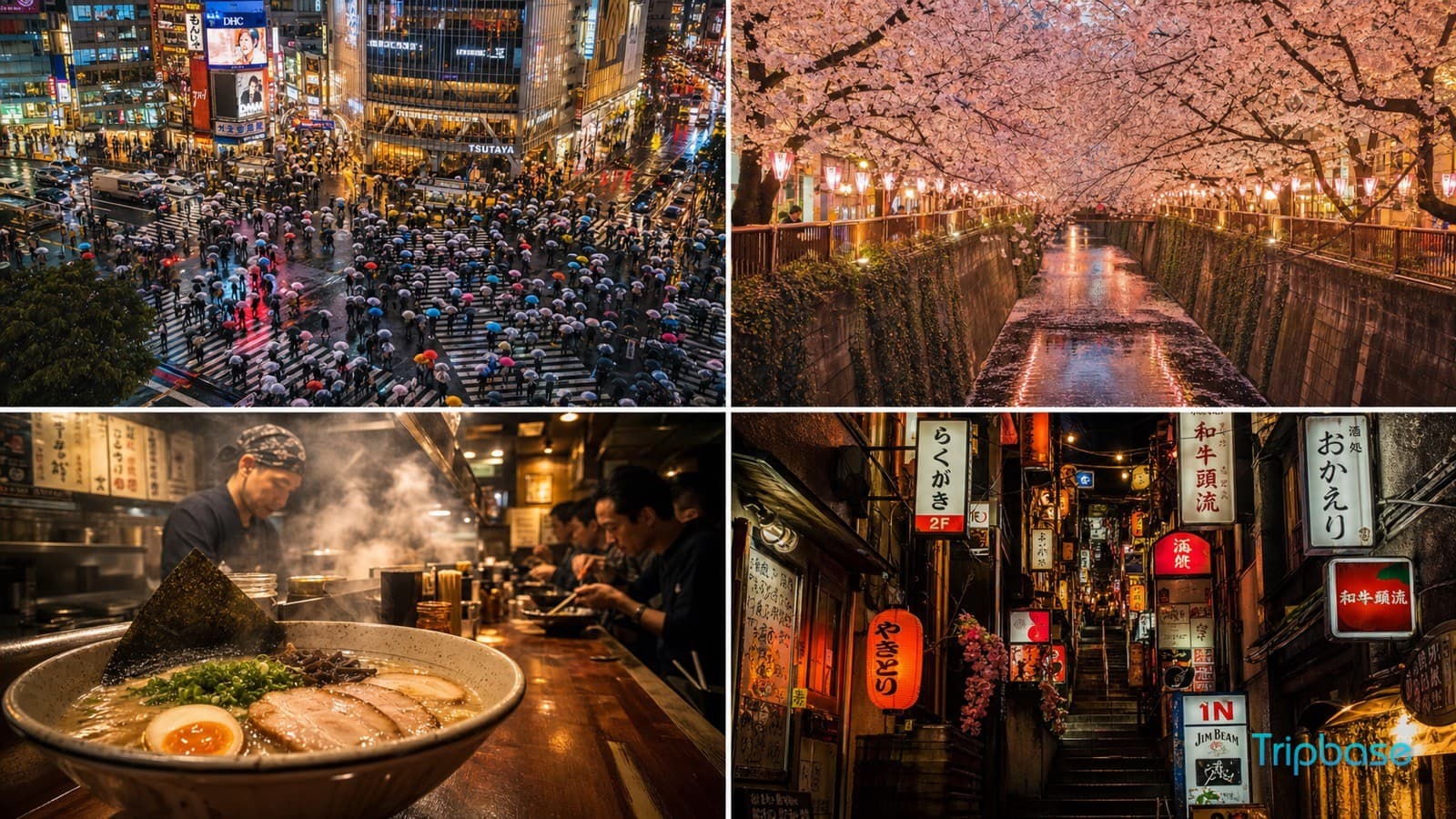
In Japan, tipping is not merely unnecessary - it is, at best, confusing and at worst, mildly offensive. The Japanese service philosophy holds that doing your job excellently is a matter of professional pride, not a transaction requiring financial reinforcement. Leaving money on the table after a meal in Tokyo implies that your host required an incentive to serve you properly, which implies that without the incentive, they might not have. This is not what you meant to imply. Nevertheless, here you both are.
In much of Europe, the situation is somewhere in between, governed by rules that nobody can fully articulate and which differ by country, establishment type, and whether you're paying by card or cash. Round up or leave a few coins and nobody will be offended. Leave precisely nothing and nobody will be offended. Leave 20% and you will identify yourself immediately as someone whose last trip was to a different hemisphere entirely.
The Front Seat
In most of the world, getting into a taxi alone and sitting in the back seat is the understood and accepted arrangement. The driver drives. You occupy the rear portion of the vehicle. Everybody knows their role. The upholstery between you represents a professional relationship and nothing more.
In Australia, Ireland, New Zealand, and parts of Scotland, getting into a taxi alone and sitting in the back seat is considered faintly rude - the social equivalent of walking into someone's house and immediately positioning yourself at the far end of the table without acknowledging the host. The front seat is the friendly option. The expectation is that you'll have a chat. The driver is a human being with opinions about the traffic and the weather and the football, and there is no structural reason why you should be separated by the automotive equivalent of a caste system when there are only two of you in the car.
If you are a person who prefers to sit in silence in the back of taxis and stare at your phone, this information is useful to process in advance of your arrival in Sydney. The conversation will happen anyway. Best to be facing forward when it does.
Shoes Off
In Japan, removing shoes before entering a private home is not a courtesy suggestion. It is the threshold between outside (where shoes have been, where the world and all its unknowable contaminations live) and inside (where careful flooring choices have been made and where the distinction is architectural). The genkan - the small entrance area where shoes are left before entering the main space - is physical evidence of how seriously this distinction is taken. Your host will not say anything if you walk through with your shoes on. What will be visible on their face is a brief, controlled suppression of something.
The same principle applies to temples, mosques, and many private residences across Southeast Asia, South Asia, and the Middle East. The visual cue is almost always present and reliable: a pile of shoes at the entrance. This pile is information. It is communicating something clearly and without ambiguity. The correct response is to add to it.
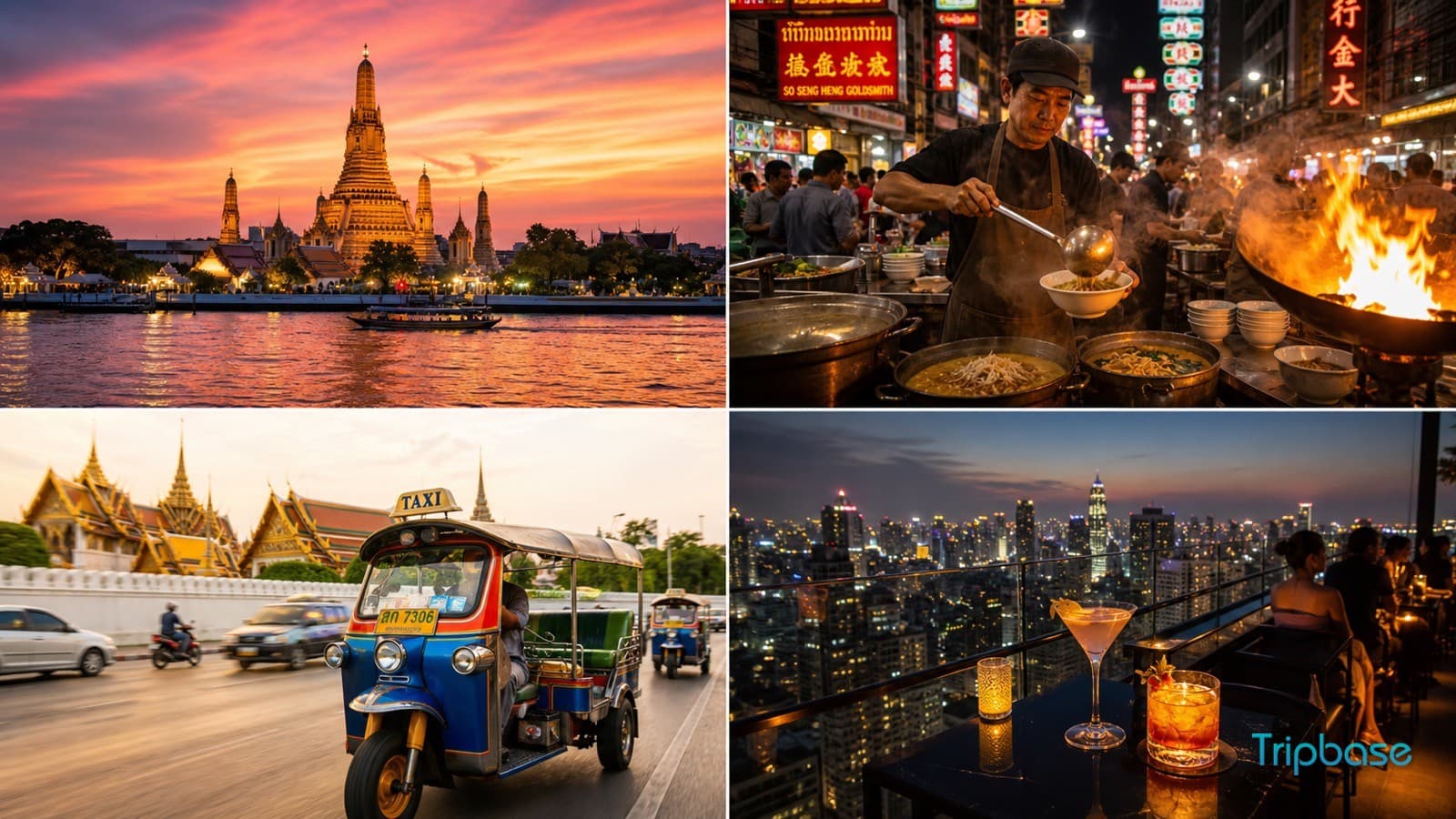
If you are planning a trip to Tokyo or Bangkok, note that shoe-removal frequency at temples, restaurants, and some shops rewards footwear with a simple slip-on design. The person ahead of you in the queue has chosen their shoes more strategically than they appear to have done.
Photography and Permission
The general rule - which requires no cultural specificity to understand - is that pointing a camera directly at a stranger's face without acknowledgement is behaviour considered intrusive in essentially every culture on earth, not just the ones with formal restrictions. This is a reasonable baseline and most experienced travellers operate within it without thinking.
The more specific issue is that several countries and communities have developed positions on photography that go beyond general courtesy. In parts of Morocco, photographing people in the medina without permission can attract a fee that you did not expect to negotiate at that moment, in that location, in that currency. In certain regions of sub-Saharan Africa and South Asia, communities that have become inadvertent tourist attractions have asked that photography be treated as something requiring consent - not because they are being difficult, but because their faces have appeared in many thousands of photographs that they have never seen and from which they have received nothing, which is a reasonable position to have arrived at.
The approach that produces both better photographs and fewer incidents: make eye contact, gesture at the camera, respond to whatever signal you receive. Yes means yes. Anything else means anything else. This takes approximately four seconds and consistently produces one of two outcomes: a photograph taken with the subject's awareness, or the absence of a photograph, which is also an acceptable outcome.
Haggling Protocols
In markets where haggling is the operating norm - which includes most of North Africa, large parts of the Middle East, much of Southeast Asia, and many markets throughout South Asia and Latin America - accepting the first price offered is not a transaction. It is the beginning of a negotiation that you have prematurely concluded to the significant advantage of one party, who will discuss this later with some warmth.
The opening price in a haggling market is not a price. It is an opening position, calibrated to leave room for movement in both directions. The appropriate counter-offer, as a starting point, is somewhere between 40% and 60% of the initial ask. Not 10%, which is insulting. Not 80%, which means you have conceded the interesting part of the negotiation before it has properly begun. The midpoint between your opening offer and theirs is approximately where you'll end up, and both parties will know this from the start, which is what makes it social as well as financial.
In the souks of Marrakech and the night markets of Bangkok, the process involves tea, expressed doubt about the quality of the item, a walk toward the exit, a counter-offer called after you, a return to the table, and eventually a figure that both parties accept with the slight air of mutual suspicion that characterises a completed negotiation. Walking in and paying full price for the first item you see is confusing to everyone involved. It also makes subsequent purchases more expensive, because you have now established what you are willing to pay and this information has not gone unnoticed.
The Restaurant Bill
In France, and across much of continental Europe, the bill does not arrive until you ask for it. The waiter is not ignoring you. The waiter is respecting your right to sit at the table for as long as you wish without being implicitly pressured to vacate it. This is a philosophical position - the meal as a social occasion rather than a throughput metric - and it is embedded in the culture with enough depth that attempting to change it from your side of the table is not recommended. To get the bill, you make eye contact and signal: mime writing, say "l'addition, s'il vous plaît," or simply ask. The bill arrives. Not before.
In the United States, the bill will arrive unbidden, probably before you have finished dessert. Sometimes before you've formed an opinion about dessert. This is not rudeness. This is a different cultural relationship with the meal as a commercial transaction, combined with labour economics that create structural incentives for table turnover. Asking for the bill in America is unnecessary. Leaving no tip is, as previously noted, a separate and more consequential matter.
The Toilet Paper Situation
Across most of Southeast Asia and parts of South Asia, toilet paper is either absent from public bathrooms entirely, or present but not intended to be flushed, due to plumbing infrastructure that predates the widespread adoption of tissue paper. There will instead be a water hose or small bucket for hygienic purposes, which is a perfectly effective and arguably superior system that simply requires advance knowledge of its existence to engage with correctly.
The experienced traveller carries toilet paper. Not ostentatiously, not as a cultural statement, but folded into a bag pocket the way one might carry a transit card or a charger - as a quiet acknowledgement that the world is large and varied and does not reconfigure its infrastructure to match your expectations. A single trip to a petrol station bathroom on a remote highway in rural Thailand is typically sufficient to produce this understanding in travellers who have not yet acquired it. One is usually enough.
Reading the Departure Board
Departure boards show local time. This is obvious - it is sufficiently obvious that it barely needs stating - and yet, in the specific cognitive fog of an early morning at an international airport following a red-eye across multiple time zones, it is the kind of obvious thing that can fail to process correctly until a gate has been missed and the situation has become logistically complicated in ways that will occupy the next several hours.
The other departure board issue is the gap between "Boarding" as a status update and "boarding" as an activity. Budget airlines at smaller airports begin boarding with urgent and slightly chaotic energy approximately 35 minutes before departure. Long-haul flights begin boarding 50-60 minutes before and continue through several passenger groups until departure time. Neither of these is the moment the board changes to say "Boarding." That moment is an announcement. The actual process is already underway or is about to begin and does not wait for you to finish your coffee. A departure time of 9:45 means the doors close at approximately 9:40. Be at the gate at 9:05. Accept that the coffee will be consumed at pace.
Learn Two Words Per Country
The minimum viable language effort for any international destination is two words: please and thank you in the local language. Not a full sentence. Not a menu phrase. Two words, requiring approximately three minutes of preparation before departure, that signal - in the most basic way available to you - that you are aware other languages exist and have made some effort.
In Japan, where the concept of expressing respect through small gestures is embedded deeply enough to be architectural, even a badly pronounced "arigatou gozaimasu" produces a response qualitatively different from its English equivalent. In Morocco, "shukran" marks you as someone who has tried, which the culture of hospitality in that country responds to with considerable warmth. In France, "merci" is not optional - it is the baseline. Beginning from below the baseline creates an atmosphere that does not need to be created and persists for the remainder of the interaction with a low-level consistency that is difficult to shake.
Three minutes. Per country. The return on investment is unreasonable, and the alternative - arriving and operating entirely in English on the implicit assumption that this is fine - is technically viable in many destinations and socially noted in all of them. For more on navigating cultural expectations abroad without incident, see our piece on travel superstitions and what they actually mean.
The Queue
In the United Kingdom, queuing is not merely a system for managing orderly access to services. It is a value system - a silent, collective agreement between strangers that the person who arrived first has the prior claim, and that this principle applies universally regardless of whether the line is officially marked or physically delineated. Cutting into a British queue is not a minor social faux pas. It is, depending on context and the specific demographic composition of the queue, an act capable of producing responses ranging from pointed sighing to audible commentary to a level of passive-aggressive confrontation that is somehow more unsettling than direct anger. The British have had centuries to perfect this, and it shows.
The rules are not complicated. You join at the back. If you cannot identify the back, you ask. You do not create an alternative cluster near the front on the basis that the queue isn't quite orderly enough to be definitively linear. You do not stand adjacent to someone in a way that implies you might be with them when you are not. You wait. The skill required to execute this is approximately zero, which is why violations are viewed with particular bewilderment. See also: bizarre laws that will complicate your travels, some of which cover related territory with similar levels of social commitment.
The Airport Nod
There is a silent solidarity among experienced travellers waiting in transit - a shared recognition, passed via brief eye contact and a slight nod, that both parties understand the specific social contract of being in an airport at a time nobody would voluntarily choose to be in an airport. The nod acknowledges the overhead announcement that is about to change the gate. It acknowledges the man three rows back who is playing a mobile game without headphones (both parties aware, neither in a position to act). It acknowledges the 5:30am departure time and everything that led to it.
The airport nod is not an invitation to conversation. It is not the beginning of a friendship. It is a brief acknowledgement that you are both, for this moment, in the same category of person - the category of persons who are awake earlier than they wished to be, in a plastic chair, holding a boarding pass for an experience they are approaching with varying degrees of enthusiasm. It should be received with a small nod in return. The matter is then concluded. For common pitfalls that experienced travellers navigate and newcomers do not, see our guide to travel scams and how to avoid them.
The unwritten rules of travel are unwritten specifically because no single person could have compiled them from a single trip. Consider this a starting point.