
Travel Superstitions From Around the World - What Brings Good and Bad Luck
Travel Superstitions From Around the World
Every culture has developed its own set of beliefs about luck, omens, and the invisible forces that govern whether a journey goes well or ends in disaster. Many of these are ancient, rooted in genuine practical observations that became ritualized over time. Others seem to have no origin at all - just ideas that spread and stuck. When you travel, you encounter them constantly, often without realizing it.
Understanding local superstitions isn't just intellectually interesting. It can prevent accidental offence, help you connect with locals, and occasionally tell you something real about the culture's history. Here's a tour of some of the most widespread and interesting travel superstitions from around the world.
The Evil Eye - Mediterranean and Middle East
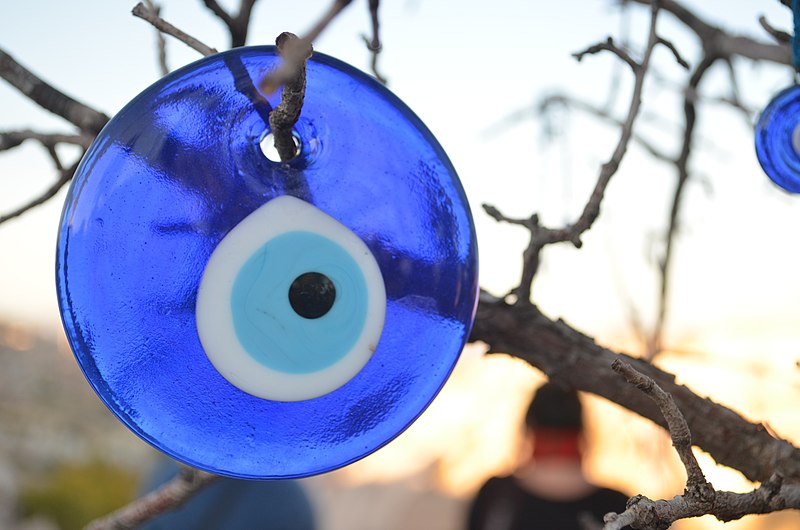

The evil eye - the belief that a malevolent glance can cause harm, bad luck, or illness - is one of the most widespread superstitions in human history. It appears in ancient Mesopotamian texts, Greek and Roman literature, the Hebrew Bible, Islamic texts, and the folklore of dozens of cultures across the Mediterranean, Middle East, South Asia, Latin America, and East Africa. It is not a fringe belief: it is a mainstream cultural concept in Turkey, Greece, Egypt, Morocco, Iran, and many other countries.
The blue-and-white nazar boncuğu charm you see hanging in Turkish shops, homes, and on jewelry is specifically designed to deflect the evil eye - the glass eye "sees" the malevolent gaze and returns it. In Turkey, receiving a compliment without a protective phrase ("maşallah," roughly meaning "what God has willed") is considered to risk attracting the evil eye. Particularly strong praise for a child without this protection is a genuine social concern for many Turkish parents. In Greece, the equivalent is the mati ("eye") charm. In Iran, the cheshm nazar.
The Horseshoe - United Kingdom and Ireland
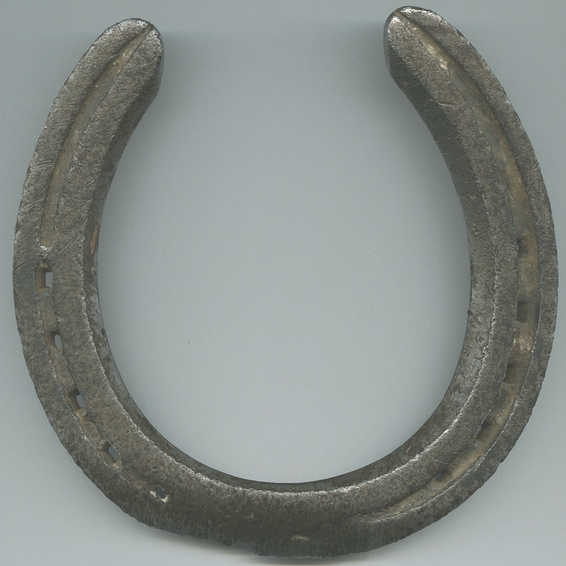

The horseshoe as a good luck charm is one of the older Western European superstitions with a reasonably traceable history. Iron was considered protective against evil spirits (iron was cold-worked, not cast - a transformative, almost magical process in early metalworking culture). Horseshoes made from iron by a blacksmith (considered a mystically powerful trade in Celtic tradition) and belonging to a horse (a powerful, valuable animal) accumulated multiple layers of protective symbolism.
The orientation matters: hung with the opening facing up (like a U), the horseshoe catches and holds luck. Hung with the opening facing down, it pours luck away - though some traditions believe this protects the house by pouring luck over anyone who enters. Both versions are common enough that asking a British person which way round you should hang it will often produce a confident but incorrect answer.
In British and Irish wedding tradition, the bride often carries a small horseshoe or receives one as a gift, which the groom's family may hand to her at the door of the church.
Four-Leaf Clover - Ireland and Western Europe


The four-leaf clover's association with luck predates recorded Irish history, with roots in Celtic belief where clover was considered a protective plant. The four-leaf variation (a genetic mutation occurring in roughly 1 in 5,000 plants) was thought to allow the finder to see fairies and to bring good fortune. Medieval herbalists associated the four leaves with faith, hope, love, and luck.
The statistical rarity of the four-leaf form is itself part of the superstition's logic: finding one requires either extraordinary luck or extraordinary patience, and either quality predisposes the finder toward good outcomes. The record for the most four-leaf clovers found in one hour is 166, set in 2009 by a Japanese student - which suggests that what looks like random luck may be more about pattern recognition than anything mystical.
Never Look at the Moon Through Glass - Japan
In Japan, viewing the full moon through a window glass is considered bad luck. The proper way to appreciate moonviewing (tsukimi) is outdoors, unmediated by glass. This extends to photography: taking a picture of the moon through a window is considered inauspicious by some. The origin is unclear, but moon-viewing itself is a significant cultural and aesthetic tradition in Japan, with specific foods (round mochi rice cakes, representing the full moon) and traditional outdoor moon-viewing parties held in autumn.
Don't Leave by the Same Door You Entered - Russia
In Russian tradition, leaving a house by a different door than the one you entered through is considered bad luck. If you enter through the front door, you must leave through the front door. Leaving by a back door or side door when you arrived via the front is particularly inauspicious. The reverse - entering one way and specifically exiting another - is even worse. This belief is common enough across Russia that it genuinely affects behavior: hosts will sometimes redirect guests to ensure they leave by the same route they arrived.
Breaking a Mirror - Widespread
The belief that breaking a mirror brings seven years of bad luck is ancient and remarkably widespread across Western Europe. The Romans believed mirrors captured a fragment of the soul, and their destruction therefore damaged it. The seven-year timeline corresponded to how long they believed it took the body (and soul) to entirely replace itself. The remedy varies: some traditions say burying the shards, throwing them in running water, or grinding them to dust will neutralize the curse.
Whistling at Sea - Maritime Traditions
Whistling on a boat is considered bad luck across many maritime cultures - Norwegian, British, Irish, and others - because it was believed to "whistle up the wind" and bring storms. This is less irrational than it seems: in the days of working sail, whistling was actually used to summon wind when becalmed, using a low, quiet whistle. The prohibition against casual whistling was about respecting that power and not invoking it carelessly. Fishermen were particularly strict about this; the prohibition extended to whistling in ports and harbors where fishing boats were moored.
Opening an Umbrella Indoors - UK and US
The origin of this widely shared superstition is disputed. One theory connects it to ancient Egyptian parasols, which were solar symbols and therefore forbidden to open in shade; another links it to the spring-loaded Victorian umbrellas that could cause genuine physical harm when opened in small spaces. The practical and the supernatural explanations have merged over time into a single prohibition that operates entirely on superstitious grounds in its modern form.
Do you have a travel superstition from your country or culture that's not here? Tell us in the comments - we'd love to expand this list.
Speaking of strange rules: see our guide to the 25 most bizarre laws still on the books around the world - from flushing your toilet after 10pm in Switzerland to dying in the Houses of Parliament.