10 Things That Have Washed Up On Beaches (That Have Absolutely No Business Being There)
The ocean, for all its majestic wonder and terrifying depth, is fundamentally a very slow delivery service. It takes your stuff, holds onto it for a while - sometimes months, sometimes decades, sometimes a century - and then returns it to the shore of whatever country it happens to be nearest at the time, regardless of whether that country ordered anything. It does not accept returns. It does not provide tracking numbers. And it has absolutely no sense of what is or isn't appropriate to deposit on a family beach in August.
What follows is a collection of items the ocean has seen fit to return to humanity, apparently deciding we needed them back. We did not always agree.
28,800 Rubber Ducks (And Some Frogs, Turtles, and a Beaver)
In January 1992, a cargo ship called the Ever Laurel was crossing the North Pacific when it ran into a storm. A container fell overboard. This container held 28,800 "Friendly Floatees" - bath toys produced by The First Years, consisting of yellow rubber ducks, red beavers, green frogs, and blue turtles. The ocean, delighted by this acquisition, immediately set about distributing them across the Pacific with the chaotic enthusiasm of a toddler emptying a toy box.
What happened next was, somehow, scientifically useful. Oceanographer Curtis Ebbesmeyer began tracking the toys as they drifted and discovered they were mapping ocean currents with remarkable precision. The ducks reached Alaska in 1992. Some entered the Arctic, froze into the polar ice, and were carried across the top of the world. Others crossed the Atlantic and began appearing on the beaches of Britain in 2003 - eleven years later, somewhat bleached, having traveled approximately 17,000 miles. A faded rubber duck on a Cornish beach is still a genuine possibility today, which is the sort of sentence that seemed unlikely to be true in 1991.
The scientific term for objects released into the ocean to track currents is "drifter." The scientific community had been using this method for some time before 1992. They did not, it must be said, expect that their most famous dataset would be provided by a container of bath toys. Science contains surprises.
The stretch of coastline that has been receiving these nautical refugees for three decades is well worth a visit in its own right. Our Cornwall guide can help you plan the trip - though we make no promises about what you'll find on the beach.
A Working Harley-Davidson Motorcycle
In March 2012, a large container washed ashore on Graham Island, British Columbia. Inside was a 2004 Harley-Davidson Street Glide, Japanese license plate still attached, along with its owner's belongings: fishing gear, tools, and personal effects. The container had been swept from a garage in Miyagi Prefecture, Japan, during the March 2011 tsunami. The motorcycle had spent roughly a year in the Pacific Ocean before fetching up, more or less intact, in Canada.
The owner, Ikuo Yokoyama, was tracked down by Canadian authorities via the license plate and offered the bike back. He declined. The Harley-Davidson had crossed the Pacific Ocean unassisted, survived a tsunami, and arrived in a different country. He felt it had, in some sense, earned its freedom. A Canadian restoration shop repaired the bike pro bono, and it has since been displayed at the Harley-Davidson Museum in Milwaukee, Wisconsin.

This is, without question, the most impressive professional history a motorcycle has ever compiled. The distance from Miyagi Prefecture to Graham Island is approximately 4,400 miles. The Harley completed this journey without a rider, a fuel top-up, or any form of navigation. There are experienced motorcyclists who have not achieved this. There are experienced humans who have not achieved this.
A Giant Eyeball (Not What You'd Hope)
In October 2012, a man walking along Pompano Beach in Florida discovered something in the sand. It was roughly the size of a softball. Blue-grey. Gelatinous. Unmistakably an eye. From something very large.
The Florida Fish and Wildlife Conservation Commission retrieved the eyeball and sent it for DNA testing. This took several weeks, during which the internet made its collective decision that the eyeball belonged to: a Kraken; a Colossal Squid; a Giant Squid; a prehistoric sea creature that had died in some confusion about which geological era it was in; or possibly a spy drone. The possibilities were extensively discussed.
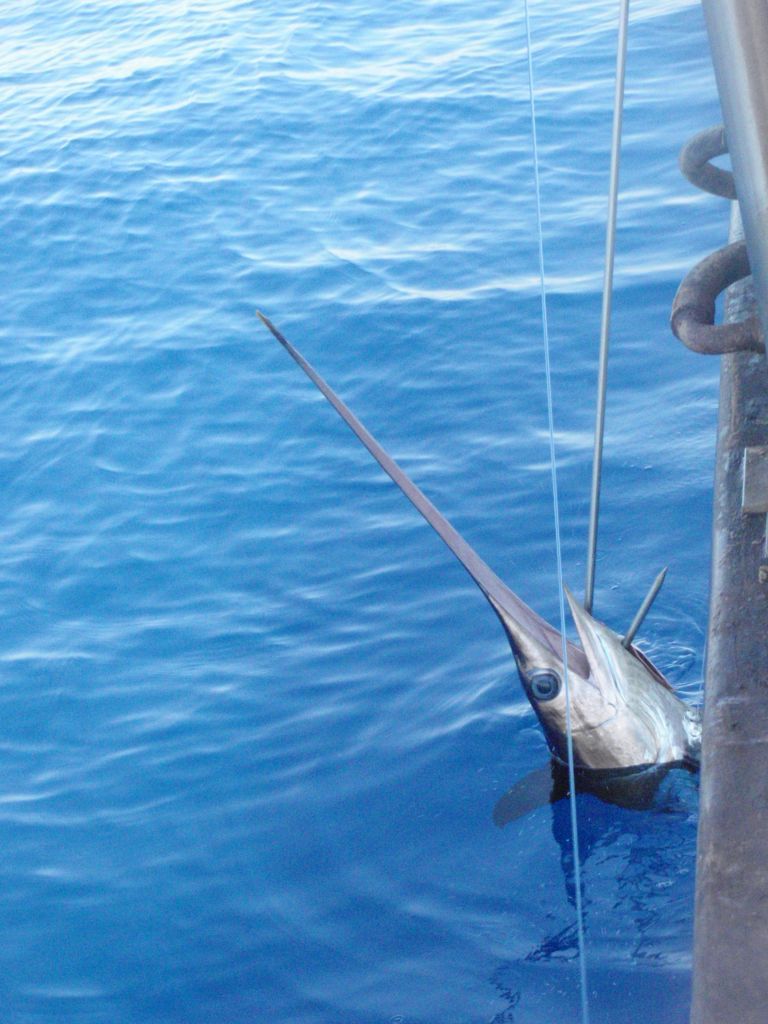
Researchers at Florida's Fish and Wildlife Research Institute concluded that the eyeball belonged to a swordfish. A very large swordfish, but a swordfish. The kind of thing that appears on menus at restaurants in Miami Beach. One had, apparently, lost an eye, and the eye had subsequently washed ashore. The excitement was significant. The denouement was not.
4.8 Million Pieces of LEGO
On the 13th of February 1997, the container ship Tokio Express was hit by a freak wave approximately sixty miles off Land's End, Cornwall, and tilted sharply to one side. Sixty-two shipping containers slid overboard. One of those containers held 4,756,940 pieces of LEGO - a pre-Christmas consignment en route to the United States.
The LEGO sank. Then it redistributed. Then it began washing up on the beaches of Cornwall, Devon, and Wales, and it has been doing so for twenty-seven years. People are still finding pieces today. Beachcombers in Cornwall have built entire social communities around the pursuit of LEGO from the Tokio Express, and a woman named Tracey Williams has been collecting and cataloguing pieces since 1997, maintaining an ongoing record of what the sea returns and when.
What makes this particular incident especially remarkable is the content of the LEGO. The container included dragons, octopuses, sea grass, scuba flippers, spear guns, life-saving equipment, and aquatic creatures of various descriptions - all items that, on a beach, would blend seamlessly into the natural debris. The ocean essentially received a camouflaged consignment and has been concealing it ever since. This is either a remarkable coincidence or evidence that the universe has a sense of humor, depending on how you feel about these things.
80,000 Nike Trainers (And the Swap Meets That Followed)
In May 1990, a container ship crossing the North Pacific lost two containers holding approximately 80,000 Nike athletic trainers. Unlike the LEGO, the trainers floated. Within months, they began washing ashore across Alaska, Oregon, Washington State, and British Columbia.
The notable development was the community response. Beachcombers on the US Pacific Coast began collecting the trainers, cross-referencing their serial numbers to find matching pairs, and organizing swap meets - informal markets where you could exchange a right shoe, size eleven Nike Air, for a left shoe, size eleven Nike Air, and leave with a functional pair of footwear retrieved from the beach at no cost. This was, by any measure, an efficient allocation of resources.
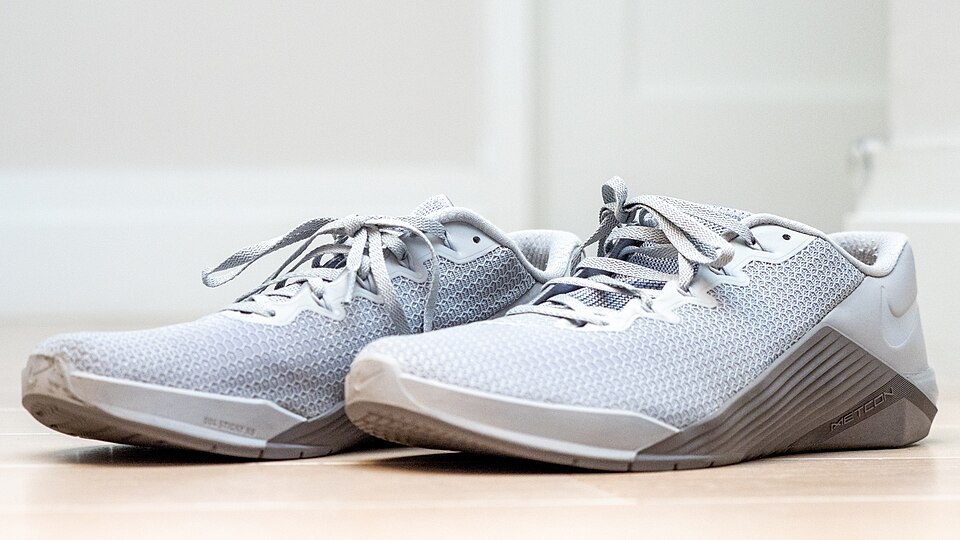
Steve McLeod, a beachcomber who had collected hundreds of the trainers, contacted oceanographer Curtis Ebbesmeyer - the same man who had been tracking the rubber ducks - and together they used the drift patterns of the shoes to refine models of Pacific Ocean currents. This has since become an accepted method of oceanographic research: wait for something to fall off a ship, then track where it washes up. The ocean charges nothing for this service, which makes it substantially more economical than deploying purpose-built scientific instruments.
250,000 Bottles of Whisky
In February 1941, the cargo ship SS Politician ran aground on a sandbank near Eriskay in the Outer Hebrides, en route from Liverpool to Jamaica and New Orleans. Her cargo included 264,000 bottles of Scotch whisky, destined for American export. The crew were rescued. The whisky was not immediately dealt with.
The inhabitants of the surrounding islands - Eriskay, South Uist, Barra - were. Within days, local men were rowing out to the stricken ship and helping themselves to the cargo. Over the following weeks, an estimated 24,000 bottles were recovered from the wreck by the local population before customs officials arrived and began making arrests. Several men were prosecuted for removing goods from a wreck. The judge handed down fines and prison sentences. The convicted men were, according to contemporary accounts, not especially remorseful.

The story became so famous that the Scottish writer Compton Mackenzie, who lived on Barra at the time and was almost certainly aware of what was happening on the neighbouring island, wrote a novel about it: Whisky Galore (1947), which was adapted into a beloved film. The novel did not dwell on Mackenzie's personal proximity to events. In 2015, a bottle of SS Politician whisky sold at auction for £5,300. In 2017, construction work on Eriskay unearthed six more intact bottles, still sealed. The ocean had been keeping them in good condition. You have to admire the patience.
If you want to visit the area where this took place, our guide to the Scottish Highlands is a starting point - though the Outer Hebrides require additional planning, a ferry, and the specific willingness to visit somewhere that is beautiful and very, very remote.
A Message in a Bottle That Took 108 Years
In April 2015, a Scottish fisherman named Andrew Leaper was working off the Shetland Islands when he found, tangled in his net, a sealed glass bottle. Inside was a postcard printed in German and English. The postcard requested the finder fill in the date and location of discovery and return it to the Marine Biological Association of the United Kingdom in Plymouth. It offered a reward of one shilling.
The postcard was dated June 12, 1906. It had been drifting for 108 years, four months, and eighteen days. This is the Guinness World Record for the longest-drifting message in a bottle ever recovered.
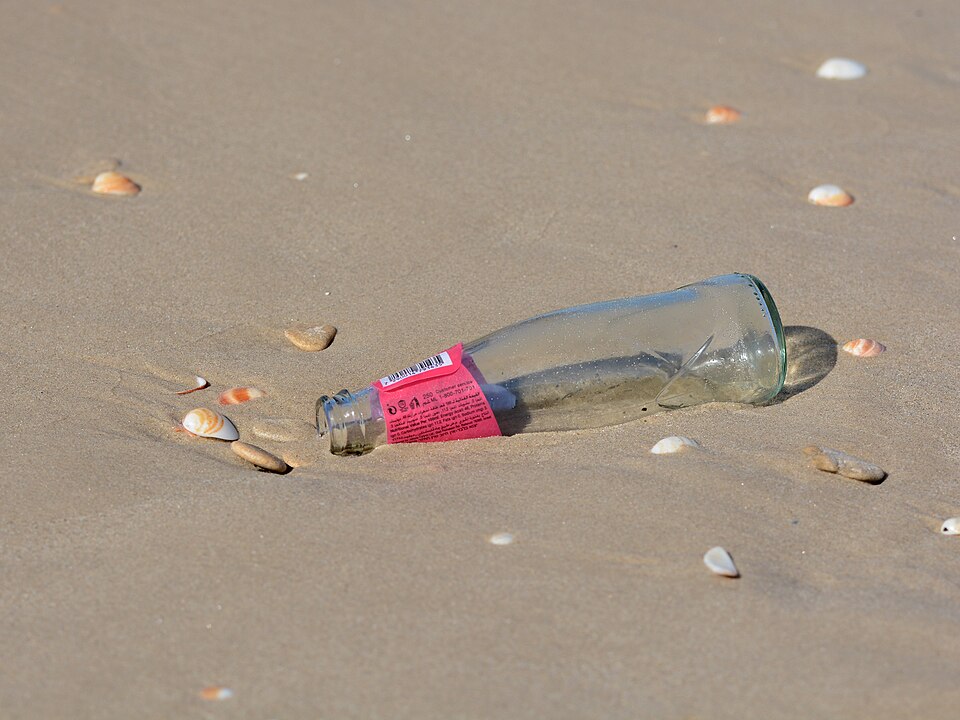
The Marine Biological Association, which had released approximately 1,890 bottles into the sea between 1904 and 1906 as part of a study on tidal drift, was contacted and confirmed the postcard was authentic. They also confirmed the shilling reward. Tracking down a shilling - a currency that was decimalised out of existence in 1971 - took some effort, but the Marine Biological Association located one and paid it. The accounts department, presumably, found a way to process this.
Leaper donated the bottle and postcard to a museum. The one shilling he kept.
WWII Unexploded Ordnance (An Ongoing Situation)
The Second World War ended in 1945. The munitions it deposited in the world's oceans and beaches have not yet received this news. Every year, across European coastlines, North African shores, and Pacific island beaches, WWII-era bombs, shells, and sea mines continue to surface - uncovered by shifting sands, dredged up by fishing nets, or simply brought in by the tide with no particular announcement.
Germany alone is estimated to hold approximately 100,000 tons of unexploded ordnance within its territory and adjacent coastal waters. In the North Sea, Allied aircraft dropped over 1.5 million bombs between 1940 and 1945. A significant proportion did not detonate on impact. They are, at this moment, slowly corroding somewhere on the seabed, leaking explosive compounds into the water column, and waiting for the specific set of circumstances that will make them relevant again.
Dutch and German beach closures due to WWII ordnance discoveries are routine enough that they have essentially ceased to be news. If you are planning a beach holiday in northern Europe, it is worth understanding that the sand beneath your towel may contain eighty-year-old weapons. This is not a reason to avoid going - millions of people visit these beaches every year without incident - but it is perhaps a useful corrective to the idea that beaches are inherently tranquil places. For a comprehensive tour of destinations that are dangerous in other, more scenic ways, see our article on the world's most dangerous roads.
Bales of Cocaine
Of everything on this list, bales of cocaine are the most reliably recurring beach discovery. They wash up on beaches in Florida with such regularity that local news outlets have developed standardized reporting templates. They appear on British beaches. They have been found on Irish beaches, in fields adjacent to Spanish coastlines, and on the shores of Brazil, which is the world's second-largest consumer of cocaine and has 7,491 kilometres of coastline with which to receive deliveries.
The mechanism is straightforward enough: drug trafficking vessels, when pursued by law enforcement or intercepted by coast guards, jettison their cargo into the sea. The bales - typically wrapped in black plastic, sealed against water entry where the smugglers have been thorough - then drift until they reach land. In 2022, multiple bales washed up on beaches in Northeast Brazil following a single maritime interception. In 2023, several hundred kilograms were recovered on beaches in Galicia, Spain. UK farmers and dog walkers find them with a frequency that has stopped being surprising.
This is, it should be noted, an extremely inefficient distribution model. If you are running a drug trafficking operation and your primary method of product delivery is "let the Atlantic Ocean figure it out," you should consider a different line of work. The ocean returns your merchandise to the wrong country, at unpredictable intervals, usually in front of someone walking a Labrador.
The Sea Gives Nothing Back Without Commentary
The ocean, taken as a whole, is less a wilderness and more a very large, very slow storage facility operating on no discernible organizational system. It takes things - your bath toys, your motorcycles, your wartime ordnance, your whisky, your centuries-old correspondence, your narcotics - and it returns them on its own schedule, to whatever coastline it happens to be passing at the time, in whatever condition it sees fit.
The lesson, if there is one, is that the sea is under no obligation to make its returns convenient, appropriate, or free of unexploded munitions. It does this on its terms alone. And if the tide brings something surprising to the shore while you're standing on a beach in Miami, Cornwall, or anywhere along the Gulf Coast, the correct response is probably to step back, take a photograph, and call someone more qualified than yourself to deal with it.
Disclaimer: Tripbase does not recommend consuming, handling, or attempting to sell anything you find washed up on a beach, regardless of how well-sealed it appears to be. This is especially true if it is leaking, ticking, or if it arrived in a black plastic bale. Call the relevant authorities. Do not take a souvenir.