The World's Most Dangerous Train Journeys
There is a particular breed of traveler who, upon learning that a train route was built by forced labor through malarial jungle, or descends a cliff face that professional engineers described in their official report as "impossible," thinks: "Perfect. Two tickets please."
This is not a criticism. The world's most dangerous train journeys are also, almost invariably, the most spectacular - because the things that make a railway terrifying to build are usually the same things that make the landscape extraordinary to pass through. Impossible gradients. Impossible bridges. Cliffs that engineers looked at, wrote "impossible" in their notes, and then built through anyway, which is either inspiring or alarming depending on your relationship with structural engineering and how you feel about being inside a metal tube on a switchback over a 500-metre drop.
What follows is a selection of train routes that make the average delayed commuter service look like a spa treatment. Some are dangerous because of where they go. Some are dangerous because of how they get there. One is dangerous because it passes near an active volcano, and the question of whether that seemed like a reasonable engineering decision has never been satisfactorily answered.
The Death Railway, Thailand
The name is not metaphorical. The Burma-Siam Railway - known universally as the Death Railway - was constructed between 1942 and 1943 by the Imperial Japanese Army using Allied prisoners of war and approximately 90,000 conscripted Asian laborers. The 415-kilometre line cut through Thai-Burmese jungle to supply Japanese forces in Burma, bypassing the Allied naval blockade. Approximately 12,000 to 13,000 Allied POWs died during construction, along with an estimated 80,000 to 100,000 Asian laborers. The railway was completed in October 1943. These are not the same sentence, but they tend to appear together.
The most notorious section is Hellfire Pass - the Konyu Cutting - where prisoners were forced to work through the night under torch and campfire light, carving a 75-metre cutting through solid rock using hammer and chisel. The name refers to the appearance of the torchlit night shifts from a distance. The Hellfire Pass Memorial Museum near Kanchanaburi documents this in detail that is not easy reading and should not be.
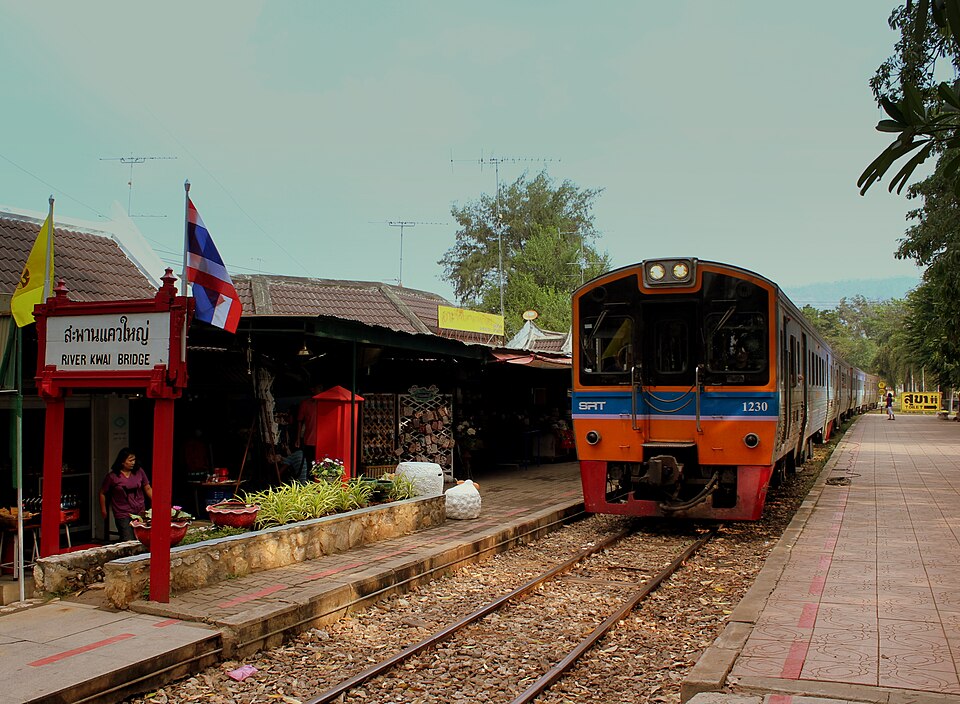
Today, the Death Railway's remaining operational section runs 77 kilometres from Kanchanaburi north to Nam Tok station. The full original line is gone. The journey through the region surrounding Bangkok passes through teak forests and limestone gorges, and the Wang Po Viaduct section - where the track clings to a wooden trestle above the Kwai Noi River - is genuinely beautiful in a way that feels uncomfortable to acknowledge given the circumstances. That discomfort is probably appropriate, and possibly the point. For travelers interested in history and willing to sit with some complexity, this is one of the most significant stretches of track in the world.
Nariz del Diablo, Ecuador
The Devil's Nose. The name was not chosen arbitrarily.
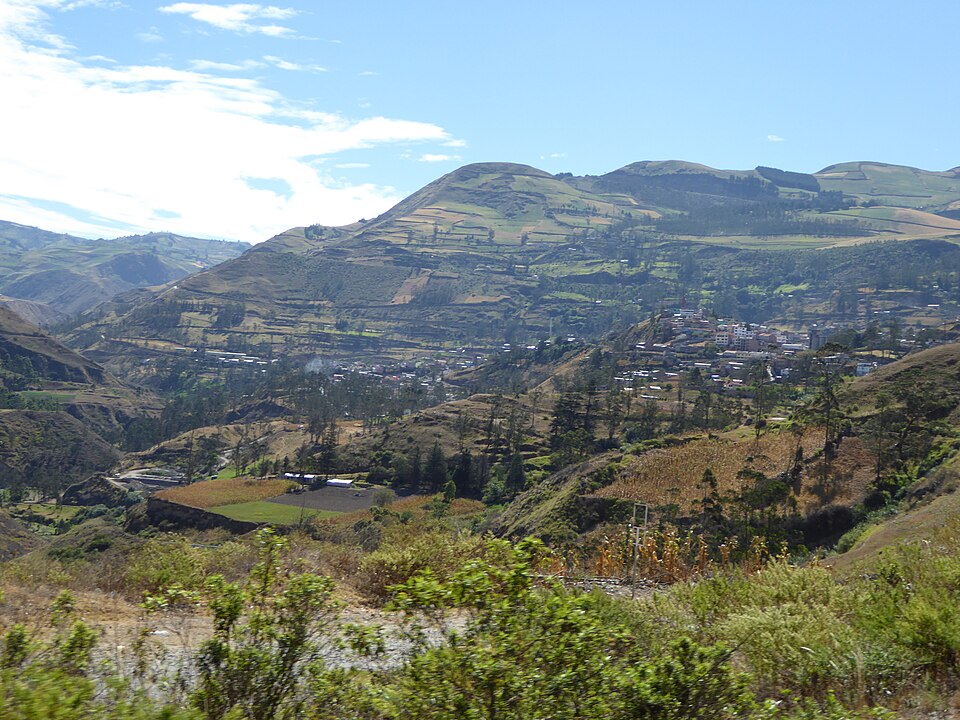
The Nariz del Diablo is a section of Ecuador's railway south of the town of Alausí, where the track needs to descend approximately 800 metres in roughly 12 kilometres, down a cliff face so steep that the American engineers brought in during the early 1900s initially declared it impossible. "Impossible" is a word engineers use in roughly the same tone that surgeons use "inadvisable" - meaning that they then did it anyway, but wanted it on record that they'd said something first.
The solution was a system of switchbacks: the train descends forward on one section of track, stops, reverses down the next section below it, stops again, and continues forward - zigzagging down the cliff face in a series of controlled retreats that the marketing materials describe as "breathtaking" and the engineering literature describes in terms suggesting the designers were working without sleep and possibly without adequate food. The result is a section of railway that descends a cliff no one thought a train could descend, on a track built largely by Jamaican laborers in conditions that would not today be described as optimal, through scenery that is genuinely extraordinary and does not care whether you appreciate the irony.
The Ecuadorian rail system has had a complicated relationship with operational continuity over the years, and the Nariz del Diablo currently runs as a heritage tourist route rather than a functional transport link. This is probably the safer arrangement for everyone involved. The cliff has not gotten any less steep. The engineers' original report remains, technically, correct about the difficulty involved, even if it turned out to be wrong about the impossibility.
The Pamban Bridge, India
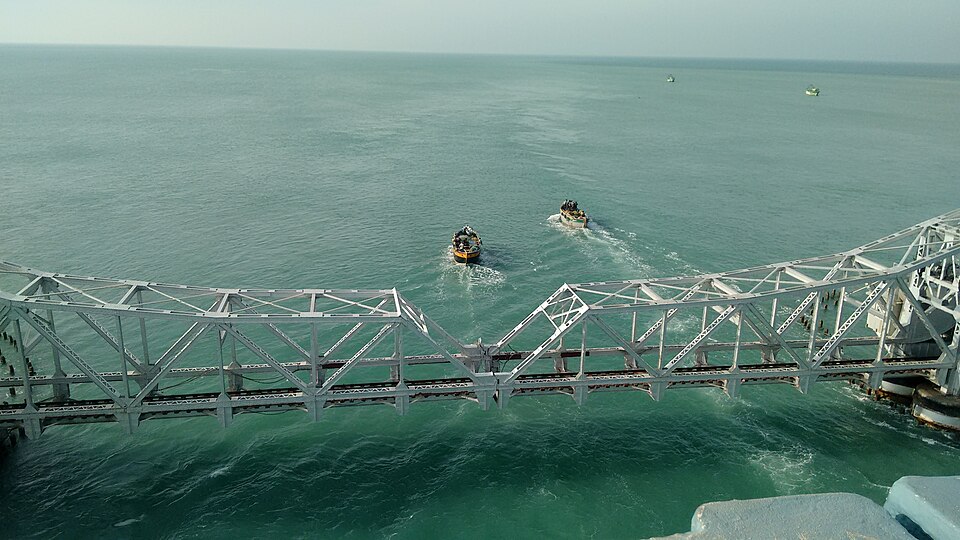
The Pamban Bridge connects mainland India to Pamban Island and the holy city of Rameswaram, spanning the Palk Strait between India and Sri Lanka. Built in 1914, it is India's first sea bridge - 2.3 kilometres of rail trestle above the open ocean - and it is monitored continuously for wind speed because the strait is famous for its unpredictable weather, periodic cyclones, and general meteorological hostility toward anything humans have chosen to build above it.
The bridge's Scherzer rolling bascule section - a span that can be raised mechanically to allow ships to pass underneath - means that trains crossing the Pamban Bridge sometimes stop, mid-crossing, while the section ahead pivots upward for a passing vessel. This is a sentence that sounds more alarming than it is, but only slightly. Trains are forbidden from crossing when wind speeds exceed certain thresholds. Those thresholds are reached, in the Palk Strait, with some regularity. A 1964 cyclone severely damaged the bridge and derailed a passenger train onto the reef below, which is the kind of historical note that changes the emotional texture of a train journey somewhat.
Rail traffic to India's sacred island has continued across the Pamban Bridge for over a century, through cyclones, saltwater corrosion, and the general indignity of being a Victorian railway bridge in one of the world's most meteorologically aggressive bodies of water. A new bridge is currently under construction alongside the original. This is, depending on your perspective, either reassuring or belated, and the two views are not mutually exclusive.
Tren a las Nubes, Argentina
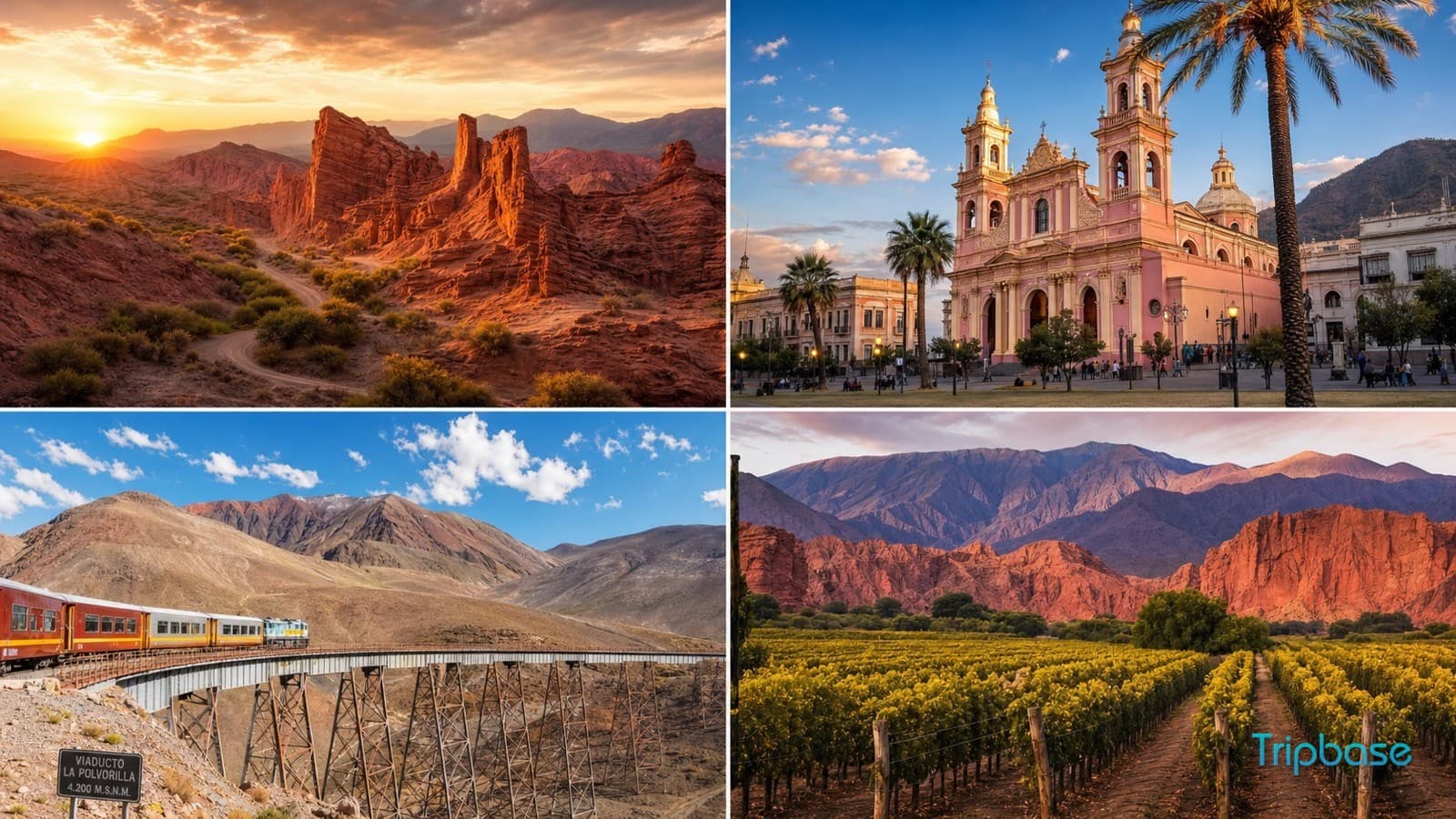
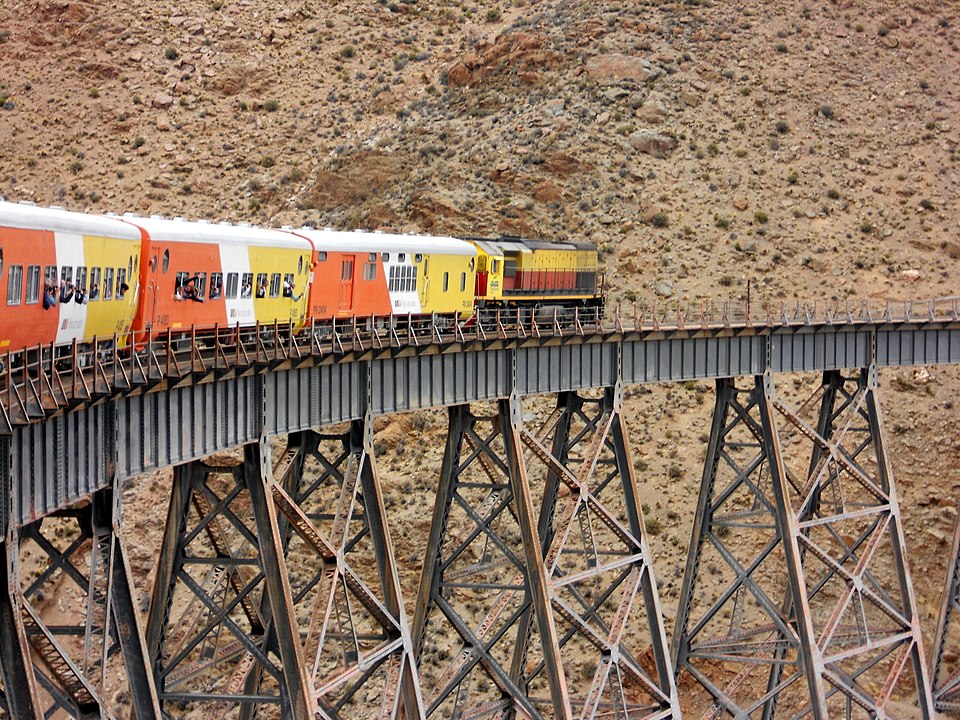
The Train to the Clouds is the third-highest railway in the world, which sounds like a qualification but is actually just a description. Departing from Salta in northwestern Argentina, the Tren a las Nubes climbs to 4,220 metres above sea level - higher than most ski resorts, higher than most people have any particular reason to find themselves in an enclosed metal tube - before reaching the La Polvorilla viaduct, a 224-metre iron arch bridge suspended 63 metres above a desert gorge that was built in 1932 and has, in the intervening decades, presumably passed every inspection it has been subjected to.
The route covers 570 kilometres through the Andean puna and includes 29 bridges, 21 tunnels, and 13 viaducts, none of which involve a rack-and-pinion system. The train climbs purely through adhesion - wheels gripping rails on gradients that would, in other contexts, seem inadvisable. The landscape of the high desert plateau is extraordinary: salt flats, volcanic rock formations, and the kind of horizon that looks less like a country and more like the surface of a neighboring planet that happens to be reachable by slow train from a provincial Argentinian city.
The train carries an onboard doctor. This is presented in promotional materials as a feature rather than a warning. At 4,220 metres, altitude sickness affects a meaningful percentage of passengers - shortness of breath, headaches, and the kind of nausea that leads you to reconsider the wisdom of eating lunch before departure. The doctor administers oxygen when required. This is all very well-organized and sensible, and does not address the underlying question of why the train has a doctor, which is that you are riding a train into the atmosphere and someone thought it prudent to have one. They were right. This is not a reassurance exactly, but it is something.
The Minami Aso Railway, Japan
Mount Aso is one of the world's largest volcanic calderas and one of Japan's most consistently active volcanoes, producing periodic eruptions that have, over the centuries, been responsible for significant geological events in the surrounding region. This makes the Aso area of Kumamoto Prefecture in southern Japan a beautiful, geologically fascinating, and episodically explosive place to build a railway - which is exactly what happened.
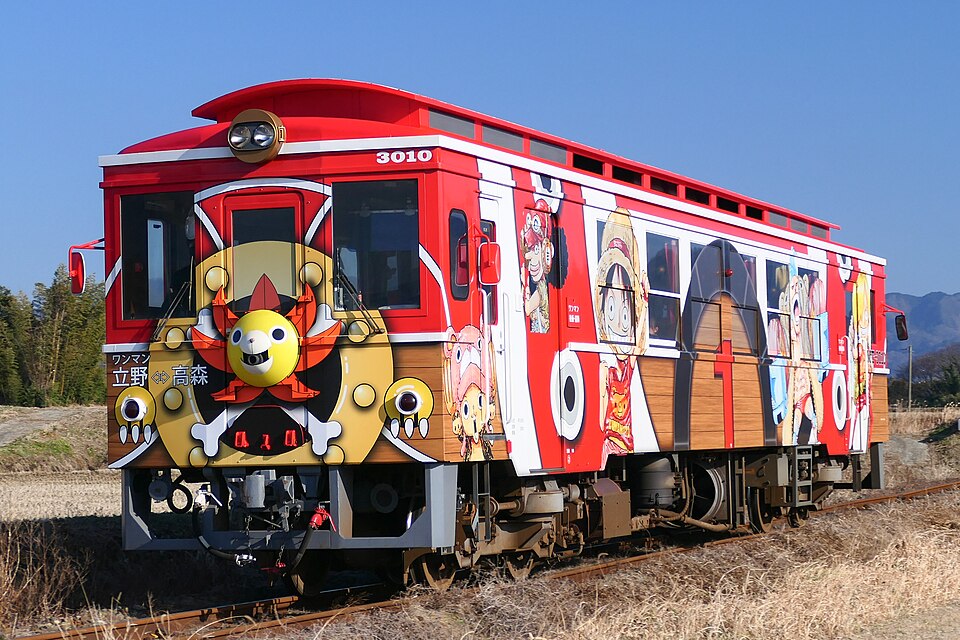
The Minami Aso Railway runs through the caldera's southern flank, passing through a landscape defined by the volcanic activity that built it: the ash-grey soil, the steam vents visible from the carriage window, the mountains that are still, in the most literal possible sense, actively producing the things that define them. The railway issues schedule adjustments in response to eruption advisory level changes at Mount Aso's active crater. This is a sentence that does not appear in the operational manuals of many rail operators, and perhaps should appear in more of them, in the interests of full disclosure.
In April 2016, the Kumamoto earthquake - measuring 7.0 magnitude - caused severe damage to the Minami Aso Railway, collapsing bridges and disrupting track across its route. Full service was not restored until 2023, a seven-year reconstruction effort through difficult terrain that says a great deal about both the commitment of the railway and the stubbornness of the landscape. The reopened railway passes through some of the most dramatic scenery in Kyushu. The volcanic context that makes it periodically inconvenient is also the thing that makes the views unrepeatable. Dangerous and beautiful are not, as it turns out, mutually exclusive - a principle that appears to have guided railway planning in this part of Japan for well over a century.
For those who prefer their dangerous journeys on roads rather than rails, the most dangerous roads in the world offer comparable scenery with different risks and, notably, no onboard doctor. Whether this makes them more or less alarming depends on how you feel about doctors and how you feel about roads. The extremes of travel tend to converge on the same basic truth: the most extraordinary places are usually the most difficult to reach, and the most difficult to reach are usually the ones that reward the effort. The Minami Aso Railway, the Death Railway, the Train to the Clouds - they are all, in the end, trains going somewhere worth going. The definition of "worth" is doing some heavy lifting in that sentence, but it holds.
Disclaimer: Check current operational status, volcanic advisory levels, and travel advisories before booking any of the routes described here. The Pamban Bridge's wind monitoring exists for a reason. The Tren a las Nubes doctor exists for a reason. The Death Railway's name exists for a reason. All of these reasons are worth knowing before you buy your tickets.