
The Most Insane Competitive Eating World Records Ever Set
Every Fourth of July, while most Americans are watching fireworks, several dozen professional athletes gather on a stretch of Brooklyn sidewalk to eat as many hot dogs as humanly possible in ten minutes, and the fact that this is treated as a legitimate sporting event says something wonderful about this country.
Competitive eating has an actual governing body, actual world records verified with the same seriousness as a marathon time, and actual athletes who train their stomachs the way other athletes train their hamstrings. It also has, as of 2024, an actual dispute between a hot dog company and its own most famous champion, one that escalated all the way to a Netflix special. This is a sport that takes itself extremely seriously while doing something that, described to an alien, would sound like a punishment.
Here's how the record book actually reads, and how one man eating 76 hot dogs became one of the most-watched sporting moments of the American summer.
Nathan's Famous and the Fourth of July Institution
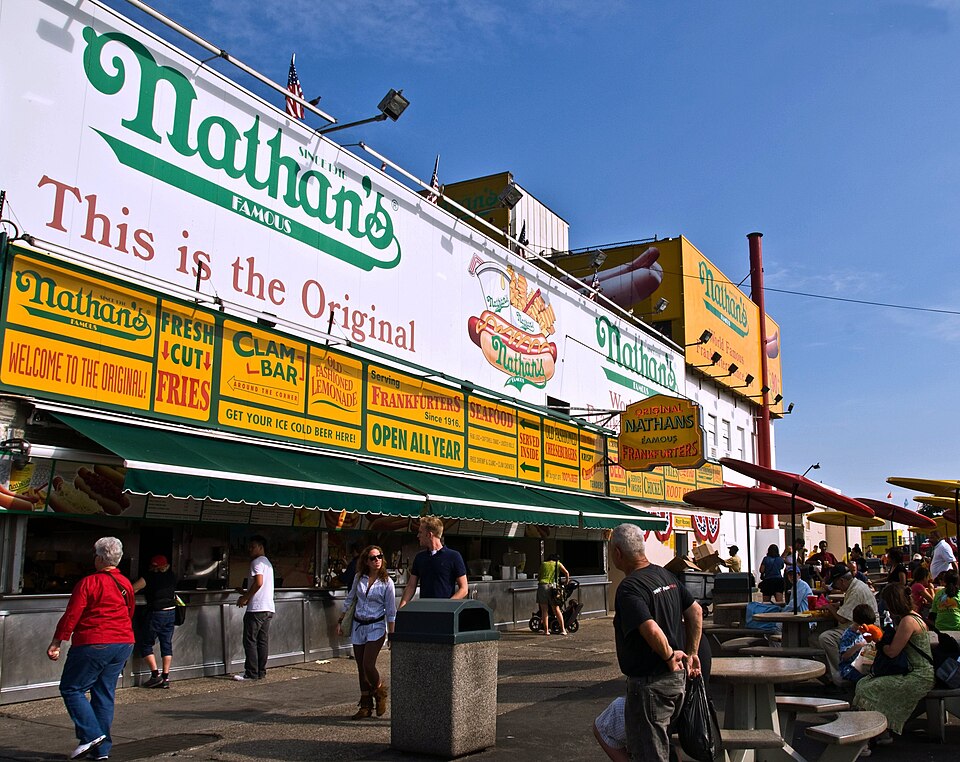
The whole sport traces its modern lineage to a single hot dog stand on Coney Island. Nathan's Famous has run its Fourth of July hot dog eating contest at its original Brooklyn location for decades (the company's own claim that it dates back to 1916, involving four immigrants settling an argument about patriotism via hot dog, is a marketing legend nobody has ever managed to verify with an actual document). What isn't in dispute is that by the 1970s the contest was running annually, ESPN started broadcasting it live in the early 2000s, and it is now the single most-watched event in a sport most people didn't know existed until they stumbled onto it looking for the actual fireworks coverage.
The contest is overseen by Major League Eating, the self-serious governing body for professional competitive eating, run by brothers George and Rich Shea, who discuss hot dog consumption with the gravity most people reserve for describing peace treaties. There is a ranking system. There is a championship belt. There are pre-contest weigh-ins. It is, structurally, exactly like boxing, except the opponent is a bun and everybody eventually loses to their own digestive system.
Takeru Kobayashi Doubled the World Record Overnight
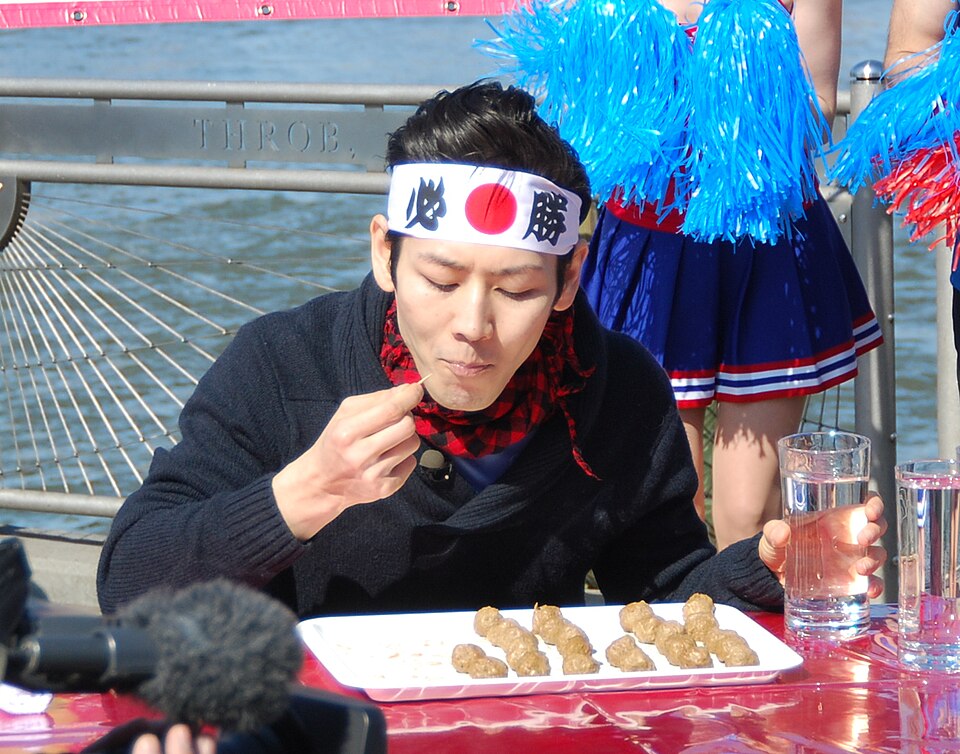
Before 2001, the men's hot dog record had crept up gradually over the decades, the way records generally do, one or two hot dogs at a time. Then a slight Japanese competitor named Takeru Kobayashi showed up at Coney Island and ate 50 hot dogs and buns in twelve minutes, roughly double the existing world record, and the sport was never the same again. Kobayashi had built his technique through Japan's own tradition of televised "big eater" contests, and he brought two genuine innovations to Coney Island: breaking the hot dog in half before eating it, and dunking the bun in water to make it easier to swallow, a move competitive eaters still call the "Kobayashi shake."
He won six consecutive Nathan's titles between 2001 and 2006, a level of dominance that forced Major League Eating to actively recruit a new generation of American competitors just to make the contest watchable again. One of them, a soft-spoken competitor from San Jose named Joey Chestnut, would eventually eat considerably more hot dogs than Kobayashi ever did, then spend a good chunk of 2024 not being allowed to compete at all.
Joey Chestnut, 76 Hot Dogs, and the Impossible Foods Scandal
Joey Chestnut set the current men's world record on July 4, 2021, eating 76 hot dogs and buns in ten minutes, a number so far beyond human logic that it works out to roughly one hot dog every eight seconds for the entire contest. He has won the men's title well over a dozen times and is, by a wide margin, the most dominant athlete competitive eating has ever produced, which makes what happened in 2024 all the more absurd.
Ahead of that year's contest, Chestnut signed an endorsement deal with Impossible Foods, maker of plant-based hot dogs and a direct competitor to Nathan's. Major League Eating barred him from competing, citing a conflict of interest with a rival sponsor, and Chestnut sat out his own sport's marquee event for the first time in nearly two decades. The dispute didn't end quietly: Netflix stepped in and staged a live head-to-head special between Chestnut and his old rival Kobayashi later that year, proving that even a hot dog sponsorship dispute can, with enough streaming money behind it, become a television event.

Molly Schuyler and Philadelphia's Wing Bowl
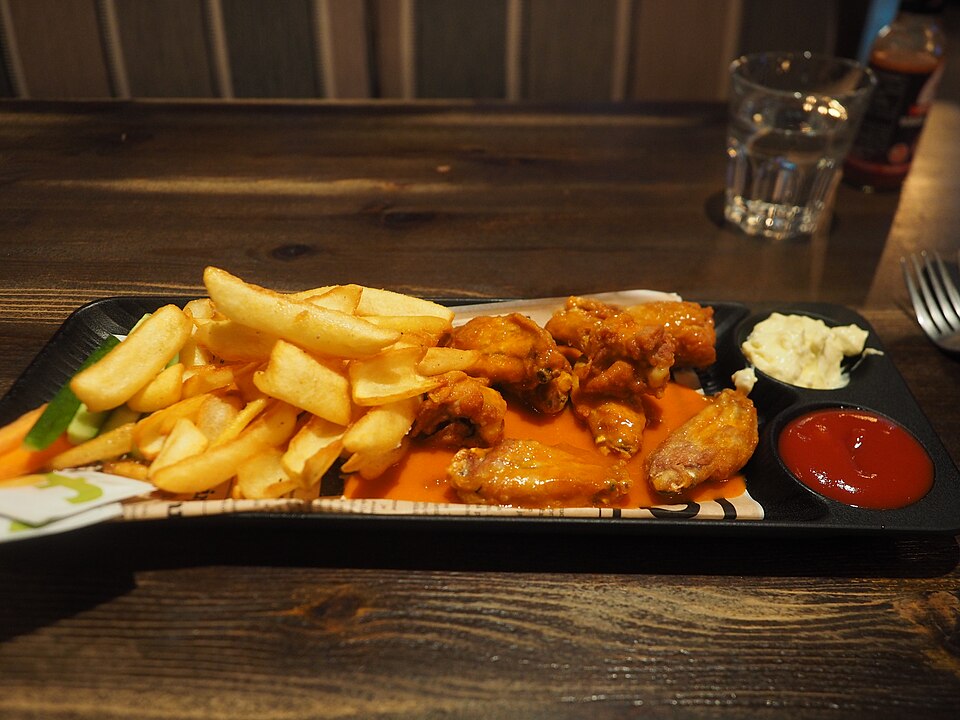
Hot dogs aren't the only currency in this sport. For nearly three decades, Philadelphia hosted Wing Bowl, an enormous, chaotic chicken wing eating spectacle held every winter, organized by sports radio station WIP and drawing tens of thousands of spectators to an arena at six in the morning to watch grown adults eat their body weight in Buffalo wings before the sun came up. Molly Schuyler, one of the sport's most decorated competitors, dominated Wing Bowl's later years and holds records across multiple disciplines beyond wings, from whole chickens to enormous steaks, in a career built on the fairly simple observation that most competitive eating records are set by whoever is willing to be more uncomfortable than everyone else in the room.
Wing Bowl finally ended in 2019 after 27 years, a casualty of changing radio ownership and a slow decline in both sponsorship and, one assumes, anyone's remaining appetite for six-in-the-morning chicken wings. It remains one of the strangest recurring events an American city has ever willingly hosted on purpose.
Sonya Thomas: Pound for Pound, the Most Dominant Eater in the Sport
If Chestnut and Kobayashi are the sport's heavyweights, Sonya Thomas, nicknamed "The Black Widow," is its middleweight champion who kept beating heavyweights anyway. Weighing around 100 pounds for most of her career, Thomas spent the 2000s and early 2010s racking up world records across an almost comically broad range of foods, from chicken wings to hard-boiled eggs to whole Maine lobsters, frequently defeating male competitors who outweighed her by well over a hundred pounds. She remains, by most measures inside the sport, the most statistically dominant competitive eater relative to body size that Major League Eating has ever certified.
Thomas's career is the best rebuttal to the idea that competitive eating is purely a contest of raw stomach volume. Technique, pacing, and jaw endurance matter enormously, and for over a decade the woman who proved it most consistently was also the smallest person in the room.
The Science of Competitive Eating (Yes, Someone Studied This)
In 2007, a gastroenterologist named Dr. David Metz got curious enough about Kobayashi to actually study him, publishing a case report in the American Journal of Roentgenology comparing Kobayashi's stomach, filled during a contest, against a control subject who simply ate until full. Kobayashi's stomach expanded to fill an enormous portion of his abdominal cavity without triggering the usual signals that tell an ordinary person to stop eating, the result, researchers concluded, of years of deliberate training rather than any unusual anatomy he was born with.
That training is exactly what it sounds like: competitive eaters practice by consuming large volumes of low-calorie food, water, or cabbage to stretch stomach capacity over time, alongside a principle Kobayashi himself popularized, sometimes called the "belt of fat theory," the idea that a leaner torso gives the stomach more room to expand into. It is, in other words, a real athletic discipline with real physiological training behind it, applied entirely toward the goal of eating more hot dogs than the person standing next to you. Sport is a strange and occasionally beautiful thing.
If you'd like to witness any of this in person rather than through a grainy livestream, Coney Island's original Nathan's stand still runs the contest every Fourth of July (see our New York City guide), and Philadelphia will happily tell you all about the Wing Bowl years if you ask a local of a certain age. Japan's own big-eater television tradition, which produced Kobayashi in the first place, is still very much part of the culture in Tokyo. For more numbers that shouldn't be possible, our roundup of the world's most extreme food records and our guide to foods that are illegal or controversial somewhere on Earth are the natural next stops.
Have you ever attempted a food challenge that ended badly? We want to hear about it, mostly because we suspect it will make us feel better about our own worst decisions at a buffet.