
The World's Hottest Peppers, Ranked by Scoville Units (And What They Actually Do to You)
Somewhere in Rock Hill, South Carolina, a man named Ed Currie has spent the better part of two decades trying to make a plant hurt people, and by every measurable scientific standard, he has succeeded spectacularly.
Currie runs a company called PuckerButt Pepper Company, which is an outstanding name for a business whose entire purpose is inflicting controlled agony on willing customers. He has personally bred two of the hottest peppers ever verified by science, which makes him either humanity's foremost capsaicin researcher or the closest thing we have to a supervillain with a horticulture degree. Possibly both.
None of this happened by accident. There is an actual unit of measurement for how much a pepper will ruin your evening, a global community of people who compete to eat the worst of them on camera, and a decade-long arms race between breeders that has produced peppers roughly a thousand times hotter than a jalapeno. Here is how we got here, ranked from merely alarming to scientifically unconscionable.
The Scoville Scale: How We Measure Pain
Before 1912, "how hot is this pepper" was a purely subjective question answered with tears, sweat, and the occasional betrayal of trust between friends. Then an American pharmacist named Wilbur Scoville invented a test: dilute a pepper extract in sugar water until a panel of tasters could no longer detect any heat at all, then count how many times you had to dilute it. That number, scaled up, became the Scoville Heat Unit (SHU), and it is still the unit the entire chili world argues in, even though nobody actually recruits panels of human tasters anymore. Modern labs use HPLC chromatography instead, which is more precise and considerably less likely to end in a workplace grievance.
The scale gives everything else in this article context. A bell pepper sits at a flat zero SHU, because it isn't spicy, it's just a vegetable cosplaying as a pepper. A jalapeno runs 2,500 to 8,000 SHU. A habanero, which most people consider genuinely dangerous, clocks in at 100,000 to 350,000. Pure capsaicin, the compound actually responsible for all of this, measures around 16 million SHU, and police-grade pepper spray sits somewhere in the low millions. Keep those numbers in your back pocket, because every pepper on this list makes a habanero look like a garnish.

Bhut Jolokia: The Pepper That Broke a Million
For most of modern history, nothing had ever been independently measured above a million Scoville Units, which is exactly the kind of ceiling that exists so someone can shatter it. In 2007, Guinness World Records certified the Bhut Jolokia, better known as the ghost pepper, as the world's hottest chili at an average of 1,041,427 SHU. It's grown primarily in India's northeast, in Assam and Nagaland, where it has been part of the local diet for generations and is also reportedly smeared on fences to keep wild elephants away from crops, which tells you everything you need to know about how the local wildlife feels about it too.
The ghost pepper's real legacy isn't the number itself, it's what the number did to the rest of the industry. Once a pepper had broken a million Scoville Units and the world kept turning, chili breeders everywhere treated it as an open challenge rather than a warning. Within five years, the record wouldn't just be broken, it would very nearly be doubled.
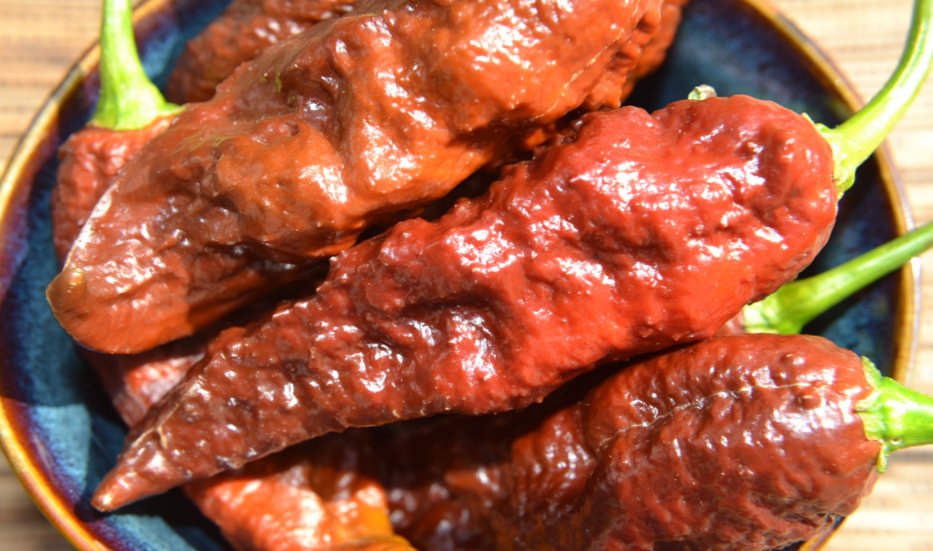
Trinidad Moruga Scorpion: The Pepper That Actually Looks Like a Warning
Named for the Moruga region of Trinidad, where it grows wild, the Trinidad Moruga Scorpion looks the way its results feel: gnarled, alien, and vaguely threatening, with a stinger-like tip that seems specifically designed to make you reconsider your choices before you've even bitten into it. When researchers at New Mexico State University's Chile Pepper Institute tested it in 2012, they recorded an average of around 1.2 million Scoville Units, with individual peaks measured well above 2 million.
What makes the Scorpion notable among serious chili enthusiasts isn't just the number, it's the delivery. Eyewitness accounts, and there is an entire genre of online video dedicated to this, describe a heat that arrives late and then refuses to leave, building for a full minute after the pepper is already gone, like a horror movie villain who was never actually dead. It remains a favourite base ingredient in the extract-heavy hot sauces marketed almost entirely on the premise of regret.
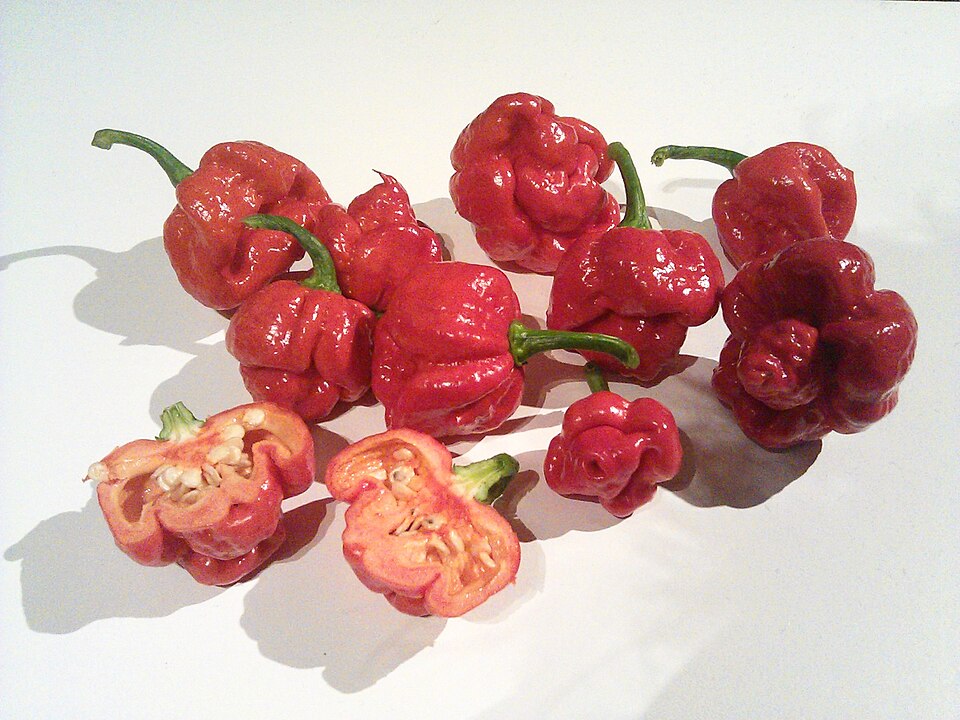
Carolina Reaper: A Decade on the Throne
Enter Ed Currie again. In 2013, Guinness certified his creation, the Carolina Reaper, a cross between a ghost pepper and a red habanero, as the new world's hottest chili at an average of 1,569,300 SHU, with individual pods measured above 2.2 million. It held the official title for a full decade, which in the fast-moving world of competitive pepper breeding is roughly equivalent to a dynasty. The Reaper looks almost cheerful, a wrinkled, bright red pod with a small curling tail, like something that would be adorable if it weren't capable of ending your evening.
The Reaper became the industry's default benchmark for "unreasonably hot," the pepper that hot sauce companies reach for when they want a product name that also functions as a legal disclaimer. It's the base ingredient in "Da Bomb: Beyond Insanity" and countless other sauces sold specifically to people who have made questionable decisions before and would like to make another one. It also became a fixture of internet chili-eating challenge videos, a genre that exists purely to prove dignity is optional.
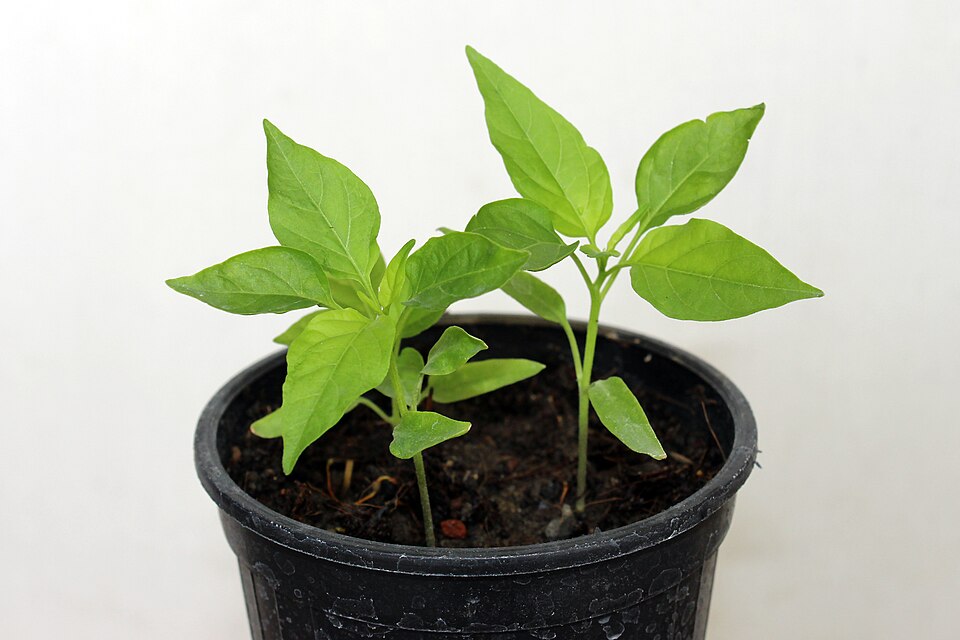
Pepper X: The New Undisputed Champion
You will not be shocked to learn who dethroned the Carolina Reaper. In 2023, Guinness certified Pepper X, also bred by Ed Currie at PuckerButt, as the new world's hottest pepper, with an average measurement of 2,693,000 Scoville Units, roughly 70% hotter than his previous creation. Currie has said publicly that developing it took ten years and that testing it personally sent him to the emergency room more than once, which is either a chilling warning label or the single best piece of marketing a hot sauce company has ever received for free.
Pepper X now anchors the "Last Dab" hot sauce used on the YouTube series Hot Ones, which has turned watching celebrities cry on camera into a legitimate promotional tour stop. Somewhere between Wilbur Scoville's sugar-water dilution test and a talk show host sobbing through an answer about their new film, this genuinely became an industry.
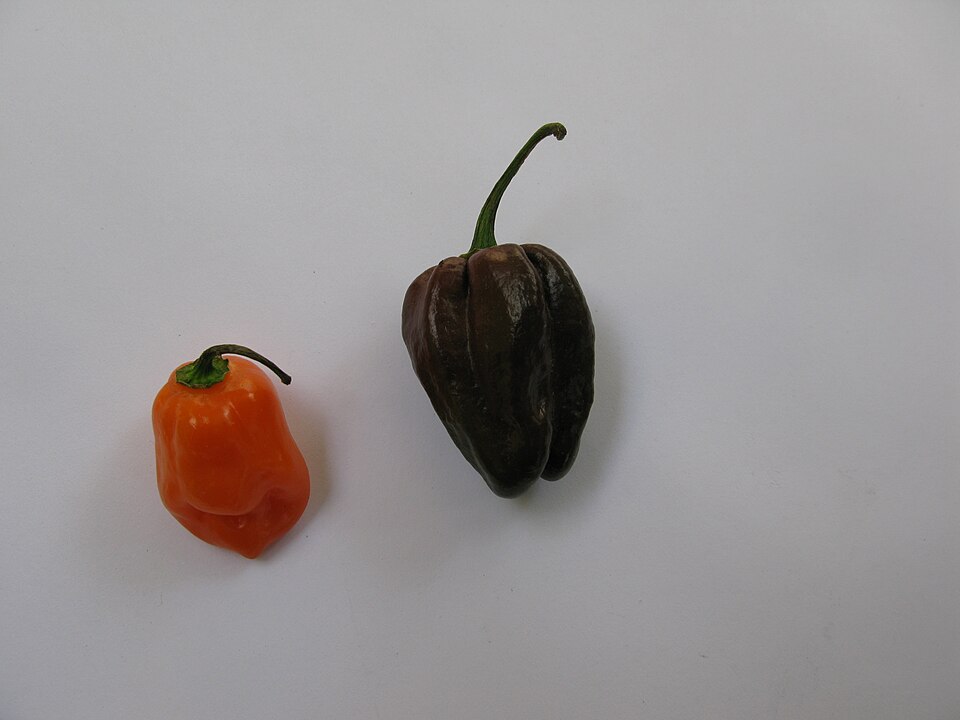
Dragon's Breath: The Chili Nobody Could Actually Verify
Not every record claim survives contact with science. In 2017, a chili breeder in Wales working with researchers at Nottingham Trent University announced a new pepper, Dragon's Breath, with a claimed heat of roughly 2.48 million Scoville Units, developed originally as an ornamental plant rather than a food crop. It generated a wave of breathless headlines about a chili "hot enough to kill," but the claim was never independently verified through Guinness's formal testing and certification process, and the pepper was never brought to market as a commercial product.
Dragon's Breath is a useful reminder buried inside an otherwise absurd list: in the world of competitive pepper breeding, a press release is not a peer-reviewed measurement, and "hot enough to kill" is a phrase that gets thrown around by tabloids a great deal more often than it gets thrown around by toxicologists. Pepper X earned its title through certified testing. Dragon's Breath earned its reputation through a slow news day.
What Capsaicin Actually Does to Your Body
Here's the part that should, in theory, make all of this less appealing: capsaicin doesn't burn you, not in the tissue-damage sense. It binds to a receptor called TRPV1, the same one your nervous system uses to detect actual heat, and tricks your brain into believing your mouth is on fire when it isn't. Your body responds with the full physical package anyway: sweating, a racing heart, watering eyes, and a flood of endorphins that some people, inexplicably, find enjoyable. That last part is the entire reason this hobby exists.
Water will not save you, because capsaicin is fat-soluble, not water-soluble, meaning a glass of water just spreads the oil around your mouth like you're basting a very unhappy turkey. Milk works because the casein protein binds to capsaicin and washes it away, which is the one piece of genuinely useful advice in this entire article, and the one piece everyone ignores in the moment because they're too busy questioning their life choices to locate a fridge.
If any of this has, against all reason, made you want to try one yourself, we'd point you toward Bangkok's street food stalls for a more survivable introduction to serious heat, or Trinidad and Tobago if you'd like to meet the Moruga Scorpion on its home turf. Santa Fe will get you the Hatch chile experience instead, a considerably gentler way to lose an evening. For the rest of the record book, our guide to the world's most extreme food records and our list of foods that are technically trying to kill you cover the ground this one doesn't.
Disclaimer: We are not doctors, dieticians, or emergency room physicians, though at this point we may have absorbed enough secondhand knowledge to pass for one. If you eat a Pepper X on a dare and start experiencing chest pain, put down the camera and call an ambulance. In that order.