Bizarre Airline Rules That Are Completely Real
Somewhere between Orville Wright's first twelve-second flight and the invention of the airport Pret, airline legal teams quietly achieved something remarkable: they turned the act of sitting in a chair for several hours into a compliance exercise requiring a spreadsheet, three browser tabs, and a level of personal organization previously associated with filing tax returns.
We are not, as travelers, entirely innocent in this. We brought emotional support peacocks aboard. We packed durian in our carry-ons. We asked what "personal item" meant at the gate, as if the gate agent hadn't spent the previous four hours answering that exact question for different versions of the same bag. In some ways, the rules are our fault. In other ways, the rules are wildly disproportionate. Both things are true, and the following list is a celebration of both.
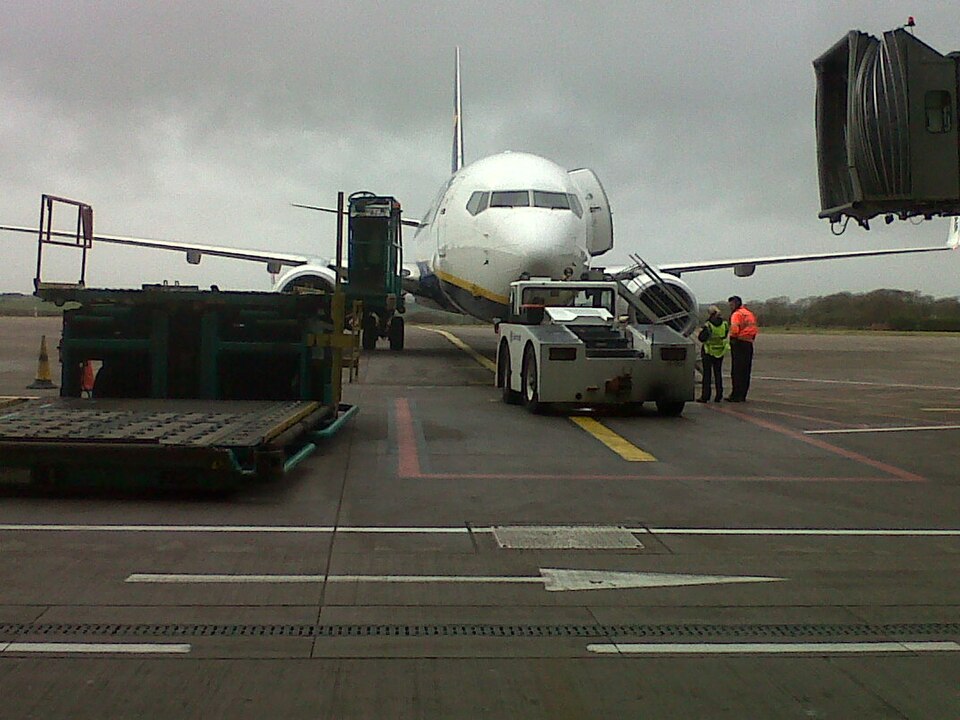
The Ryanair Bag Policy: A Journey Through the Administrative Dark
There are concepts in modern physics that resist intuitive understanding - quantum superposition, the nature of dark matter, the precise moment when a particle ceases to be in two states at once. Ryanair's baggage policy operates similarly. It is observable, technically, but the act of observing it changes the outcome.
The basics: Ryanair allows one personal item (small bag, under seat) on all fares. A carry-on requires priority boarding, which requires an additional fee, which must be paid before a cutoff date, which varies by route. The size limits for the personal item are enforced at the gate by a metal frame into which your bag must fit; if it doesn't, you pay. The fee for this gate check is higher than the fee you would have paid online, which is itself higher than the fee you would have paid at the time of booking, which is lower than the fee you'll pay in your next life if you ever figure out what that fee actually is.
This is not a uniquely Ryanair problem - the low-cost carrier baggage model is essentially a system for converting the concept of "cheaper flight" into "differently expensive flight" - but Ryanair has achieved a particular consistency in this area that has made it the subject of considerable documentation. There are, genuinely, YouTube channels and subreddits dedicated to navigating Ryanair bag policy. There are travelers who have studied it more carefully than they have studied their own mortgage. There is at least one person - somewhere, probably in London - who has it completely figured out, and who no longer experiences the cold dread of approaching a Ryanair gate with a bag that might be slightly too large. That person is not on your flight.
The policy changes periodically, which means that the guide you read last year is no longer accurate, and the guide you read this year may also no longer be accurate by the time you arrive at the airport, which is the final, purest expression of what Ryanair has built.
The Durian Dilemma: Banned, and For Good Reason
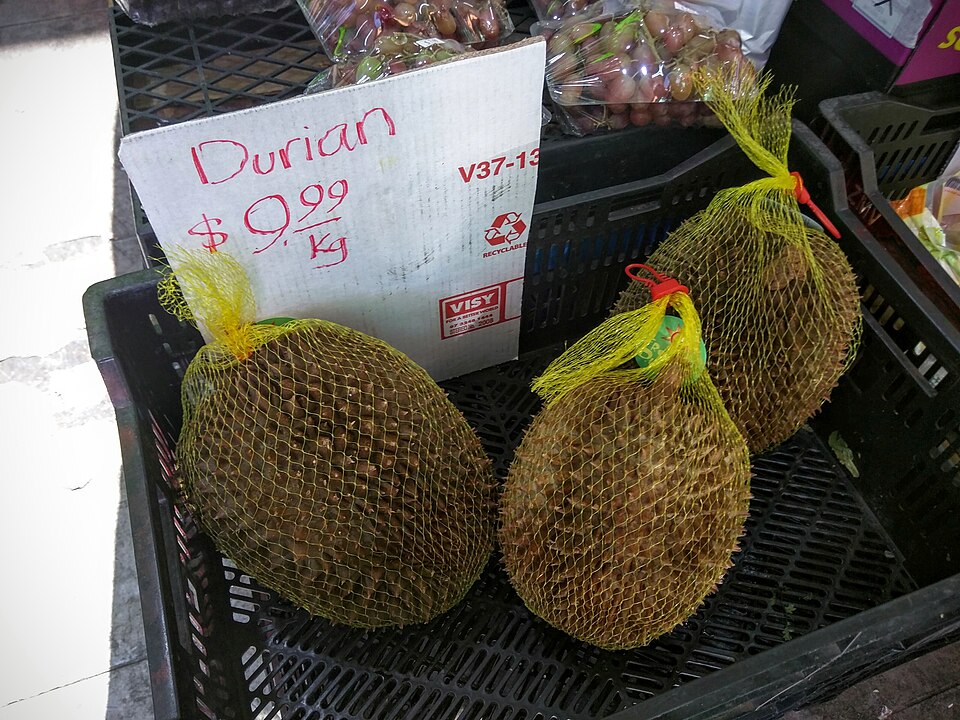
Durian is a tropical fruit the size of a small child's head, covered in spikes, beloved across Southeast Asia, and categorically unwelcome on commercial aircraft. Singapore Airlines, Thai Airways, AirAsia, Cathay Pacific, and a substantial portion of Asian aviation have banned it. The rule is, in the canon of airline regulations, one of the more defensible ones. This does not stop it being inherently funny.
The durian is beloved in Bangkok and throughout the region - its custard-like flesh is genuinely delicious to those who have made it past the olfactory barrier, which is a significant barrier. Descriptions of the smell range from "complex" and "earthy" (from fans, usually at a distance) to "rotting onions," "sewage," and "a gym locker that has been sealed since the Cretaceous." This range of descriptions does not mean the smell is ambiguous. It means the people on each end of the range are describing the same thing differently.
The structural problem is that durian does not merely smell. It permeates. Hotels in Southeast Asia hang "No Durian" signs alongside their "No Smoking" signs, and these are hotels - buildings designed to accommodate hundreds of people and their complicated personal aromas, with staff, ventilation systems, and cleaning crews. Aircraft are sealed metal tubes that cannot be opened at altitude and are cleaned on a schedule that can charitably be described as "between flights." A single insufficiently sealed durian can reportedly leave detectable odor traces in an aircraft cabin for days.
The ban has, naturally, created a market for durian derivatives - chips, candies, puffs, freeze-dried pellets - that satisfy the letter of the prohibition while producing an odor that tests its spirit in ways that customs officers have been unhappily documenting for years. For a fuller accounting of what airlines have decided humans are not allowed to transport, see our piece on foods banned on planes, which covers the broader landscape of aerial dietary regulation.
Flying With Your Cello: A Practical Guide to Uncertainty
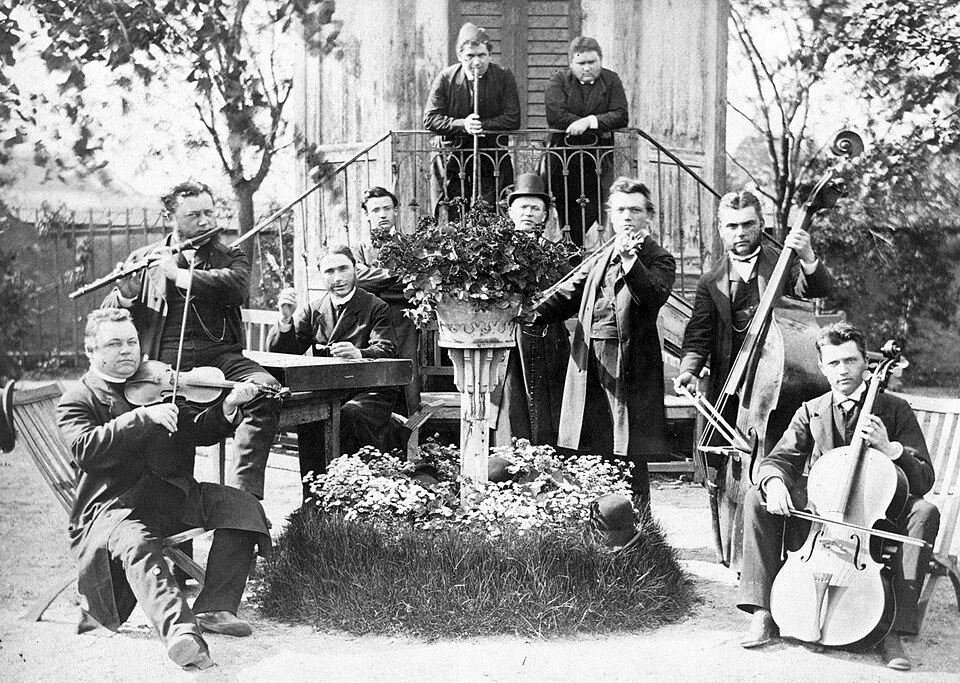
The rules for travelling with musical instruments on commercial flights can be summarized in one word: depends. It depends on the instrument. It depends on the airline. It depends on the route. It depends on whether there is overhead bin space available. It depends on whether that space is "available" in the technical sense (empty) or "available" in the practical sense (physically accessible given the bags already loaded above seat 14F). It depends on the gate agent. It depends on whether the airline recently had a public relations incident involving instrument damage, which affects not the formal policy but the informal one.
The FAA ruled in 2012 that US carriers must allow small musical instruments in the cabin if space permits, which means the law is clear and the implementation is a recurring conversation at airport gates. United Airlines famously damaged musician Dave Carroll's guitar during checked baggage handling in 2009, and Carroll's response - a YouTube video called "United Breaks Guitars" - accumulated ten million views and became a business school case study in customer relations. The result was not a clear universal instrument policy but rather a general awareness among airlines that instrument incidents were now capable of becoming news stories, which is a form of regulation, technically.
Larger instruments - cellos, basses, anything requiring its own seat - enter genuinely uncharted territory. Buying a seat for a cello is theoretically possible on most airlines. The cello must be in a hard case. The case must be secured. The seat assignment must be confirmed. The gate staff must be informed. The cello may not be placed in the exit row. The specifics of which seats are acceptable vary by aircraft type. None of this is available in a single document. It is assembled, like most knowledge of aviation policy, through phone calls, forums, and the lived experience of people who have done it before and written it down somewhere that may no longer be current.
Professional orchestras now factor instrument logistics as a standard line item in tour planning. This is efficient and organized and suggests that the orchestras have accepted the situation. It does not suggest that the situation is normal. It is not normal.
Southwest Open Seating: The Social Experiment That Ran for Fifty Years
For decades, Southwest Airlines operated without assigned seating. This was described in their marketing materials as a feature. The operational reality was a system in which passengers were assigned a boarding group and number, then permitted to sit anywhere they liked - which sounds like freedom and feels, in the middle of a C-group boarding experience at a full flight to Las Vegas, like something else entirely.
The mechanics of the Southwest boarding process: check-in opens exactly 24 hours before departure. Passengers who check in earliest receive the lowest numbers within their group, which means the earliest available overhead bin space and the widest seat selection. Passengers who fail to check in at exactly the 24-hour mark - because they were asleep, or working, or living in a timezone where 24 hours before departure is 3 a.m. - receive higher numbers, which means boarding later, which means middle seats, which means a window into a part of the human condition that most people prefer to experience from an aisle.
Southwest also sold "EarlyBird check-in," which automatically checked you in 36 hours before departure, ahead of the public window, for a fee described as modest and experienced as necessary. Buying EarlyBird was, in effect, purchasing insurance against the possibility of checking in late, which is a statement about the original system's design philosophy that Southwest did not appear to have included in any press release.
Southwest announced the end of open seating in 2024, citing customer research showing that people prefer assigned seats. The research seems, in retrospect, like it could have been conducted at any point in the previous fifty years. The change rolled out in 2025. Southwest now has seat assignments like every other airline, which is either the end of an era or the end of an experiment, depending on how nostalgic you feel about boarding group arithmetic.
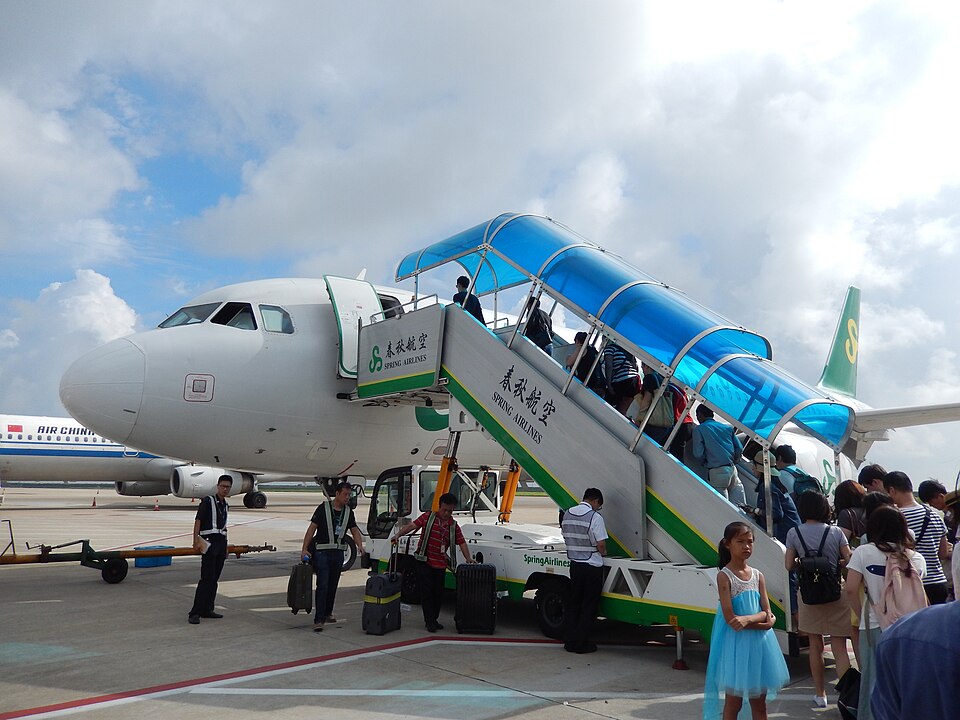
Shoes at All Times, Including to the Bathroom
Thai Airways requires passengers to wear shoes at all times during the flight, including when walking to the lavatory. This rule is not unusual in the landscape of airline footwear policies - many carriers encourage footwear in general terms - but Thai Airways is notable for specifying the bathroom, which is where most passengers on most airlines experience a subtle relaxation of personal standards that goes informally unaddressed by everyone who has noticed it and decided not to say anything.
The reasoning, when considered, is not unreasonable. Aircraft lavatories are small rooms that receive several hundred visitors per flight, are cleaned infrequently relative to their use, and accumulate a surface history that resists thorough description in a way you understand instinctively the first time you see someone padding down the aisle in socks. The floor of an aircraft lavatory is, in clinical terms, a high-contact surface with a complex microbial profile. This is not a statement about any specific airline. This is a statement about physics and cleaning schedules.
What Thai Airways has done is write it down and enforce it, which sets them apart not because the hygiene concern is unusual but because most airlines have quietly decided that shoe enforcement is a conversation they do not want to have with every passenger heading to row 27. Tokyo's carriers - Japan Airlines and ANA chief among them - have similarly clear expectations about cabin etiquette, reflecting Japan's broader emphasis on not being inconvenient to others in enclosed spaces. Thai Airways' explicit shoe rule sits in the same tradition: a preference for writing down what other carriers prefer to handle through polite suggestion and hopeful signage.
See our companion piece on the strangest airports in the world for further evidence that aviation has chosen some remarkable hills to plant its regulatory flag on.
Emotional Support Animals: The Golden Age Has Passed
From approximately 2014 to 2021, American commercial aviation experienced a regulatory gap that, if future generations encounter it in a history book, will require some explanation. The Air Carrier Access Act permitted emotional support animals aboard flights, defined them loosely, and created documentation requirements that were, for several years, minimal enough to produce outcomes that no one in the drafting committee could plausibly have anticipated.
In this period, passengers brought aboard: a peacock (rejected by United Airlines in 2018; the story became international news). A miniature horse (accepted by American Airlines under their service animal policy). A turkey (permitted on Delta). A duck in a Captain America outfit (documented, real, one of the more remarkable images in the history of commercial aviation). The problem was not that any individual animal was necessarily dangerous. The problem was that "emotional support animal" had functionally ceased to mean anything specific, and airlines were caught between disability discrimination law on one side and the operational reality of a 737 full of fauna on the other.
The Department of Transportation resolved this in 2021 by clarifying that airlines are only required to accommodate trained psychiatric service dogs, not emotional support animals broadly. Most airlines updated their policies within months. The peacock era ended. What replaced it was a set of pet travel rules that are specific, varied by airline, and comprehensive in a way that strongly suggests the airlines had been thinking about this for a while and were ready.
Modern in-cabin pet rules cover: carrier dimensions (which vary by airline and do not standardize in a way that allows one carrier to work universally). Breed restrictions based on breathing risk, tightened following in-flight health incidents. Temperature policies affecting cargo routes. And health certificate requirements that differ by destination, connecting airport, and each airline's individual relationship with veterinary documentation. It is a lot of information to assemble before you can simply bring your dog on a plane. But it is all real, all documented, and all - in a quiet way - the industry's best attempt at preventing a second peacock incident.
Disclaimer: Airline policies change with a frequency that makes maintaining an accurate summary technically impossible. Verify all baggage, instrument, pet, and footwear-related rules directly with your carrier before travel, check the date the policy was last updated, and consider arriving at the airport with the emotional resilience of someone who has done this before and knows roughly what to expect.