Beaches That Are the Wrong Colour
Sand is supposed to be beige. This is the arrangement. You go to the beach, the beach is the colour of a manila envelope, you lie on it, you go home mildly disappointed and carrying roughly nine per cent of it in your shoes. That is the contract we have all signed with the coastline. And then there are the beaches that broke the contract - the pink ones, the green ones, the ones the colour of a fresh crime scene - and every single one of them has a perfectly reasonable geological explanation that somehow makes the whole thing worse.
Here is the thing nobody tells you about sand: it isn't a substance. It's a size. Anything ground down to between 0.0625 and 2 millimetres is sand, regardless of what it used to be - which means the colour of any given beach is really just a report on what was standing nearby when the ocean got to work. Most of the time the answer is 'quartz', which is beige, which is why the world's beaches are overwhelmingly the colour of a beige thing. But occasionally the answer is 'a volcano', or 'a gemstone deposit', or 'several trillion dead microscopic organisms', or - in one memorable case in northern California - 'the entire municipal rubbish tip, 1906 to 1967'.
These are the beaches where the ocean got hold of something other than quartz. We've written before about natural wonders that sound completely invented, and this is that list's coastal wing. Bring a camera. Do not bring a bucket - we'll get to why.
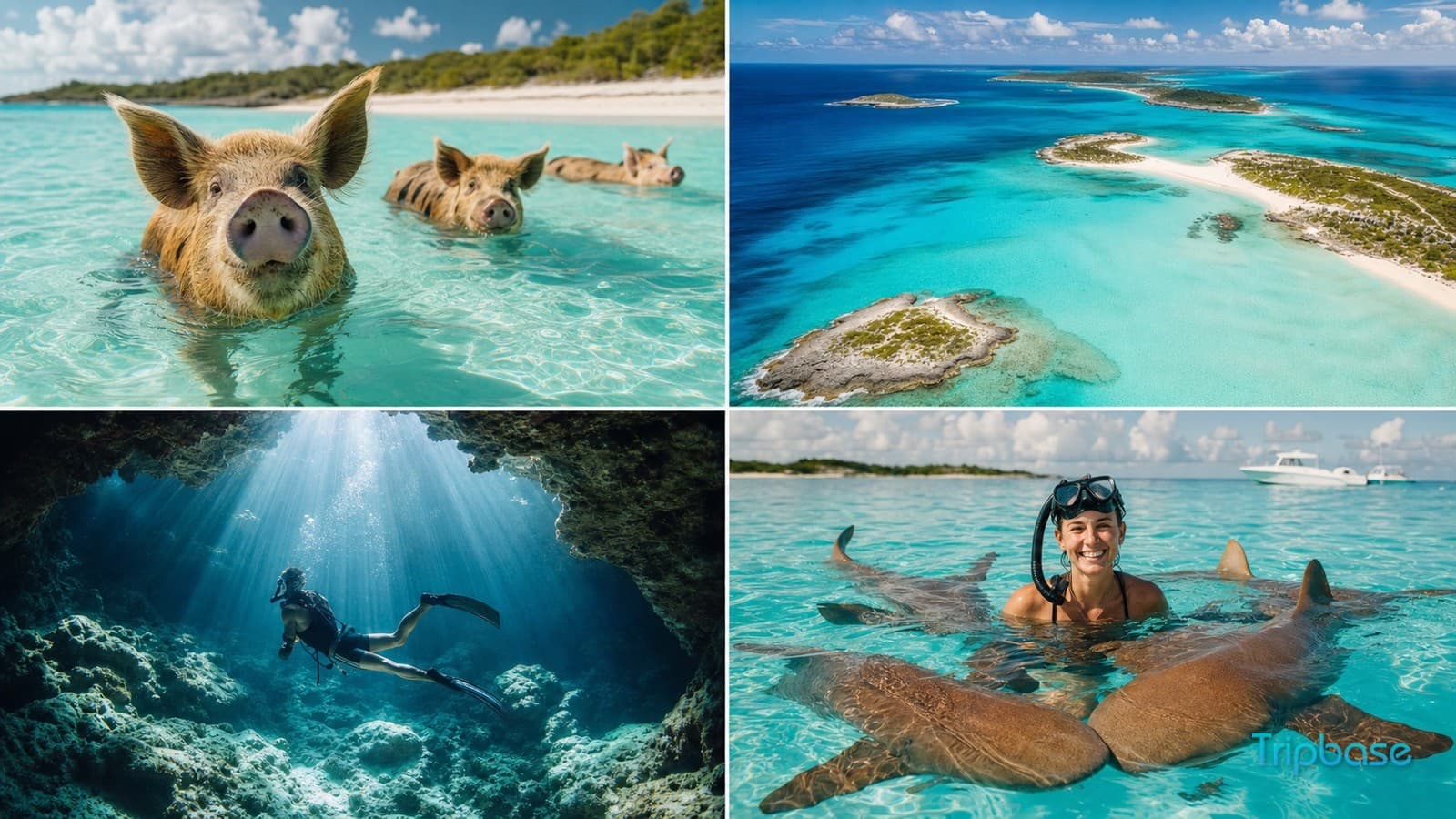
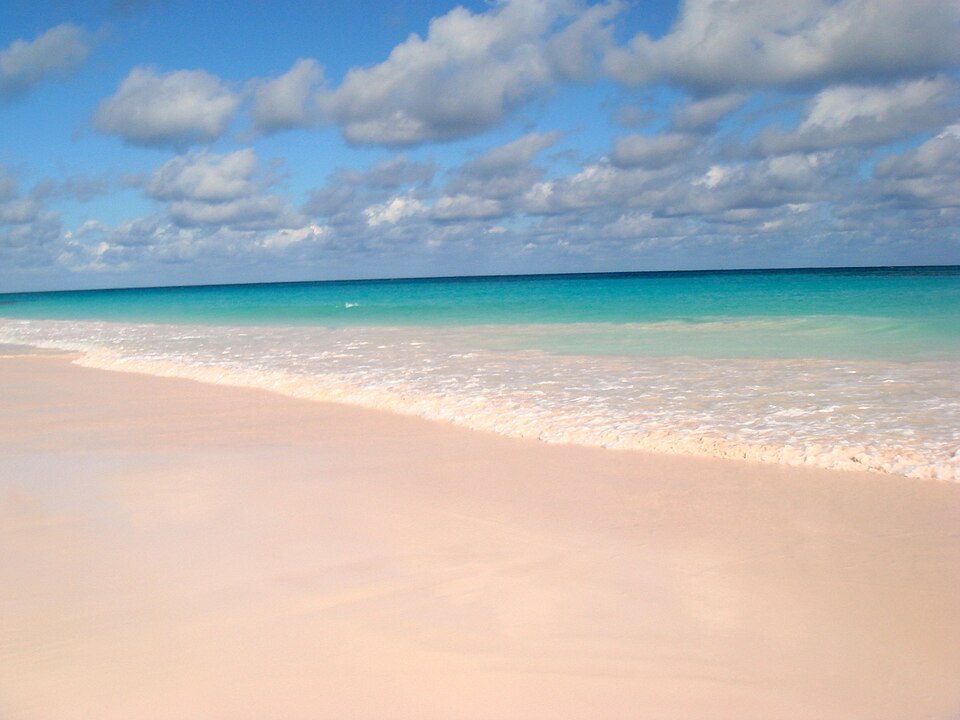
Pink Sands Beach, Harbour Island, Bahamas
Three miles of beach on the eastern shore of Harbour Island are, unambiguously, pink. Not 'pink in the right light'. Not 'pink if you have recently been struck on the head'. Pink - a soft, blushing, faintly embarrassed pink that runs the entire length of the shore and looks, in photographs, like the sort of thing a stock-image company would be sued over.
The cause is an organism called Homotrema rubrum, a single-celled foraminifer that lives on the coral reefs offshore and builds itself a tiny shell in a deep, arterial red. When they die - and they die in numbers that do not bear close arithmetic - the reef grinds their shells into the white coral and limestone sand, and the resulting mixture comes out rose-tinted. The beach is pink because it is a very, very large quantity of crushed corpses, blended thoroughly with a very, very large quantity of other crushed corpses. Honeymooners love it.
This is, genuinely, one of the more pleasant beaches on this list to actually visit: warm, shallow, gently shelving, protected offshore by the reef that is busy manufacturing more pink sand as you lie on it. Harbour Island sits just off Eleuthera, and the wider Bahamas gives you plenty of turquoise-water days on either side of it, none of which will be pink, all of which will feel slightly conventional afterwards. Nassau is the usual gateway. Nobody there will find the pink thing as remarkable as you do.
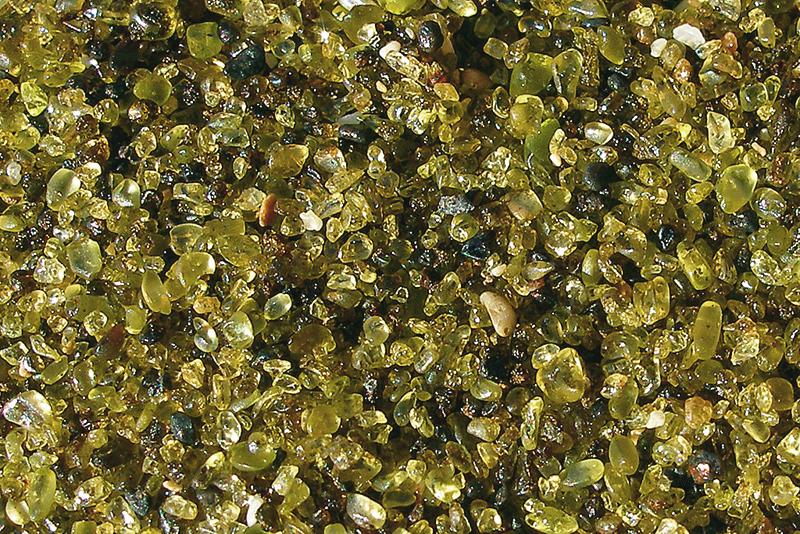
Papakolea Green Sand Beach, Hawaii
Near Ka Lae - South Point, the southernmost tip of the Big Island and therefore the southernmost point in the United States - there is a bay where the sand is green. Olive green. The green of a bottle held up to the light, or of a colour-graded film about a war.
The sand is olivine, a magnesium-iron silicate that crystallises out of basaltic magma, and which you may have encountered in a jeweller's window under its gem name: peridot. The supply comes from Pu'u Mahana, a cinder cone roughly 49,000 years old that the sea has spent the intervening period eating. Here is the elegant part: olivine is denser than the other things in volcanic rock, at around 3.3 grams per cubic centimetre against quartz's 2.65. So the waves winnow the bay like a prospector's pan - the lighter material gets carried out to sea, the heavy green crystals are too dense to leave, and what accumulates in the bay is a natural concentration of semi-precious gemstone. The beach is not green because someone put green things on it. The beach is green because the Pacific Ocean has been doing gravity separation, unsupervised, for forty-nine millennia.
There are only a handful of green sand beaches on the planet - the usual count is four, alongside sites in Guam, the Galapagos, and Norway - and getting to this one costs you a two-and-a-half mile walk each way across exposed, wind-scoured cliff from the Ka Lae parking area. Locals will offer you a lift in the back of a truck for cash. This is not officially sanctioned, the road is not officially a road, and the ride has been described by survivors as agricultural. The Big Island also gives you active volcanoes at Hawaii Volcanoes National Park, which is the same geology on a considerably shorter timeline. Take the water. Take more water than you think. There is no shade, and the wind at South Point is famous for being the reason the trees there grow sideways.
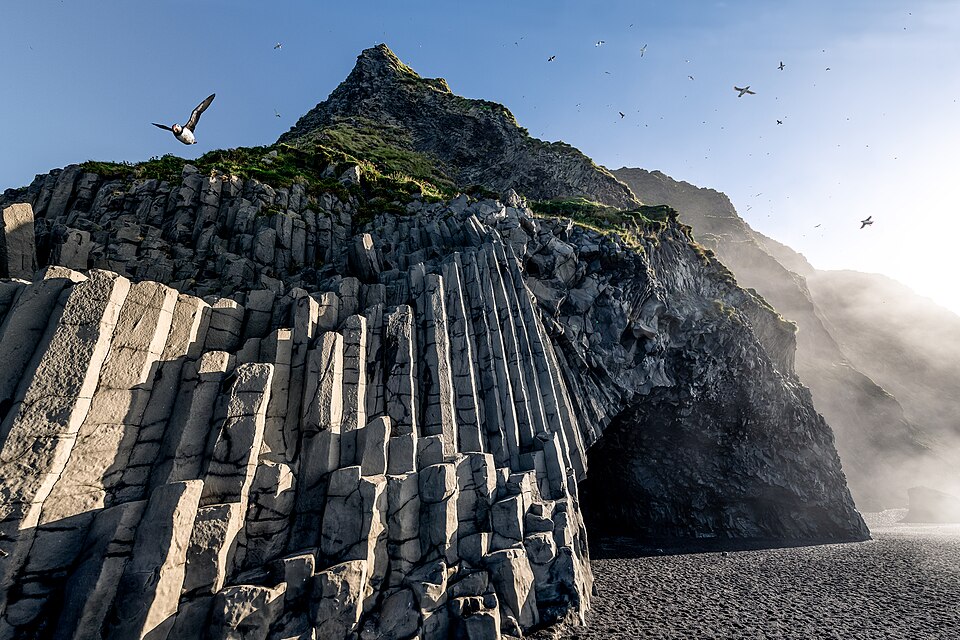
Reynisfjara, Iceland
Reynisfjara, near the village of Vik on Iceland's south coast, is black. Not dark grey, not charcoal - black, in the full and committed sense, stretching away under a sky that is usually doing something dramatic and unhelpful. Behind it stand hexagonal basalt columns arranged like a church organ built by someone with a grudge. Offshore, the Reynisdrangar sea stacks rise out of the water. Local folklore holds they are trolls, caught by the sunrise while dragging a ship to shore and turned to stone. The geological explanation is erosion, which is less good.
The black comes from basalt. When molten lava hits water or ice it doesn't cool politely - it shatters, quenching into fragments in an instant, and the ocean spends the following centuries milling those fragments down to sand. Iceland is essentially a volcano with a national football team, so it has an effectively unlimited supply of the raw material. What you're standing on is a beach made of explosions.
Now the part that matters. Reynisfjara kills people. The beach faces thousands of kilometres of open North Atlantic, which means it receives sneaker waves - waves that run far, far further up the sand than the several dozen before them, with no warning and no discernible pattern, into water cold enough to disable you in minutes and a rip current that does the rest. Visitors have died here, more than once, and the deaths follow the same shape every time: someone turns their back on the sea to take a photograph. Iceland now runs a traffic-light warning system at the entrance rating the day's wave danger, which tells you everything about how the previous approach was going. Watch the water. Watch it the entire time. Reykjavik is around two and a half hours west, and the whole south coast is one long argument for renting a car and taking the sea seriously.
Kaihalulu Red Sand Beach, Maui
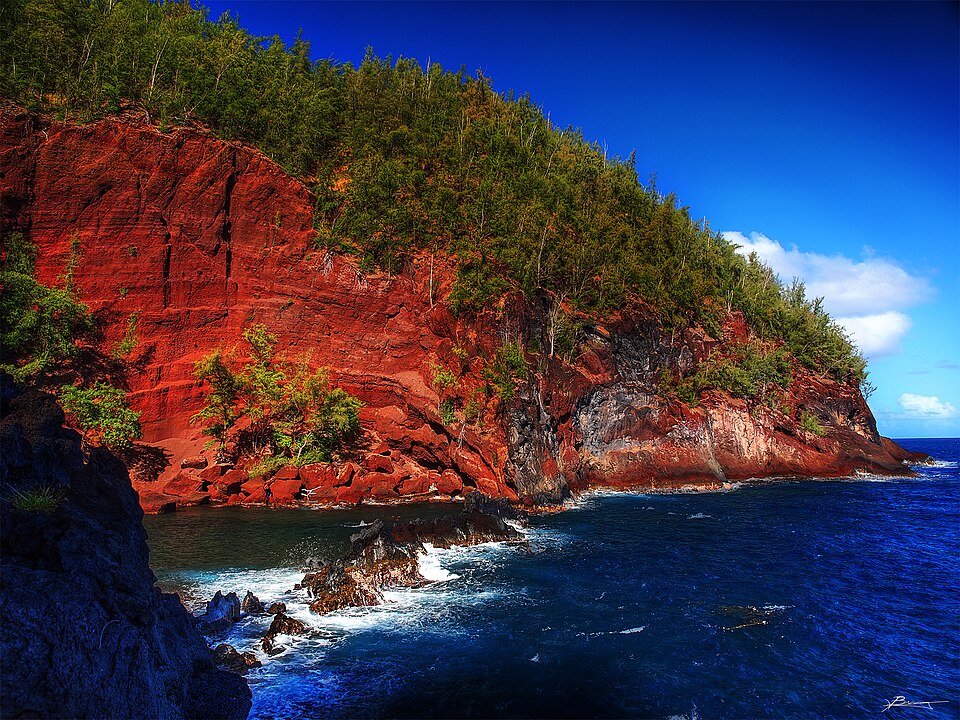
Kaihalulu, on the far side of Ka'uiki Head just outside Hana on Maui's eastern coast, is the colour of rust, brick, and dried blood, depending on the light and on how recently you have questioned your decisions. It sits in a cove enclosed by a lava-rock breakwater, with the deep blue Pacific slamming into the far side of it, and the overall effect is less 'beach' and more 'the establishing shot of a film in which nobody makes it back'.
The red is iron. Ka'uiki Head is a cinder cone, its rock stuffed with iron-rich minerals that have oxidised over time - the cliff is quite literally rusting - and as it erodes it sheds that material straight down into the cove below. The sand is fresh cliff. The cliff is getting smaller. These two facts are related, and they have implications for the walk in.
Because the walk in is the problem. The trail crosses private land and clings to a crumbling cliff face on loose volcanic cinder that behaves underfoot roughly like ball bearings on a ramp, above a drop into surf that is not interested in your circumstances. It is unmaintained, it has been actively eroding for years, and people have been seriously hurt on it. Every guidebook that mentions Kaihalulu includes a warning, and every year some number of visitors read that warning as a suggestion. It is also, unofficially and enthusiastically, clothing-optional, so you may arrive to find the local geology is not the only thing on display. Hana sits at the end of the Road to Hana - 600-odd curves and 50-odd one-lane bridges, which is its own kind of commitment - and the rest of Maui is considerably more relaxed about the whole business of getting to a beach.
Pfeiffer Beach, Big Sur, California
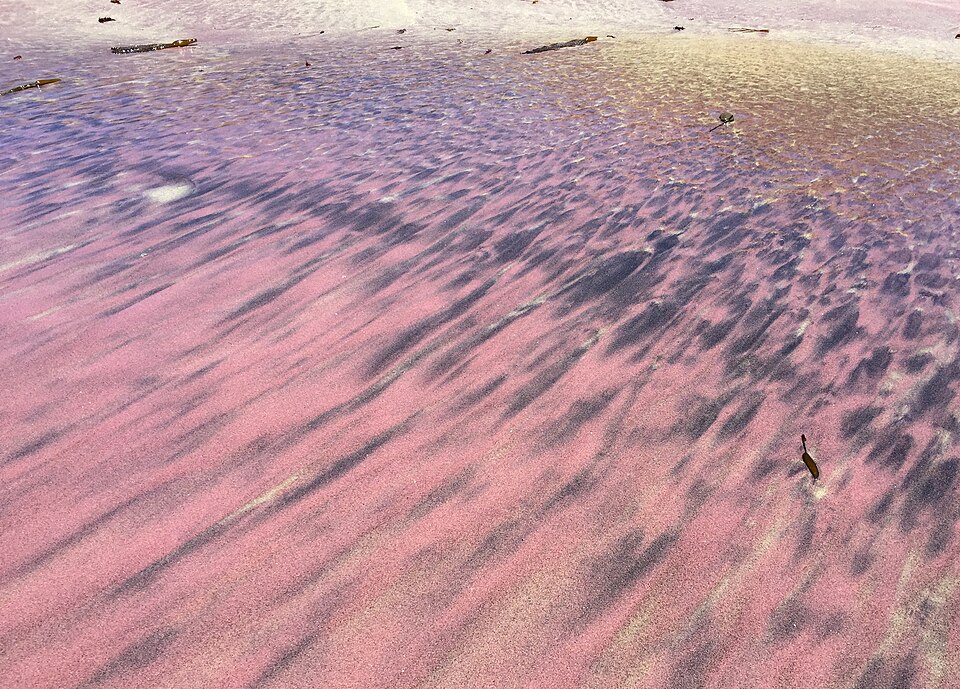
Pfeiffer Beach is purple. Not entirely, and not always - it arrives in streaks and drifts, lilac and violet bleeding through the ordinary tan sand in patterns that look precisely like a photograph somebody has interfered with. This is the beach that gets accused of being fake more than any other on this list, and the accusation comes almost exclusively from people who have not been.
The purple is manganese garnet, washing down out of the hillsides above the beach and collecting on the sand below, most visibly after winter rain has dragged a fresh supply down the slope. Which means Pfeiffer is seasonal in a way the others aren't: turn up in high summer after months of dry weather and you may find a nice, normal, entirely beige beach and a strong sense of having been lied to by the internet. Turn up after a storm and the sand looks like a bruise.
The other obstacle is Sycamore Canyon Road, the two-mile single-track descent that is the only way in, which is unmarked, unloved, gated at sundown, and narrow enough that meeting an oncoming vehicle becomes a negotiation conducted largely in reverse. Big Sur in general operates on this principle - the good things are down roads that do not want you - and the coastline is worth the entire exercise regardless of what colour the sand is doing on the day. Keyhole Arch is at the same beach, and in winter the sunset lines up through the hole in the rock, at which point you will be sharing the sand with roughly forty photographers and their tripods, all of whom got there first.
Glass Beach, Fort Bragg, California
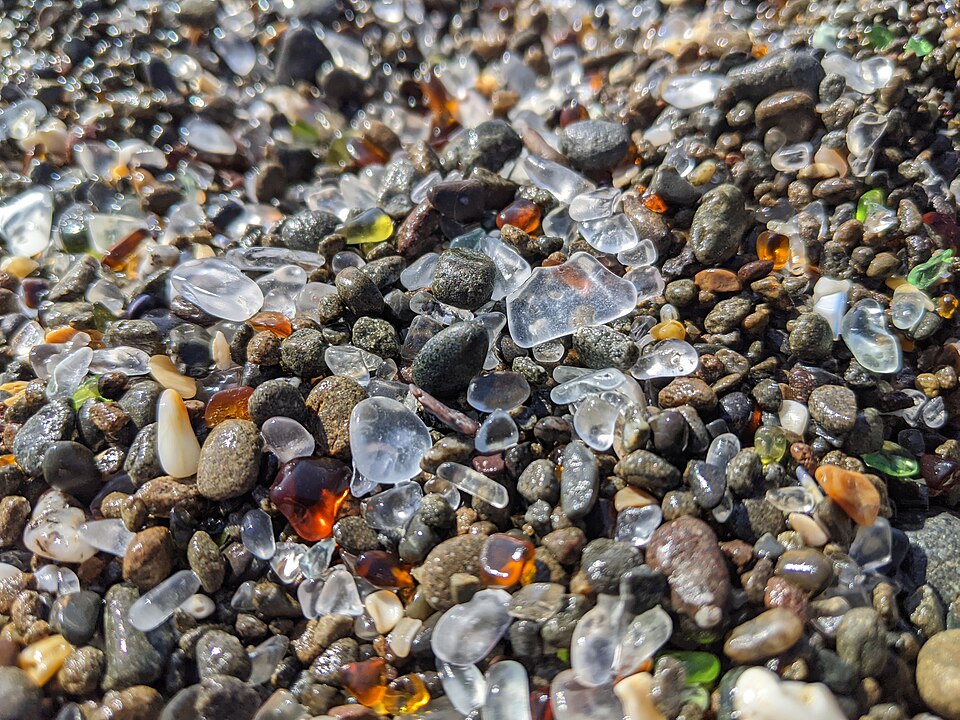
And now the one that isn't geology at all. Glass Beach, on the Mendocino coast at Fort Bragg, is covered in smooth, tumbled, jewel-coloured pebbles of glass - white, amber, green, the occasional prized cobalt blue - glittering across the shore in a way that has to be seen to be properly disbelieved. It is beautiful. It is genuinely, indisputably beautiful. It is also the town dump.
From 1906 until 1967, Fort Bragg disposed of its rubbish by driving it to the cliffs and pushing it over the edge into the sea. Not just glass - appliances, vehicles, everything. The locals called it The Dumps, which at least has the virtue of honesty. The site was finally closed in 1967, various cleanups hauled out the metal and the parts that were never going to improve, and the Pacific was left with the glass. Over the following decades the surf did what surf does: it broke the bottles, rolled the fragments, ground the edges off, and handed back an entire beach of polished gemstone made out of somebody's discarded beer supply. The ocean spent fifty years turning our rubbish into treasure, which is either a redemption story or a pointed comment, and you're free to pick.
The site is now part of MacKerricher State Park, and this is where the bucket comes in: taking the glass is prohibited. It's also, more to the point, self-defeating - the supply is finite, it has not been topped up since 1967, and every visitor pocketing 'just a few nice ones' is measurably removing the beach. Photographs of Glass Beach from twenty years ago show a shoreline of solid glass. It thins every year. The Mendocino coast has plenty else going on, and San Francisco is a scenic three and a half hours south. Look at the glass. Leave the glass. The one thing worse than a town that dumped its rubbish in the sea for sixty-one years is a generation of tourists who took it all home in their pockets.
The pattern here, once you notice it, is that none of these beaches are exceptions. Every beach is the same trick - the ocean grinding down whatever happens to be nearest and handing back the powder. Beige beaches are just beaches where the nearest thing was quartz. The pink one had a reef, the green one had a cinder cone full of gemstone, the black one had a volcano, the red one had a rusting hill, the purple one had garnet in the watershed, and the glass one had us. The ocean isn't being creative. It's being extremely consistent, and simply working with the material it was given, which in Fort Bragg's case was sixty-one years of household waste.
Disclaimer: We are not geologists, lifeguards, or the person who has to come and get you. Do not turn your back on the water at Reynisfjara. Do not take the Kaihalulu cliff trail because an article on the internet described it vividly. Do not fill your bag with Glass Beach, and do not tell us the purple sand wasn't there - you went in August, and we did warn you.