The World's Most Famous Shipwrecks You Can Actually Dive
At the bottom of the world's oceans there are roughly three million shipwrecks, which is either a testament to human ambition or a fairly damning indictment of human competence at sea, depending on how you look at it. Most of them are unremarkable: weather-beaten timber, scattered ballast, the occasional boot. But some of them are extraordinary - frozen disasters, time capsules of catastrophe, full of jeeps and motorcycles and, in at least one case, the residual glow of nuclear weapons testing. And most of them you can visit, provided you can breathe underwater and have a moderate tolerance for the concept of swimming through history's worst days.
Here are the world's most famous shipwrecks that are actually accessible to divers. We are ranking them neither by depth of tragedy nor by depth of water, though both metrics produce interesting results.
SS Thistlegorm - The One With Motorcycles
If you ask any serious wreck diver which dive they'd choose if they could only choose one, they will say the SS Thistlegorm. If they don't say the SS Thistlegorm, they are either wrong or lying. The Thistlegorm is a British merchant vessel that was sailing through Egypt's Red Sea in October 1941, loaded to the gunwales with war supplies, when German bombers located it in the middle of the night and did what German bombers were prone to doing in 1941 (sinking it). It went down in under ten minutes, taking its cargo with it.
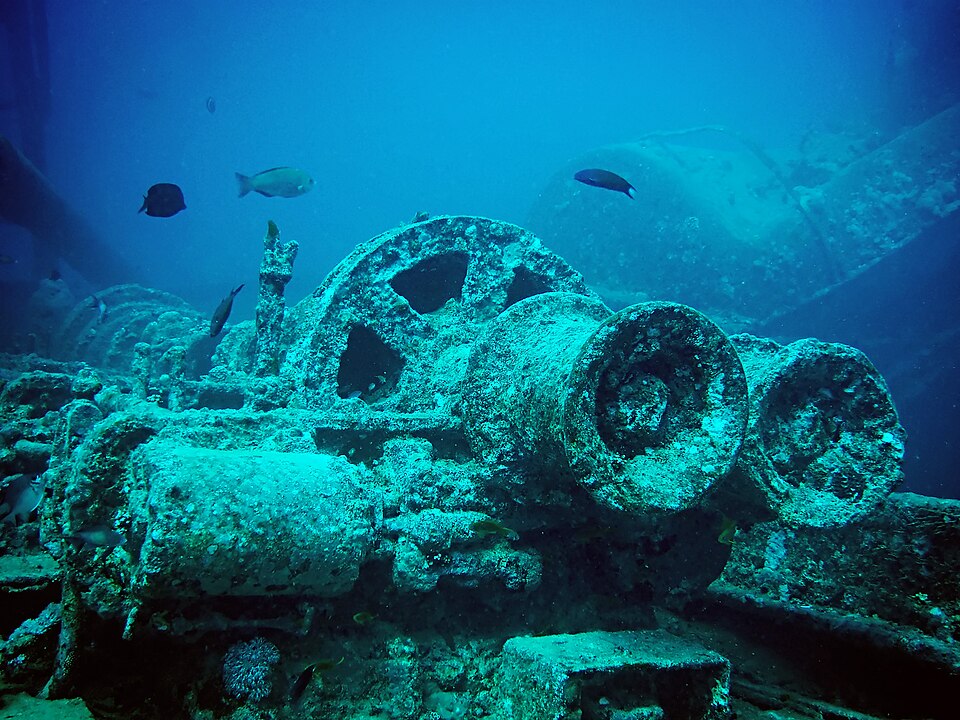
That cargo is the reason people still make pilgrimages to Sha'ab Ali in Egypt's Red Sea today. Still sitting inside the wreck, exactly as they were when the ship went down, are BSA motorcycles, Bedford trucks, Bren gun carriers, Wellington boots, rifles, and enough military hardware to supply a modest insurrection. The motorcycles have been there for over eighty years. They are covered in coral. They are magnificent. Jacques Cousteau discovered the wreck in 1955 and wisely kept its location largely secret for some years, which is the sort of restraint that the internet has made completely impossible today.
The dive sits at around 18-30 metres - accessible to recreational divers - which makes it all the more remarkable that the cargo has remained more or less intact. Divers come from Hurghada and Dahab in their hundreds, which would have horrified Cousteau but delights the local dive industry. Visibility in the Red Sea is genuinely spectacular - often 20-30 metres - and the marine life that has colonized the wreck is as impressive as the wreck itself. It is, by most accounts, the greatest wreck dive in the world. It is also, bafflingly, not the most famous wreck on this list.
HMHS Britannic - The One Everyone Forgets About
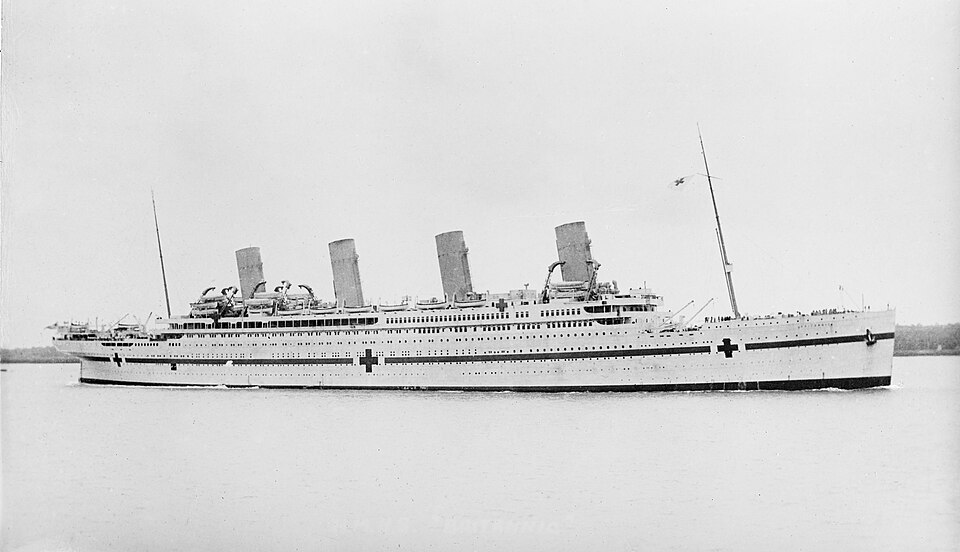
The Titanic gets all the press, its older sister Olympic gets the occasional documentary, and the Britannic - the third ship in the class, the one that was converted into a hospital ship during WWI and then sunk by a mine in the Aegean in November 1916 - gets, if we're being honest, very little attention. This is unfair. The Britannic is, in several respects, the most interesting of the three. It sank faster than the Titanic (under an hour), killed fewer people (30, compared to over 1,500), and is significantly more accessible to modern explorers, which Titanic definitively is not (more on this later).
It also sank in the relatively shallow waters off the Greek island of Kea at about 120 metres, which puts it in reach of technical divers - those trained to go beyond recreational depth limits and equipped with the appropriate gas mixes and equipment and, crucially, the willingness to descend into blue nothing with only a thin layer of neoprene between them and the crushing weight of the Aegean. Jacques Cousteau (him again) found the Britannic in 1975. It remains the largest accessible passenger ship wreck in the world.
The wreck is in remarkably good condition. The Britannic capsized as it sank, which means it rests upside-down on the seabed, which is a detail that tends to disorient divers expecting something that looks like a ship rather than the underside of one. The massive propellers are still in place. The cargo holds still contain the medical supplies that never made it to the front. If you would like to dive the Britannic yourself, you will need technical diving certifications, a liveaboard trip out of Athens or the Greek islands, and a willingness to explain to concerned relatives that yes, you're diving a WWI hospital ship in the Aegean, but it's completely fine.
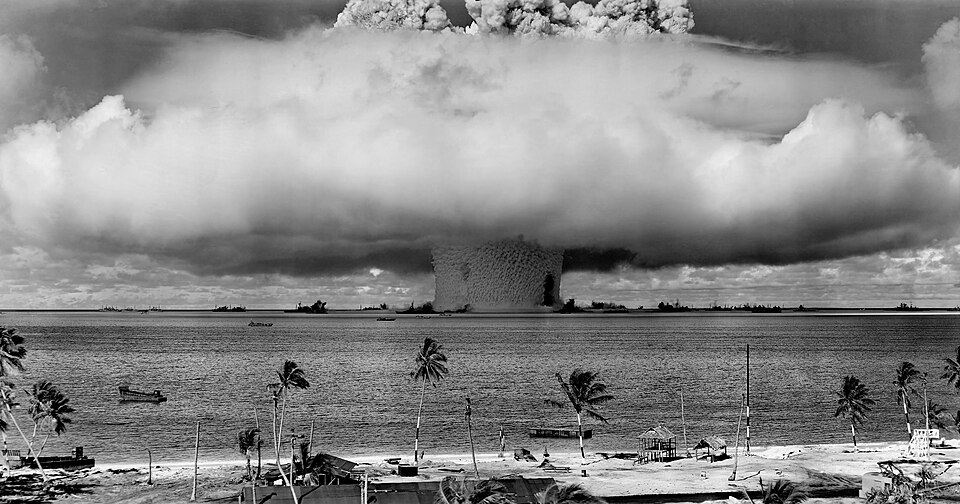
Bikini Atoll - The One That Glows
In 1946, the United States military gathered together a fleet of 95 ships, including German and Japanese war prizes, and sailed them to a remote lagoon in the Marshall Islands called Bikini Atoll. They then detonated two atomic bombs over the fleet in what they called Operation Crossroads, which is a sentence that sounds made up but is entirely true. The purpose was to study the effect of nuclear weapons on naval vessels (spoiler: the effect was considerable). Twenty-three ships sank. The rest were contaminated with radioactive material and subsequently scuttled across the Pacific over the following years.
The ships that remain in Bikini Atoll's lagoon - including the aircraft carrier USS Saratoga, the battleship Nagato (the flagship from which Japan's Admiral Yamamoto ordered the attack on Pearl Harbor), and the submarine USS Apogon - are now a UNESCO World Heritage Site and one of the most extraordinary diving destinations on the planet. You can swim through an aircraft carrier's flight deck. You can peer into the engine rooms of a ship that survived Pearl Harbor only to be sacrificed to an atomic bomb. You can see Japanese fighter planes still chained to the Saratoga's deck, exactly as they were positioned in 1946.
The good news is that the radioactivity levels are now considered low enough for divers to visit safely (the fish, however, remain technically off the menu, being mildly radioactive - which is the kind of dietary restriction you don't see on many menus). The bad news is that Bikini Atoll is genuinely remote, requires liveaboard trips departing from Majuro in the Marshall Islands, and visits are severely limited, which makes it expensive and logistically challenging. The worse news is that the island's former residents, relocated in 1946 and promised they could return after the testing, have never been able to return permanently. The atoll remains uninhabitable. But you can dive it, which is something.
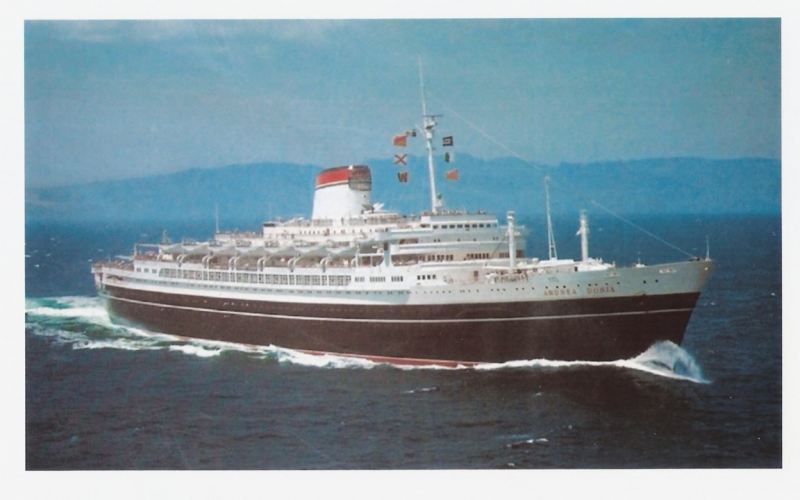
SS Andrea Doria - The Mount Everest of Wreck Diving
The Andrea Doria is called the Mount Everest of wreck diving, and the comparison holds up rather better than most analogies, primarily because people have died attempting both. The Italian ocean liner sank in 1956 off the coast of Nantucket after a collision with the Swedish ship MS Stockholm in heavy fog - a collision so improbable that maritime historians still argue about exactly how two ships managed to find each other in the middle of the Atlantic - and has been attracting increasingly ambitious divers ever since. At least sixteen divers have died attempting to explore it (the exact figure is disputed, but 'more than one' is not).
The reasons for the body count are not hard to enumerate. The wreck sits at 50-76 metres, putting it firmly in technical diving territory. The current around it is strong and unpredictable. The visibility is frequently poor. The wreck is actively deteriorating, with sections collapsing in ways that are essentially impossible to predict and thoroughly possible to get trapped under. The interior is an increasingly unstable labyrinth of silt-covered corridors. The distance from shore means that anything that goes wrong does so a long way from help. And yet divers come every year from around the world, because the Andrea Doria is the Andrea Doria, and because some people are constitutionally unable to resist a challenge that has already killed people who were attempting the same challenge.
The wreck does offer rewards. Divers have recovered china bearing the Italian Line logo, silverware, portholes, and assorted artifacts that make their way into wreck diving museums and private collections. There is an active debate in the diving community about whether recovering artifacts from shipwrecks constitutes salvage or looting - a debate that the Andrea Doria's ongoing decomposition makes increasingly moot, since there will eventually be nothing left to argue about. Trips depart from Montauk and other ports in New York and New England during the summer months, when weather windows make the journey marginally less terrifying. We've covered the general subject of places that try to kill you in our guide to the world's most dangerous destinations. The Andrea Doria would fit right in.
RMS Titanic - The One You've Heard Of
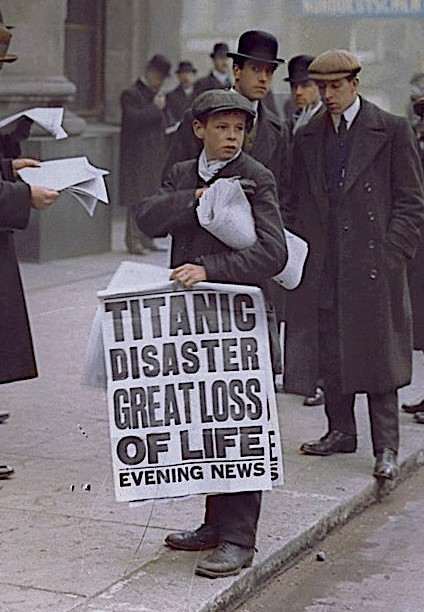
Yes, yes, the Titanic. The unsinkable ship that sank. The largest moving object ever built at the time of its construction, the deadliest peacetime maritime disaster in history, the subject of a James Cameron film that won eleven Academy Awards and launched the career of a song that has never once left your head since you first heard it. You know the Titanic. Everyone knows the Titanic. It sank in April 1912, taking 1,517 people with it, and has been sitting at the bottom of the North Atlantic at a depth of 3,800 metres ever since, which is a depth that clarifies immediately why this entry is somewhat different from the others on this list.
You cannot dive the Titanic with scuba gear. 3,800 metres is a pressure of roughly 380 atmospheres, which is the kind of figure that makes human biology temporarily amusing to consider and then immediately stops being amusing. What you could do - until very recently - is pay approximately $250,000 per person for a seat on a submersible operated by a company called OceanGate, which would take you down in a vessel that its CEO once described as 'breaking the rules of the classing authority' as though this were a selling point. In June 2023, OceanGate's Titan submersible imploded during its descent to the Titanic with five people aboard, killing all of them instantaneously. The submersible, which had been constructed in part with a carbon fiber hull and had been raising safety concerns in the technical diving community for years, was destroyed at depth. OceanGate has since ceased operations.
The Titanic is now effectively inaccessible to non-scientific visitors. The wreck itself is also deteriorating rapidly - iron-eating bacteria are consuming the hull at a rate that means significant portions will have collapsed within decades - and is protected under a 2012 international agreement that prohibits interference with the site. It can be visited by remotely operated vehicles deployed by research expeditions, and there are occasional documentary productions that obtain access. If you'd like to actually dive a Titanic-class wreck, the Britannic, as mentioned above, remains available to qualified technical divers who prefer their historic maritime disasters at survivable depths. The Titanic remains what it has always been: the world's most famous ship, resting somewhere that neither you nor I will ever actually go. For more on the world's most extreme travel experiences, some of which are slightly less fatal in their recent history, we've compiled the relevant data elsewhere.
Disclaimer: Wreck diving is an inherently technical activity and several of the dives described in this article require advanced or technical diving certifications. This article is not a substitute for proper dive training. If you are considering diving the Andrea Doria in particular, we suggest also considering not diving the Andrea Doria.