
Foods We Can Never Eat Again - A Guide to Extinct Ingredients
Foods That Are Gone Forever
We tend to think of extinction as something that happens to large, charismatic animals - tigers, rhinos, polar bears. But extinction reaches deep into our food systems too. Plants, fish, animals, and varieties of domesticated crops have disappeared because of overharvesting, habitat loss, changing agriculture, and the basic economics of supply and demand. Some of these extinctions represent genuine and irreplaceable losses - tastes and flavors that no one alive has experienced and no one ever will again.
Silphium - The Herb That Built an Empire and Then Vanished


Silphium was a plant that grew wild only in a narrow coastal strip of what is now Libya - the ancient Greek colony of Cyrene. It was the most prized ingredient in the ancient world. Roman writers described it as essential: Pliny the Elder called it worth its weight in silver. It was used as a flavoring in cooking, as a medicine, as a contraceptive (ancient texts suggest it was effective), and as a general ingredient in the upper-class Roman kitchen. Apicius, the only surviving Roman cookbook, includes it in dozens of recipes.
The problem was that silphium could not be cultivated. It grew wild and only wild, and the demand from Rome was essentially unlimited. Cyrene's economy ran largely on exporting it - the plant appears on their coins. By the first century CE, Pliny wrote that only a single stalk had been found in living memory, and it had been sent to Emperor Nero as a curiosity. It is now believed to be completely extinct, quite possibly the first plant to be eaten entirely into nonexistence by human demand.
What did it taste like? The best guess, based on ancient descriptions and botanical analysis suggesting it was related to asafoetida and giant fennel, is something intensely savory, garlicky, and sulfurous - like a more complex, milder version of asafoetida. We will never know for certain.
The Passenger Pigeon
_(14562557107).jpg)
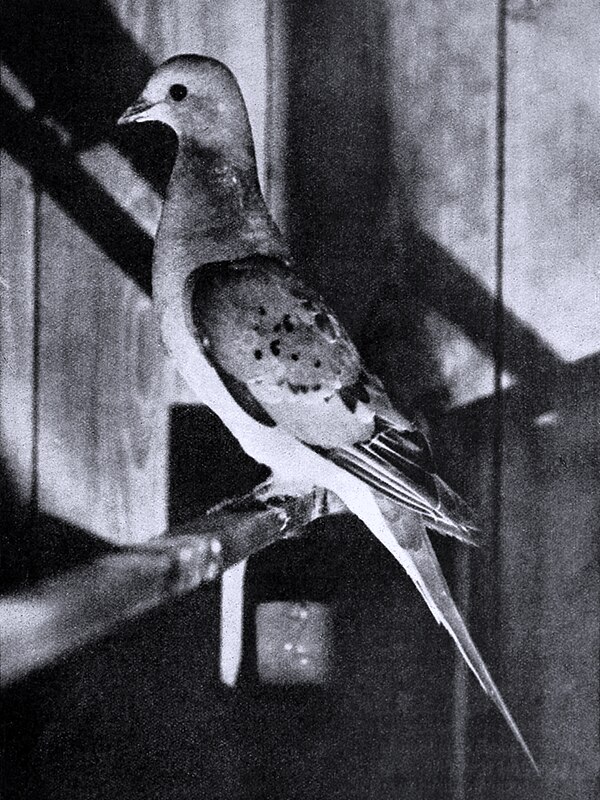
The passenger pigeon was once arguably the most abundant bird in North America - possibly in the world. Flocks containing billions of birds would darken the sky for days as they passed over. John James Audubon described a migration in 1813 as blocking out the sun for three days. Estimates place the total population at between 3 and 5 billion birds at the species' peak - around 25-40% of all birds in North America.
It was also a major food source. Passenger pigeons were cheap, abundant protein for indigenous peoples, European settlers, and eventually the urban working class as commercial hunting developed. They were shot, netted, and smoked in quantities that seem impossible in retrospect. The combination of commercial hunting and deforestation (which destroyed the beech mast the birds depended on) reduced the population with extraordinary speed. The last known passenger pigeon, a female named Martha, died in the Cincinnati Zoo on September 1st, 1914.
Contemporary accounts describe them as flavorful, resembling squab or dark-fleshed chicken but richer. They were eaten roasted, stewed, and in pot pies. The extinction happened so fast that recipe books were still including passenger pigeon recipes for years afterward.
The Dodo
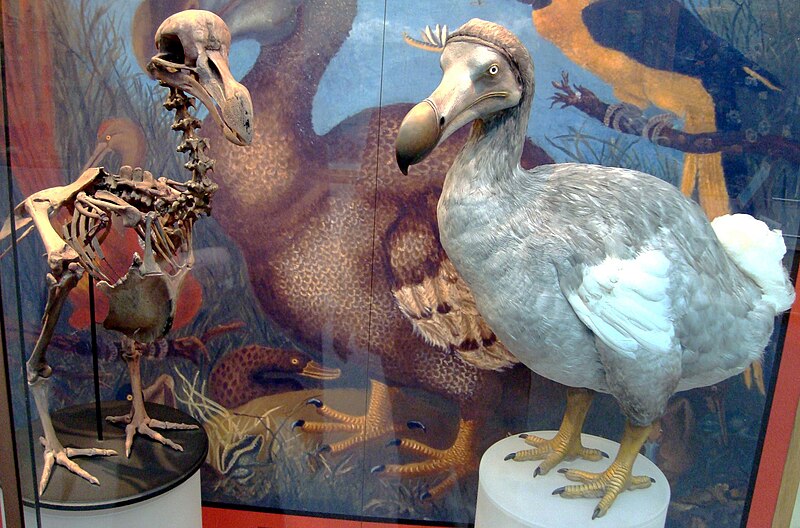

The dodo (Raphus cucullatus) was a flightless bird endemic to the island of Mauritius, a large species related to pigeons, that had evolved in the absence of any ground predators. When Dutch sailors arrived in the 1590s, the dodo had no fear of humans whatsoever - they were easily walked up to and killed. The Dutch called them dodaersen ("sluggard bird"), from which we get "dodo."
Contrary to popular belief, the dodo was not eaten into extinction simply because it tasted good. Dutch accounts describe the meat as unpleasant and tough. The primary causes of extinction were likely the introduction of invasive species - rats, pigs, and monkeys eating eggs and chicks - combined with continued hunting. The last confirmed sighting was in 1662. The entire extinction occurred within about 70 years of first European contact.
The Great Auk
_specimen,_Kelvingrove,_Glasgow_-_geograph.org.uk_-_1108249.jpg)
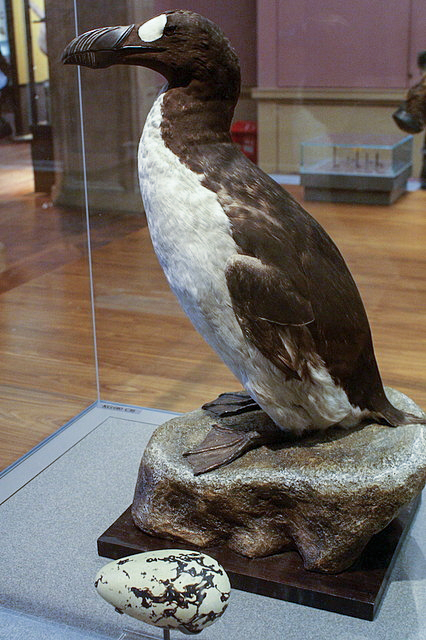
The great auk was a large flightless seabird - the Northern Hemisphere's equivalent of a penguin, though not closely related - that bred on rocky North Atlantic islands and fed on fish. Standing about 75-85cm tall, it was an exceptional swimmer but entirely helpless on land. Fishermen who visited its breeding colonies found it easy to herd aboard ships, where it was killed for meat, oil, and feathers. The birds were also used as fishing bait.
The last confirmed living individuals were a pair killed on Eldey Island, Iceland on June 3rd, 1844, by collectors who strangled them and smashed their egg. The final extinction came not from casual food gathering but from the paradox of rarity: as the species became rarer, museum collectors and private collectors paid increasingly high prices for skins and eggs, creating a perverse incentive to kill the last remaining specimens before someone else did.
Extinct Apple, Grape, and Wheat Varieties
Beyond charismatic megafauna, thousands of varieties of cultivated crops have vanished. The United States alone had over 7,000 named apple varieties in the 19th century; today, roughly 300 are in commercial production and a handful dominate retail. The flavors, textures, and seasonal characteristics of the extinct varieties - recorded in 19th-century horticultural catalogs with descriptions as evocative as wine tasting notes - are gone. The same story applies to grapes, wheat, potato varieties, and hundreds of other cultivated plants.
Efforts to preserve remaining diversity through seed banks (the Svalbard Global Seed Vault, USDA seed collections, and countless community seed libraries) are specifically designed to prevent further culinary extinction - recognizing that genetic diversity is irreplaceable once lost.
Are there any local foods or varieties from your region you're worried about losing? Tell us in the comments.
For the ingredients that are still very much with us but cost more than gold, see our guide to the world's most expensive foods - white truffles, saffron, and Kopi Luwak.