
The World's Most Bizarre Currencies (And the Stranger Stories Behind Them)
Money is meant to be the dullest part of travel - the thing you convert at the airport, resent the fee on, and cram into your wallet until a waiter comes to take it away from you.
And then you actually look at it. You unfold a banknote with the number one hundred trillion printed on it. You handle a coin from a country that abandoned its own currency two decades ago. You learn that on one Pacific island, the local money is a doughnut of limestone the size of a car, and that one particularly valuable piece has been sitting at the bottom of the ocean for a century while everyone politely agrees it still counts. The world's currencies are, on closer inspection, a catalogue of national eccentricity rendered in metal, paper, salt and stone.
Here are the strangest of them, along with the frankly ridiculous stories behind how they got that way.
Zimbabwe's One Hundred Trillion Dollar Note
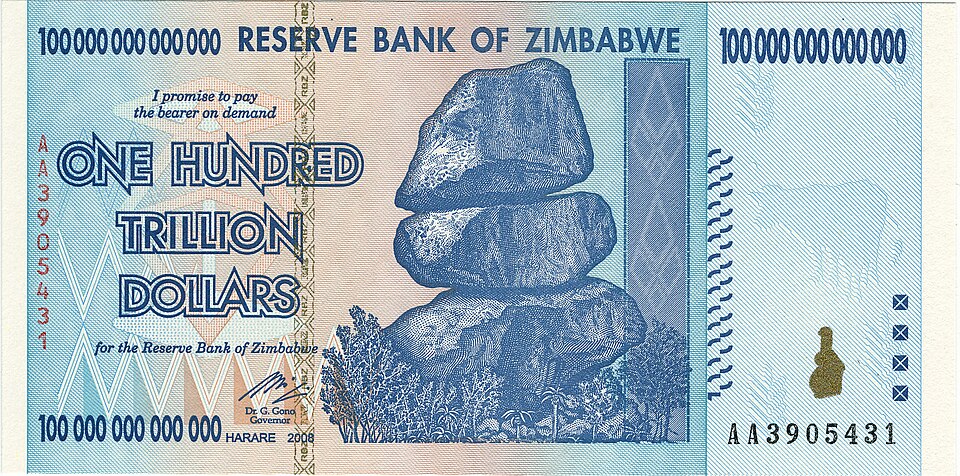
In 2008 and 2009, Zimbabwe experienced hyperinflation so severe that it became genuinely difficult to describe with a straight face. At its peak, prices were doubling roughly every 24 hours, which meant the sensible order of operations at a supermarket was to buy first and count later, on the reasonable assumption that the bread would cost more by the time you reached the till.
The Reserve Bank of Zimbabwe responded the way any institution does when the numbers stop cooperating: it printed bigger numbers. The final flourish was the Z$100,000,000,000,000 note - one hundred trillion dollars, a figure so large it stops meaning anything - which, when issued, was worth around 40 US cents. You could not reliably buy a loaf of bread with the single largest denomination of legal tender ever put into circulation by a functioning government.
The delicious postscript is that the note is now worth vastly more dead than alive. Zimbabwe abandoned its dollar in 2009, and the notes became collector's items; a crisp one hundred trillion dollar bill now changes hands for well over one hundred actual US dollars. It is, as far as we know, the only banknote in history to have become substantially more valuable after its country decided it was worthless. If you fancy standing where all this happened, our Victoria Falls guide covers the country's headline attraction, which mercifully charges in currencies that still work.
The Kuwaiti Dinar, the Most Expensive Money on Earth
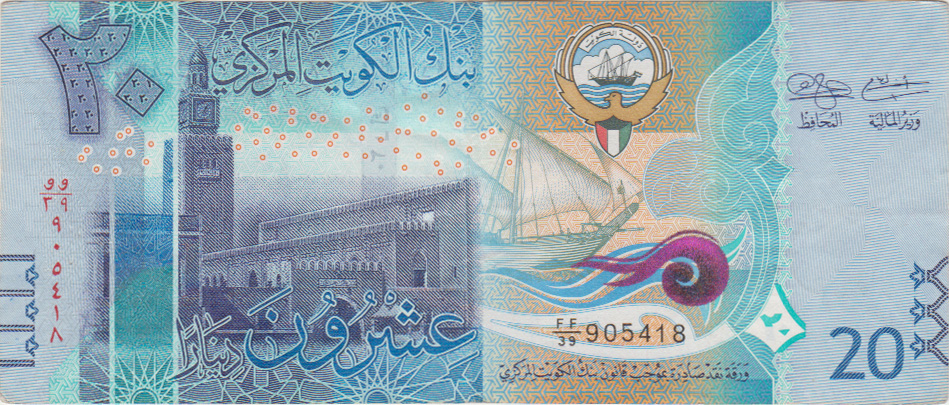
At the opposite end of the spectrum sits the Kuwaiti dinar, which holds the title of the most valuable currency unit in the world. One dinar is worth a little over three US dollars, which doesn't sound dramatic until you realise it makes the humble one-dinar note more valuable than any single unit of any other currency on the planet - more than the pound, the euro, the Swiss franc, all of them.
This is not because Kuwait's economy is three times better than everyone else's in some cosmic sense. It's largely a matter of arithmetic and oil: the dinar is pegged to a basket of currencies, the country is small and staggeringly rich in petroleum, and it has simply never seen any reason to lop zeros off or let its money slide. The result is a currency where the smallest fractional coin, the fils, comes in denominations of five, ten and twenty, because a single fils would be worth so little that even Kuwait can't be bothered to mint it.
For the traveller, the practical upshot is that changing a modest stack of dinars back into dollars at the airport feels weirdly like a windfall, which is precisely the trap. It is not a windfall. It is just very dense money.
The Swiss Franc and the Country That Once Had 860 Kinds of Money
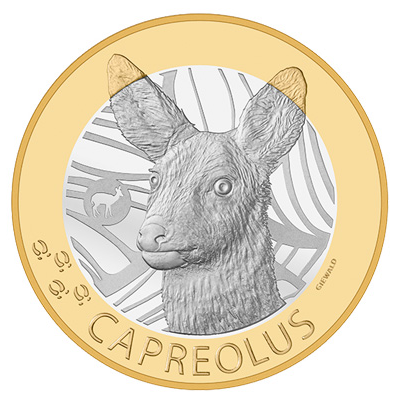
The Swiss franc is famous today for being boring in the best possible way - the financial equivalent of a Volvo, the currency people flee to whenever the rest of the world catches fire. It's so trusted as a safe haven that Switzerland spent years with negative interest rates, which is to say the banks charged people for the privilege of storing money there, and people cheerfully paid up.
What's genuinely strange is where it came from. Before the modern franc was introduced in 1850, Switzerland was a chaotic patchwork of cantons, foreign occupiers and independent-minded towns, each merrily issuing its own coinage. By some counts there were around 860 different coins circulating in the country at once, in a bewildering assortment of values, which made buying anything across a cantonal border an ordeal in mental arithmetic (and, one imagines, a lucrative time to be a money-changer).
The new federal state swept the lot away and replaced it with a single franc, and the Swiss have guarded its stability with the same quiet fanaticism they apply to trains and chocolate ever since. Spend a few days in Zurich or Geneva and you'll notice the prices reflect exactly how much everyone else wants to hold this money. The franc is stable, respected, and will comfortably ruin your budget.
Fiji's Money, Now Featuring the Local Wildlife
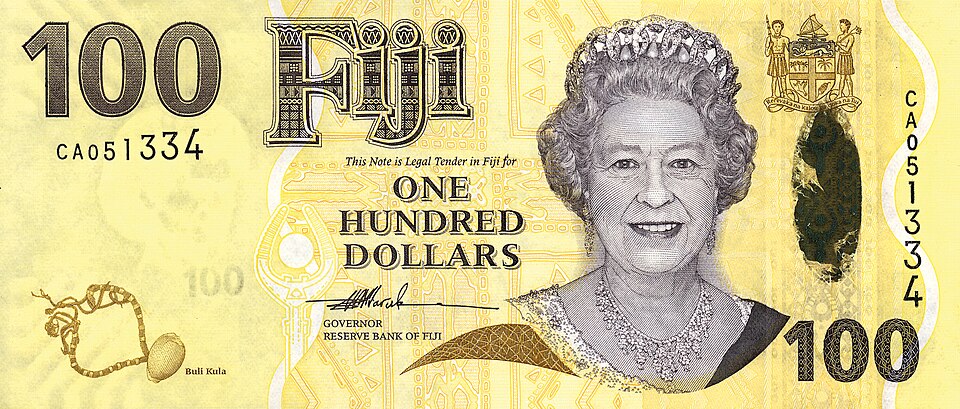
For most of its history, Fijian coins and notes did the standard thing for a former British territory and put a portrait of Queen Elizabeth II on the front. Then, in 2012, Fiji did something quietly delightful: it fired the monarch and replaced her with animals.
The redesigned "flora and fauna" series dropped the royal portrait entirely in favour of Fiji's native species - a banded iguana here, a parrot there, a sea turtle paddling across the money as though it owns the place. It was a rare case of a country looking at its currency, deciding it wanted to celebrate its own ecosystem rather than a head of state on the other side of the world, and simply doing it. The turtle in particular has become a small point of national affection, which is more than most currencies can say for their cover stars.
It also makes Fijian money genuinely nice to look at, a sentence you can utter about depressingly few currencies. If the wildlife on the banknotes puts you in the mood for the real thing, our Suva guide is the place to start plotting.
Bhutan's Ngultrum, the Currency You'll Struggle to Spend
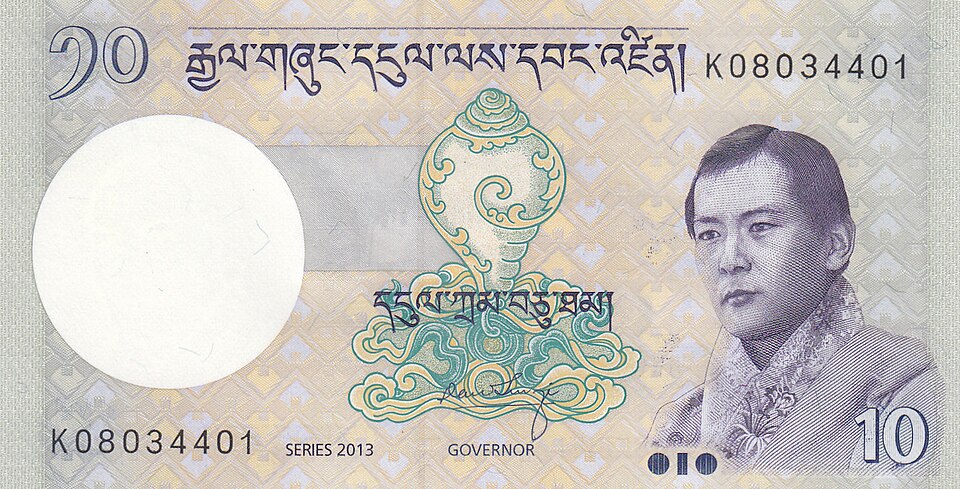
Bhutan issues a perfectly real currency called the ngultrum, and you will have a surprisingly hard time getting your hands on it or spending it once you have. It's pegged one-to-one to the Indian rupee, and here's the twist: the Indian rupee is also accepted more or less everywhere in Bhutan, so a great deal of daily commerce happily runs on someone else's money while the national currency looks on politely.
The ngultrum barely exists outside Bhutan's borders. It's not freely traded on international markets, most foreign banks won't touch it, and you generally can't buy any until you've actually arrived. This suits a country that spent much of the twentieth century in deliberate, careful isolation, measures its progress in Gross National Happiness rather than GDP, and only permitted television and the internet in 1999. A currency you can't acquire in advance and can't easily take home is entirely on brand.
The notes themselves are lovely - dragons, dzongs and mountains, because if you're going to make money nobody outside your kingdom can use, it may as well be beautiful. Our Bhutan guide has the details on getting in, which involves a daily fee and rather more planning than the average trip.
The Iraqi Dinar and the Investment That Never Comes
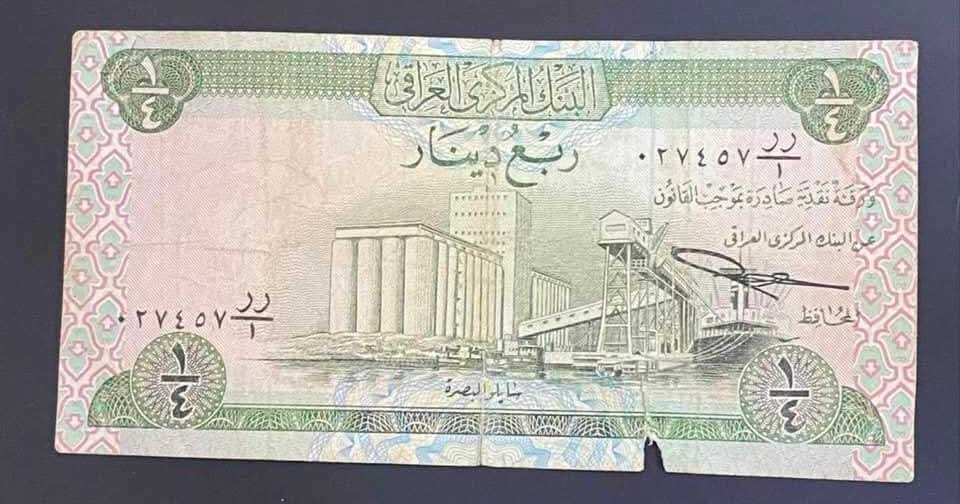
The Iraqi dinar occupies a strange corner of the currency world not because of anything intrinsically odd about the note, but because of a persistent scam built entirely around it. For years, a small industry in the United States and elsewhere has sold physical Iraqi dinars to ordinary people as an "investment," on the promise that the currency is about to dramatically "revalue" and turn a few hundred dollars of banknotes into a life-changing fortune.
It is not about to do this. The revaluation has been perpetually imminent for well over a decade, forever just around the corner, always confirmed by anonymous insiders and "dinar gurus" on forums who somehow never manage to get rich themselves. Regulators have repeatedly warned that it's a classic speculative trap: buyers pay inflated markups for notes that are worth roughly what they're worth, waiting for a windfall that has no particular reason to arrive.
The genuinely interesting part is that a currency became a scam vehicle at all - proof that if you attach enough hope and a good story to a piece of paper, people will buy it well above face value. Which, when you think about it, is the entire premise of money in the first place, just done badly. Iraqi Kurdistan, incidentally, is increasingly visitable; our Erbil guide covers the region for travellers rather than speculators.
The Countries That Gave Up and Used Someone Else's Money
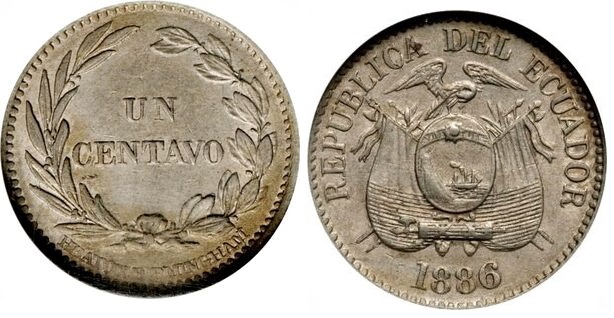
Some nations have looked at the exhausting business of running a currency - the printing, the inflation, the central-bank meetings - and simply opted out. Ecuador is the headline example: after its own currency, the sucre, collapsed spectacularly in 2000, the country adopted the US dollar outright. Ecuadorians now spend American greenbacks, though they mint their own centavo coins featuring national heroes, which jangle around in the same pocket as US quarters in a small act of monetary independence.
It is not alone. El Salvador dollarized too (before later making the rather bolder move of adopting Bitcoin as legal tender), Panama has effectively used the dollar for over a century, and Zimbabwe, having incinerated its own currency, spent a decade running on a chaotic mix of US dollars, South African rand and anything else that held its value. Handing your monetary policy to a foreign central bank that has never heard of you is a drastic step, but it does have the advantage of making hyperinflation somebody else's problem.
The traveller's reward for all this is that in dollarized Ecuador you can hike the Andes and haggle in a currency you already understand. Our Quito guide is a fine place to begin, no exchange-rate maths required.
Salt, and the Giant Stone Discs of Yap
Before there were banknotes to overprint, people got creative about what counted as money, and a few of those systems are gloriously still remembered. In parts of historic Ethiopia, bars of salt known as amole were used as currency for centuries - a sensible choice in a landlocked highland where salt was scarce, portable and universally wanted, and a reminder that the word "salary" itself descends from salt. You could, quite literally, be worth your weight in it. Modern Addis Ababa runs on the Ethiopian birr now, but the salt caravans of the Danakil are still part of the country's story.
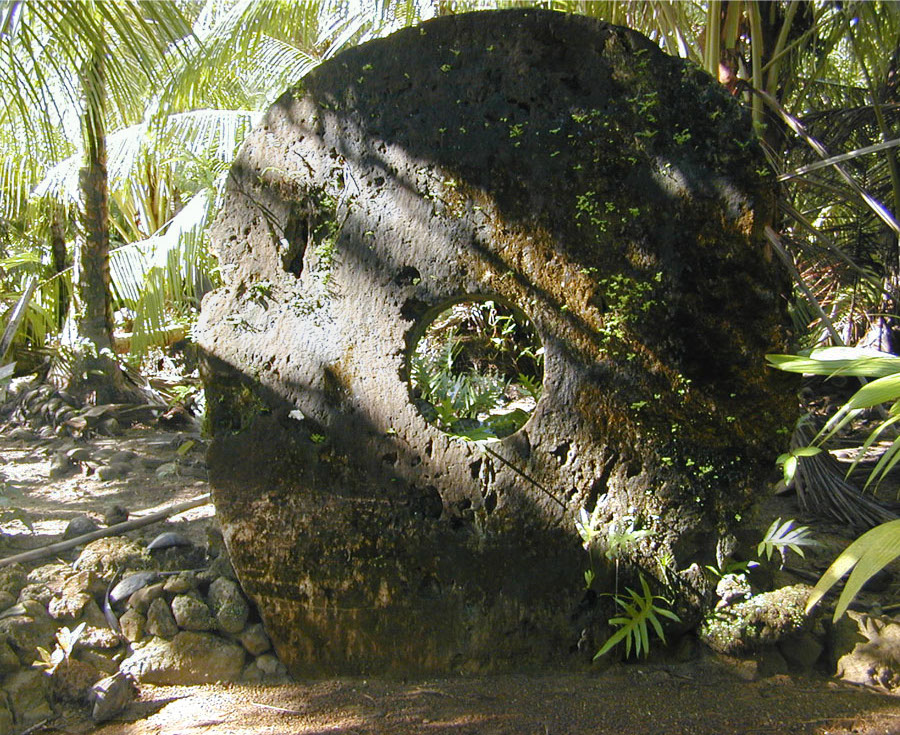
The undisputed champion of strange money, though, lives on the island of Yap in Micronesia, where the traditional currency is the rai: enormous carved discs of limestone, some over three metres across and weighing several tons, each with a hole in the middle like the world's least practical doughnut. Because moving a multi-ton stone is absurd, ownership generally transfers without the stone going anywhere - the community simply agrees, by oral record, who now owns which rock. Most famously, one prized stone was lost overboard while being ferried across the sea, and the islanders reasonably concluded that its sinking made it no less real, so it remained valid wealth, owned and traded, from the bottom of the ocean.
If that sounds preposterous, remember that most of the money in your bank exists only as numbers agreed upon in a database nobody has ever physically seen - which is, functionally, a stone at the bottom of the sea that everyone agrees is yours. The people of Yap simply worked this out several hundred years before the rest of us. Our Yap guide covers the island, where the stone money still stands along the paths, quietly making a fool of your debit card.
Small, Strange and Yours to Change
The next time you sneer at a handful of foreign coins accumulating uselessly at the bottom of your bag, spare a thought for what they represent: a country's entire, peculiar decision about how to agree that a thing has value. Some chose salt. Some chose limestone the size of a shed. One chose to print a hundred trillion of something and then throw the whole idea away. For a broader look at where your money stretches furthest, our guide to the cheapest countries to travel is the practical companion to all this - and if strange national quirks are your thing, our roundup of the world's craziest laws proves that money is far from the only place countries lose their minds.
So: what's the strangest banknote or coin you've ever brought home, and is it still languishing in a drawer, quietly worth more than you think?