15 Animals That Kill More People Than Sharks (And Where They Live)
Every summer, the same cycle begins: a shark bites someone, the footage goes viral, and roughly half the internet decides it will never enter the ocean again. Meanwhile, the animal responsible for over 700,000 human deaths per year is outside your window right now, probably biting you, and you are barely inconvenienced.
Our fear of sharks is one of the great collective delusions of modern civilization. We have built an entire genre of cinema around them, generated a billion-dollar shark-cage diving industry, and developed a persistent anxiety about open water that has absolutely no basis in statistical reality. Sharks are, by every meaningful metric, one of the least threatening large animals on the planet. The truly dangerous ones are unassuming, unglamorous, and would not make a compelling summer blockbuster.
What follows is a corrective - a tour of the animals actually responsible for thinning the human herd, where they live, how they do it, and what you can do about it (spoiler: mostly nothing, because several of them weigh as much as a small car).
Mosquitoes: 700,000+ Deaths Per Year
The mosquito. That plaintive, whining, barely-there thing that ruins camping trips and makes summer evenings indoors more appealing than outdoors. This is the apex predator of the human species - not the white shark, not the saltwater crocodile, not anything with teeth. The mosquito, which weighs approximately two milligrams, is responsible for more human deaths than every other animal on this list combined, multiplied by several hundred.
The mechanism is not the bite itself (though it is, objectively, annoying) but what comes with it: malaria, dengue fever, Zika, yellow fever, West Nile virus, and a rotating cast of other diseases that have killed more people than all of history's wars. Malaria alone kills over 600,000 people annually, predominantly children under five in sub-Saharan Africa. The mosquito is the reason that Manaus, Brazil - one of the most extraordinary places on Earth - requires you to think carefully about prophylactics before visiting, and not the fun kind.
Sharks, for context, kill around 5-10 people per year. The mosquito's annual toll is roughly equivalent to the entire population of a mid-sized European city. Every year. Consistently. While you swat at it and miss.
Freshwater Snails: 200,000 Deaths Per Year
If you needed evidence that the natural world has a sense of humor - specifically a dark, deeply cruel one - here it is. The second most lethal animal on the planet, after the mosquito, is a snail. Not a poison snail. Not a snail with venom or teeth or any of the characteristics that would make it worthy of the death count it has accumulated. Just a regular snail, the kind children pick up after rain.
The snail itself is harmless. The problem is what it carries: schistosomiasis, a parasitic disease caused by flatworms that live part of their life cycle inside freshwater snails before moving into humans who wade or swim in infested water. Once inside a person, the parasites lodge in the blood vessels and cause organ damage over years. The World Health Organization estimates around 200,000 deaths annually and 200 million people currently infected - making it the second most devastating parasitic disease after malaria, and yet somehow less famous than a fish with a bad reputation.
It is primarily a disease of sub-Saharan Africa, the Middle East, and parts of South America and Asia. The Ngorongoro region of Tanzania and similarly stunning parts of East Africa are areas where freshwater contact requires care. The lesson - there is always a lesson, and it is rarely a comfortable one - is that the things that can kill you most efficiently tend to look like nothing at all.
Dogs: 59,000 Deaths Per Year
Humanity's best friend, loyal companion, subject of approximately 40% of all social media content, and responsible for 59,000 deaths per year. Not from biting (though dog bites send millions to hospital annually) but from rabies, which dogs transmit to humans more than any other animal and which, once symptoms appear, is essentially always fatal. There are rabies vaccines. They exist. They work. The deaths are, in a particularly grim sense, entirely preventable - which makes the 59,000 figure rather more confronting than it would be if rabies were simply incurable.
Dogs are the primary reservoir and transmitter of rabies in Asia and Africa, where the disease kills 95% of its global victims. Kerala, India has historically had significant stray dog populations and associated rabies transmission, though concerted vaccination campaigns have made progress. Southeast Asia is also a region where post-exposure treatment needs to happen fast - within hours, not days. The good news is that pre-exposure vaccination exists and is available; the less good news is that most people visiting countries where this is a real risk don't bother, because nobody is afraid of dogs the way they are afraid of sharks.
Hippopotamuses: 500 Deaths Per Year
Now we begin to enter territory where the animal in question is, in fairness, somewhat menacing - though nowhere near as menacing as the mosquito or the snail, who have both lapped it statistically. The hippopotamus is the most dangerous large land mammal in Africa, responsible for an estimated 500 deaths annually, and it achieves this through a combination of factors: it weighs up to 4,500 kilograms, runs at 30 km/h, has teeth designed to process enormous quantities of vegetation that also function adequately as weapons, and is famously, aggressively, legendarily territorial.
Hippos spend their days in water and nights grazing on land, and the danger zone is the path between the two. Disturbing a hippo on land, or inadvertently placing a boat between a hippo and water, or simply being in the vicinity of a hippo with a calf, are all activities that can end your holiday in a permanent and irreversible way. The hippo's yawn - which is not a yawn but a threat display involving a 180-degree jaw opening - is the animal's way of saying something that requires no translation.
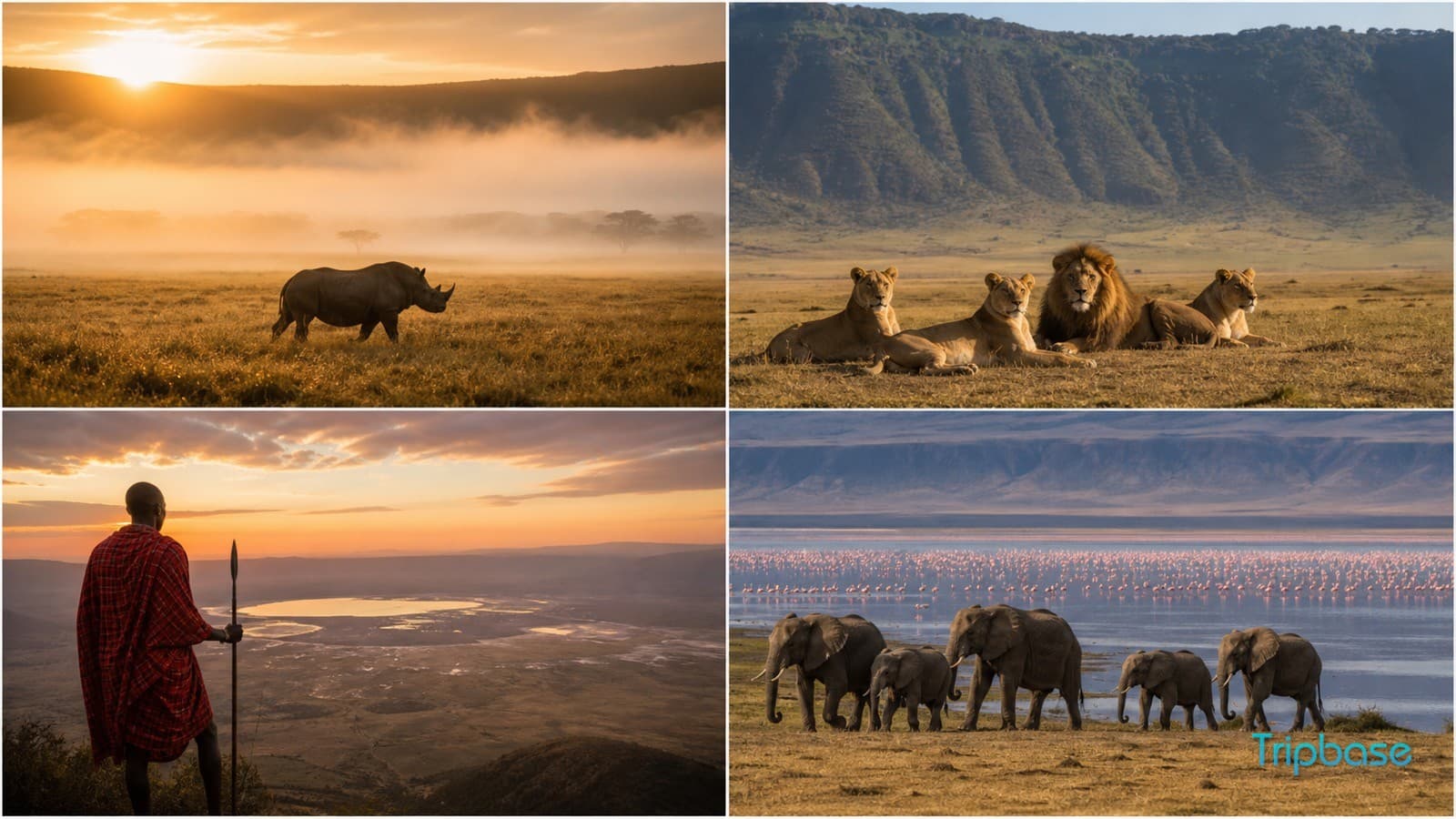
The Serengeti, the Masai Mara, and the Ngorongoro Crater are all home to hippo populations. Safari guides know this. The hippo knows this. You should probably know this too.
Tsetse Flies: 10,000 Deaths Per Year
Another insect. Because apparently one was not enough. The tsetse fly is found exclusively in sub-Saharan Africa and transmits African sleeping sickness (trypanosomiasis), a disease that begins with fever and joint pain, then progresses to neurological dysfunction as the parasite crosses the blood-brain barrier, and eventually - if untreated - to coma and death. The "sleeping" in the name refers to disrupted sleep-wake cycles caused by the parasite rewiring the brain's rhythms, which sounds almost peaceful until you consider what follows.
Treatment exists and is effective if caught early. The problem is that early symptoms are generic enough to be dismissed as ordinary illness, by which point the parasite has had time to settle in. An estimated 10,000 people die annually, with many more cases going unreported. The tsetse fly is about the size of a housefly, which it resembles, and it bites during the day, which rules out the basic mosquito net strategy. Repellents and covering exposed skin are the main defenses. This, as defenses go, is not entirely reassuring.
Assassin Bugs: 10,000 Deaths Per Year
The name, for once, is doing honest work. Assassin bugs - also called kissing bugs, in a stroke of naming whimsy that must have seemed funny to someone - transmit Chagas disease, primarily across Latin America. They bite humans near the face (hence the name; less funny in context), defecate near the wound, and the parasite in the feces enters through the broken skin. The disease then has an acute phase with manageable symptoms, followed by decades of quiet damage to the heart and digestive organs before eventually killing the patient, often long after they've forgotten they were ever bitten.
Roughly 6-8 million people are currently infected with Chagas disease, with 10,000 deaths annually. Parts of Brazil's Amazon region and across Central America are endemic areas. Treatment works well in the acute phase and progressively less well as the disease advances, which is a design flaw in the parasite's overall scheme but remains very much the parasite's problem to have and yours to suffer.
Freshwater Crocodiles and Nile Crocodiles: 1,000 Deaths Per Year
We arrive, finally, at something with teeth and a reasonable claim to menace. The Nile crocodile kills an estimated 1,000 people annually - a figure that is probably understated because crocodile attacks in rural Africa are often not officially reported. Nile crocodiles can reach 6 meters in length, weigh over 700 kg, and have been operating on essentially the same successful design since the Cretaceous, which suggests evolution's considered verdict that they didn't need improving.
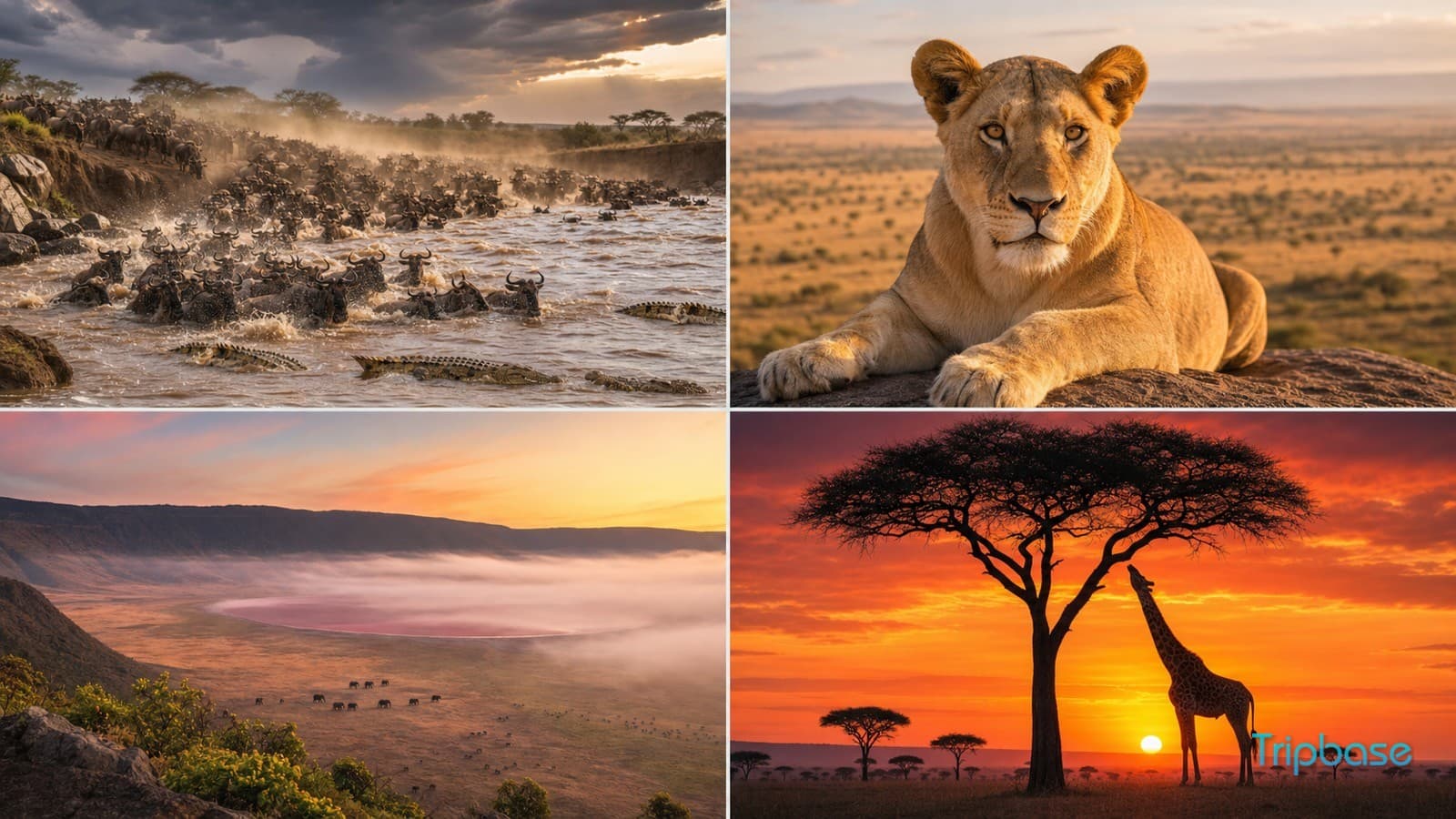
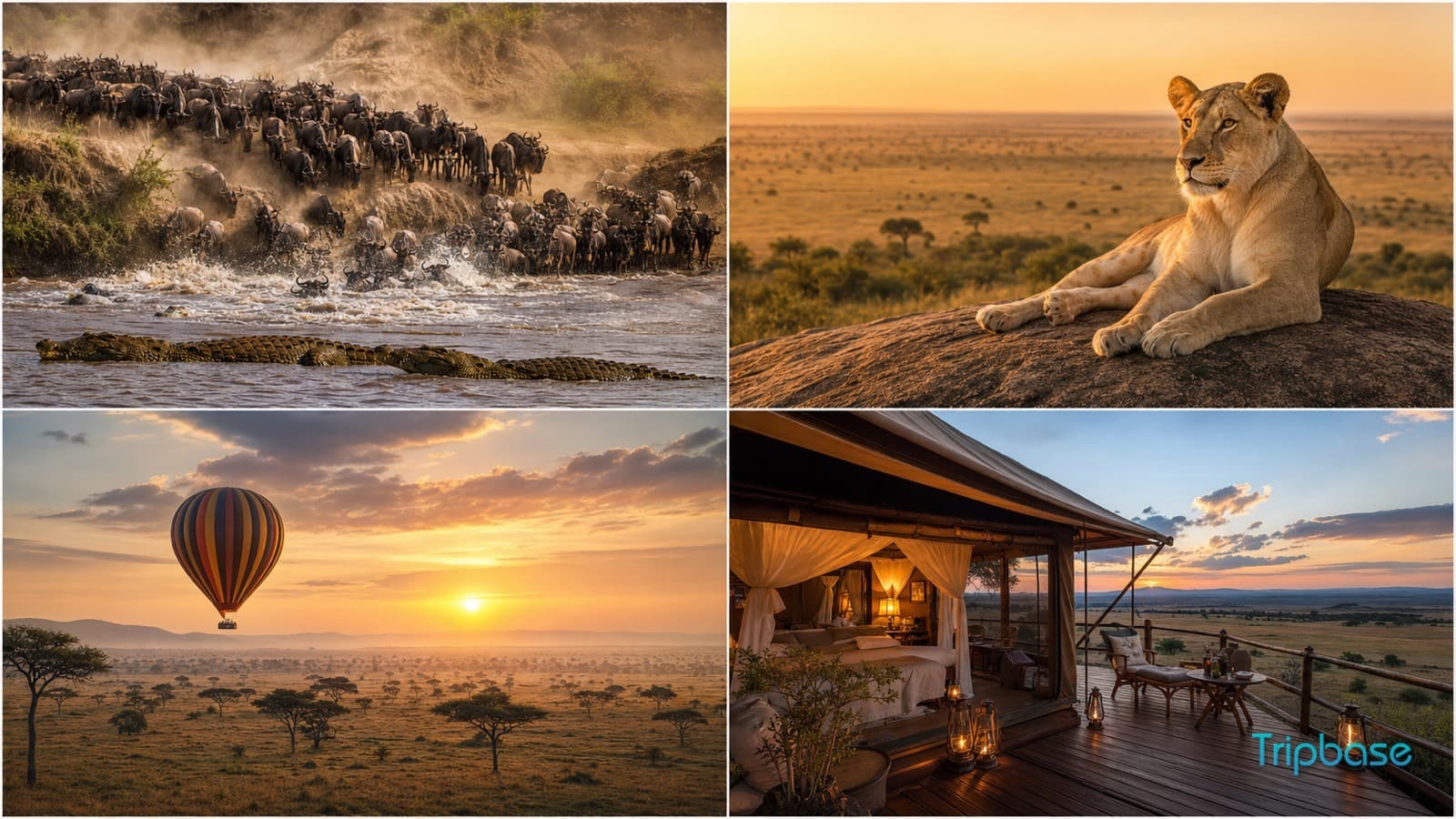
Their hunting method is patience: submerge almost completely, wait for something to approach the waterline to drink, then close the distance in a fraction of a second. The death roll - in which the crocodile rotates rapidly to disorient and drown prey - is one of the more effective techniques in the natural world, and not one that allows much opportunity for reflection on what went wrong. The Serengeti river crossings where wildebeest and zebra negotiate crocodile-filled rivers are one of the great wildlife spectacles; they are also, for the animals involved, an extremely honest assessment of the odds.
The practical advice for travelers is simple: do not wade into, swim in, or approach African rivers and lakes without first confirming they are crocodile-free, which they frequently are not. This is advice that sounds obvious and is apparently insufficient, given the annual death toll.
Elephants: 500 Deaths Per Year
Elephants are intelligent, emotionally complex animals that demonstrate grief, use tools, and form lasting social bonds. They also kill approximately 500 people per year, primarily in Africa and Asia, through a combination of trampling and goring that reflects less on their emotional complexity and more on the fact that they weigh up to 6,000 kilograms and are capable of genuine wrath when provoked, which in elephant terms includes being approached, surprised, separated from their herd, or simply having a bad day.
Bull elephants in musth - a periodic condition involving elevated testosterone and reproductive drive - are considered extremely dangerous and are given a wide berth even by experienced wildlife rangers. The tell-tale signs include temporal gland secretion and what rangers diplomatically call "unpredictable behavior," which is a professional understatement for behavior that is quite predictable and involves charging. Human-elephant conflict is also increasing as agricultural expansion encroaches on elephant ranges, producing territorial encounters in which one party is a 6,000-kilogram animal who was there first.
Cape Buffalo: 200 Deaths Per Year
Cape buffalo are so consistently dangerous to approach that they have earned the nickname "the black death" among African hunters - a community not known for using hyperbole casually. They kill an estimated 200 people per year through a hunting behavior that is, frankly, impressive: a wounded or cornered Cape buffalo will circle back to ambush its pursuer, attacking from behind with horns that curve upward in a C-shape specifically adapted for hooking and lifting. They are, in other words, capable of tactical thinking about vengeance, which places them in a fairly select category of animals.
Visitors to the Amboseli and Masai Mara regions will see Cape buffalo in large herds, which is the safest viewing distance: large enough that you become statistically irrelevant. They are, at sufficient distance, spectacular. African wildlife guides universally rank them as the most dangerous of the Big Five to approach on foot. The lion gets all the mythology; the buffalo does more actual damage.
Cone Snails: ~30 Deaths Per Year
A second entry for snails, because apparently the phylum deserved two slots. The cone snail is a beautifully patterned marine gastropod found in tropical coastal waters across the Indo-Pacific, and it possesses a retractable tooth (technically a modified radula, for those scoring at home) capable of injecting venom from any point on its shell - including the end that looks safe to hold. The venom contains conotoxins, a cocktail of peptides that can cause paralysis, respiratory failure, and death within hours. There is no antivenom.
Cone snails kill roughly 30 people per year, which sounds manageable until you consider that the mechanism is picking up a pretty shell from the beach. The most venomous species, the geography cone (Conus geographus), has a fatality rate estimated at 70% for untreated stings. The Indo-Pacific reef areas around India's Andaman Islands and similar tropical coastlines are home to multiple cone snail species. The correct response to finding a beautiful shell on a reef beach is to observe it without touching it, which is advice that applies to quite a lot of things in life.
Ants (Fire Ants and Driver Ants): ~30 Deaths Per Year
No list of statistically underappreciated lethal animals would be complete without the ant, which kills via anaphylactic shock from venom (in the case of fire ants) or simply by overwhelming numbers and mechanical means (in the case of driver ants, which migrate in columns of up to 50 million individuals and will eat anything that cannot move out of the way, including livestock, and very occasionally humans who are incapacitated or unconscious).
Fire ants - introduced invasively across the Americas, Australia, and parts of Asia - kill roughly 30-50 people per year, primarily through allergic reactions in people who don't know they are allergic until the point at which they find out, which is a poor time to discover it. Driver ants in Central Africa kill significantly fewer humans because their approach is audible and visible and gives most people sufficient warning. The ants have been documented killing tethered animals, which suggests the threat is real if your mobility is compromised. The entry on driver ants in most field guides contains sentences that are not fully comfortable to read.
Jellyfish: ~40 Deaths Per Year
The box jellyfish, found primarily in Australian and Indo-Pacific waters, is among the most venomous animals on Earth. Its tentacles - which can reach 3 meters - contain nematocysts that inject venom capable of causing cardiovascular collapse within minutes. The Australian box jellyfish (Chironex fleckeri) is responsible for more deaths in Australian waters than snakes, sharks, and crocodiles combined, which is an astonishing fact about a creature that has no brain, no central nervous system, and no apparent malice whatsoever.
The irukandji jellyfish - a much smaller species, roughly the size of a fingernail - causes Irukandji syndrome: severe pain, hypertension, and in some cases fatal cardiac events. It is nearly invisible in the water. The northern Australian coast and the waters around Andaman and surrounding Indo-Pacific regions have box jellyfish populations. Stinger suits and seasonal awareness are standard advice. The jellyfish, for its part, is simply drifting.
Horses: 20 Deaths Per Year (Plus 100,000 Injuries)
The horse is domesticated, trainable, beautiful, and the subject of a disproportionate number of children's novels. It is also responsible for approximately 100,000 serious injuries and around 20 deaths annually in the United States alone, primarily through kicks and falls. A horse's kick delivers roughly 1 ton of force. The hoof is approximately the size and density of a medium rock. These are not compatible with the area immediately behind a nervous horse.
Equestrian deaths rarely make the news because they are framed as accidents rather than animal attacks, which is technically accurate but obscures the fact that horses are large, powerful animals with well-developed flight responses that can express themselves through your sternum. Globally, horse-related fatalities are higher in countries where working horses are more common. The problem is that we think of horses as pets and partners, which they are - just ones that can accidentally kill you while experiencing a normal emotional response to something that startled them. The shark, by contrast, had to actively swim toward you.
Cows: 20+ Deaths Per Year (In the UK Alone)
In the United Kingdom, cows kill more people per year than any other large animal. Not wild cows; regular dairy cows in regular fields, via kicking and trampling, usually when a walker has wandered too close to a calf or come between a cow and an exit route. The Health and Safety Executive has issued multiple advisories about this. The advisories are, statistically, not entirely working.
Globally, cow-related deaths are in the hundreds annually. In countries where cattle are kept in closer proximity to human populations, cattle account for a meaningful proportion of large-animal fatalities. The cow's defense mechanisms - kicking, charging, and the mob behavior of a herd that has decided collectively to run in one direction, which turns out to be yours - are not especially sophisticated, but they do not need to be, because the cow weighs 600 kilograms and you do not. It is perhaps the most mundane item on this list, which is the point.
Sharks: 5-10 Deaths Per Year
And finally, having covered animals responsible for hundreds of thousands of annual deaths, we arrive at the one that launched a thousand anxieties. Great white sharks, tiger sharks, bull sharks - the subjects of documentaries, nightmares, and the reason some people won't swim past their knees at the beach. Global shark fatalities average between 5 and 10 per year. Some years it is less. In a bad year, the number approaches 15.
For comparison, the mosquito killed more people in the time it took you to read this article than sharks kill in a decade. The freshwater snail is statistically 40,000 times more dangerous than the shark. The shark's reputation is almost entirely the product of a 1975 film directed by Steven Spielberg, who has since expressed some regret about what it did to public perception of the animal.
Sharks are, of course, potentially lethal - that is not in dispute. But so is crossing the road, getting into a bathtub, or eating an undercooked kidney bean (a sentence that would look strange out of context, but our article on foods you should never eat raw will explain). The specific fear we reserve for sharks, relative to the actual danger they represent, is a masterclass in how the human brain assesses risk: badly, visually, and with heavy influence from cinema.
The ocean is fine. The mosquito outside your window is not.
Disclaimer: Death tolls cited are global annual estimates from WHO, CDC, and peer-reviewed wildlife research. Figures vary by source and year. The mosquito's figure is, if anything, an undercount. No sharks were contacted during the preparation of this article, but their PR team is clearly very good.