
Amphibious Vehicles Around the World - Roads, Rivers, and the Machines That Do Both
Amphibious Vehicles: The Machines That Go Everywhere
Most vehicles make a choice: road or water. Amphibious vehicles refuse to. They drive on land, roll into water without stopping, and continue. The engineering required to do this - sealing a vehicle against water, providing propulsion in two entirely different environments, managing the transition between them - is genuinely difficult, which is why truly capable amphibious vehicles remain relatively rare. But the ones that exist are extraordinary.
From WWII military landing craft now repurposed as tourist buses, to sleek sports cars that drive directly off a pier, to purpose-built passenger ferries that can drive across a beach, this is a guide to the most interesting amphibious vehicles in use - and where you can ride or see them.
Duck Tours - Boston, London, and Around the World
.jpg)
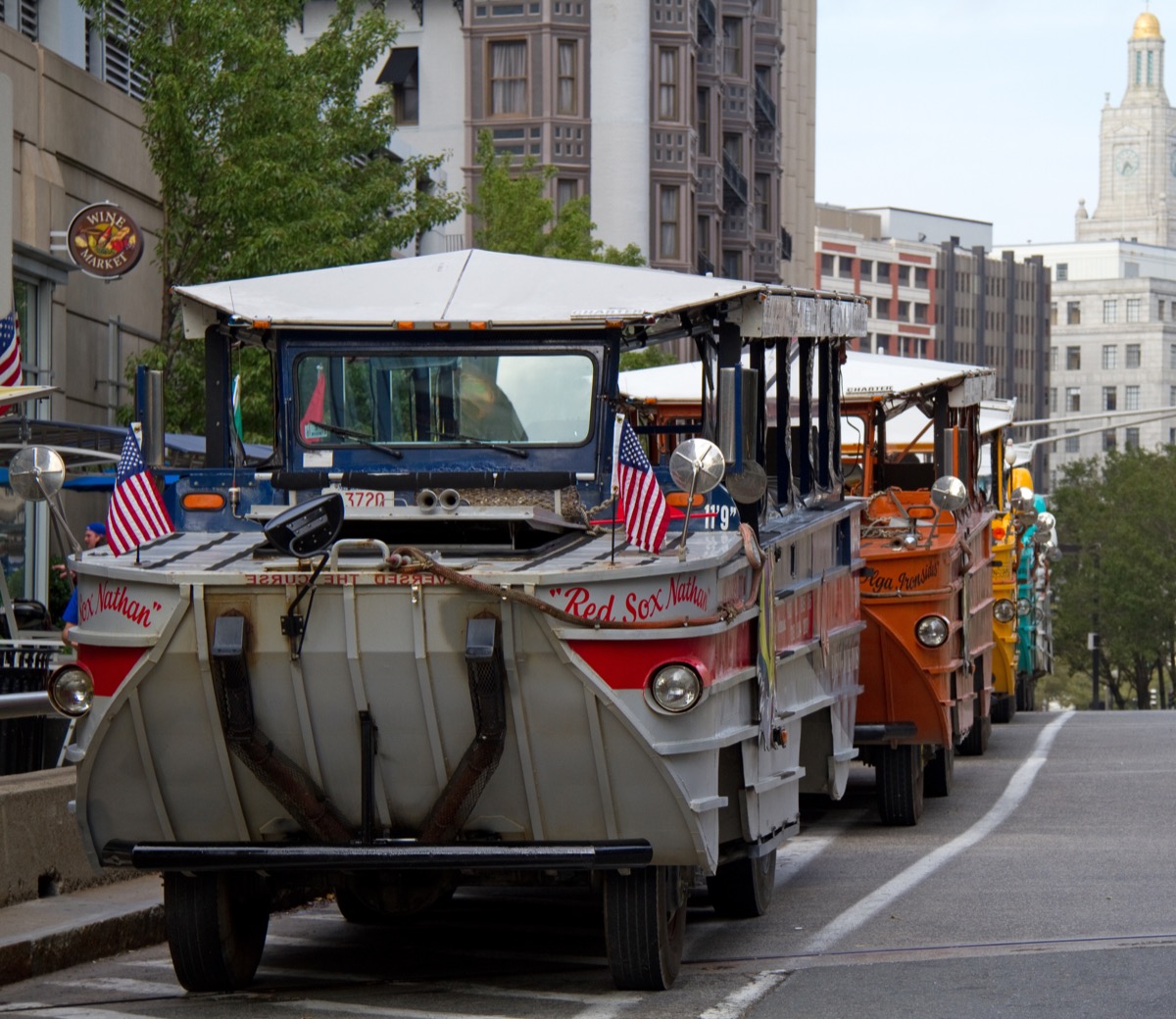
The most widely encountered amphibious vehicle in civilian life is the "Duck" - a repurposed DUKW (pronounced "duck"), a six-wheel-drive amphibious military truck built by GM during World War II for the Allied invasion of Europe and the Pacific. DUKWs were used to ferry supplies and troops from ships to beaches during D-Day and dozens of Pacific island landings. After the war, thousands of them were sold off surplus, and enterprising operators discovered they made extraordinary tourist vehicles.
The formula is simple: the "Duck" drives through city streets, delivering a narrated tour, then without stopping drives into a river or harbour and continues. Passengers don't disembark between the road and water sections - the transition is the point.
Boston Duck Tours is the oldest and largest operator, running refurbished World War II DUKWs along the streets of Boston before launching into the Charles River. The tours have been running continuously since 1994 and carry over 500,000 passengers per year. The city's distinctive layout - the Charles River forming a natural "moat" alongside Beacon Hill and Back Bay - makes it ideal for the concept.
London Duck Tours operated on the Thames from 1999 until 2017, when structural concerns with the Hungerford Bridge ramp forced their closure. At their peak they were one of London's most popular tourist attractions, launching from behind the London Eye into the Thames.
Duck tour operators now run in Seattle, Washington DC, Philadelphia, Chicago, San Francisco, Singapore, Kuala Lumpur, and a dozen other cities worldwide. The basic DUKW design has been updated in modern operations - many now use custom-built amphibious coaches rather than original WWII vehicles - but the concept is identical.
The Gibbs Aquada - The World's First High-Speed Amphibian
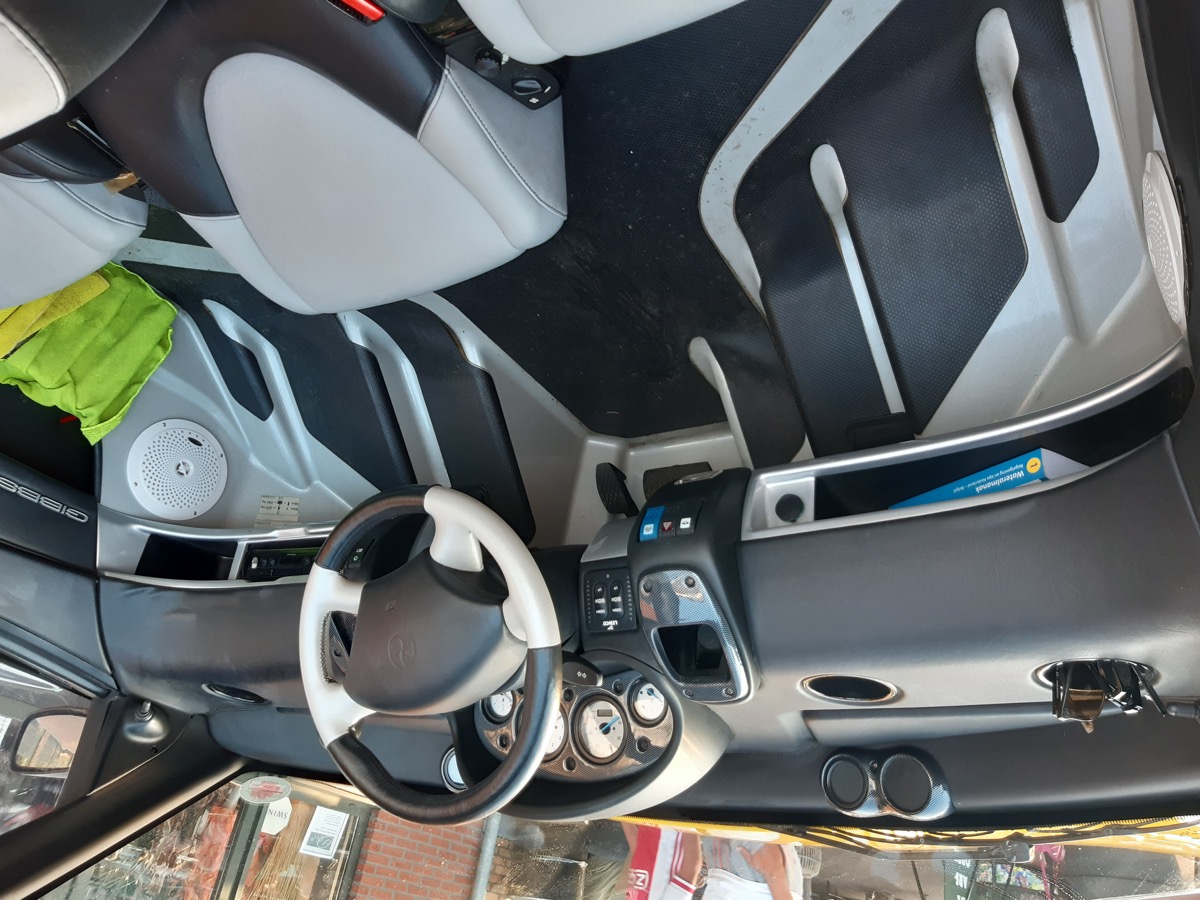

Most amphibious vehicles make a trade-off: they're either reasonable road vehicles that are slow in water, or reasonable boats that are awkward on land. The Gibbs Aquada was designed to be genuinely fast on both. Developed by British engineer Alan Gibbs, the Aquada can travel at up to 100mph on land and 30mph on water - the latter speed making it the fastest civilian amphibious car ever built.
The key innovation is a retractable wheel and suspension system. As the Aquada enters water, the wheels fold up flush with the body, reducing drag. A jet drive provides propulsion on water. The transition takes about five seconds - the driver simply drives into the water, the wheels retract automatically, and the jet takes over.
In 2004, Richard Branson drove an Aquada across the English Channel in 1 hour, 40 minutes and 6 seconds, breaking a record set 50 years earlier by an amphibious jeep. The Aquada itself never entered full production - Gibbs Technologies has focused on larger commercial vehicles - but the engineering demonstrated that true high-speed amphibious capability was achievable in a practical vehicle.
The Rinspeed sQuba - The Submersible Car
Taking amphibious vehicles to their logical extreme, the Rinspeed sQuba (presented at the 2008 Geneva Motor Show) was designed as a concept for a vehicle that could not just float but fully submerge. Based on a Lotus Elise, the sQuba could drive on land, float on the surface of water, and then sink to a depth of ten metres, where electric motors powered by lithium-ion batteries provided underwater propulsion via thruster jets.
The obvious catch: the car is open-topped, so occupants must wear scuba gear. The concept was inspired by the Lotus Esprit that appeared in the 1977 James Bond film The Spy Who Loved Me, which appeared to transform into a submarine. The actual prop car (discovered at a storage auction in New York in 2013 by an unsuspecting buyer who paid $100 for a mystery box) sold at auction for $866,000. The sQuba remains a concept vehicle - the actual James Bond submarine car never existed, but the Rinspeed version proves the engineering is possible.
The LARC-V - Military Amphibious Workhorse
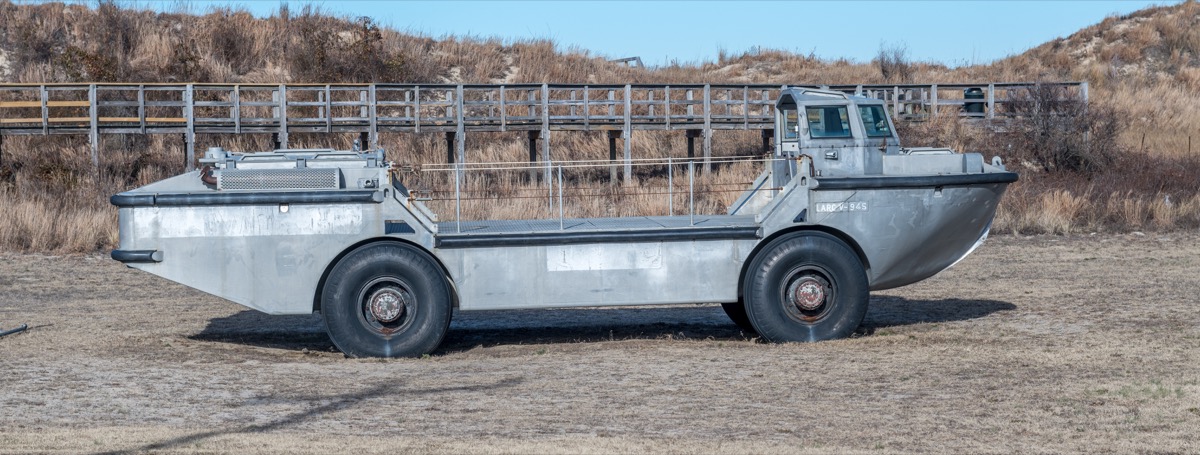

The DUKW's successor in US military service was the LARC-V (Lighter, Amphibious Resupply, Cargo - 5 ton capacity), a purpose-built amphibious resupply vehicle used from the 1950s through the Vietnam War and beyond. Where the DUKW was a converted truck, the LARC-V was designed from the ground up for amphibious operation.
Surplus LARC-Vs have been used for everything from Antarctic supply missions to tourist operations in parts of Australia and New Zealand. Several are still operational, providing resupply runs to remote coastal communities where a conventional harbour doesn't exist - the vehicle simply drives across the beach and into the sea to meet a supply ship, then returns.
Amphicoach and Modern Amphibious Buses
The original DUKW design has been updated by several manufacturers into purpose-built modern amphibious passenger vehicles. The Amphicoach (manufactured in the Netherlands) is a full-size luxury coach that can carry 150 passengers on road and approximately 80 on water, launching and recovering from standard beach ramps. Several operators in Europe and Asia have adopted it for harbour tour operations.
The HydraForce, the Splash, and the Hydra-Rig are all modern variants of the same concept - a bus body on an amphibious hull - designed for tourist operations in coastal cities. The engineering challenge in all of them is the hull design: a bus body is fundamentally the wrong shape for water, so considerable work goes into making the transition stable and preventing water ingress at speed.
Amphibious Cars: A Brief, Glorious History of Failures
The mid-20th century saw a remarkable number of attempts to produce a commercially viable amphibious personal car. Almost all of them failed, for the same reason: a vehicle optimized for both environments is rarely excellent in either.
The Amphicar (manufactured in Germany 1961-1968) is the most famous. About 3,878 were built, making it the most mass-produced civilian amphibious car ever. It drove on land using a conventional 1.1-litre Triumph Herald engine, and in water via two propellers driven off the gearbox. On land it could reach 65mph; on water, about 7mph. Contemporary reviews noted that it was "not a good car, and not a very good boat, but a unique combination of the two." They are now collectors' items worth $30,000-70,000 in good condition, and Amphicar club events - where members drive their cars across rivers and lakes - are a regular feature of the vintage car world in the US.
The VW Schwimmwagen (1942-1944) was a military amphibious variant of the famous Kubelwagen, used by German forces on the Eastern Front for river crossings. About 15,000 were built, and approximately 150 survive today - making them one of the rarest World War II vehicles.
Where to Experience Amphibious Vehicles Today
- Boston Duck Tours - The original and still the best. Tours run daily, April - November, from Huntington Avenue near the Prudential Center. Book in advance in summer.
- Seattle Ride the Ducks - Tours of Seattle followed by a launch into Lake Union.
- Singapore Duck Tours - Tours of the Marina Bay Sands area with a launch into Marina Reservoir.
- Kuala Lumpur Duck City Tour - Tours of the city centre with a launch into a lake near Putrajaya.
- Amphicar Club events - The Amphicar Swim-In at Lake Guntersville, Alabama, held annually, is the world's largest gathering of Amphicars.
For more extreme vehicle and travel engineering, see our guide to the world's most extreme airports - where the engineering challenges are, if anything, even more demanding. And for records in land-based travel, our extreme travel records guide covers the humans who push transportation to its absolute limits.