
Peru: The Gringo Trail
Peru's most-traveled spine - from Lima down the Pacific coast to desert oases and mysterious geoglyphs, then up through Arequipa and the Colca Canyon to the altiplano of Lake Titicaca, on to the Inca capital of Cusco, and finally to the Sacred Valley and the cloud-shrouded ruins of Machu Picchu.
9–21 days · Point-to-point
When to go
- PermitInca Trail permits (Apr - Oct) — All Inca Trail permits sell out months in advance - book as soon as your dates are confirmed. The trail is also fully closed every February for maintenance.
- NoteAltitude acclimatisation — Cusco sits at 3,400m, the Sacred Valley at 2,800m, and Machu Picchu at 2,430m. Ascend gradually - most travelers fly Lima→Cusco then descend to the Sacred Valley for a night before re-ascending. Factor 1-2 extra buffer days if you are coming from sea level and are prone to altitude sickness.
The Gringo Trail earns its name: this is the spine of Peru that almost every first visitor follows, and it exists because the geography makes it hard to improve on. You move from Lima's Pacific fog and urban energy down to bone-dry coastal desert, past eerie Nazca geoglyphs, up through Arequipa's colonial elegance to one of the world's deepest canyons, across the windswept altiplano of Lake Titicaca, and finally into the Inca heartland - Cusco, the Sacred Valley, and the ruins that need no introduction at Machu Picchu. Fourteen days covers it comfortably; nine is tight but doable by flying past the coast; twenty-one lets you add the Amazon.
This route's vibe
What you get across the whole trip, blended from each stop's strengths.
Stop by stop
The route
Adjust trip length, budget, and travel style — the stops, transport, and cost update to match.
- 1
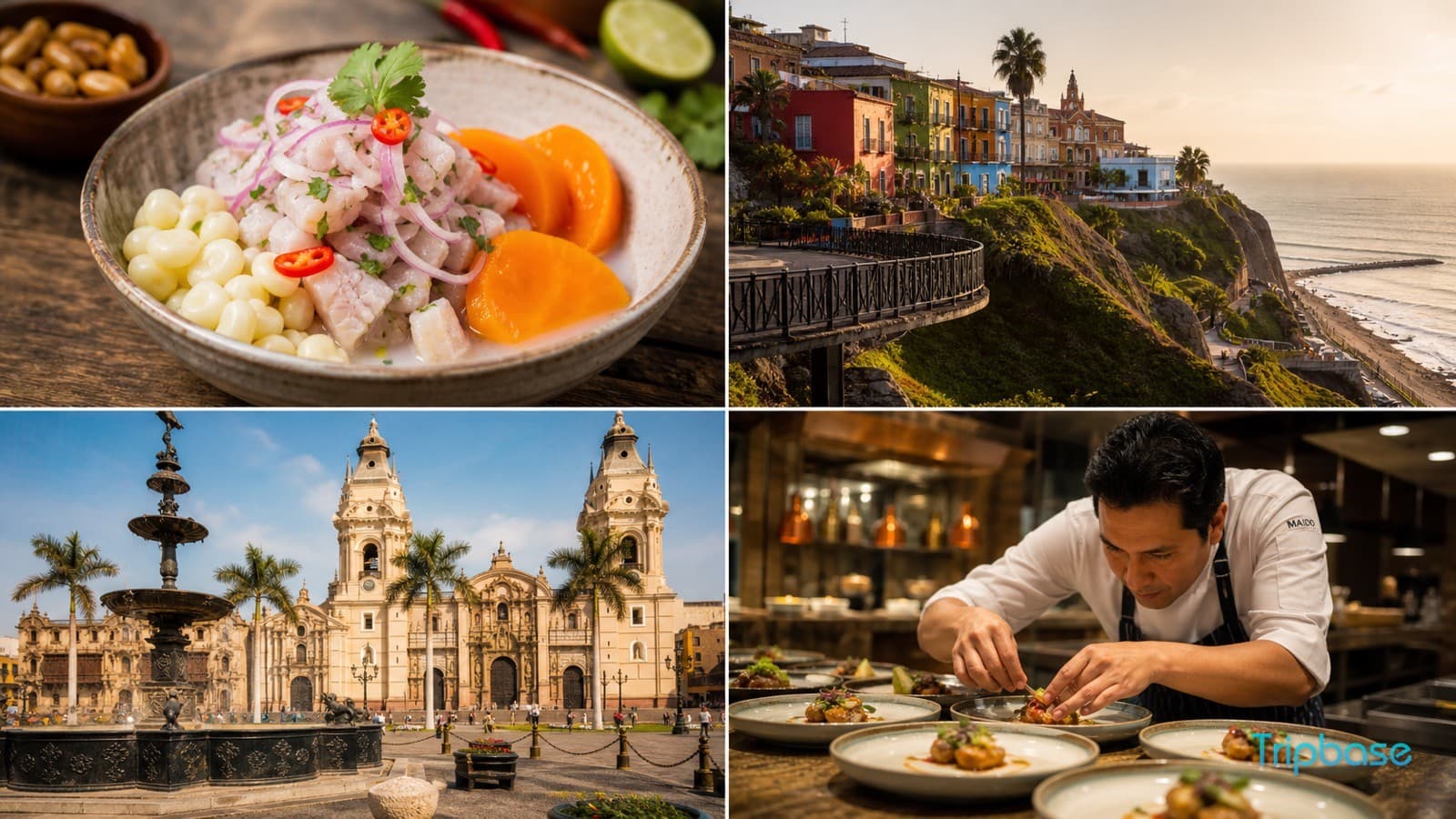
Lima
2 nightsPeru's capital and the main international gateway. Miraflores and Barranco deliver some of South America's best restaurant scenes; the colonial centre (UNESCO-listed) sets the historical tone. Two nights lets you land, eat well, and see the essentials before heading south.
Skip / overrated: The Larco Museum is genuinely excellent - go. The airport-area strip malls and package-tour 'Peruvian show dinners' at tourist-oriented restaurants are skippable; the real food is in Miraflores and Barranco at mid-range prices.
View Lima guide→Getting there· ~245 kmBusRecommendedComfortable direct coaches ~4h on the Panamericana Sur; Cruz del Sur and Oltursa run multiple departures daily. This is the overwhelmingly standard way.
Book: Cruz del Sur / Oltursa / 12Go — Buy from the official company website or app - touts at Lima's bus terminals sell overpriced 'seat guarantees' that aren't real
Book busesFlightFlights Lima→Pisco/Ica do exist but are uncommon and rarely make sense for this short leg; the bus is faster door-to-door.
- 2
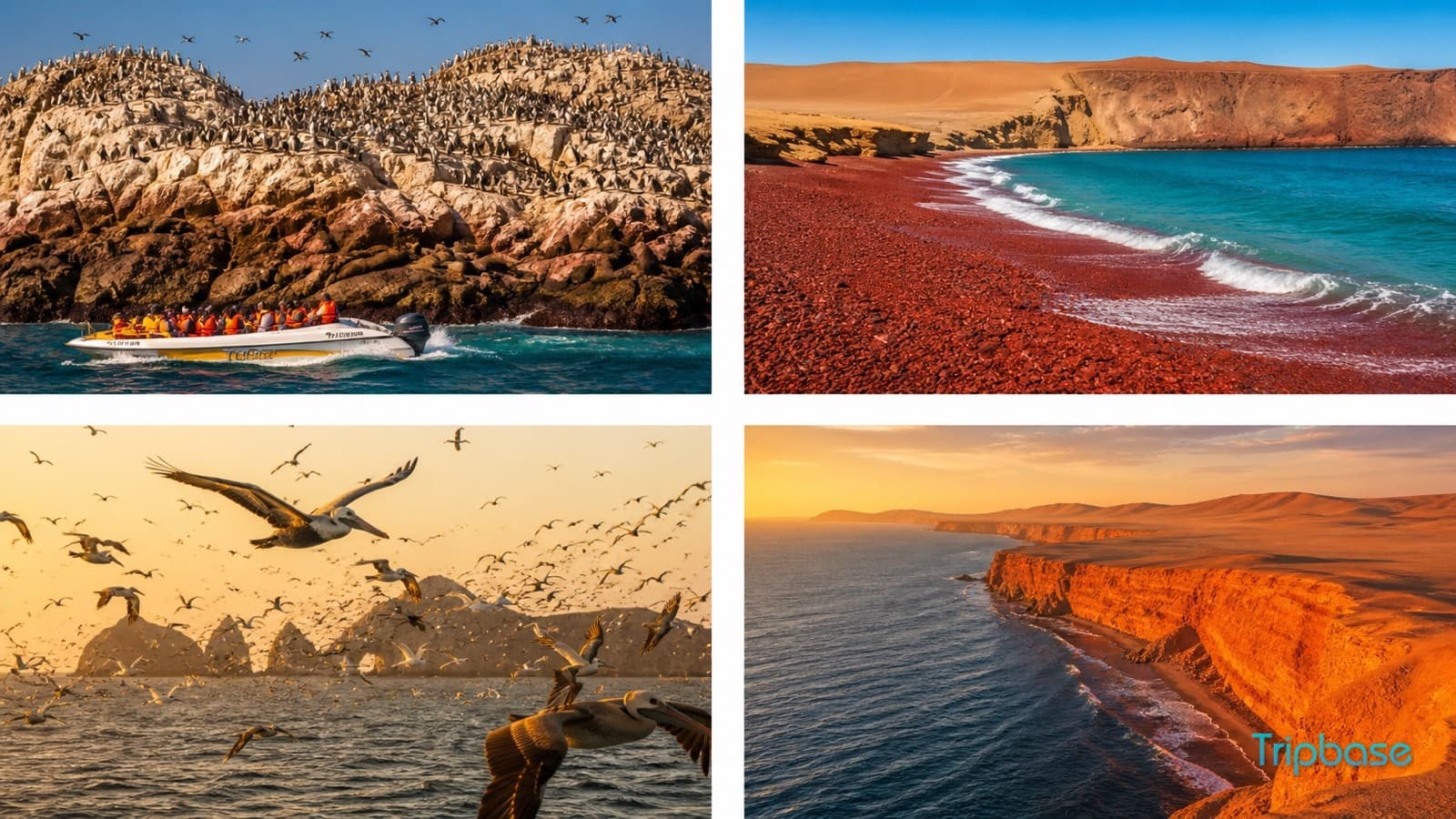
Paracas / Ica
1 nightThe Paracas National Reserve protects a wild stretch of Pacific desert and wildlife-rich bay (Ballestas Islands boat trip for sea lions, Humboldt penguins and birdlife). A stopping point on the way south; one night is usually enough.
View Paracas / Ica guide→Getting there· ~68 kmBusRecommendedShort hop ~1h; shared combis and minibuses run frequently from Ica city centre to Huacachina - or take a taxi/tuk-tuk for a few soles. Any hostel in Paracas or Ica can arrange onward transport.
Book: local hostel / taxi
Book buses - 3
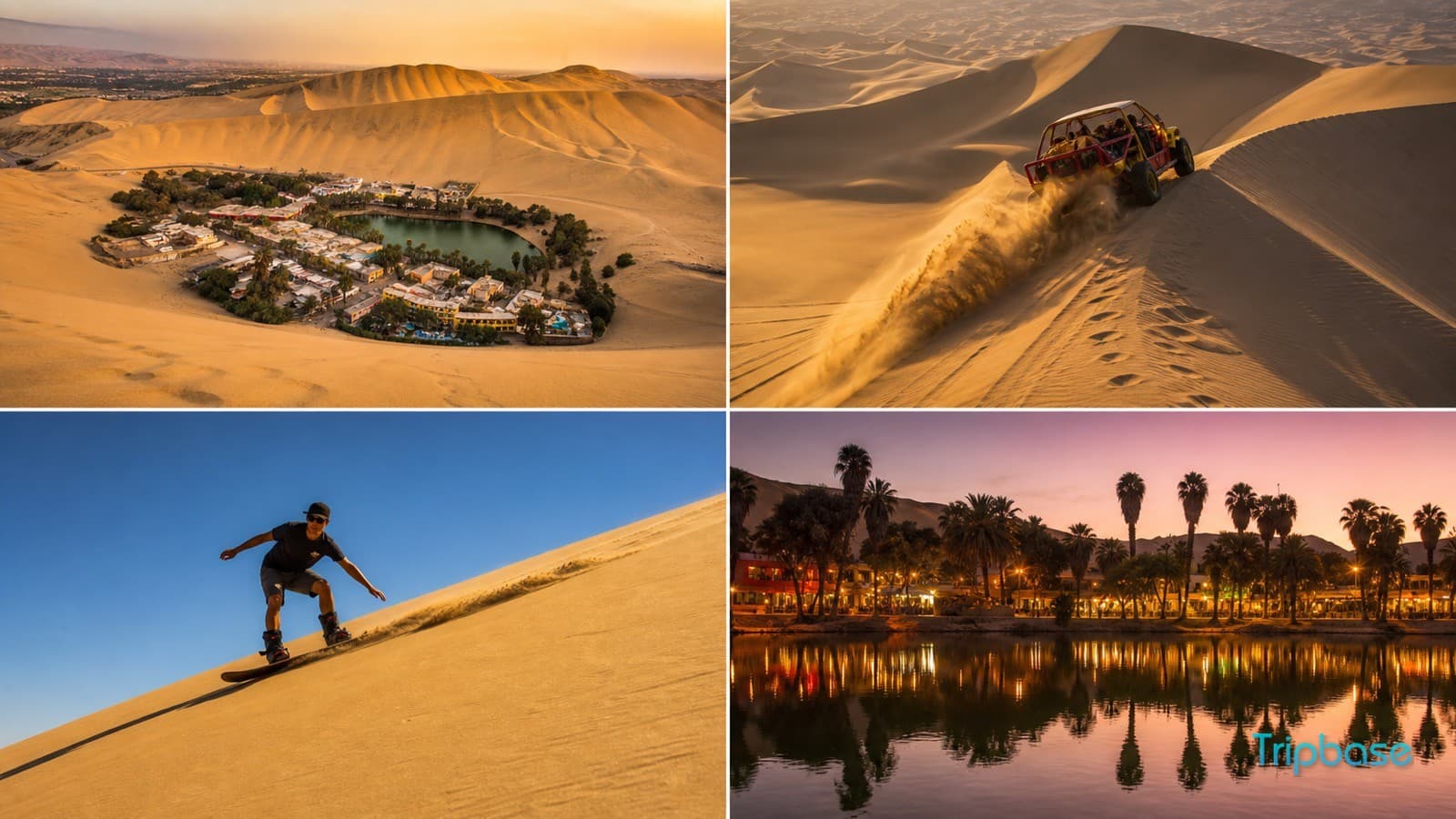
Huacachina
1 nightA lagoon ringed by towering sand dunes - the most cinematic stop on the coast. The afternoon sandboarding and dune-buggy run at sunset is genuinely thrilling; one night is the standard stay.
Skip / overrated: The dune buggies are loud and rough - if you just want the scenery, an early morning walk up the dunes on foot is quieter and free.
View Huacachina guide→Getting there· ~110 kmBusRecommended~2h south on the Panamericana; regular departures from Ica bus terminal. Nazca-bound buses from Lima also stop in Ica - coordinate departure with your hostel.
Book: Cruz del Sur / Flores / local operator
Book busesCarPrivate transfer ~1.5h; can include a stop at the Palpa geoglyphs en route.
Book: local operator / hostel desk
- 4
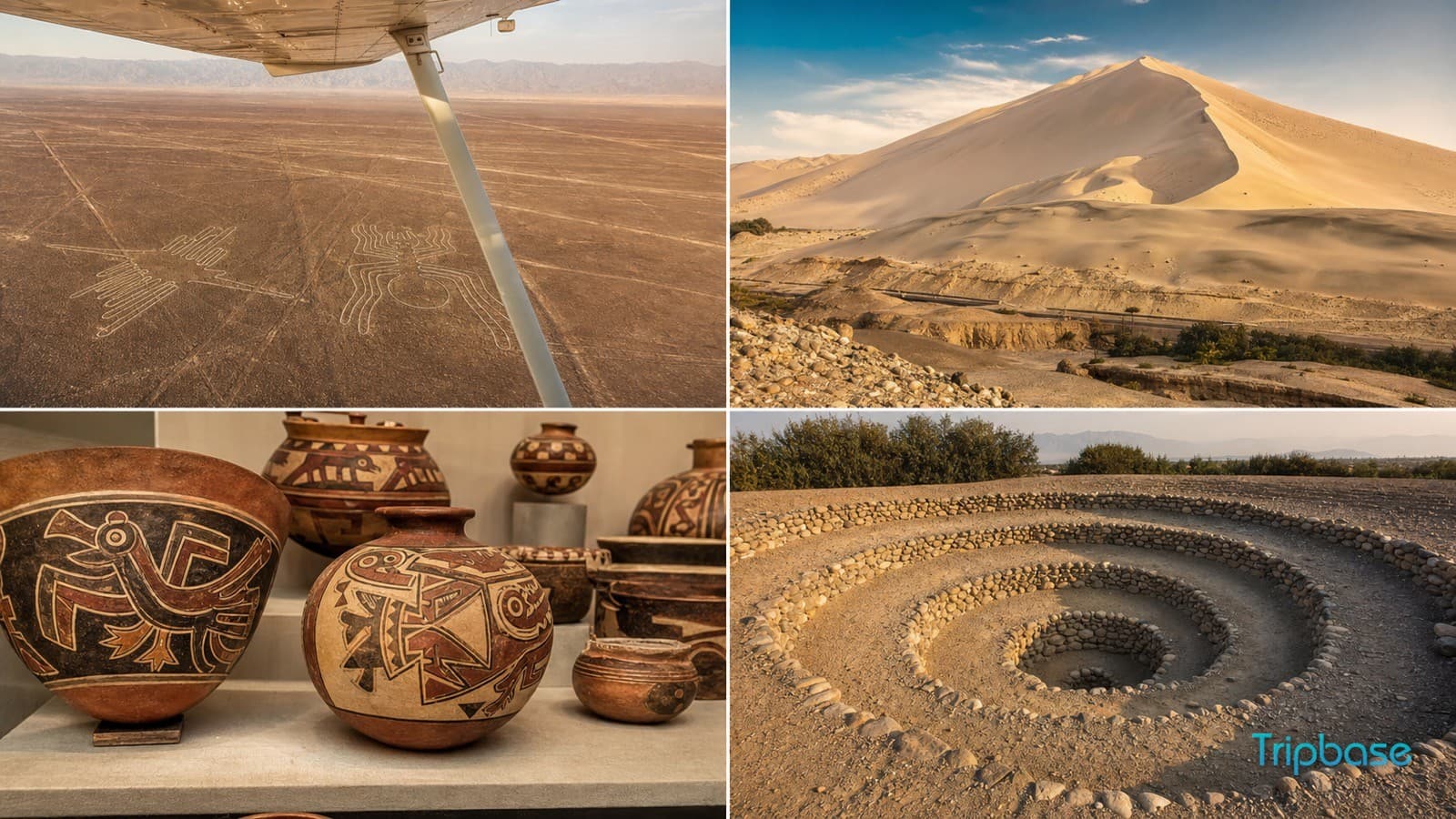
Nazca Lines
1 nightThe enigmatic geoglyphs etched into the desert - hummingbird, condor, spider - are best seen from the air on a short overflight. One night in Nazca town is all you need.
Skip / overrated: The roadside watchtower viewpoint shows almost nothing; the overflight is the only way to grasp the scale. If you're prone to motion sickness, the small planes can be bumpy - take precautions or skip the flight.
View Nazca Lines guide→Getting there· ~427 kmBusRecommendedLong overnight bus ~9-10h; Cruz del Sur and Oltursa run cama (lie-flat) seats that make this manageable. Taking the night bus lets you save a hotel night and arrive in Arequipa in the morning.
Book: Cruz del Sur / Oltursa / 12Go — Book the cama (business/VIP) class on overnight runs - the semi-cama seats are noticeably less comfortable on a 9h trip
Book busesFlight~1.5h flight from Lima (backtrack) or a direct Lima→Arequipa flight if you skip Nazca and the coast entirely. A reasonable shortcut for the Short variant.
Book: LATAM / Sky Airline / JetSmart
- 5
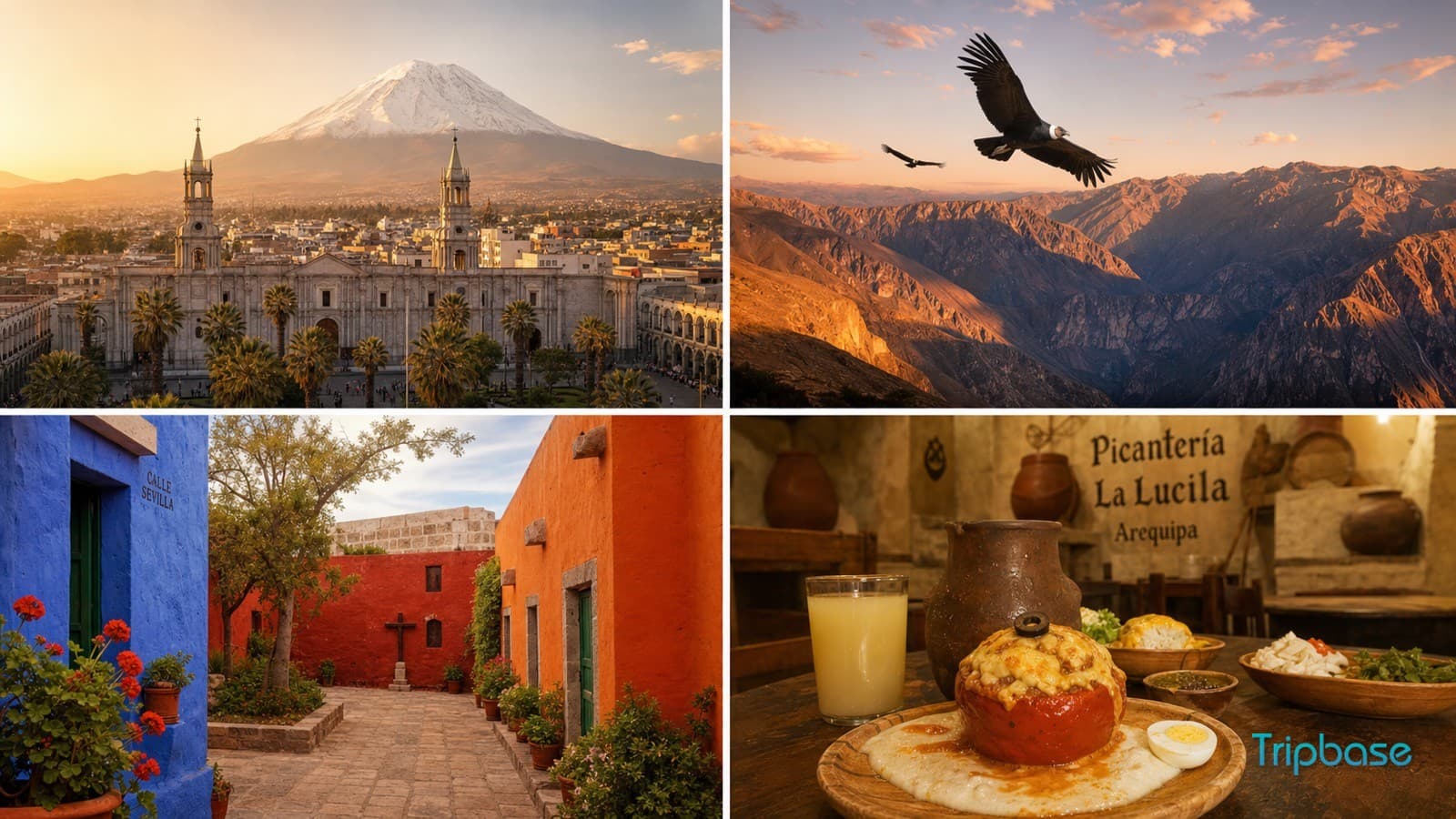
Arequipa
2 nightsPeru's 'White City' - built from pale sillar volcanic stone under the shadow of El Misti volcano. The Santa Catalina Monastery is a walled city-within-a-city worth a long morning; the Plaza de Armas is one of Peru's finest. Two nights lets you acclimatise to 2,335m before ascending higher.
Skip / overrated: Arequipa's food scene (rocoto relleno, adobo) is the best in the south - don't rush past it for a quick transit.
View Arequipa guide→Getting there· ~95 kmBusRecommendedAll Colca Canyon tours depart from Arequipa at ~3-4am and return you the following evening. The road passes through stunning Andean scenery and the Reserva Nacional Salinas y Aguada Blanca. Every hostel and agency in Arequipa sells guided overnight tours (2d/1n) - the standard and simplest way.
Book: Arequipa hostel or tour agency — The cheapest one-day tours rush the canyon; book the overnight specifically
Book buses - 6
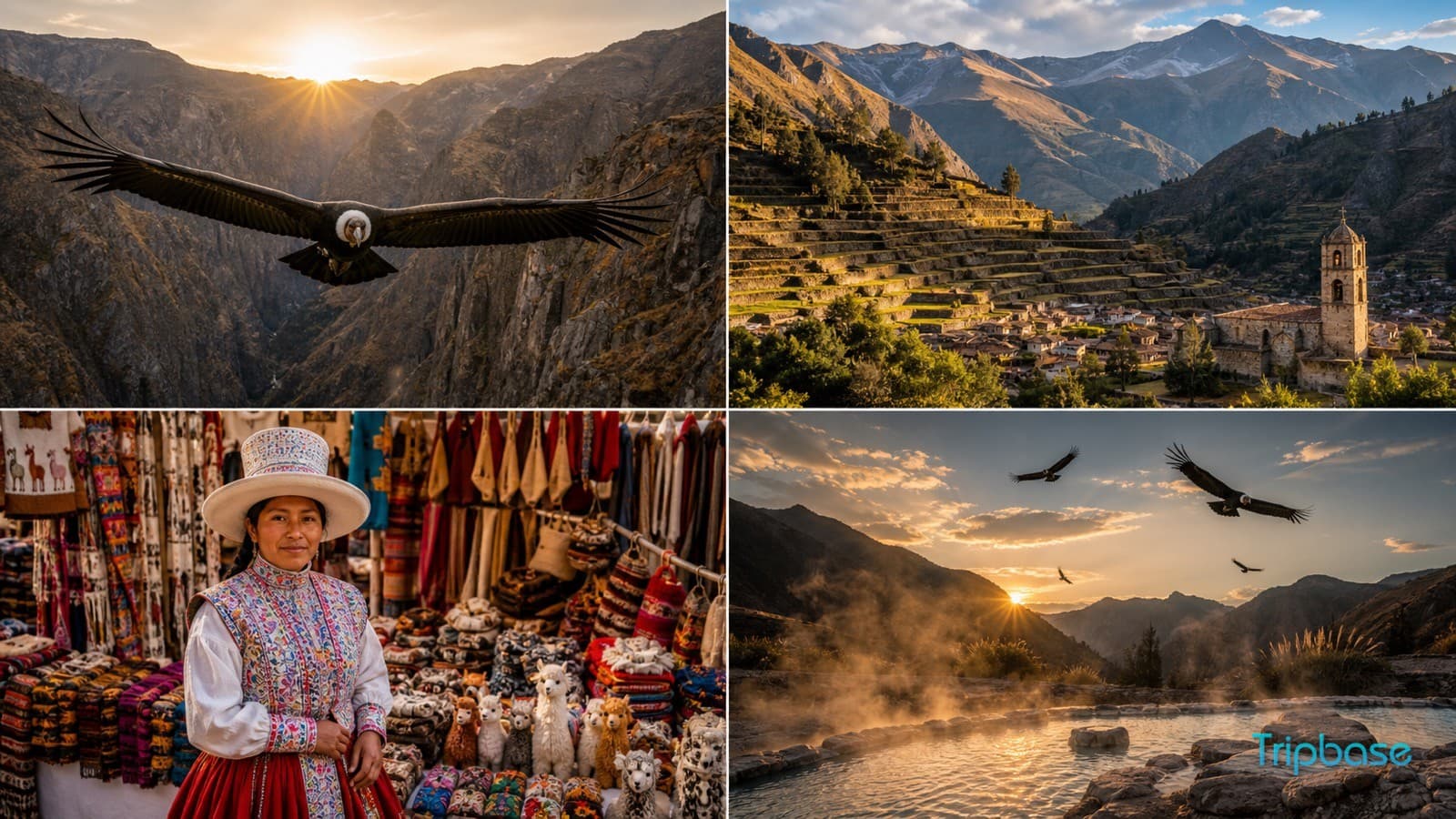
Colca Canyon
1 nightOne of the world's deepest canyons, and the best place in South America to spot the Andean condor at Cruz del Cóndor viewpoint in the morning. Usually done as a 2-day/1-night trip from Arequipa; the canyon rim villages are quiet and genuinely Andean.
Skip / overrated: Tour operators in Arequipa push a punishing one-day Colca day trip (4am - 10pm). The overnight version is well worth the extra night.
View Colca Canyon guide→Getting there· ~204 kmBusRecommendedMost Colca tours return to Arequipa; from there, several bus companies run direct Arequipa→Puno ~6h along a high altiplano route (the Ruta del Altiplano) with Andean scenery. Some travelers book the through-ticket Arequipa→Puno as part of the Colca return.
Book: Cruz del Sur / Oltursa / tour agency combo ticket
Book busesCarPrivate 4WD ~5h with flexibility to stop at the altiplano scenery, flamingo lagoons, and Lagunillas on the way - worth it if you have the budget.
Book: Arequipa tour agency / hotel concierge
- 7
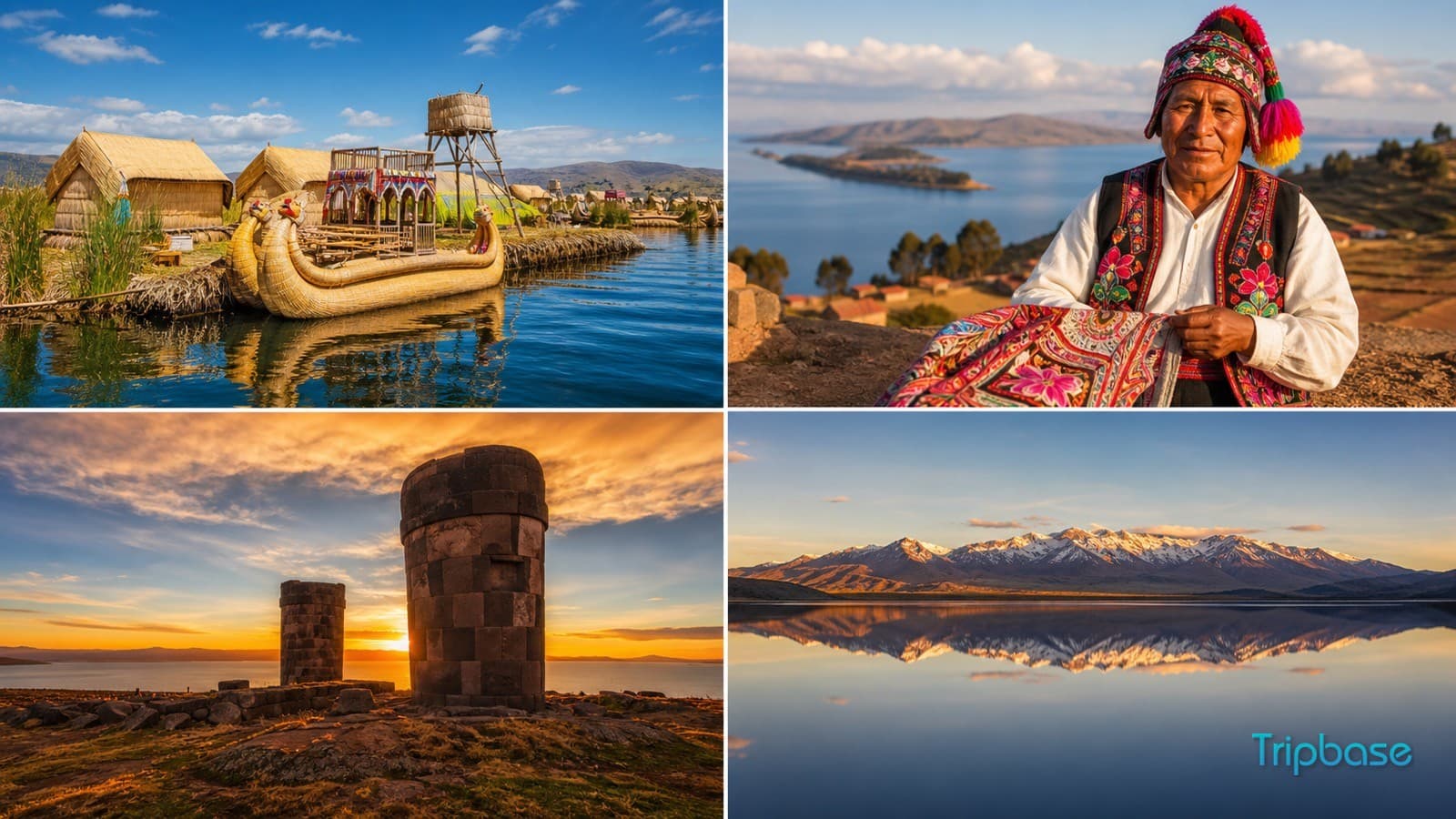
Lake Titicaca (Puno)
2 nightsThe world's highest navigable lake at 3,810m, shared with Bolivia. The reed islands of the Uros people are a genuine cultural encounter (not just a show), and an overnight on Amantaní island with a local family is one of the trip's most memorable experiences. Two nights minimum.
Skip / overrated: Puno town is gritty and functional - eat, sleep, and spend your time on the lake itself. The tourist train from Cusco to Puno is scenic but very slow; the bus is faster and cheaper for most travelers.
View Lake Titicaca (Puno) guide→Getting there· ~390 kmBusRecommendedThe Puno→Cusco bus (~7h) runs along the altiplano past Andean villages and archaeological sites; many travelers take the hop-on tourism bus (Inca Express) that stops at Raqchi, Pukara, and La Raya pass.
Book: Inca Express / Cruz del Sur / 12Go — The Inca Express is a higher-end tourist bus - worth it for the included stops; the standard bus is cheaper but non-stop
Book busesTrainThe Andean Explorer (PeruRail) is a luxury scenic train running Puno→Cusco roughly twice a week; genuine bucket-list experience for the landscape but expensive and schedule-dependent.
Book: PeruRail — Book months ahead - seats are limited and the schedule is infrequent
Book trains - 8
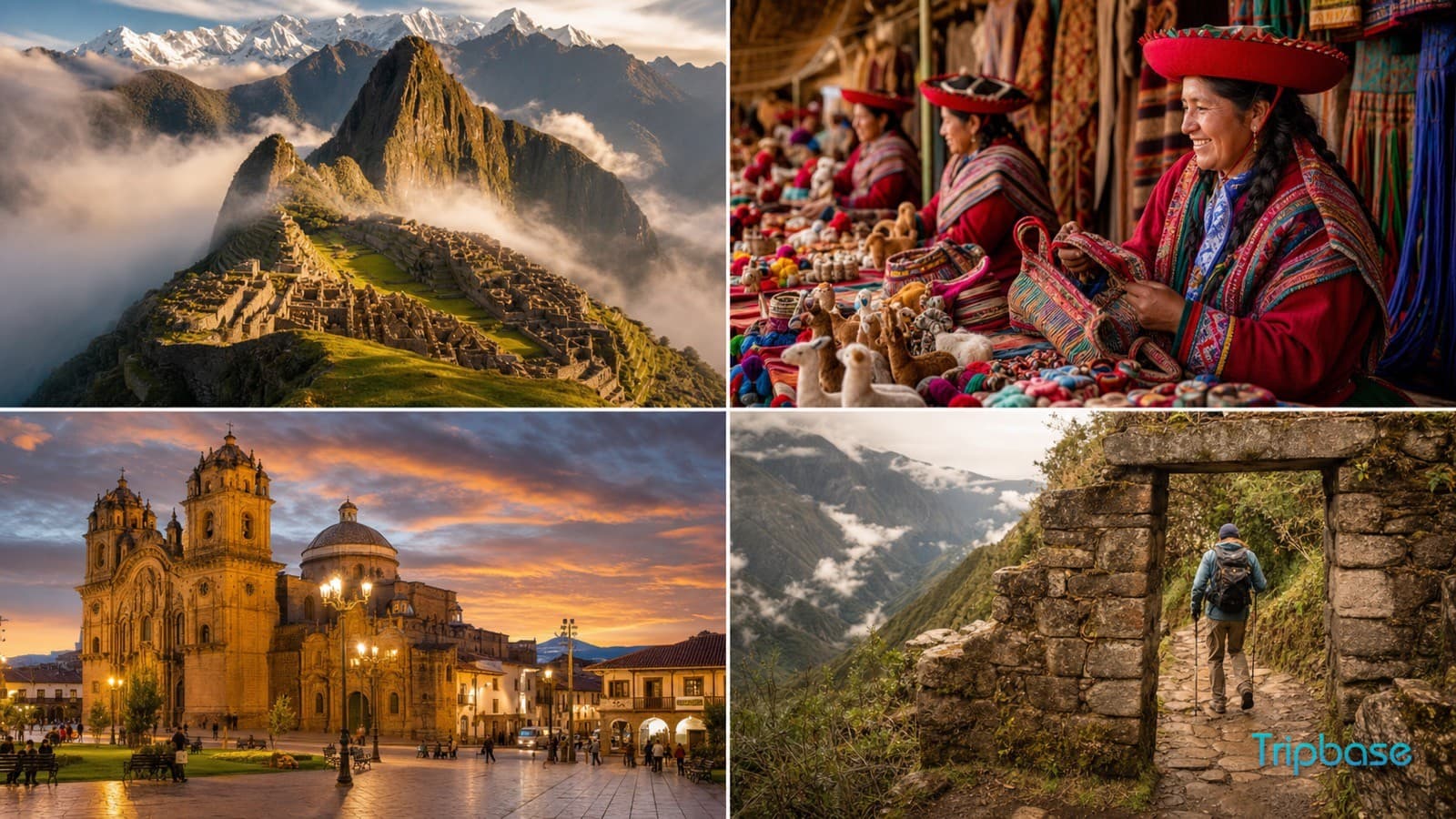
Cusco
3 nightsThe former Inca capital, now Peru's most visited city. Qorikancha (the gold-clad sun temple), the San Blas artisan quarter, and the market at Pisac are essential. Three nights also leaves time to acclimatise before Machu Picchu - most altitude sickness on the trail happens to people who rushed.
Skip / overrated: Avoid the San Pedro market tourist entrance racket (the local section is still authentic); skip the nightly 'Inca dinner show' which are overpriced tourist spectacles.
View Cusco guide→Getting there· ~72 kmBusRecommendedComfortable shared minivans run frequently from Cusco to Ollantaytambo and the Sacred Valley villages (~1.5-2h); collective combis are the budget option from the Cusco terminal.
Book: Cusco tour agency / collectivo terminal
Book busesCarPrivate transfer with stops at Chinchero, Moray salt mines, and Pisac market - the classic Sacred Valley day tour done en route to Ollantaytambo.
Book: Cusco tour agency / hotel concierge
- 9
Sacred Valley / Ollantaytambo
1 nightThe fertile valley between Cusco and Machu Picchu is dotted with Inca terracing, the fortress of Ollantaytambo, and the markets at Pisac and Chinchero. Spending a night here at 2,800m is also the classic altitude acclimatisation step before ascending to Cusco. Ollantaytambo is the departure point for the train to Aguas Calientes.
Full guide coming soon for this stop.
Getting there· ~40 kmTrainRecommendedThe only practical way in - PeruRail and Inca Rail run frequent trains from Ollantaytambo to Aguas Calientes (the town below Machu Picchu) in ~1.5h through increasingly dramatic jungle gorge scenery. Book ahead, especially in high season.
Book: PeruRail / Inca Rail — Machu Picchu entry tickets and train tickets are separate purchases - both must be booked well ahead. Entry to Machu Picchu is now capped by time slot; tickets often sell out 4-8 weeks in advance in peak season
Book trains - 10
Machu Picchu
1 nightThe most iconic ruin in the Americas - and it lives up to the hype. Stay overnight in Aguas Calientes to enter at the first gate opening (before the tour-bus hordes) and to have the afternoon when the crowds thin. The Sun Gate hike above the main citadel adds a spectacular ridge-top perspective.
Skip / overrated: The Inca Bridge trail and Huayna Picchu summit add meaningful views but require separate tickets booked in advance. Skip the overpriced restaurants in Aguas Calientes in favour of the market stalls - the food is the same.
Full guide coming soon for this stop.
Lodging + daily spend only — excludes flights & intercity transport. Partial: some stops lack cost data.
What to skip
Don't try to loop back to Lima at the end by bus - it's a punishing 20-hour ride. Fly out of Cusco instead, which is easy and cheap. Also resist the impulse to add Bolivia (Lake Titicaca crossing + Uyuni Salt Flats) unless you have at least three extra days - Bolivia deserves more than a rushed add-on.
Practical tips
Book Machu Picchu entry tickets and the Inca Trail (if applicable) first, before planning anything else - they dictate the rest of your dates. Carry altitude sickness tablets (acetazolamide) and take the ascent to Cusco slowly. The coastal legs (Lima→Paracas→Huacachina→Nazca) can be done in either direction and are sometimes better done before flying to Cusco, reducing backtracking.
Best for
Common questions
How do I reach Machu Picchu?
The only practical route is by train from Ollantaytambo (or Cusco) to Aguas Calientes (~1.5-3h depending on origin), then a 25-minute bus up the switchback road to the ruins gate. There is no road to Machu Picchu. Book both your train ticket (PeruRail or Inca Rail) and your timed-entry Machu Picchu ticket separately and well in advance - both sell out in peak season.
How bad is the altitude on this route?
Cusco (3,400m) and Lake Titicaca/Puno (3,810m) are the main altitude challenges. Symptoms - headaches, fatigue, shortness of breath - are common and usually mild. The classic mitigation is to arrive in Cusco, spend a day doing very little, then descend to the Sacred Valley (2,800m) for the night before returning. Most travelers acclimatise within 48h. Drink plenty of water, avoid alcohol your first night, and consider acetazolamide (prescription in most countries - get it before you go).
Is the Gringo Trail too touristy?
Yes - and that's fine. The infrastructure (buses, hostels, tours) is excellent precisely because so many people do this route. If you want to go deeper, add side trips: the Colca Canyon hike, an Amantaní homestay on Lake Titicaca, or the Lares Trek instead of the Inca Trail. The crowds thin out fast once you leave the main stops.