
Iberian River Route
Follow the Douro from its Atlantic mouth at Porto up into the terraced wine country - Peso da Régua, Pinhão and the upper river toward the Spanish border - by the river-hugging Linha do Douro railway, quinta-to-quinta cruises and quiet valley roads.
4–10 days · Point-to-point
When to go
- FestivalVindima (grape harvest) (mid-Sep - early Oct) — The valley's signature season - quintas run harvest-and-treading experiences that book out months ahead; reserve early if you want to pick or foot-tread.
- WeatherInterior summer heat (Jul - Aug) — The sheltered upper valley regularly tops 38-40°C and the river light is harsh; spring and harvest are far more comfortable for tastings and boat time.
The Iberian River Route is the Douro done the way the river itself wants - from the Atlantic mouth at Porto, where the port lodges age everything grown upstream, into the terraced wine country at Peso da Régua and Pinhão, and on to the wilder upper valley near the Spanish border. The trick is to let the water and the century-old Linha do Douro railway do the sightseeing: both hug the river past terraces no road really sees. Four to six days covers the core; with ten you can add baroque Lamego and cross the frontier into Salamanca.
This route's vibe
What you get across the whole trip, blended from each stop's strengths.
Stop by stop
The route
Adjust trip length, budget, and travel style — the stops, transport, and cost update to match.
- 1
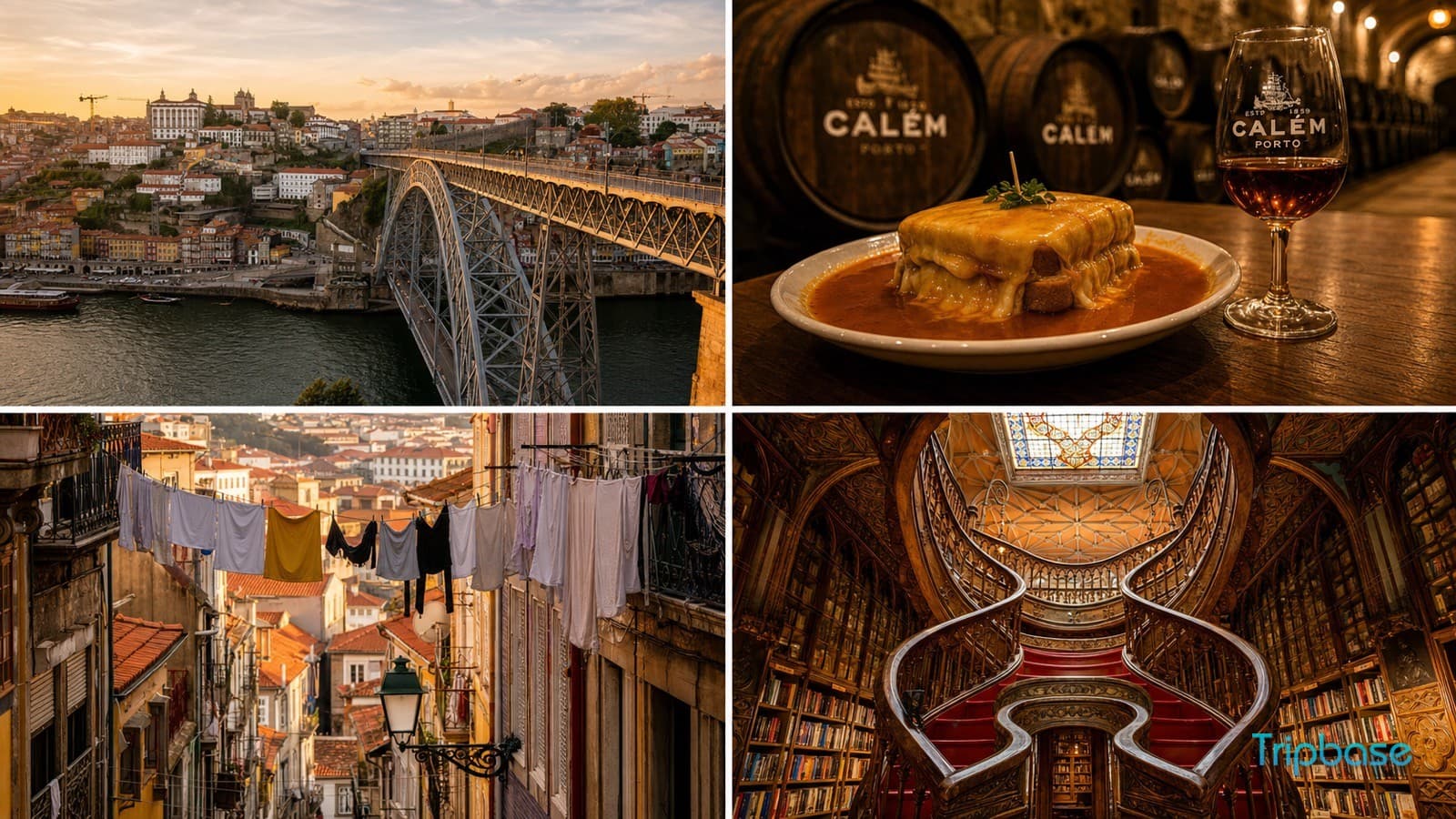
Porto
2 nightsWhere the Douro meets the Atlantic: the tiled Ribeira waterfront, the six bridges, and the port-wine lodges across the river in Vila Nova de Gaia where every bottle from upriver is aged. The natural start and supply base before you head inland.
Skip / overrated: The one-day Douro river cruises sold along the Ribeira mostly motor between the Porto bridges - pleasant, but not the wine valley. Save your boat time for the stretch above Régua.
View Porto guide→Getting there· ~70 kmTrainRecommendedThe Linha do Douro railway is the classic approach, ~2h from Porto (São Bento/Campanhã); the line drops down to hug the river after Marco de Canaveses for the scenic run in.
Book: Comboios de Portugal (CP) — The river views are almost all on the right-hand side heading upstream - pick a right-window seat, and note the vintage steam 'Comboio Histórico do Douro' only runs summer weekends and sells out early.
Book trainsBoatA full-day up-river cruise from Porto to Régua turns the transfer into the sightseeing - locks, terraces and long lunches - but eats an entire day and often buses you one direction.
Book: Douro cruise operators (Ribeira quay) — Many 'Porto - Régua' day boats coach you back (or up) one leg to save time - confirm which direction is actually on the water before booking.
Book ferriesCarBy road it's roughly 1h15-1h30 via the A4 motorway; faster and flexible, but you miss the river the train follows.
- 2
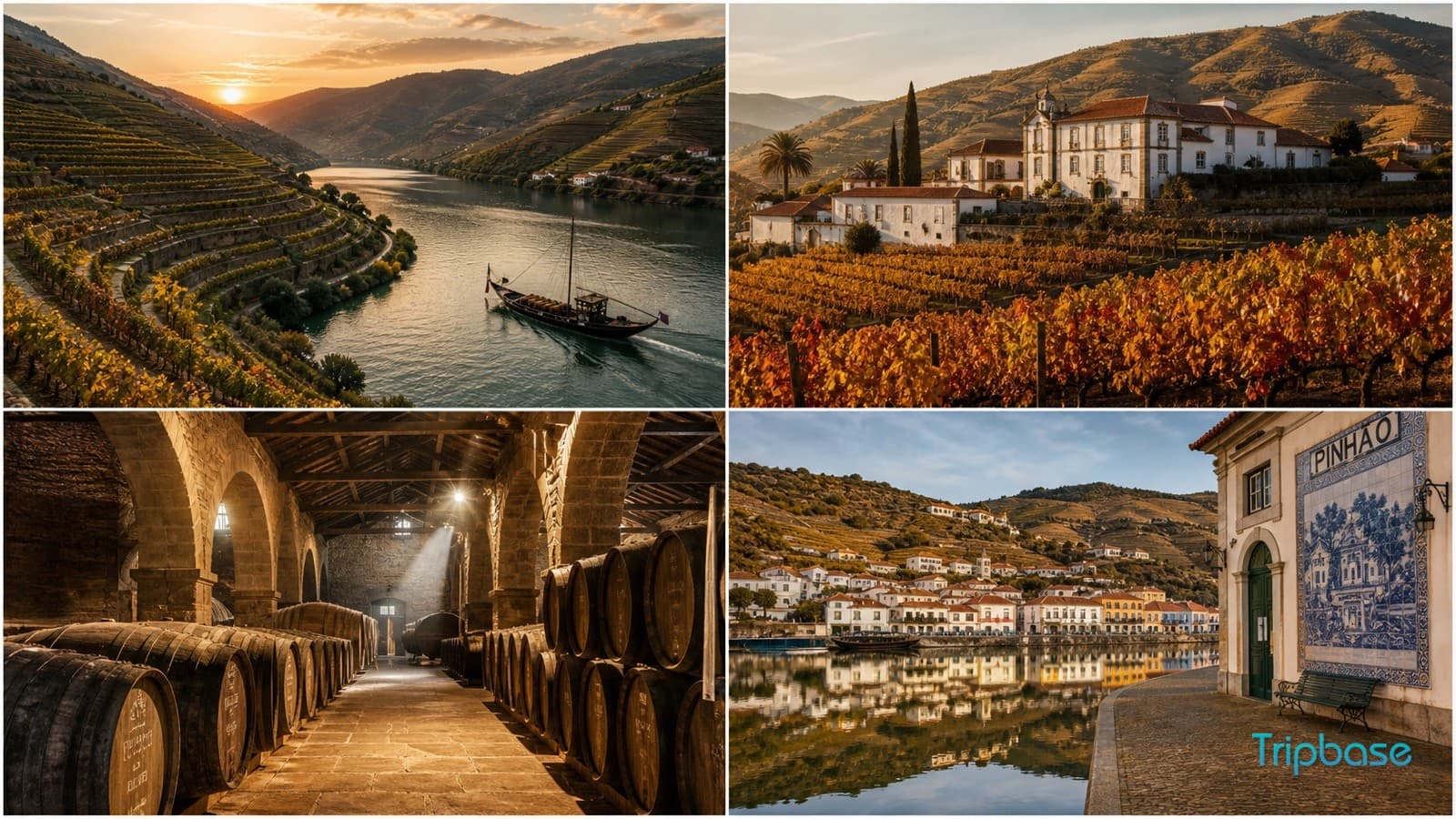
Peso da Régua
1 nightThe historic capital of the demarcated Douro wine region and the river's working hub, where rail, road and river all meet. The Museu do Douro explains the whole valley in an hour, and it's the gateway where the terraces really begin.
Skip / overrated: Régua town itself is more workaday than pretty - treat it as a base and a museum stop, not a place to linger; the scenery is on the water and up in the quintas.
View Peso da Régua guide→Getting there· ~20 kmTrainRecommendedA short, gorgeous ~25-minute hop further up the Douro line, right along the water into Pinhão's tiled station - the single best rail stretch of the trip.
Book: Comboios de Portugal (CP)
Book trainsBoatSmall river cruises and traditional rabelo boats run this stretch, the prettiest to do on the water; usually a booked excursion rather than a scheduled ferry.
Book: local quinta / Pinhão quay operators
Book ferriesCarAbout 20-25 minutes by road along the valley; handy if your quinta is up in the hills above the river.
- 3
Pinhão
2 nightsThe postcard heart of the valley - the amphitheatre of vine terraces, the famous azulejo-tiled station, and a cluster of quintas you can visit by boat or short drive for tastings and lunches overlooking the river.
Skip / overrated: Pinhão village is tiny and quickly seen; the payoff is up in the surrounding quintas, so plan a tasting or a rabelo boat trip rather than expecting much in town.
View Pinhão guide→Getting there· ~37 kmCarRecommendedRoughly 45-60 minutes on quiet valley roads into the Douro Superior; a car makes the remote quintas and the Côa park practical.
TrainThe Douro line runs on to its terminus at Pocinho (~1h from Pinhão), the closest railhead to Foz Côa and the Côa museum, then a short taxi; a fine car-free option.
Book: Comboios de Portugal (CP) — The line ends at Pocinho - there is no rail beyond, and Pocinho is still ~10km from Foz Côa, so arrange the onward taxi in advance.
Book trainsBoatUpper-Douro cruises continue toward Barca d'Alva at the frontier; scenic but slow and schedule-bound rather than a quick transfer.
Book ferries - 4
Vila Nova de Foz Côa
1 nightThe wilder Douro Superior near the Spanish border, where the river runs through a UNESCO-listed valley of open-air Palaeolithic rock engravings (the Côa Valley). Big-country vineyards, dark skies and the sense of the river narrowing toward its frontier gorge.
Skip / overrated: Don't expect to just walk up to the engravings - the Côa rock-art panels are viewable only on the park's guided 4x4 tours, so it's the museum-plus-booked-tour that makes the stop, not a self-guided ramble.
Full guide coming soon for this stop.
Lodging + daily spend only — excludes flights & intercity transport. Partial: some stops lack cost data.
What to skip
Resist trying to 'do the Douro' as a day-trip from Porto - the one-day coach-and-boat tours spend most of the day getting there and back and barely reach Régua. Give the valley at least two nights, or don't bother going inland.
Practical tips
Sit on the right-hand side of the train heading upstream for the river views, book quinta tastings and any harvest experience well ahead (especially for September's vindima), and remember the railway ends at Pocinho - beyond that the upper valley needs a car or a pre-arranged transfer.
Best for
Common questions
Should I do the Douro by train, boat or car?
All three, ideally: take the scenic Linha do Douro train from Porto up to Régua and Pinhão for the best river views, add a short boat trip around Pinhão to see the terraces from the water, and use a car (or a Pocinho-railhead taxi) for the remote upper valley toward Foz Côa.
When is the best time to visit the Douro Valley?
Late spring (May - June) and the September - October grape harvest are the sweet spots - green or golden terraces and comfortable temperatures. Midsummer in the sheltered interior is very hot, and winter, while atmospheric, closes some quintas.
How many days do I need?
Four days covers Porto plus Régua and Pinhão; five or six lets you reach the upper valley and the Côa rock art without rushing. Ten opens up an extension through Lamego and across the border to Salamanca.