
Why Scuba Diving Could Soon Become Extinct
Thailand banned it. Conservationists are calling for much stricter rules around it.
Scuba diving, the popular and fun way to see the underwater beauty of tropical spots all around the world, may be doing more environmental damage than its worth.
A Dying World
Twenty-seven percent of the world’s coral reefs are already damaged or lost, according to The World Resources Institute.
If the current rate of destruction continues, that number will reach 60% by the year 2030. That’s over half the world’s reefs lost forever.
That’s the loss of homes for a variety of sea life, from life-sustaining bacteria to worms to fish.
These “rainforests of the sea” provide a safe haven for 25% of marine species, so the breakdown of the reefs not only the means mass movement of fish and their sustenance, but also loss of food for us.
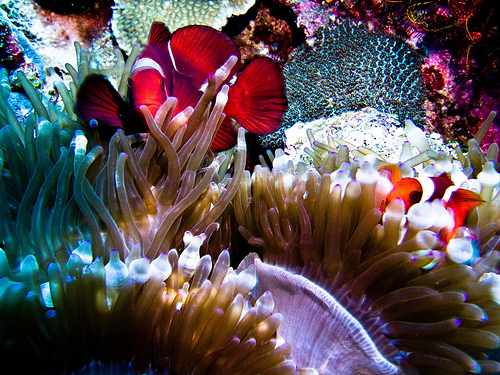
A snap-shot of the underwater world in Bali by Ilse Reijs and Jan-Noud Hutten
Coral reefs provide homes for 25% of all marine life.
Who’s Killing the Coral?
The beauty of coral reefs invites divers to view their lustrous colors and varied exteriors, yet the fragility of these systems make them susceptible to damage.
It begins with the under-water pressure of boats as they take people to their diving destinations.
Divers then add to the damage as they knowingly or unknowingly scrape and touch the reef with their hands. The cycle continues with damaged corals not being able to fight off parasites and disease, breaking them down further.
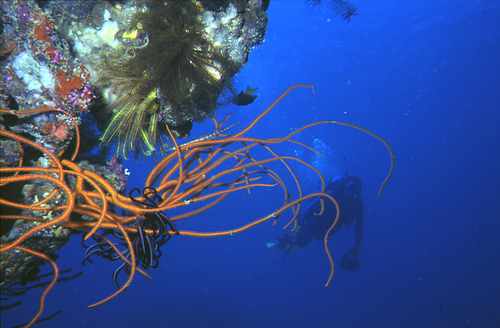
Diving in Fiji by derekkeats.
Scuba diving has been described as a life changing and even spiritual experience.
There are those who blame the disintegration of the coral reefs purely on pollution and other environmental concerns.
But some studies suggest healthy reefs with little impact from pollution or poor fishing practices show signs of tarnish and weaknesses due to the effect of divers.
Other studies conducted by scientists from the Marine Research Center show definitive links between areas frequented by divers having more damage to their coral reefs than non-dived areas close by.
Worse, in the past, divers who haven’t been educated about their impact on ocean life are more than just mindless when it came to protecting the reefs.
Instructors have noted that people sit, kick, or break off chunks of reef as they take in the splendid underwater scenery.
Given, minimal damage occurs per diver. But when you add up the amount of people that dive over time, especially in popular locales such as Bali, Fiji, and Florida, this points to a substantial impact.
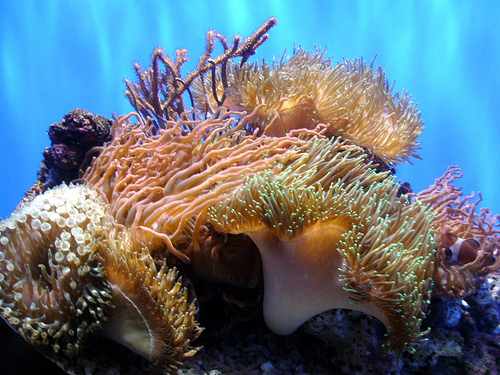
Healthy coral in Singapore by just for fun.
Uneducated divers have been known to sit on, kick or break off chunks of reef as they pass by.
Could Scuba Diving be Banned?
Is a worldwide ban on diving the best way to save our corals, and is this even an option?
Probably not. Although the industry tends to be secretive about the amount of money made per year off of diving, it is a very popular part of travel and vacations located near clear water.
Plus, it can be a life-changing part of a trip, teaching about the local sea life and enriching the experience of tropical life. Some people even call it a must-have spiritual experience.
Instead of attempting to ban scuba diving, it seems as if the answer may have to do with education.
There are large benefits to educating divers about the destruction of the coral reefs and how to handle themselves properly while diving.
Without education, divers typically touch the reef 10 to 12 times per dive. But after they’ve received instruction, they touch fewer than two times per dive.
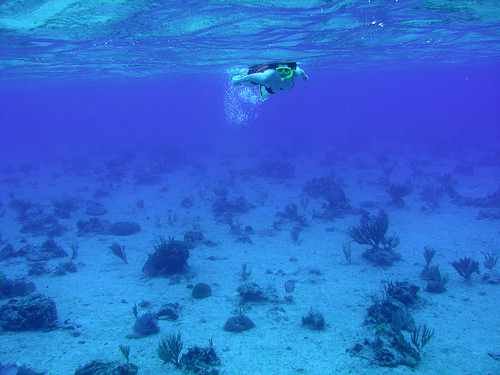
Damaged coral in Cozumel, Mexico by emmiegrn.
60% world’s coral reefs are predicted to have been destroyed by the year 2020.
How to Save the Reefs
There are other ways to help conserve coral reefs, whether you are a diver yourself, or you are simply a concerned citizen who wants to help pressure the industry to make changes.
Some of these options include:
1. Mandate that every diver take a diver’s education course which outlines how to protect the corals.
2. Develop more marine reserves.
3. Prohibit anchoring in or near reef areas.
4. Charge fees for diving in marine parks that would go toward their upkeep.
5. Penalize diving companies when coral reef degradation increases in the areas where they dive the most.
Will the conservation techniques of divers have a large enough impact on the reefs?
Changing the way scuba diving is currently conducted is imperative. Yet what may cause the complete demise of the breathtaking coral reefs is what we are doing here on land.
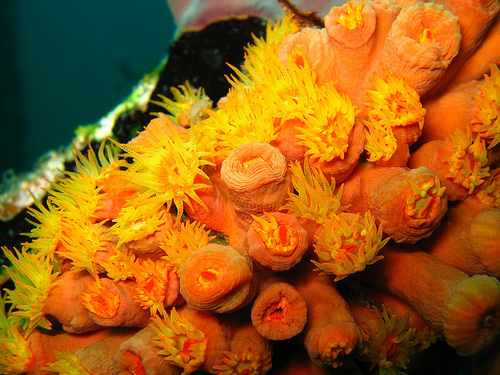
Beautiful cup coral by divemasterking2000
Are greenhouse gases to blame for the destruction of the world’s reefs.
The Greenhouse Effect
Some scientists believe that the large majority of damage to the coral reefs comes from global warming.
In a recent NPR report, scientists said that the oceans are literally choking on greenhouse gases. The fact is, oceans all over the world are becoming more acidic and this keeps coral reefs from flourishing.
That means that what we do on land, on a daily basis and in our travels, may matter more than diving.
Using public transportation, riding bikes, and car-pooling as much as possible after you’ve arrived to a destination are some ways you can help cut down on emissions while traveling.
What can I do to help save the world’s coral?
For more information on conservation programs and to stay updated on the latest projects to protect our coral reefs, visit the National Oceanic and Atmospheric (NOAA) Coral Reef Conservation Program site.
Do you think scuba diving should be banned? Post up your comments and let us know!
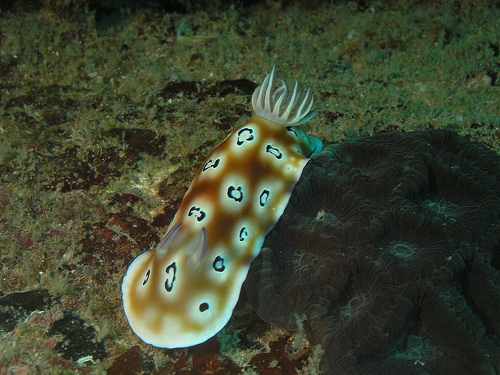
Striking marine life in Malaysia by Travelling Runes
A ban on scuba diving would keep treasures like these hidden far beneath the sea.
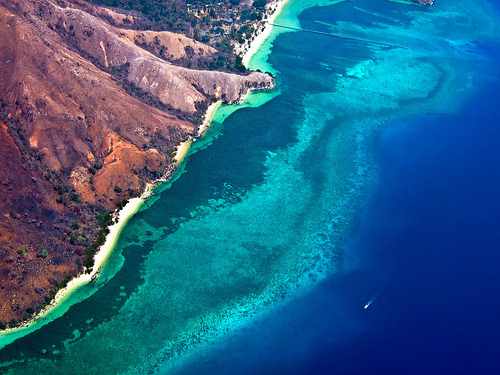
Main image: Coral reefs of Bali by Ilse Reijs and Jan-Noud Hutten.