
8 Ideals of Beauty from Around the World
Throughout the world, beauty ideals vary tremendously. This is particularly true when it comes to women, who are most often impacted by these ideals in order to attract a mate - and as an extension, their livelihood.
But as times change, men are also becoming more impacted by international ideals of beauty.
In a globalized world, lighter skin and thinness seem to reign supreme for what is considered successful and beautiful, and the negative consequences on traditional cultures include the often dangerous act of skin whitening or extreme weight loss.
Still, some traditions of the past that were both painful and unhealthy, such as foot binding and force-feeding women to make them fat, have slowly died out.
As travelers, it is important for us to both know and honor the different beauty ideals of places we visit, while also expressing ideas of acceptance and love for what each of us look like individually and culturally.
Here are 8 ideals of beauty - both past and present - from around the world, and how they are changing:
1) India: Decorative Dress
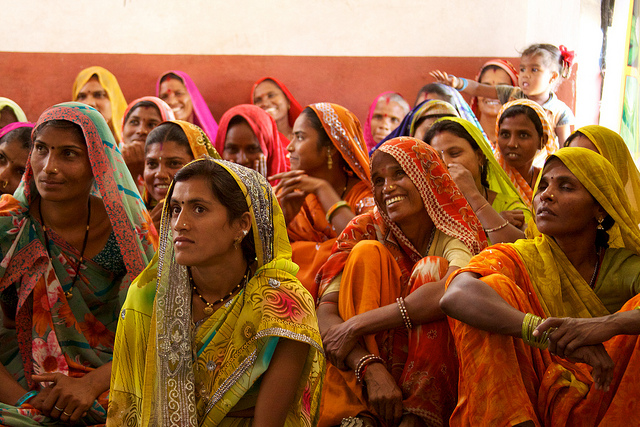
Indian women often wear colorful saris, nose rings, and dots or bindis on their foreheads as signs of femininity and sometimes marital status. Photo by mckaysavage.
No matter the caste in India, women adorn their bodies with colorful saris, dupattas, nose rings, bindis and henna, particularly for festivals and celebrations such as weddings.
Traditionally, being a thin woman was not thought of as attractive or healthy in India. But as Aruna Radhakrishna notes in her piece, India Walks a Thin Line to Beauty, western influence has infiltrated to the point that being skinny is becoming the beauty ideal.
2) Mauritania: Fat-Farms
Larger women were traditionally thought of as more beautiful, and many were sent as girls to “fat-farms” to be force-fed. Photo by geezaweezer.
Larger women are considered the ideal by men in the African country of Mauritania, where “fat-farms” still exist, not to slim women down, but to beef them up.
Though the practice is starting to die out, there are still seven and eight year-olds being taken out of school and left at the farms.
There, they are forced to eat dates, couscous, and other fattening foods all day. Traditionally, a large girl or women denoted her higher class and status, therefore defining her beauty.
3) Japan: Gyaru
Wild styles are popular with young women in Japan, especially in the large cities. Photo by Esther Gibbons.
In Japan, especially the large cities, traditional Japanese dress has given way to often outlandish fashion, hair, makeup, and even skin coloring called Gyaru.
There are many categories that fall under this name, from the moderately to extremely tanned Ganguro, popular in the late 1990s to B-Gyaru, which imitates the fashion of female R&B artists.
4) China: Foot Binding
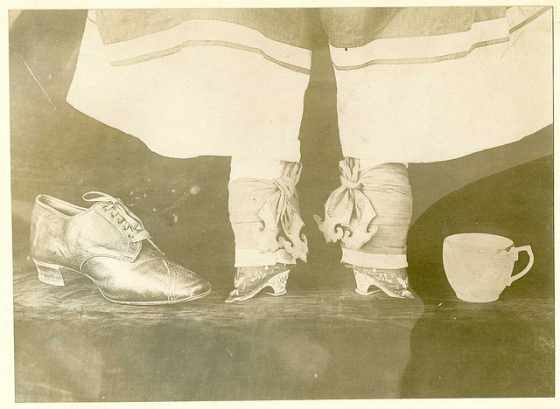
Though the tradition of feet binding in China has died out, some elderly Chinese women still walk around with tiny feet due to being bound as children. jadis1958.
Though foot binding is no longer a common tradition in China, the impact of this tradition - which lasted until the 1940s - can be seen on some elderly Chinese women.
Binding the feet involved breaking the toes and pushing them up against the sole of the feet, then tightening and sewing bandages around the entire foot.
This was considered erotic to men, and also limited the mobility of women, both literally and also within politics and the world at large.
5) Brazil: Guitar Shape
Tanned and curvy women are considered beautiful in Brazil, though beauty ideals are changing toward a thinner look similar to what is popular in the United States. Photo by BrazilWomenBeach
Brazilian women have traditionally been thought of as toned, tanned, and curvy. Though not large by any means, the ideal of beauty in Brazil included hips, a smaller chest, and a rounder backside, otherwise known as a “guitar” shape.
As is true in several other countries, though, this beauty ideal has begun to change. At least according to author Mary del Priore, who writes in her book, The History of Private Life in Brazil that “today it’s the rich in Brazil who are thin and the poor who are fat.”
6) Thailand: Skin Whitening
Skin whitening continues to be a popular approach in Thailand, where being whiter is considered more attractive and affluent. Photo by nickgraywfu.
Even as ideas of beauty shift worldwide to incorporate the multifaceted beauty of different skin colors, skin whitening still is revered by some in Asia.
Lighter skin signals more affluence in places ranging from Thailand to India, where skin whitening creams are sold for cheap in open air markets.
But these creams can be permanently disfiguring, as one Thai singer found out after using one in hopes of improving her career.
7) New Zealand: Maori Tribe Face Tattoo
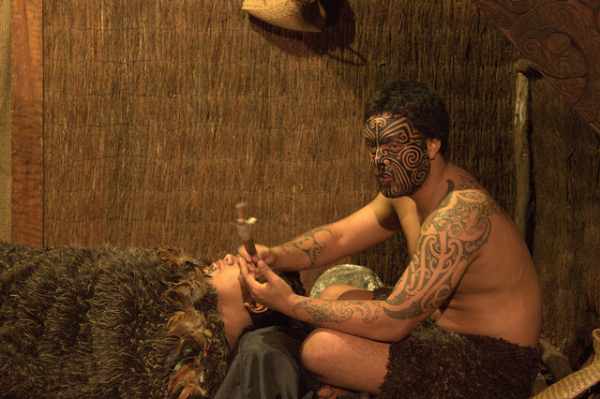
Though the tradition of a tribal face tattoo was dormant for many years, it has recently become popular once again amongst the Maori tribe of New Zealand. Photo by RaviGogna.
Both men and women of the Maori tribe have long imprinted their face with swirling tattoos called Ta moko. Most high-ranking people in New Zealand’s indigenous tribe received moko before the Europeans arrived in the country, and it was considered an important milestone between childhood and adulthood.
Since the early 1990s, moko has had a revival in the culture, though now most often, a tattoo machine is used instead of the traditional chisel, which carved grooves in the face.
8) Burma: Padaung/Kayan “Long Necks”
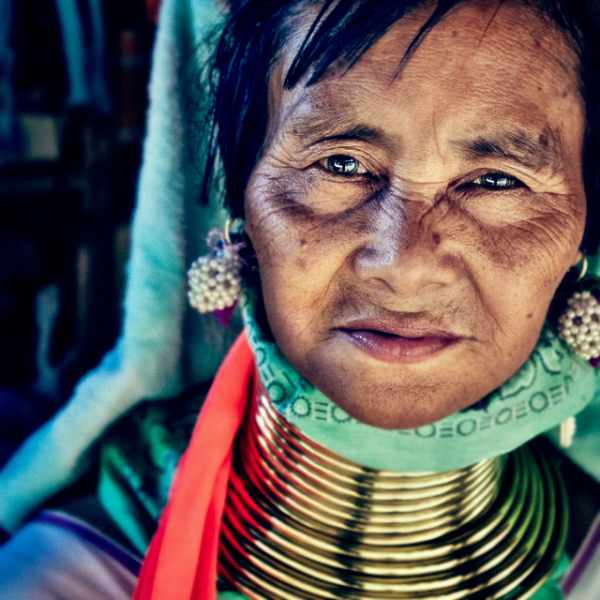
Most Kayan women wear rings around their necks, which is considered a sign of beauty in their culture. It is also now being used as a tourist attraction. Photo by Mister Jo.
Women of the Kayan tribe, many of which are now refugees from Burma (now Myanmar) living in Thailand, often wear brass coils around their necks to give the illusion they are lengthened.
Starting at a young age, the coils are wrapped around the neck, and more are added over the years, which in actuality pushes down the women’s shoulders, producing the effect that their neck is longer.
These neck rings are both used as a way to attract men and now as a controversial attraction for tourists.
What do you think about these ideals of beauty around the world? Which ones did we miss?
If you liked this, you might also like: 11 School Lunches from Around the World
Main image by otisarchives3.