The Most Dangerous Foods to Eat While Traveling (And How to Stay Safe)
Traveler's diarrhea hits 30-70% of international visitors to developing countries. That's not a typo. Somewhere between a third and two-thirds of you are going to spend a portion of your trip in intimate communion with a toilet you don't own, in a country whose plumbing you don't trust.
The good news is that most food-related illness abroad is entirely preventable with a handful of practical habits and a moderate amount of paranoia. The bad news is that the thing most likely to destroy your holiday isn't the exotic street food you Instagrammed - it's the ice cube. The invisible, unremarkable, seemingly innocent ice cube. Let's get into it.
Ice and Tap Water (The Silent Destroyer)
That ice cube in your piña colada? It might have had a previous life as tap water from a pipe that hasn't been cleaned since the 1990s. In much of Southeast Asia, South Asia, Africa, and Central America, tap water carries bacteria, parasites, and viruses that local residents have built tolerance to over a lifetime of exposure, but which will treat your virgin Western digestive system like a trampoline park on fire.
The bacterium most commonly responsible is enterotoxigenic E. coli (ETEC), which causes watery diarrhea within 6-72 hours and has ruined more holidays than lost luggage, flight delays, and bed bugs combined. Here's the trap: most restaurants in tourist areas use purified water for cooking but still make their ice from tap water. The kitchen is safe. The bar is a biohazard. Your mojito is more dangerous than the street pad thai.
Ask for drinks without ice, or look for commercial tubular ice - the kind with a hole through the center, made in factories by machines that don't have opinions about water filtration. If you're heading rural, carry a LifeStraw or SteriPen, which are the travel equivalent of a bulletproof vest for your intestines. And for the love of everything holy, don't brush your teeth with tap water. Your mouth is not an exception to the rules of microbiology, however special you think you are.
Street Meat and Grilled Proteins
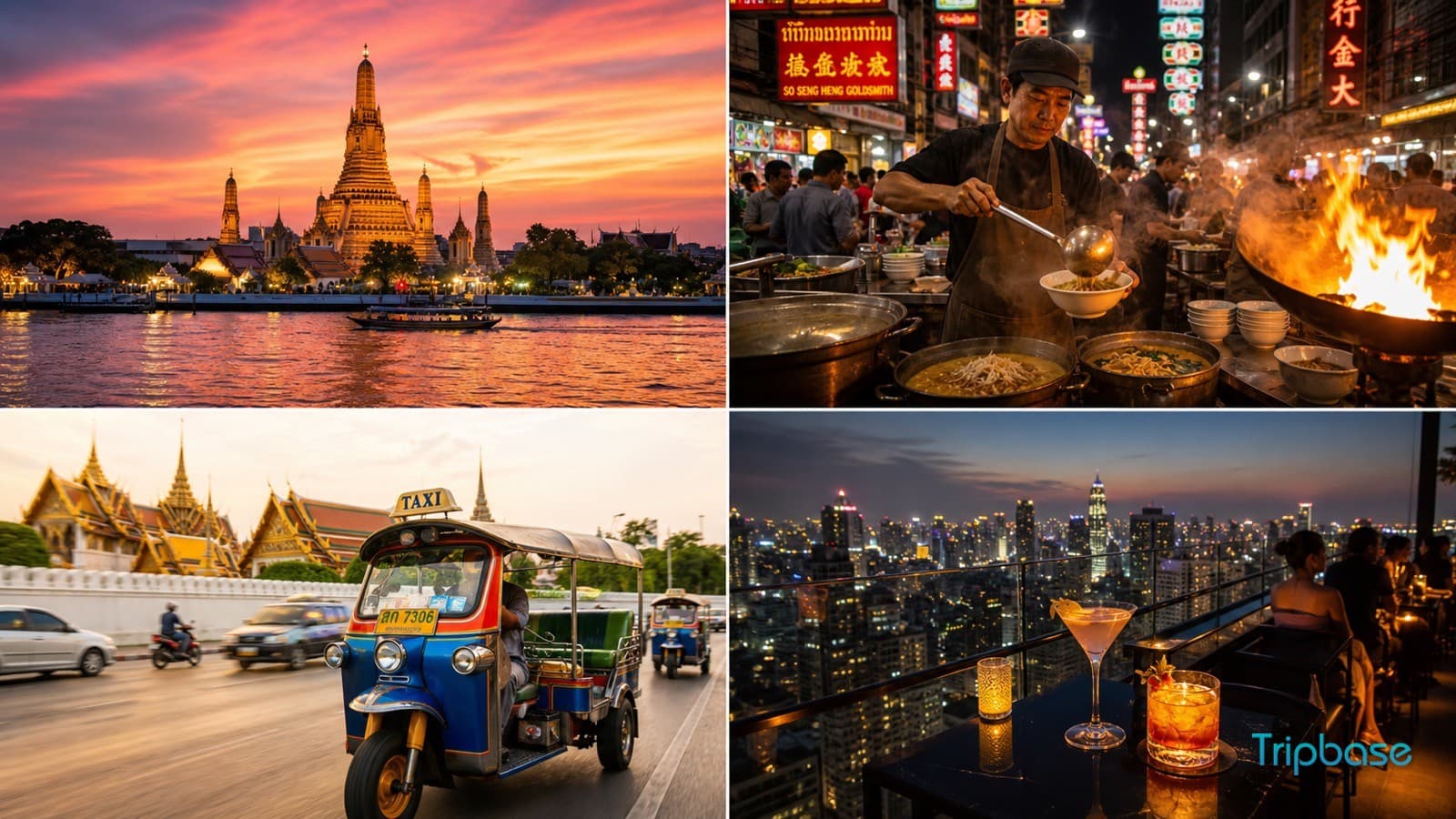
Street food gets an undeservedly bad reputation. In most countries, the street vendor grilling satay in front of you - fresh, sizzling, turned every thirty seconds - is serving safer food than the hotel buffet that's been slowly cultivating new life forms since dawn. The danger isn't the street stall. The danger is the stall where everything was cooked three hours ago and has been sitting at ambient temperature in 35°C heat, slowly transforming from "lunch" into "a salmonella incubator with a price tag."
Bacteria multiply like gossip in the temperature danger zone between 5°C and 60°C. A pre-cooked chicken skewer displayed unrefrigerated in tropical heat is basically a petri dish on a stick. The solution is absurdly simple: choose stalls with a queue. A long line of local workers means high turnover, which means fresh batches. Watch for active grilling or frying. If there's smoke, there's fire, and if there's fire, there's safety. If there's no visible heat source and everything looks like it was made during the previous government, walk away. Keep walking. Find the stall with the queue.
Raw Seafood in Hot Climates
Ceviche in Lima is safe. The Peruvians have been perfecting the art of acid-cooking fish since before your country existed, and the supply chains are short, cold, and ruthlessly efficient. Ceviche from a beachside shack in a tropical fishing village without refrigeration, where the power goes out every afternoon and the fish was caught by a man who also doesn't believe in ice? That's a gamble, and not the fun kind.
Raw fish and shellfish carry vibrio bacteria, parasitic worms (anisakis), and norovirus - a trifecta of misery that multiplies exponentially when the cold chain is broken. Shellfish are particularly treacherous because they're essentially biological water filters, concentrating whatever pathogens are floating around in their environment. Raw oysters in a country with questionable sewage treatment are, to put it delicately, a roulette wheel where half the chambers are loaded. Hepatitis A, norovirus, and vibrio all hitch rides this way. Eat raw seafood at established restaurants with visible refrigeration and local clientele. In tropical developing countries, default to cooked. Your Instagram story isn't worth a week of norovirus.
Fruit You Didn't Peel Yourself
Pre-cut fruit at a tropical market looks glorious - great glistening wedges of watermelon, mango, and pineapple, arranged in the sunshine like an edible postcard. It's also, potentially, a bacterial civilization thriving on every exposed surface. The fruit itself is fine. The problem is the knife (washed in tap water), the cutting board (same), the vendor's hands (let's not investigate), and the hours the fruit has spent sitting in warm air with its protective skin breached, like a castle with the drawbridge down and the moat drained.
The rule is beautiful in its simplicity: eat fruit you can peel yourself. Bananas, oranges, mangoes, papayas - anything with a rind you remove before eating. Avoid pre-cut watermelon and cantaloupe at street stalls, because melons have porous flesh that absorbs bacteria more readily than a sponge absorbs self-pity. If you do buy pre-cut fruit, eat it immediately. Don't carry it around in your bag for three hours in the tropical heat and then wonder why your evening took a dark turn.
Buffet Food (The Petri Dish with a Sneeze Guard)
Hotel breakfast buffets in tropical countries are, from a microbiological standpoint, a controlled experiment in bacterial growth that happens to also serve scrambled eggs. Food sits at temperatures between 20°C and 50°C for hours - too cool to kill anything, too warm to stop anything from breeding. It's the Goldilocks zone of foodborne illness: just right for E. coli to thrive.
Scrambled eggs, rice dishes, cream-based sauces, and seafood are the worst offenders. A buffet that was perfectly safe when the first tray went out at 7am has, by 10am, become a landscape of lukewarm biological warfare. The fix: arrive early when food is freshly prepared, stick to items that are either genuinely hot (just-cooked eggs, just-boiled rice) or genuinely cold (properly chilled yogurt, intact fruit), and avoid anything that's achieved the ominous temperature of "room temperature." Skip the mayo-based salads entirely. Nobody has ever looked back on a holiday and thought "I'm so glad I ate that lukewarm potato salad at the Marriott."
Bushmeat
In parts of Central and West Africa, bushmeat - including primate, bat, and rodent meat - is a primary protein source sold openly at markets. It is also, to use a technical term, absolutely terrifying from a disease transmission perspective. Bushmeat consumption has been linked to Ebola, HIV (SIV crossover), monkeypox, and anthrax. Smoking and drying the meat reduces but does not eliminate viral risk, which is the epidemiological equivalent of "it helps a bit, but not enough to make this a good idea."
The 2014 West African Ebola outbreak was traced to a two-year-old child's contact with bats in Guinea. An entire epidemic, thousands of deaths, from a single point of animal-to-human contact. Avoid bushmeat entirely. This isn't cultural squeamishness or Western food snobbery - the disease transmission risk is genuine, well-documented, and catastrophic. If you're traveling in rural Central or West Africa and are offered unfamiliar smoked meat, ask what it is before eating. This is one of the very few situations in travel where the phrase "no thank you" could literally save your life.
Unpasteurized Dairy
Fresh cheese, raw milk, and unpasteurized yogurt in parts of Central Asia, the Middle East, North Africa, and rural Latin America can carry brucella, listeria, E. coli, and tuberculosis bacteria. Brucellosis - which sounds like something a Victorian explorer would contract and then write a very boring book about - causes weeks of undulating fever, joint pain, and fatigue, and can become chronic if untreated. "Chronic" here means "months to years," which is considerably longer than your holiday.
In countries where pasteurization isn't standard, stick to commercially packaged dairy products. Hard, aged cheeses are generally safer than soft, fresh cheeses (the aging process kills most pathogens, which is the one time that "old cheese" is actually good news). If you're in a rural area and offered fresh milk by a very kind host, boil it first. Explain that you have a sensitive stomach. They'll understand. Everyone understands a sensitive stomach.
Hidden Allergens
Allergic reactions abroad are dangerous not because the allergen itself is any different - a peanut in Bangkok is chemically identical to a peanut in Boston - but because of communication barriers and limited access to emergency care. Peanut and tree nut oils are used extensively and invisibly in West African, Thai, Malaysian, and Indonesian cooking. Soy is as ubiquitous in East Asian cuisines as salt is in Western ones. Shellfish paste and fish sauce lurk in dishes that don't obviously contain seafood, like undercover agents of anaphylaxis.
Carry an allergy card translated into the local language (apps like Allergy Translate cover 35+ languages). Always carry two EpiPens if you have a history of anaphylaxis - one is not enough, because the first one might not work, or you might need a second dose, or you might be very far from a hospital that knows what an EpiPen is. Research which cuisines heavily use your allergen before choosing destinations. Thai, West African, and Malaysian cuisines are the highest-risk for nut allergy sufferers. This isn't about avoiding adventure - it's about having the adventure and also surviving it.
Spice Overload (The Self-Inflicted Wound)
This isn't food poisoning - it's food hubris. Travelers arriving in India, Mexico, Thailand, or Sichuan province and immediately ordering at the local spice level are committing an act of gastrointestinal aggression against their own bodies. Your gut flora did not sign up for this. They were perfectly happy processing the mild, cautious foods of wherever you're from, and now you've dropped a capsaicin bomb on them like an airstrike.
Capsaicin irritates the stomach lining and accelerates intestinal motility (i.e., everything speeds up dramatically in a direction you'd prefer it didn't), causing cramping and diarrhea that's indistinguishable from food poisoning but is actually just your body's way of saying "what have you done." Ease in over 2-3 days. Order mild versions first. Most restaurants in tourist areas offer a heat scale - start at the bottom, where the menu gently suggests "for beginners" in a tone that doesn't quite manage to hide its condescension. Your gut will adapt. But it needs time, and it needs you to stop trying to prove something to no one.
Raw or Undercooked Eggs
Homemade mayonnaise, aioli, mousse, fresh pasta doughs - many beloved things contain raw or lightly cooked eggs. In countries where egg production is not salmonella-vaccinated (read: most of the world outside the EU and Japan), raw eggs carry meaningful salmonella risk. This is particularly common in Latin America, where fresh mayo and raw egg-based salsas are served daily, usually deliciously, and occasionally catastrophically.
In developing countries, avoid homemade mayonnaise, fresh aioli, and any dish described as containing raw egg. Commercial mayo from sealed bottles is made with pasteurized eggs and is safe, which is one of the very few instances where the mass-produced version of something is genuinely better than the artisanal one. Take the win.
The Five Rules (Or: How to Not Ruin Your Holiday)
The Peace Corps coined a phrase in the 1960s that remains the single best heuristic for eating safely abroad: "Peel it, boil it, cook it, or forget it." Six decades later, it still works. If you can't peel it, and it hasn't been boiled, and it hasn't been cooked, then it doesn't go in your mouth. This one sentence will save you from roughly 80% of all food-related misery.
The second rule is equally simple: eat where the locals eat. Not the restaurant with the laminated English menu and the photos of every dish - the stall with a queue of workers on their lunch break. High turnover means fresh food, and locals know which vendors won't poison them because they eat there every day and are, crucially, still alive. The third rule follows from the second: watch it being cooked. Street food prepared in front of you, on a flame, right now, is almost always safer than a hotel buffet that's been engaged in a slow, intimate relationship with room temperature since sunrise.
Rule four: in any country where you wouldn't drink the tap water, say no to ice by default. You can make exceptions for factory-made tube ice (the kind with the hollow center) and for places that clearly use purified water, but the default should be "no ice." Your cocktail will be slightly less cold and significantly less likely to introduce you to ETEC, which is a trade-off you should be comfortable with.
Rule five, and arguably the most important: carry oral rehydration salts. If you do get sick - and some of you will, because biology is indifferent to your travel plans - the danger isn't the illness itself. Traveler's diarrhea is miserable but rarely dangerous. What's dangerous is dehydration, especially in hot climates where you're already sweating. ORS packets cost $0.20, weigh nothing, and are the single most important item in a travel medical kit. Buy them before you leave. Put them in your bag. Forget about them until the night you need them, and then thank whatever deity you pray to that you packed them.
Perspective (Or: Why You Should Eat the Street Food Anyway)
The point of all this is not to terrify you into eating nothing but sealed protein bars in your hotel room for the duration of your trip. Some of the best meals of your life will come from street stalls, night markets, and family kitchens in countries where the tap water would dissolve a spoon. The risk is real but manageable. Millions of travelers eat adventurously every year and come home with nothing worse than a good story and a mildly expanded waistline.
Follow the five rules. Trust your instincts about freshness and hygiene. Eat widely. And if something goes wrong - because sometimes it will, despite your best efforts - remember that a bad night in the bathroom is the price of admission for a life spent eating your way around a planet that is, despite all the bacteria and parasites and lukewarm buffets, absolutely extraordinary.
Disclaimer: This article is written by people who have collectively spent an unreasonable number of hours in foreign bathrooms. We are not doctors, but we are survivors. Carry the rehydration salts.