Why May Is the Best Time to Visit Iceland (And July Tourists Are Suckers)
There is a special kind of traveler who books Iceland in July, pays £400 a night for a concrete box near Keflavík, and then stands shoulder-to-shoulder with 200 other people at Gullfoss pretending to have a spiritual experience. That traveler is not you. You are smarter than that. You are going in May, when Iceland is doing all the same spectacular things it does in summer - erupting, cascading, glowing under an almost-midnight sun - but without the part where you have to queue behind a German tour bus to see a geyser burp.
The Economics of Not Being a Sucker
Let's talk money, because nothing ruins the sublime indifference of an Icelandic glacier quite like realising you've spent £85 on a bowl of lamb soup. In May, accommodation prices drop 30 to 40 percent compared to the July peak. That's not a rounding error. That's the difference between "we stayed in a lovely guesthouse with geothermal hot pots" and "we slept in the car and cried." Flights are cheaper. Car rentals are cheaper. The hot dogs - okay, the hot dogs are always £7, this is Iceland, the hot dogs have diplomatic immunity from market forces.
The shoulder season discount exists because most people are cowards. They see "May" and think "cold" and "risky" and "what if it snows," which is adorable, because it can also snow in July. It can snow in August. Iceland does not care about your calendar. Iceland has never cared about your calendar. The weather will do whatever it wants whenever it wants, and your job is to bring layers and stop whining. May just happens to be the month where you get rewarded for accepting this fundamental truth.
Twenty Hours of Daylight and the Death of Sleep
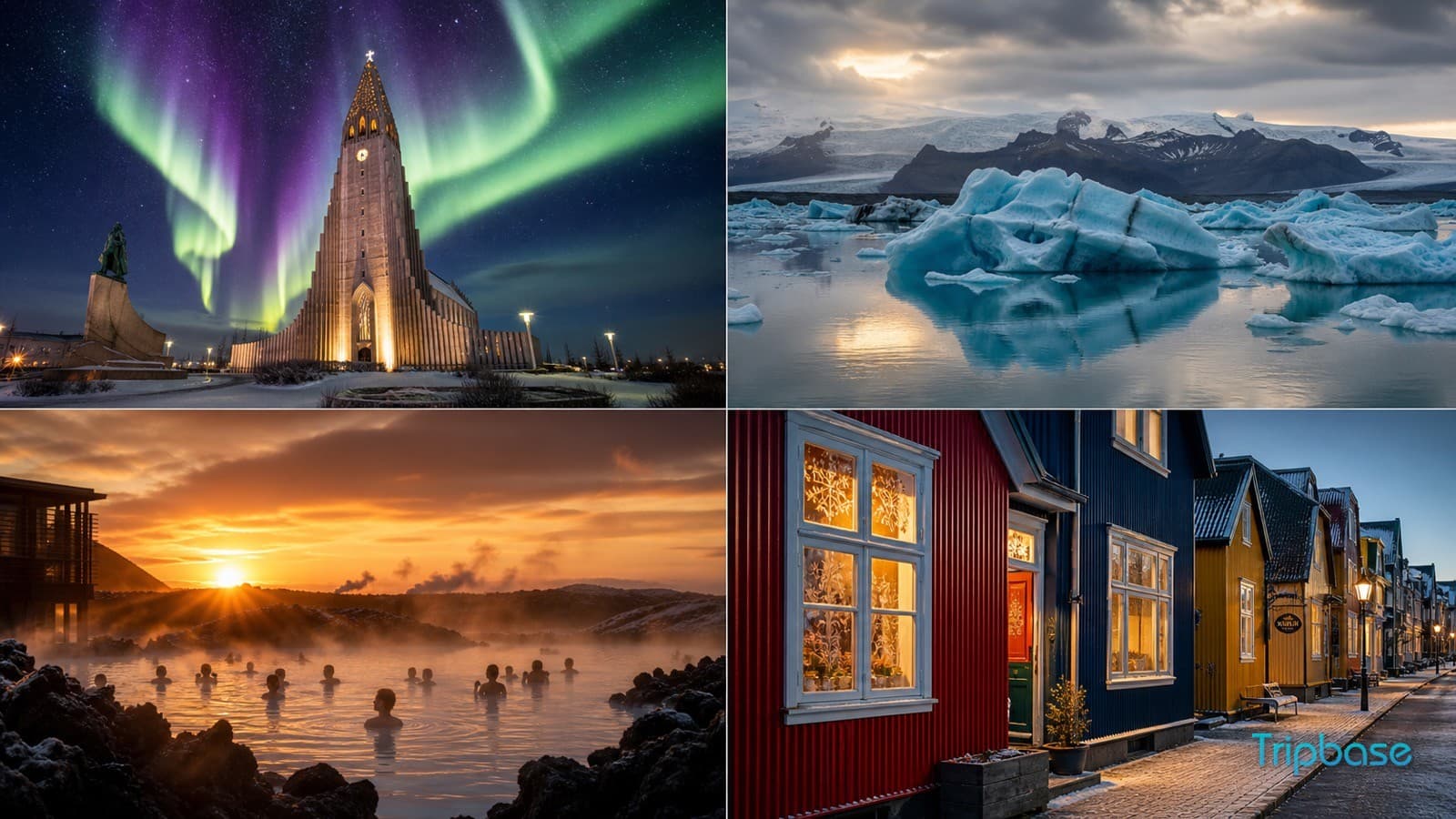
By mid-May, Reykjavík gets nearly twenty hours of daylight. The sun sets around 11pm, sulks below the horizon for a few hours in a state of perpetual golden twilight, and then comes back up around 3am like a friend who said they were leaving the party but actually just went to the off-licence. This is simultaneously glorious and deeply unsettling. Your circadian rhythm will file a formal complaint. You will ignore it, because you'll be standing at Seljalandsfoss at 10pm in perfect light with absolutely nobody else there, and your circadian rhythm can frankly get bent.
This near-endless daylight means you can drive the Ring Road at your own pace, stopping whenever something magnificent appears - which is roughly every four minutes - without the July anxiety of "we need to reach Akureyri before dark" (a sentence that doesn't even make sense in an Icelandic summer, but people say it anyway because humans are creatures of habit and mild stupidity).
The Golden Circle Without the Golden Horde
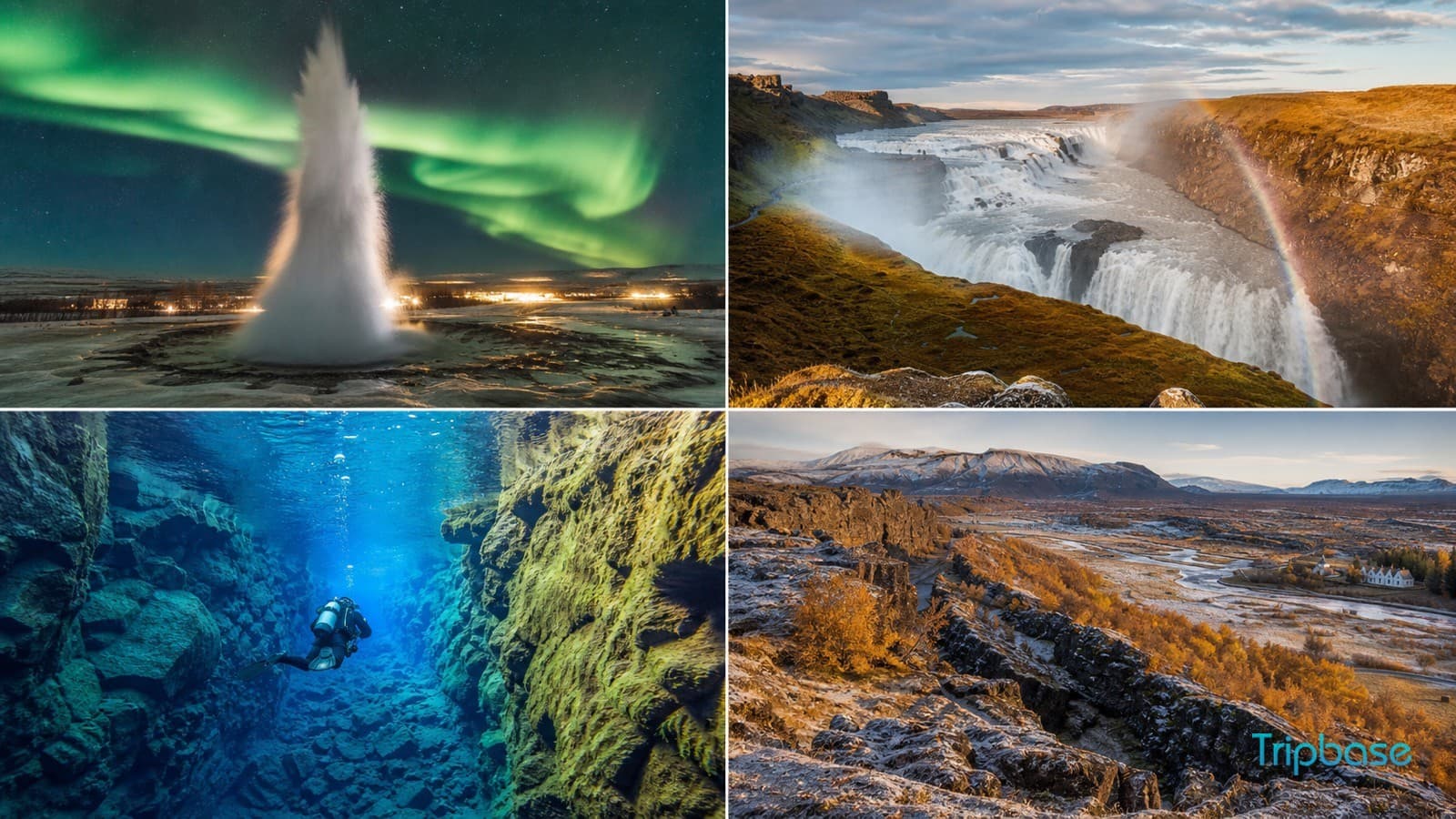
Þingvellir, Geysir, Gullfoss. The Holy Trinity of Icelandic tourism, and in July, the Holy Trinity of Carpark Nightmares. In May, you can actually stand at the Almannagjá rift and contemplate the tectonic plates pulling apart beneath your feet without someone's selfie stick poking you in the ear. You can watch Strokkur erupt every eight minutes without jostling for position like you're at a mosh pit. You can approach the edge of Gullfoss and hear the waterfall instead of a tour guide explaining the waterfall through a megaphone.
And here's the thing about Gullfoss in May specifically: the snowmelt is in full swing. The Hvítá river is absolutely thundering with runoff, and the falls are running at a volume that makes the July version look like a decorative water feature in a suburban garden centre. May Gullfoss doesn't just fall - it detonates. You will get soaked from the spray at fifty metres. You will not care.
Puffins, Whales, and Other Creatures With Better Lives Than You
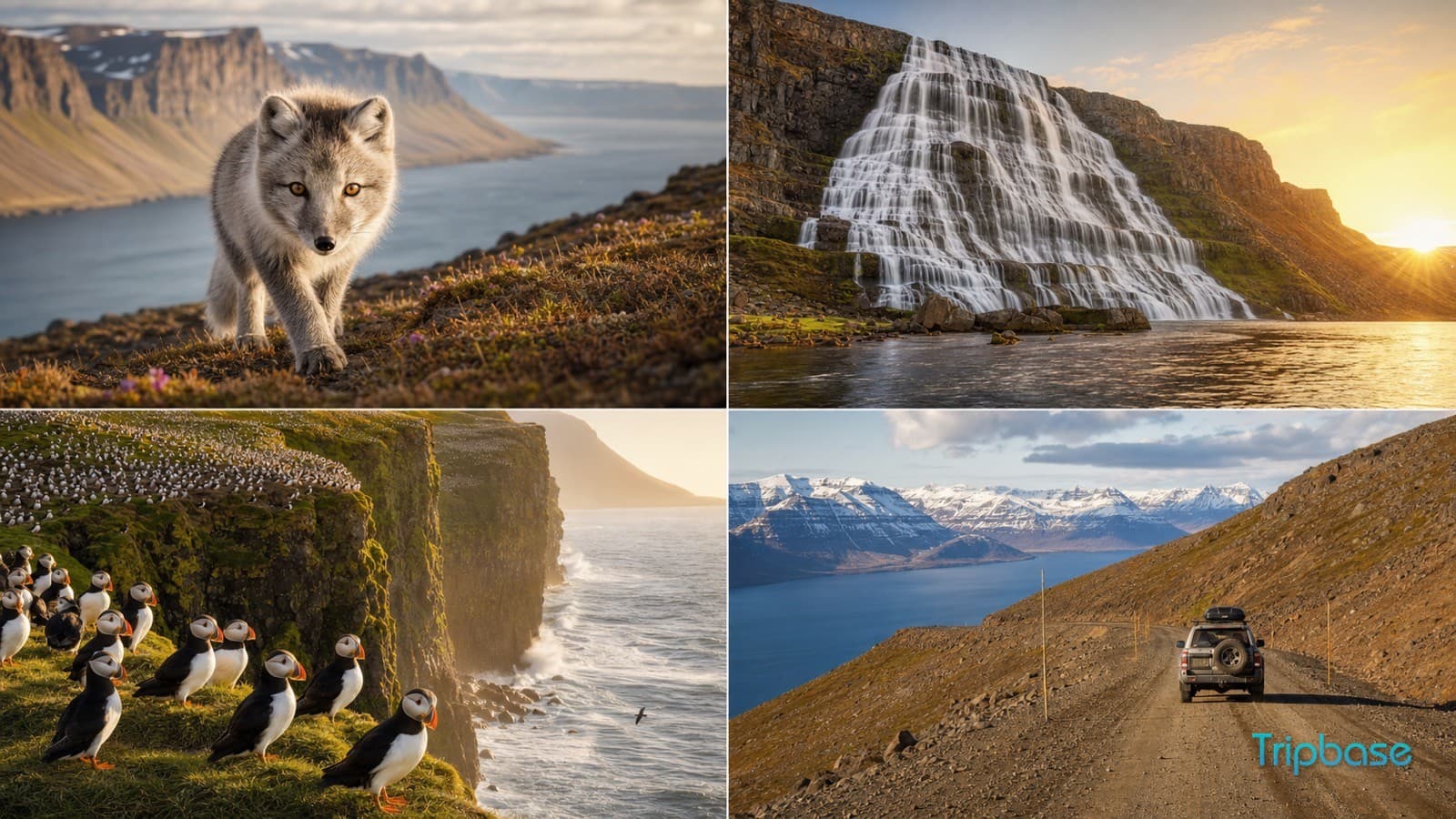
The Atlantic puffins arrive in Iceland in late April and early May, setting up their breeding colonies along the coastal cliffs with the cheerful, bumbling energy of a creature that looks like it was designed by a committee. By mid-May, you can watch them at Látrabjarg in the Westfjords or on the Vestmannaeyjar islands, where they outnumber humans by a ratio that would make any misanthrope weep with joy. They'll waddle to within a few feet of you, stare at you with their painted clown faces, and then launch themselves off a cliff with all the aerodynamic grace of a thrown brick. It is the most endearing thing in nature.
Up in Húsavík - Iceland's self-proclaimed whale watching capital, which is a title that carries more weight than, say, being the self-proclaimed whale watching capital of Luxembourg - May marks the beginning of humpback season. The whales are arriving from their winter holidays in warmer waters, presumably refreshed and ready to breach dramatically for your Instagram. Whale watching boats in May are half-empty, which means you get the good seats (read: the ones where you don't get splashed by someone else's seasickness).
The Snæfellsnes Peninsula: Iceland's Greatest Hits Album
If you only have a few days and you've already done the Golden Circle, Snæfellsnes is the move. Jules Verne set the entrance to the centre of the Earth at Snæfellsjökull glacier, which tells you everything about the peninsula's vibe: dramatic, slightly unhinged, and committed to the bit. In May, the glacier is still properly snow-capped and imposing, Kirkjufell looks like something a fantasy novelist would reject for being too on-the-nose, and the black church at Búðir sits in its lava field looking like it's auditioning for a Scandinavian noir poster.
The coastal villages are waking up from winter but haven't yet been colonised by summer tourists. You can eat fresh-caught fish in Arnarstapi without a reservation. You can hike to Djúpalónssandur beach and have the black pebbles and rusted shipwreck remains entirely to yourself, which is a sentence that sounds like the opening of a horror film but is actually just a pleasant Tuesday in May.
The Westfjords: For People Who Think Iceland Isn't Remote Enough
The Westfjords are the bit of Iceland that even Icelanders consider a bit much. A jagged, deeply fjorded peninsula connected to the mainland by a neck of land so narrow it looks like someone tried to tear it off and almost succeeded. In May, the roads are just opening after winter closures, which means you're among the first humans to drive them that year. This is either thrilling or terrifying depending on your relationship with single-lane mountain passes above sheer drops into the North Atlantic.
Dynjandi waterfall - a 100-metre wedding-cake cascade that is arguably Iceland's most beautiful waterfall, which is saying something in a country that has waterfalls the way other countries have post offices - is accessible by May and will be virtually empty. You'll share it with maybe two other cars and a few sheep who have seen it all before and are profoundly unimpressed.
Landmannalaugar and the F-Roads: A Caveat Wrapped in Rhyolite
Here's where May gets slightly complicated. Landmannalaugar, the psychedelic highland landscape of rainbow rhyolite mountains and natural hot springs, is accessed via F-roads that typically don't open until late June or July. In May, the highlands are still under snow, and the rivers are too swollen to ford. You can sometimes access Landmannalaugar via super jeep tours in late May, which cost roughly the same as a used car but do include the experience of watching a modified Land Cruiser cross a glacial river while you grip the oh-shit handle and contemplate your mortality.
This is the one genuine trade-off of May. You get almost everything - the waterfalls, the wildlife, the light, the solitude, the prices - but the highland interior remains locked behind winter's bureaucracy. If Landmannalaugar is your entire reason for visiting, wait until July and pay the premium. For literally everything else, May is superior and it's not particularly close.
The Ring Road: A Road Trip Without Road Rage
Route 1 in May is a revelation. The Ring Road parking lots - Skógafoss, Jökulsárlón, Goðafoss, Dettifoss - are not empty, but they are populated by the kind of traveler who chose May on purpose, which means they are, by definition, a better class of tourist. Nobody is blocking the path with a tripod. Nobody is flying a drone over your head. The Diamond Beach at Jökulsárlón has actual space to walk among the ice chunks without being photobombed by a family of twelve in matching anoraks.
The drive itself is spectacular in a way that photographs consistently fail to capture, which is why everyone's Iceland Instagram looks slightly fraudulent. In May, the landscape is in transition: snow still caps the mountains, but the valleys are greening up, wildflowers are beginning their brief, desperate bid for existence, and the rivers are running high and fast and that particular shade of glacial blue that doesn't look real even when you're staring directly at it.
Weather: Embrace the Chaos
Icelandic weather in May is best described as "all of it, sometimes simultaneously." You will experience sun, rain, sleet, wind, fog, and brief moments of absolute stillness so beautiful they feel like a glitch in the simulation - all before lunch. The average temperature is around 5 to 10°C, which is "wear layers" weather, not "suffer" weather. You'll need a good waterproof jacket, thermal base layers, and the emotional resilience to not check the forecast every twenty minutes, because the forecast is a work of speculative fiction.
But here's the thing that July loyalists don't understand: the weather is always unpredictable in Iceland. July just has the audacity to charge you more for the same uncertainty. May is honest about what it is. May says, "Look, it might hail on you at Þingvellir, but also it might be 15°C and sunny, and either way you're paying a third less for your hotel." That's a fair deal. That's an honest deal. July is the weather equivalent of a resort that charges extra for the minibar and then fills it with off-brand sparkling water.
The Verdict
May is Iceland with the volume turned up and the crowds turned down. The waterfalls are fatter, the puffins are arriving, the whales are breaching, the daylight is functionally infinite, and the prices haven't yet been inflated by the gravitational pull of peak season demand. You lose the highlands and gain everything else. If you're the sort of person who reads articles about remote places and actually goes to them instead of just saving them to a Pinterest board you'll never open again, May is your month. Book it before the secret gets out - though in fairness, I've been saying that for years and July still gets all the traffic, so perhaps the secret is safe with the cowards.