
10 Foods That Look Like They Came From Another Planet
Foods That Look Completely Alien
Food is supposed to look like food. You know - round vegetables, flat grains, the recognizable shapes that have been on dinner tables for generations. And then there are these. Foods that look like concept art, or mathematical demonstrations, or something you'd expect to find at the bottom of the ocean rather than in a market stall. Here are ten real, completely edible foods that look like they were designed by someone with access to other planets.
Romanesco Broccoli
.jpg)
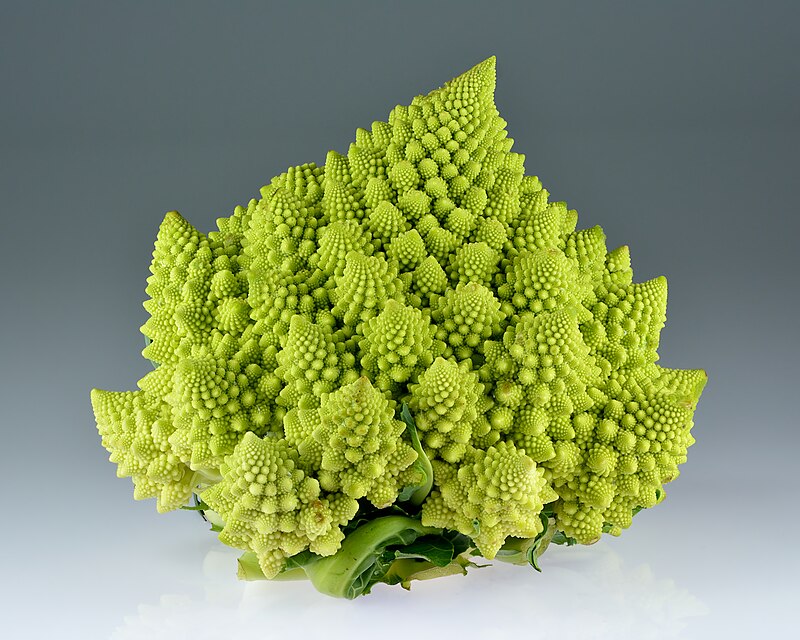
Romanesco broccoli is a form of Brassica oleracea first documented in Italy in the 16th century. The head is composed of a series of spiraling cones, each of which is itself composed of smaller spiraling cones, all the way down to a level too small to see with the naked eye. This is a natural fractal pattern - specifically an approximation of a logarithmic spiral - and it has made Romanesco broccoli something of a cult object among mathematicians and botanists. The number of spirals it produces follows the Fibonacci sequence.
The flavor is milder and nuttier than standard broccoli or cauliflower, slightly sweet when roasted, and the texture holds up extremely well to high heat without going mushy. It's as edible as it is remarkable. You can find it in Italian markets from late autumn through winter.
Buddha's Hand
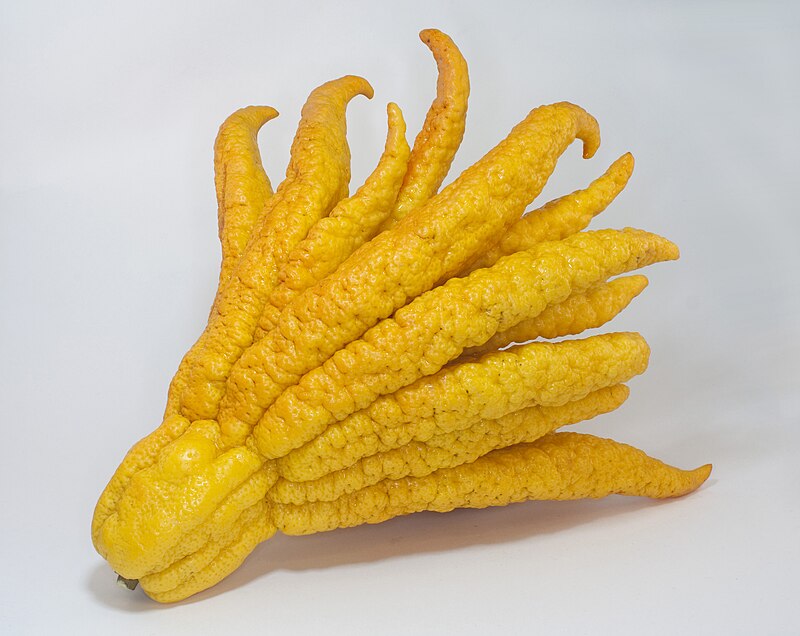

The Buddha's hand is a citrus fruit in the citron family, grown primarily in China and Japan. The fruit splits into long, finger-like segments - anywhere from five to twenty - giving it the appearance of an outstretched hand. In Buddhist tradition, the closed-finger variety (fingers curved inward, like a cupped hand) is considered a good omen for temples and offerings. The open-finger variety (fingers spread outward) is associated with good fortune in homes.
Unlike most citrus, Buddha's hand contains little to no pulp or juice. The entire fruit is essentially pith and skin - but extraordinary skin: intensely fragrant, with a clean, bright floral-citrus scent that makes it used primarily as a perfume ingredient, a zesting agent, or a liqueur flavoring. It can be candied, zested into baked goods, or used to infuse spirits. The smell of a single fruit can fill a room.
Rambutan
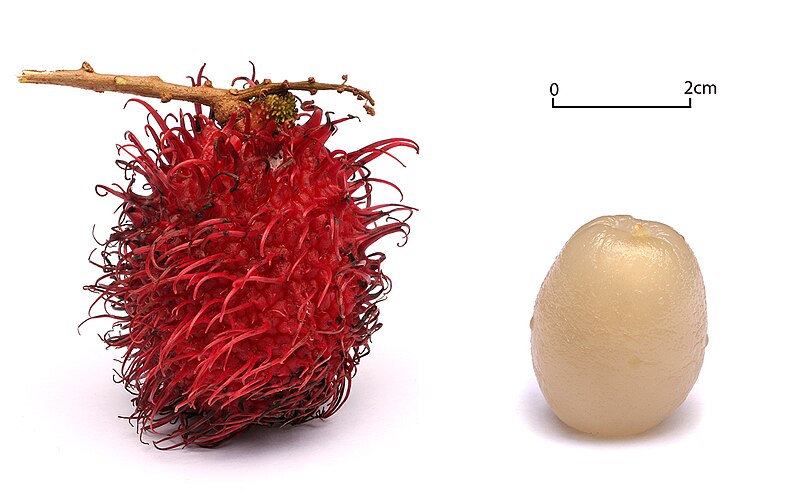

The rambutan is a Southeast Asian fruit native to Malaysia and the surrounding region. Its name derives from the Malay word rambut, meaning "hair" - because the fruit is covered in long, soft, pliable spikes that can be red, yellow, or orange, giving it the appearance of a very colorful sea urchin or a creature from a science fiction illustration. The spikes are harmless and flexible.
Inside the hairy exterior is a translucent white flesh similar to a lychee - sweet, juicy, slightly acidic - surrounding a single seed. It's one of the most pleasant tropical fruits to eat once you get past the spectacle of peeling it. Rambutan trees produce enormous quantities of fruit (up to 6,000 per tree annually) and the fruit is widely eaten fresh or canned across Southeast Asia.
Durian
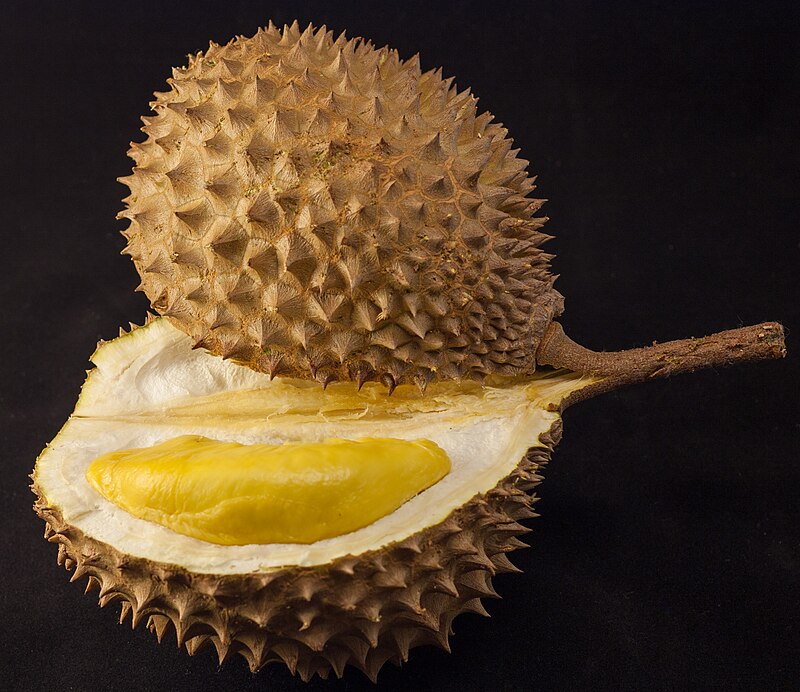

The durian is technically remarkable in several ways. It's a large, green, heavily armored fruit covered in sharp conical spikes that can draw blood if handled carelessly. It falls from trees at high speed when ripe, which makes walking under durian orchards genuinely dangerous. Most Southeast Asian countries have safety-awareness campaigns about this. When opened, the cream-colored flesh releases a smell variously described as overripe onions, turpentine, raw sewage, and gym socks - which is why it's banned on public transport in Singapore, Japan, and many hotels across the region.
The flavor, separate from the smell, is complex, rich, and custard-like - sweet, savory, and almost almond-like, with a texture somewhere between ice cream and cheese. It's known as the "King of Fruits" throughout Southeast Asia, where it is eaten fresh, used in ice cream, pastries, rice dishes, and drunk as a coffee flavoring. The durian season is a genuine cultural event in countries like Thailand, Malaysia, and Indonesia.
Ube (Purple Yam)
Ube is a variety of purple yam from the Philippines with an almost artificially vivid violet color - when cooked, it turns an extraordinary shade of purple-blue that makes food look like it's been dyed. It has a sweet, slightly nutty flavor reminiscent of vanilla and taro, and it's used in ice cream, cakes, jam (halaya), and pastries throughout the Philippines. The visual impact of ube-colored food - ice cream, bread, cake, mochi - makes it one of the most photographed food ingredients in the world.
Sea Grapes (Caulerpa lentillifera)
Sea grapes are a species of green seaweed grown and harvested in the shallow coastal waters of Southeast Asia and Japan. They look almost exactly like a bunch of tiny grapes, but green and slightly translucent, growing in clusters on a central stalk. In Japan, they're called umi-budō (sea grapes) and eaten fresh with soy sauce and vinegar; in Okinawa they're a local specialty. The texture is extraordinary: each tiny sphere pops when bitten, releasing a burst of mild, fresh, ocean-saline flavor. They're becoming increasingly available in specialty food stores internationally.
Black Garlic
Black garlic is regular garlic that has been aged at high temperature and humidity for three to four weeks until the cloves turn entirely black. The Maillard reaction (the same chemical process that browns bread and caramelizes onions) transforms the sharp, pungent fresh garlic into something completely different: soft, almost syrupy cloves with a complex flavor described as sweet, molasses-like, with hints of balsamic vinegar and tamarind, and almost none of the sulfurous sharpness of raw garlic. It looks like something that has gone badly wrong. It tastes extraordinary.
Finger Limes
Finger limes (Microcitrus australasica) are native to the subtropical rainforests of Australia and look like slender, elongated fingers (5-10cm long). Their interior contains vesicles - tiny spheres of juice resembling caviar in both appearance and texture - that pop individually in the mouth. The flavor is intensely citrus, ranging from sour to slightly sweet depending on variety. They're also sometimes called "citrus caviar" and have become extremely fashionable in high-end restaurants for their visual and textural properties.
Have you tried any of these? Which looks most appealing and which most terrifying? Tell us in the comments.